Reading guide
Content guideOverview
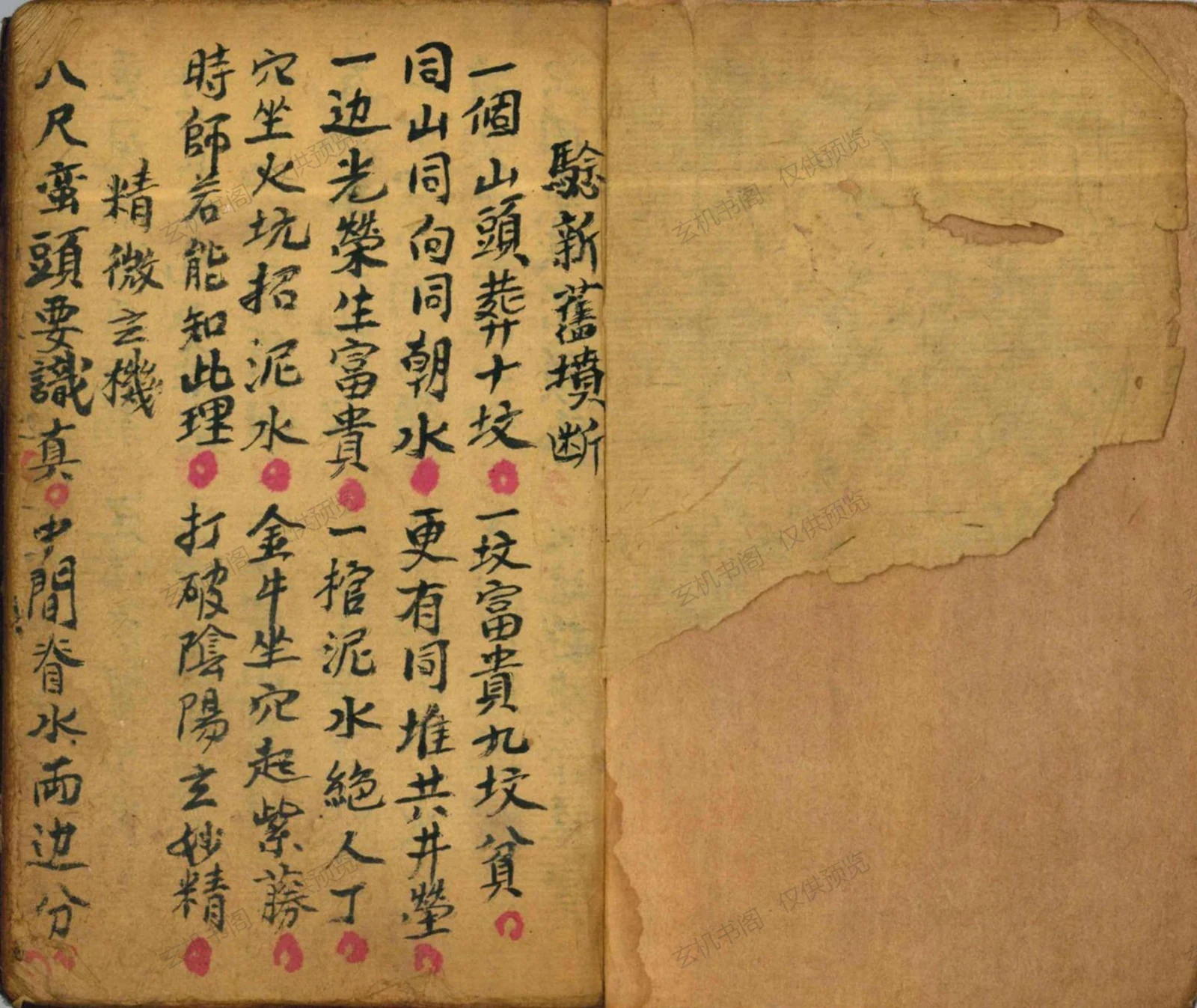
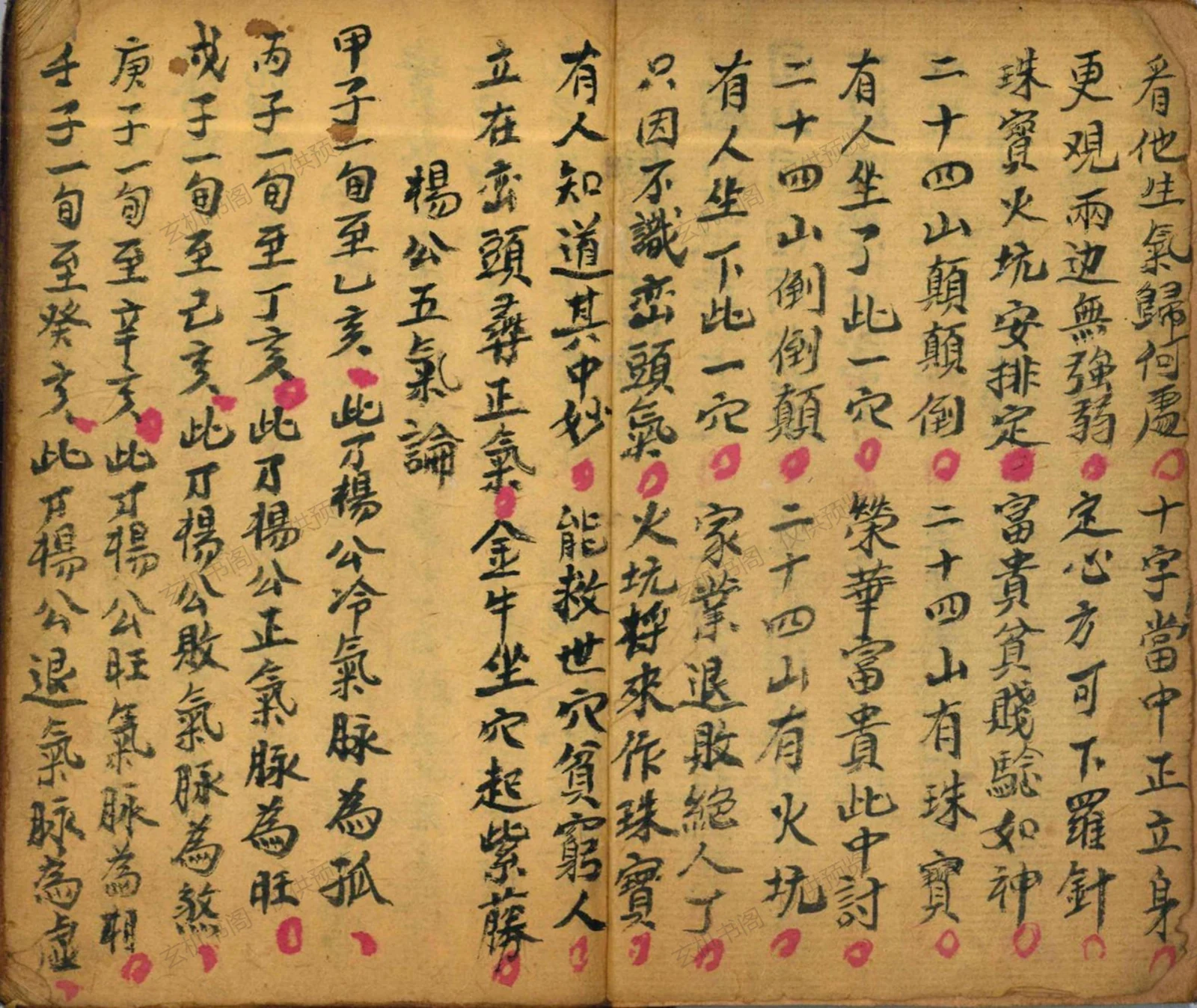
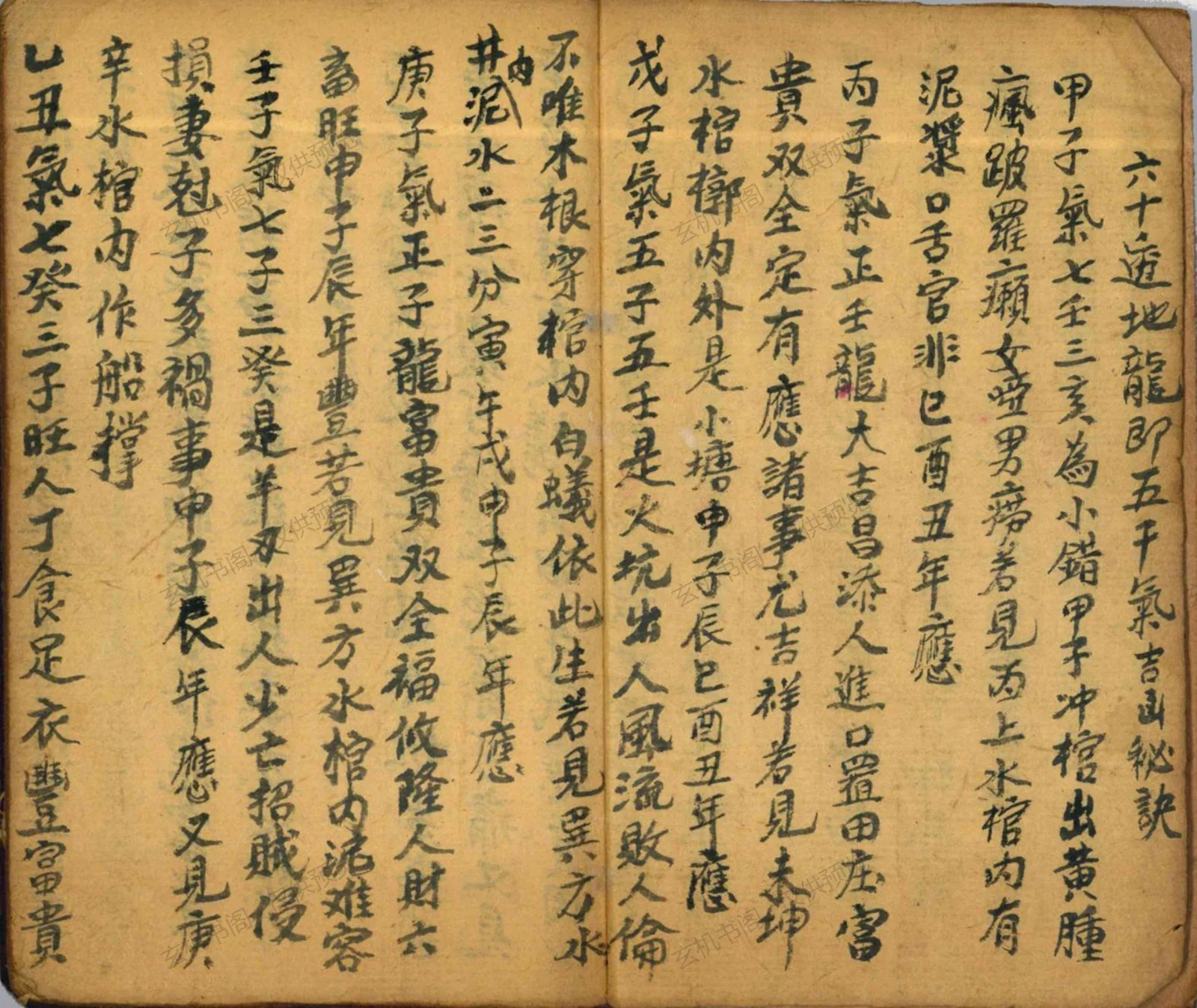
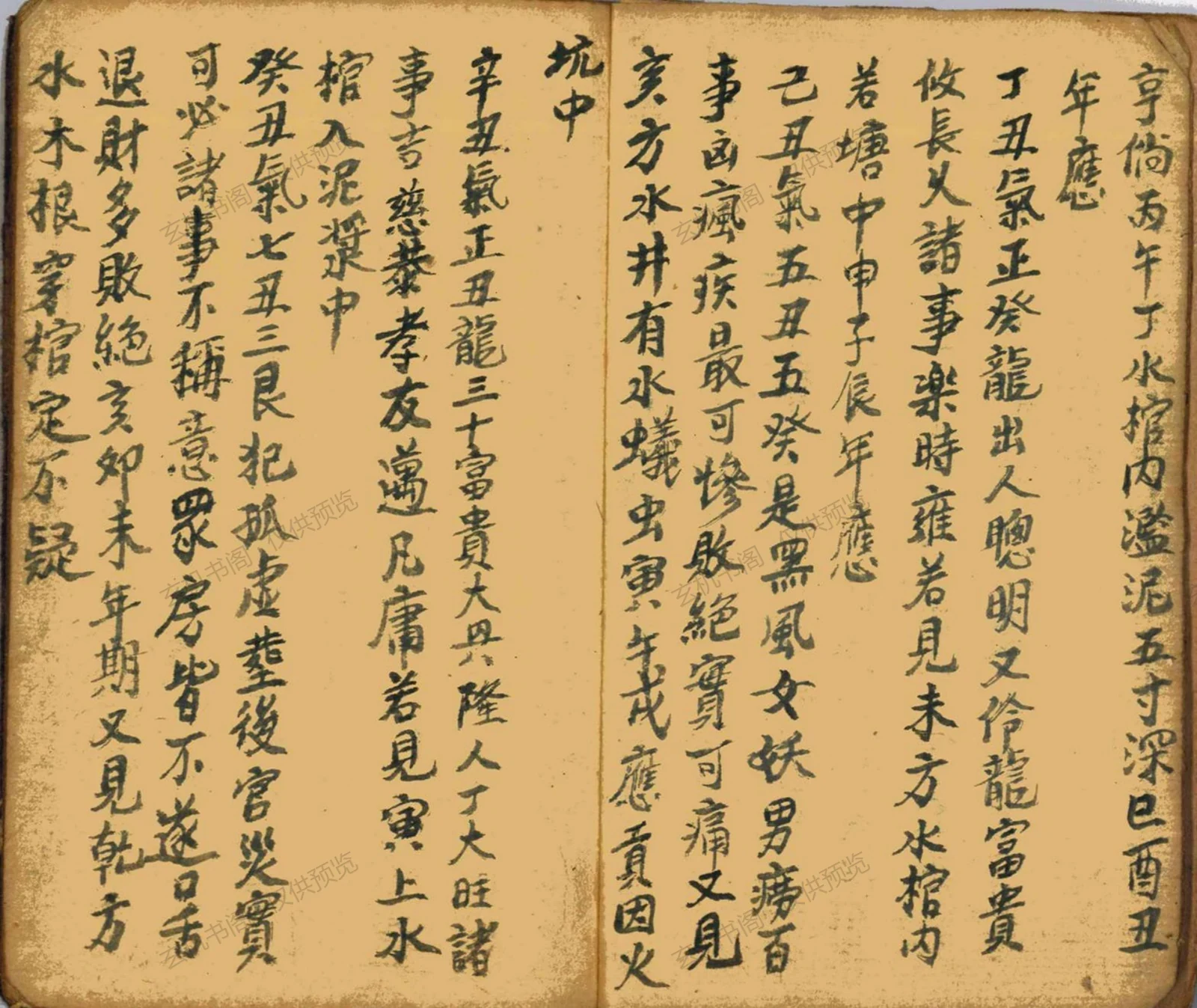
This handwritten feng shui manuscript focuses on judging the fortune of graves (yin-house feng shui). Its opening section, 'Judging New and Old Graves,' uses verse to explain how different graves on the same mountain can yield poverty, wealth, honor, or decline depending on water patterns and cave forms. It then presents Yang Gong's Five Qi theory and the Sixty Earth-Penetrating Dragons, assigning auspicious and inauspicious outcomes to specific stems, branches, and years. Recurring terms such as 'water coffin,' 'fire pit,' 'muddy water,' and 'purple vine' reflect a practical oral tradition. The text records a verse-based method for linking grave orientation and surrounding water or soil conditions to later generations' fate, making it useful for readers interested in traditional yin-house feng shui and manuscript terminology.
Contents
Verse on judging new and old graves
Yang Gong's Five Qi theory
Sixty Earth-Penetrating Dragons
Auspicious and inauspicious responses by qi
Water patterns, cave forms, and fortune
Key Points
Judges new and old graves through verse formulas
Emphasizes water patterns and their effect on grave sites
Explains outcomes through the Sixty Earth-Penetrating Dragons
Applies Yang Gong's Five Qi theory to assess qi strength
Links specific years to predicted human events