Reading guide
Content guideOverview
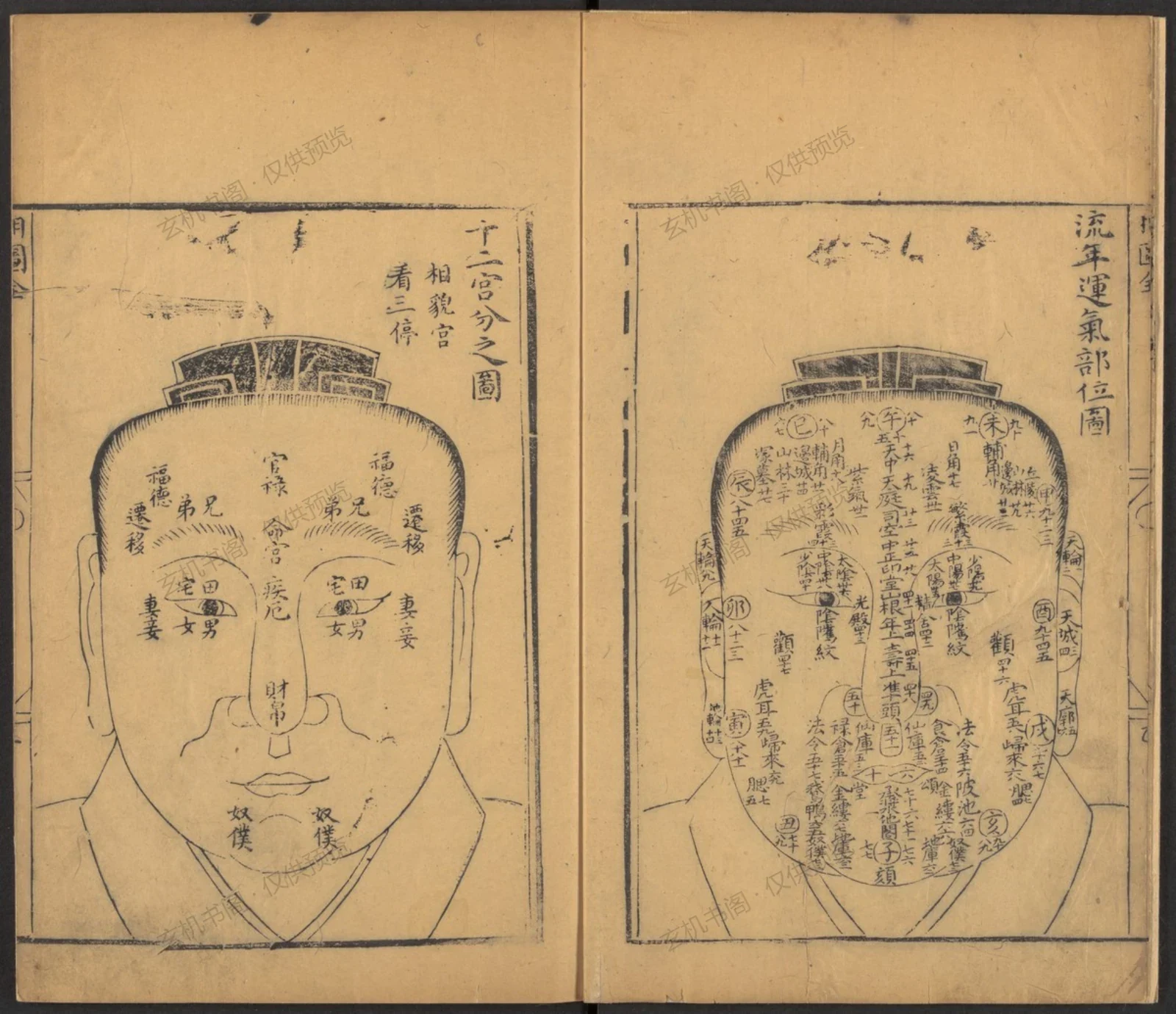
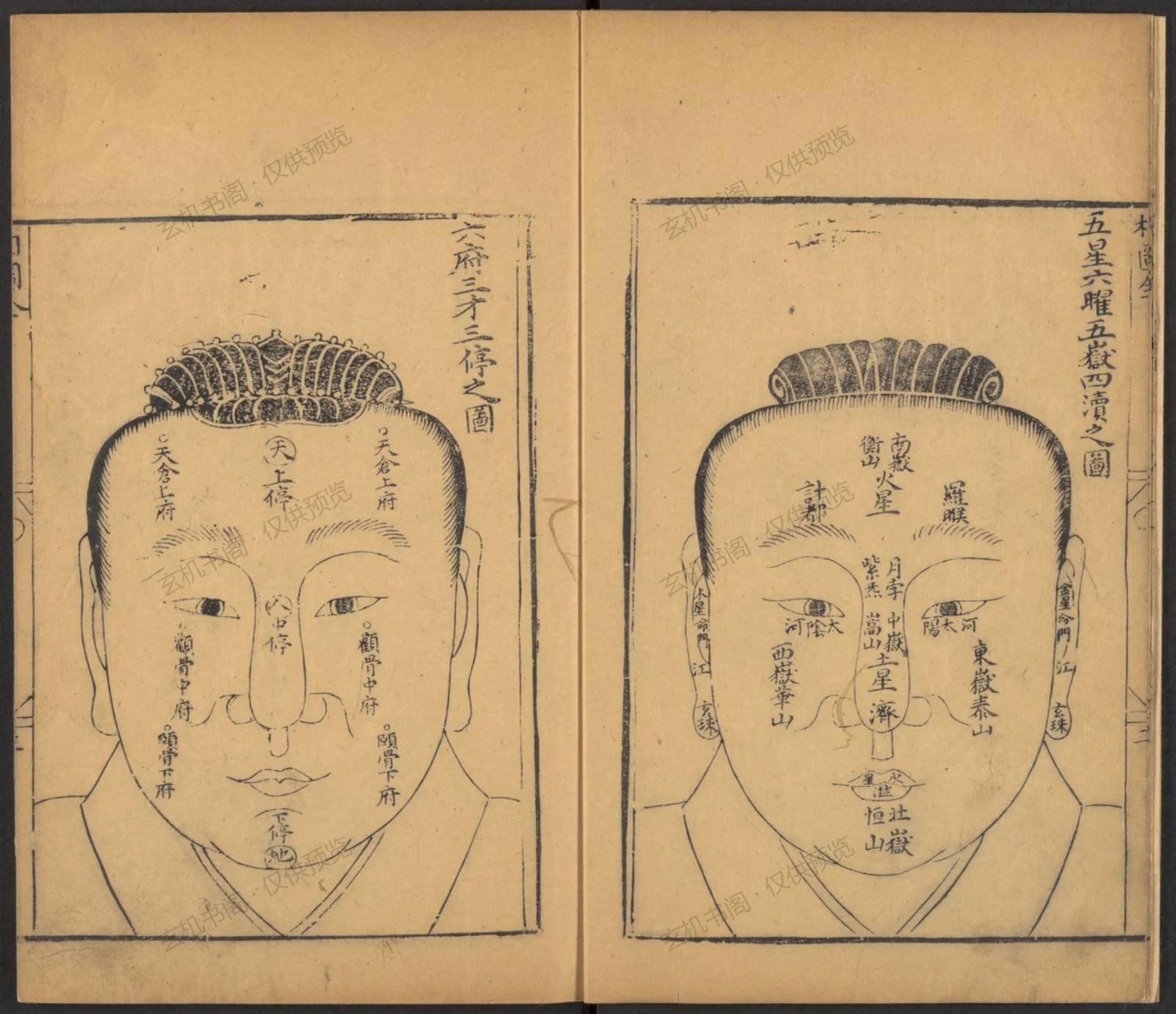
Mai Yi Xiang is a classic text on traditional Chinese physiognomy. This ancient edition by Hu Wenhuan consists of 83 single pages and opens with the author's preface explaining his reasons for compiling and publishing the book. The main body is primarily illustrated with explanatory text, systematically presenting the basic framework of face reading. It includes a general diagram of the thirteen facial regions with auspicious and inauspicious annotations; diagrams of the twelve palaces corresponding to life dimensions such as destiny, wealth, siblings, and property; a diagram of annual luck marking changes in facial complexion by age; a diagram of the five stars, six luminaries, five mountains, and four rivers, using astrological and geographical metaphors for facial structure; a diagram of the six storehouses, three powers, and three proportions for overall facial analysis; diagrams of the four and eight academies related to academic and official careers; and a diagram mapping the nine provinces, eight trigrams, and heavenly stems and earthly branches onto the face. These illustrations are important aids for studying traditional physiognomy and are suitable for readers interested in physiognomy and folk culture.
Contents
Preface to Mai Yi Xiang
General Diagram of the Thirteen Facial Regions
Diagrams of the Twelve Palaces
Diagram of Annual Luck Regions
Diagram of Five Stars, Six Luminaries, Five Mountains, and Four Rivers
Diagram of Six Storehouses, Three Powers, and Three Proportions
Diagrams of the Four and Eight Academies
Diagram of the Nine Provinces, Eight Trigrams, and Stems and Branches
Key Points
Presents core facial regions through illustrations for intuitive reference
Covers traditional physiognomy systems such as the thirteen regions, twelve palaces, and annual luck
Maps astrological and geographical concepts like the five stars and six luminaries onto the face
Includes physiognomy related to academic and official careers through the four and eight academies
Hu Wenhuan's preface explains the background of compiling and publishing the book