Reading guide
Content guideOverview
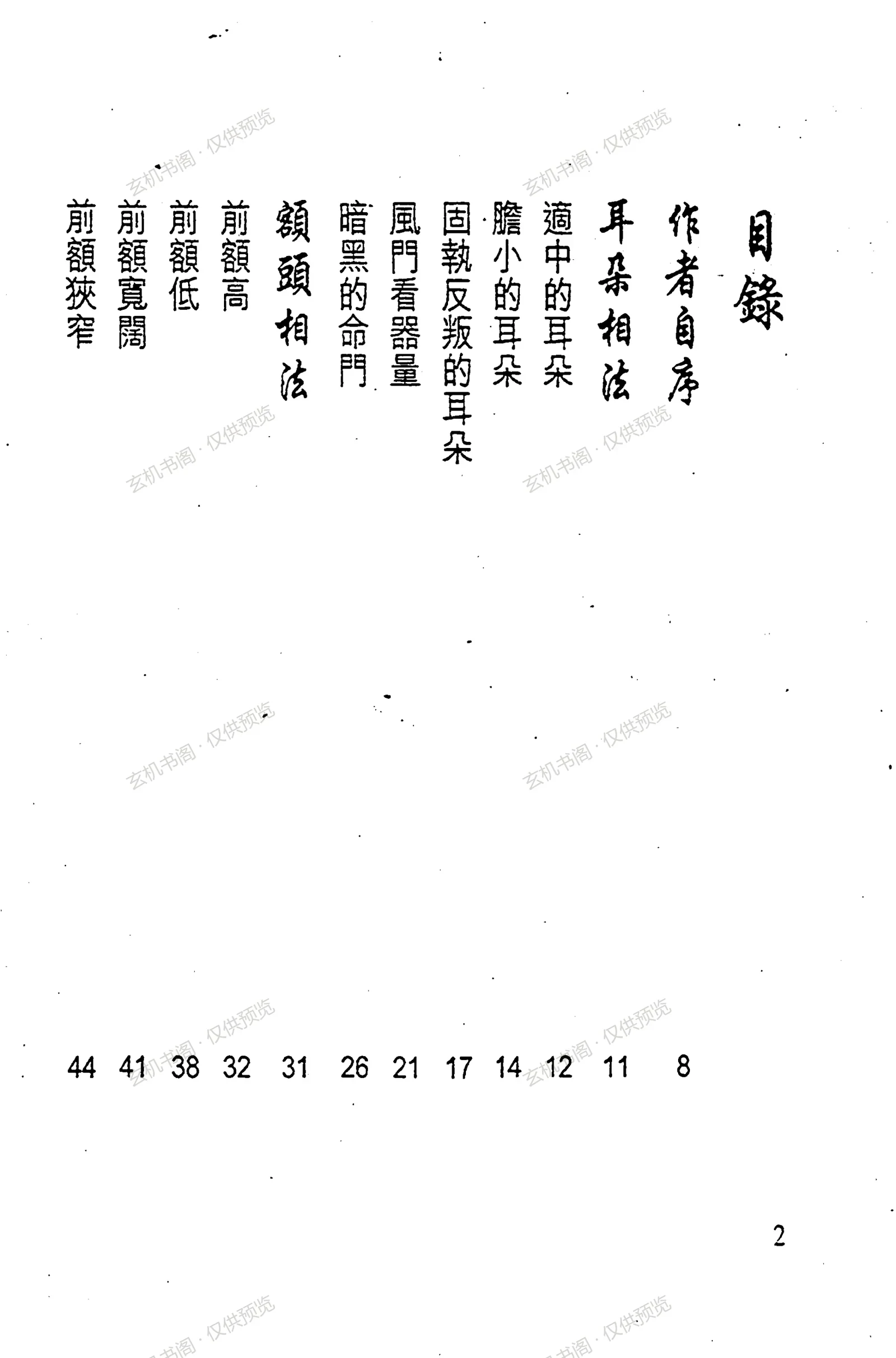
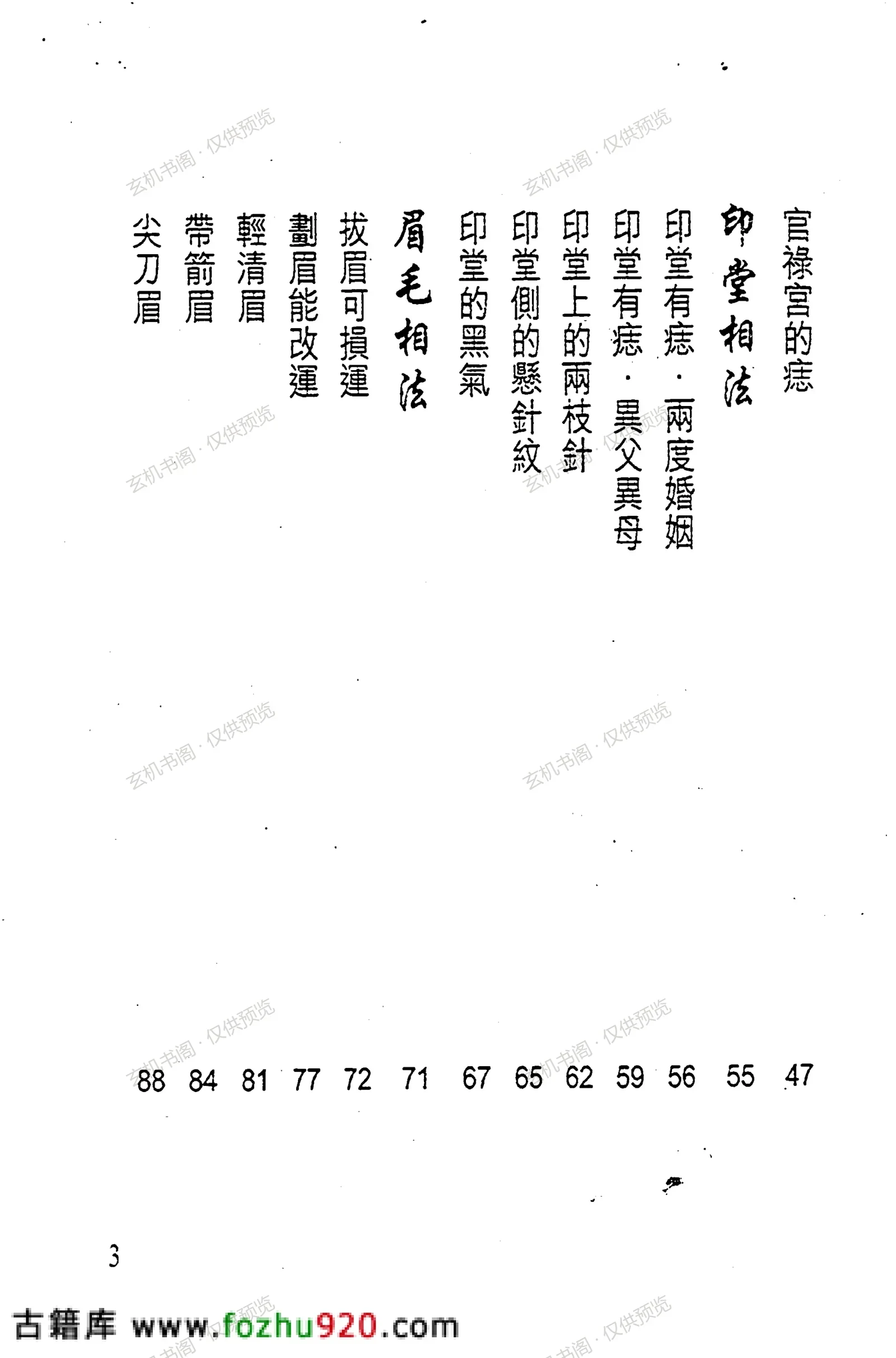
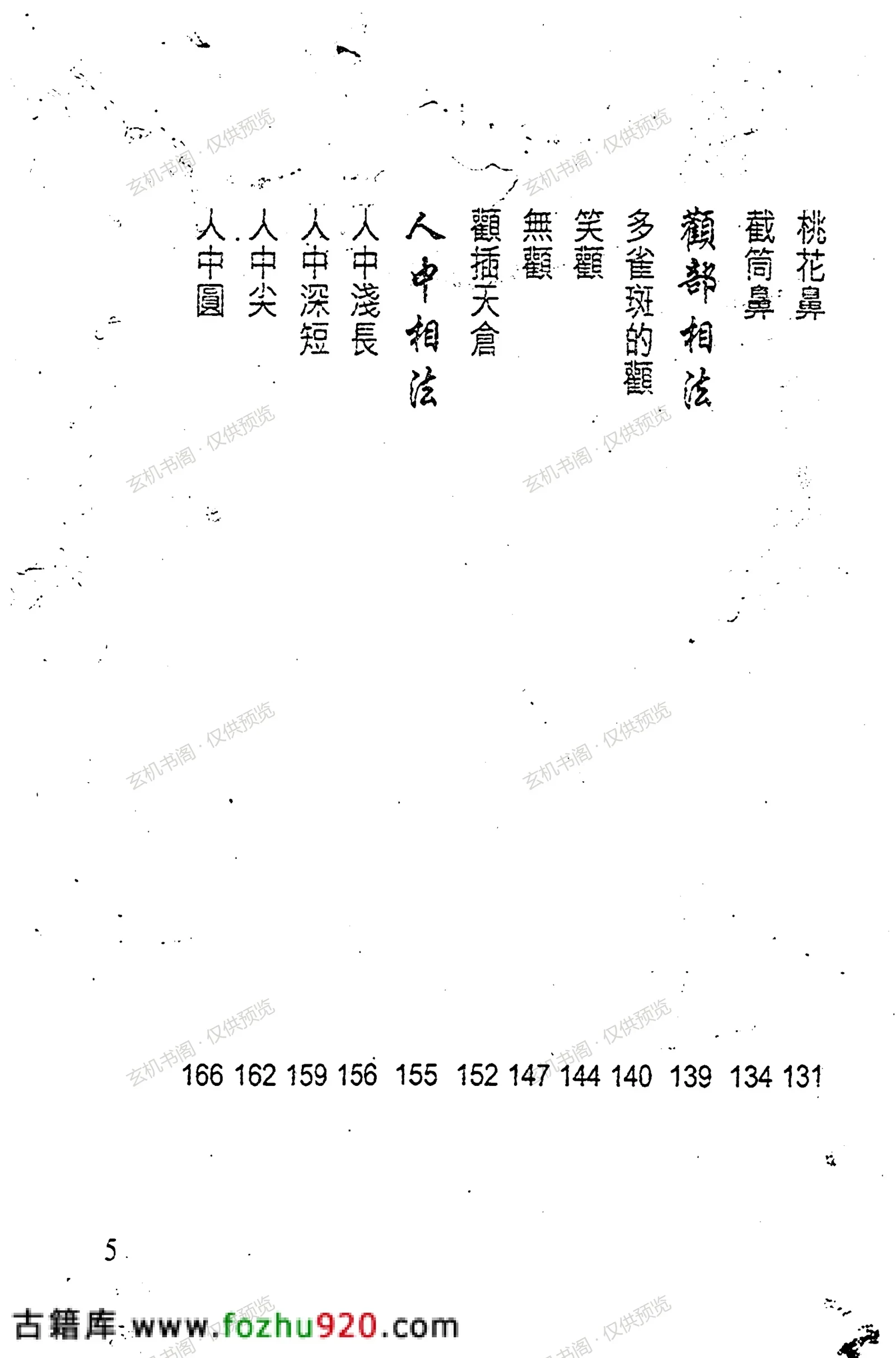
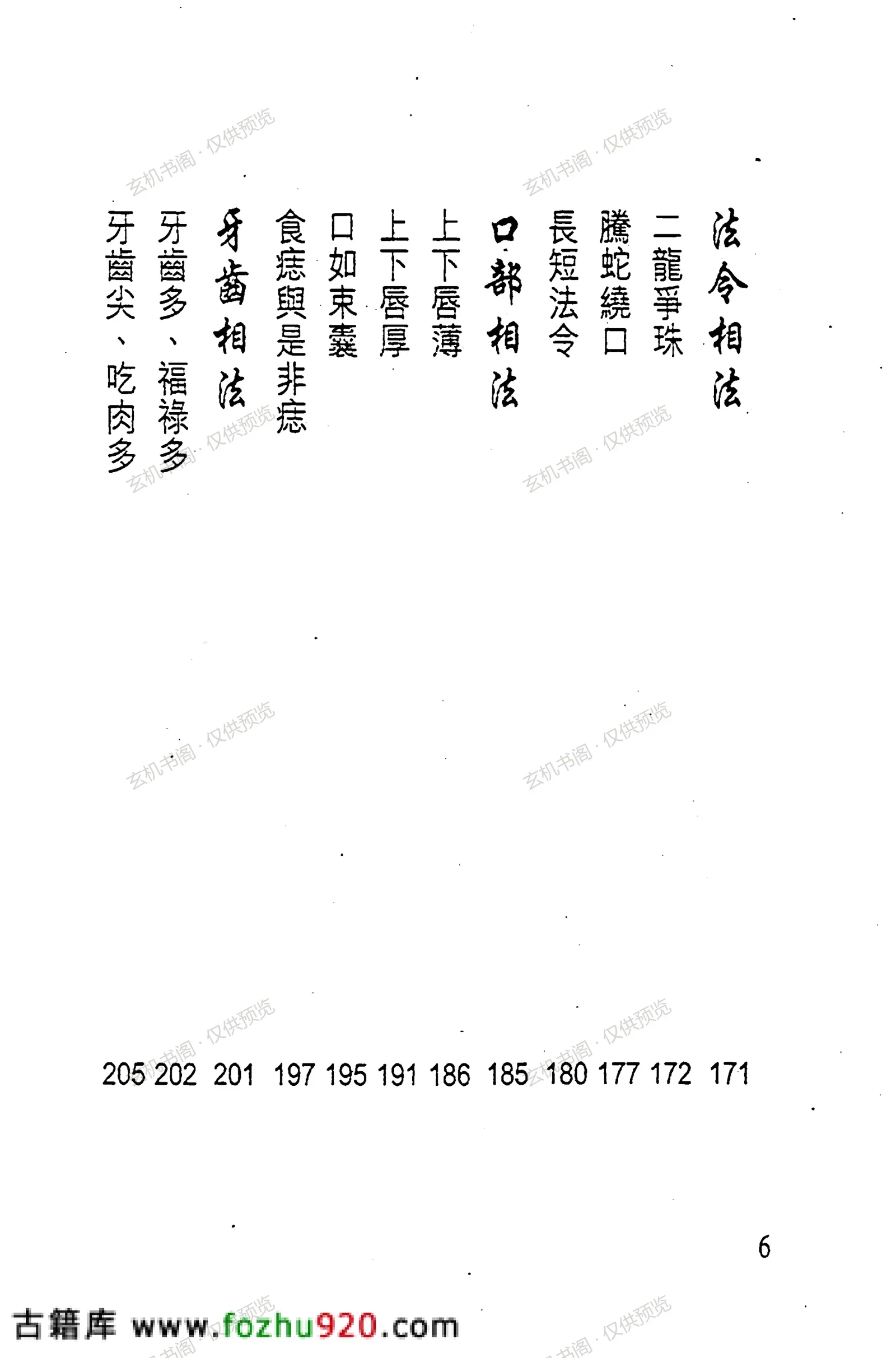
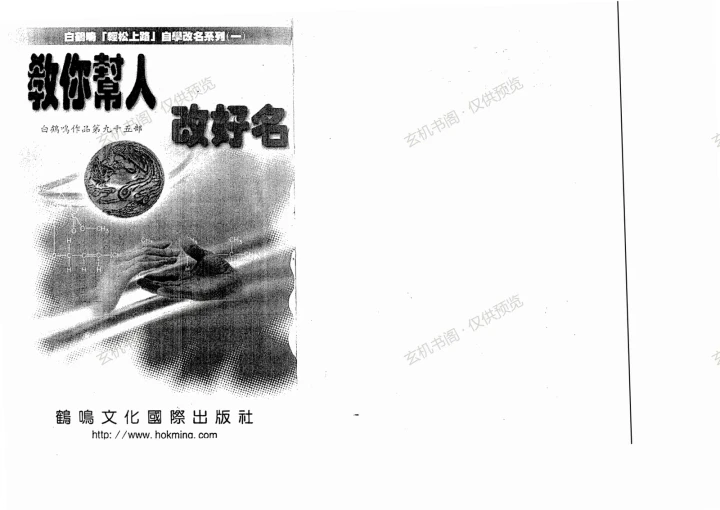
This is an introductory physiognomy work by Bai Heming. Its table of contents shows a feature-by-feature structure: after the author's preface, it discusses ear physiognomy (medium, small, stubborn, wind gate, dark fate gate), forehead and neck physiognomy (high, low, broad, narrow forehead, forehead lines), yintang physiognomy (two marriages, dark father/mother, suspended needle line, dark qi), eyebrow physiognomy (plucking, drawing to change luck, light clear brows, arrow-carrying brows, knife-tip brows), eye physiognomy (fish-tail depression, mismatched eyes, four-whites, child eyes, peach-blossom eyes), nose physiognomy (exposed nostrils, three-lobed nose, hooked nose, peach-blossom nose, truncated tube nose), cheekbone physiognomy (freckles, dimples, no dimples, cheekbones reaching tiancang), philtrum physiognomy (long, short, deep, shallow, pointed, round), and mouth and teeth physiognomy (mouth like a bundle, lip thickness, snake winding around mouth, two dragons fighting for a pearl, many teeth for fortune, pointed teeth for eating meat). It is a popular-style compilation of traditional facial reading, with short entries and shape-based judgments, suitable for readers who want to look up common physiognomy terms and folk interpretations by facial region.
Contents
Author's preface
Ear physiognomy: ear shape, position, and fate gate
Forehead and neck physiognomy: height, width, and lines
Yintang physiognomy: marriage, parents, suspended needle line, dark qi
Eyebrow physiognomy: brow shapes and luck-changing claims
Eye physiognomy: eye shapes, whites, and peach-blossom eyes
Nose physiognomy: nose shapes, exposed nostrils, hooked nose
Philtrum, cheekbone, mouth, and teeth physiognomy
Key Points
Organized by facial features for easy lookup by region
Entries are mostly shape-based judgments on forehead, brows, eyes, and nose
Includes folk physiognomy topics such as yintang suspended needle line and dark qi
Contains readings on marriage, parents, and wealth within traditional physiognomy
Useful as a reference handbook for physiognomy terms and regional interpretations