Reading guide
Content guideOverview
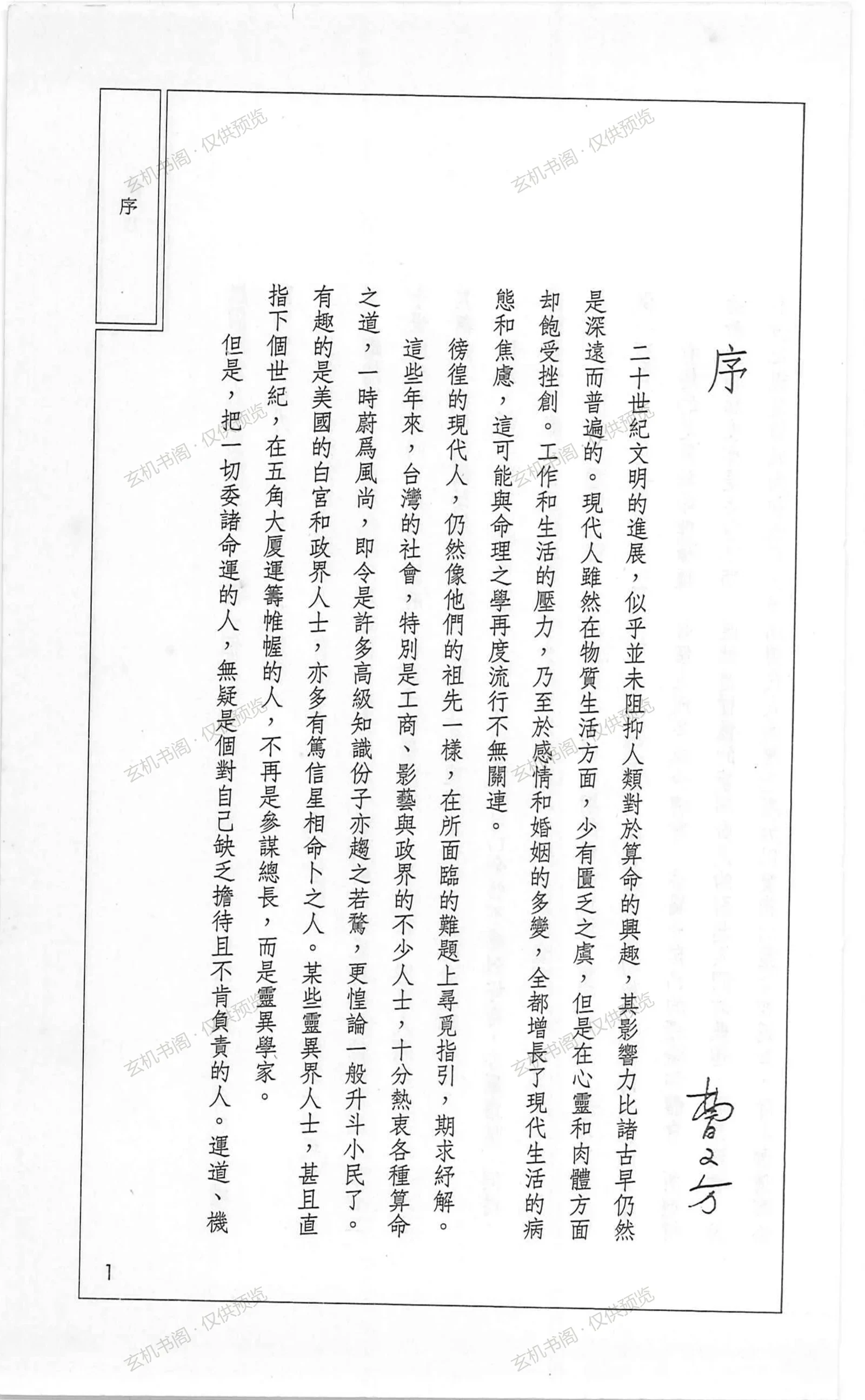
Titled Masters Discuss Fate and credited to Chou Fei-li, Fei-yun Shan-jen and others, this book is a collective volume. The second page lists dozens of contributors, including Chou Fei-li, Ying Wei-chih, Wu Chung-lan, Hsu Ming-chien, Wang Fu-tung, Fei Ma, Tai Wen-tsai, Tsao Yu-fang, Ai Pei, Hu Pin-ching, Chou Ku, Chiu Hsiu-chih, Chen Leng, Wen Hsiao-ping, Yen Jo-tang, Hsieh Li-fa, Ho Wei-kang, Chien Ko-chuan, Lin Ching-hsuan, Ku Hua, Hou Jung-sheng, Chai Sung-lin, Hung Hsiao-chiao, Hsia Yang, Tan Fei, Yen Li, Sun Ching-yu, Wu Hung-i, Chang To-wu, Lo Men, Mu Hsin, Pi Pu, Chao Shu-hsia, Ku Cheng and Fei-yun Shan-jen. The preface by Tsao Yu-fang observes that despite the advance of twentieth-century science, fortune-telling remains widespread, from business and entertainment circles to politics, and argues that destiny studies may serve as a reference but should not replace personal judgement. The visible pages contain prefatory discussion rather than technical chapters, so the book reads as a collection of essays on fate and divination rather than a systematic manual.
Contents
Cover: title and author credit
Contributor list: dozens of names
Preface by Tsao Yu-fang on modern fortune-telling
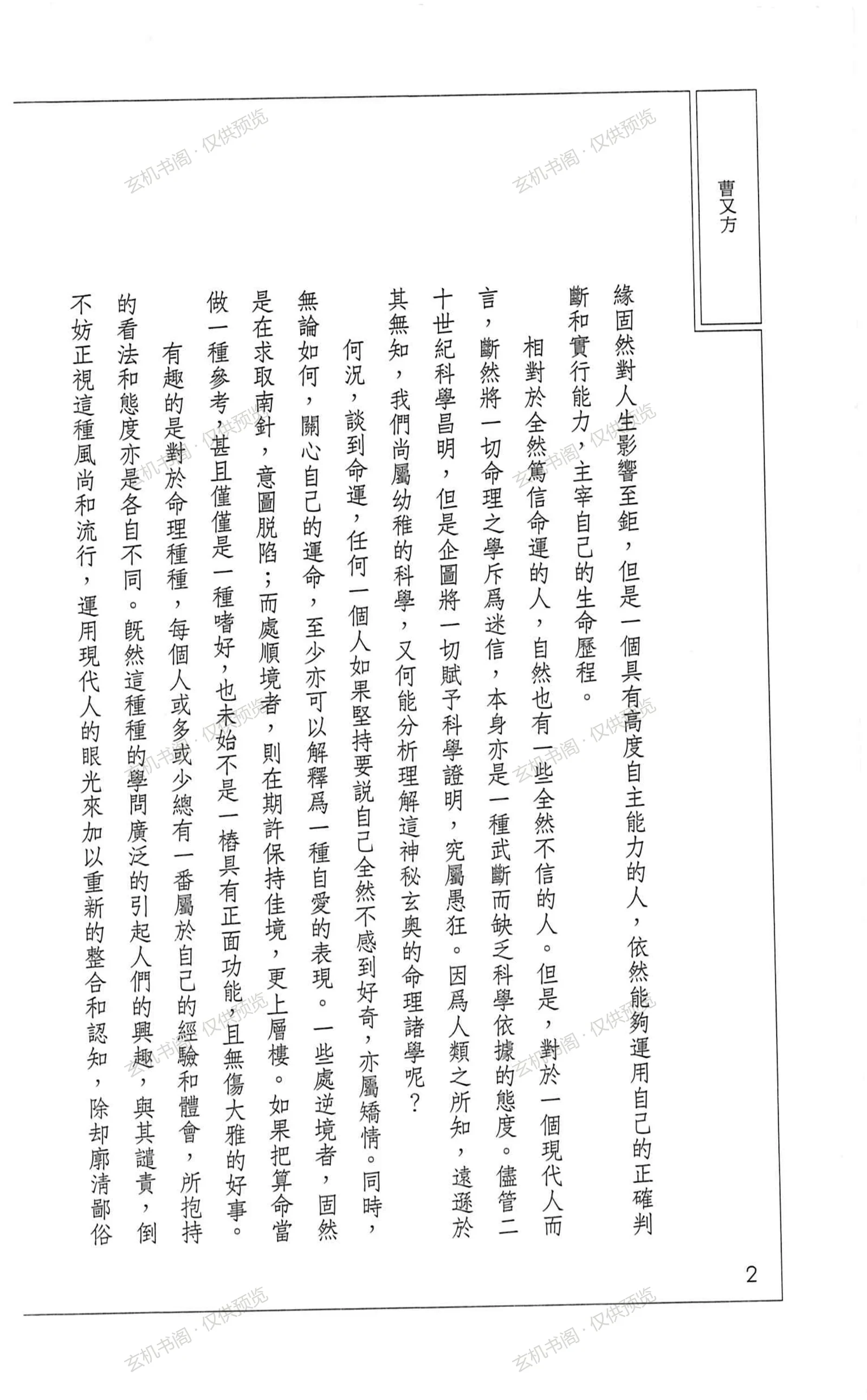
Continued preface: use divination as reference only
Main text: individual essays (not shown in sample)
Key Points
A multi-author anthology of writers, scholars and artists
Preface by Tsao Yu-fang takes a rational stance
Explains why fortune-telling persists in modern society
Treats destiny studies as reference, not determinism
No technical charting methods appear in the sampled pages