Reading guide
Content guideOverview
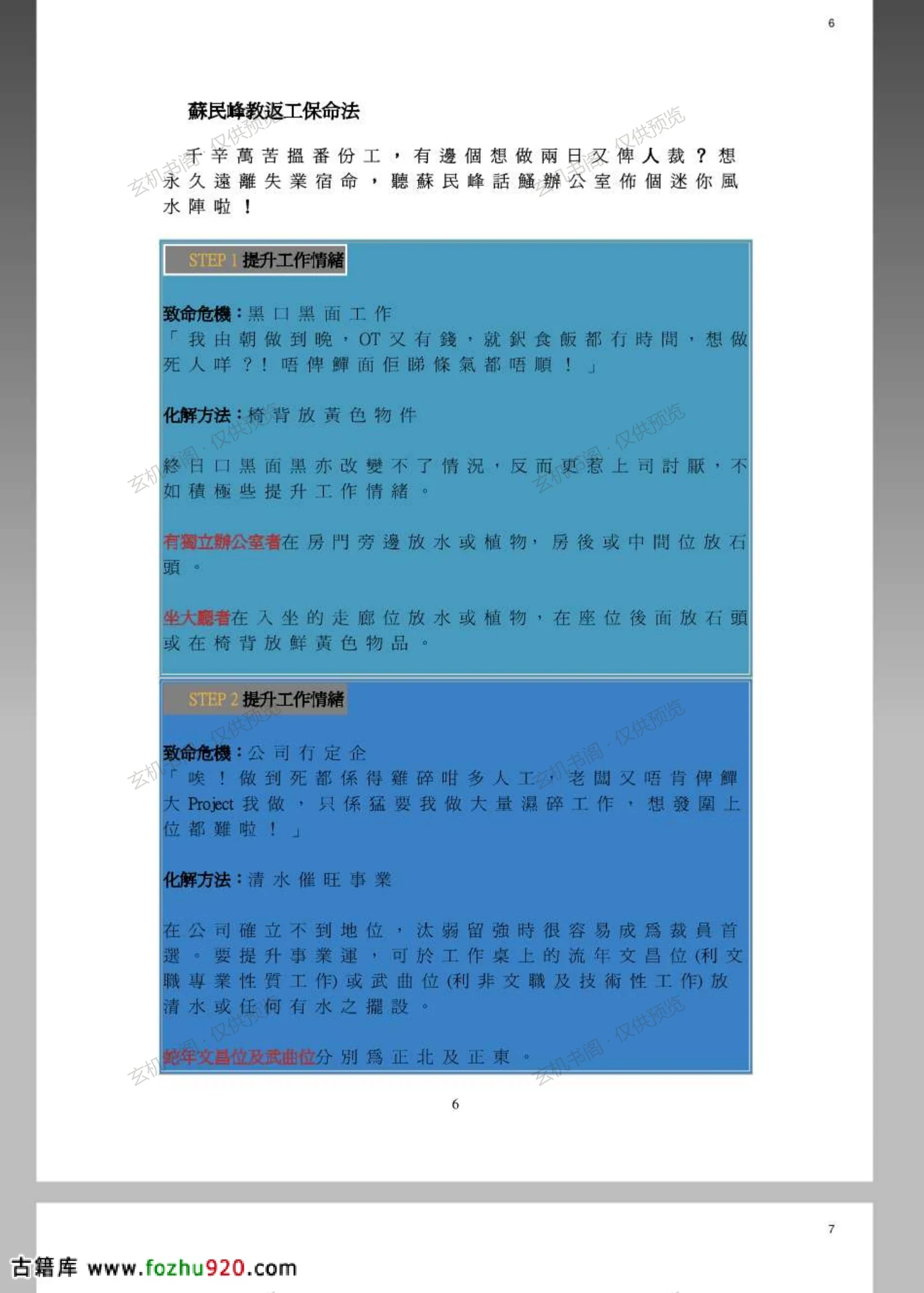
This book is a collection of casual essays on feng shui and fate by Su Min-feng. The opening pages give a year-by-year account of his career, from amateur face reading in 1983 and formal classes in 1986 to feng shui surveys across Tibet, Europe, the Americas and Southeast Asia. The main text first discusses feng shui, criticizing superstitious and hearsay-driven claims spread by the Hong Kong media. Su argues that sharp-corner clashes only matter under certain conditions, that black representing water is merely a five-element symbol, and that feng shui only assists one's fate, which ultimately rests on destiny—hence the saying 'first fate, second luck, third feng shui.' Reference charts follow: bagua with directions and colours, the ten heavenly stems, twelve earthly branches, the measuring ruler, five-element generation and overcoming, the nine-star diagram, and the three-yuan nine-period chronology. The book closes with 'Su Min-feng's office survival methods,' offering simple remedies such as placing yellow objects, water, plants or stones to counter workplace troubles. Illustrated and written in accessible language, it suits beginners curious about feng shui, though it remains a miscellany of experience rather than a systematic textbook.
Contents
Biography and chronology of Su Min-feng
Feng shui concepts: clearing up superstition and hearsay
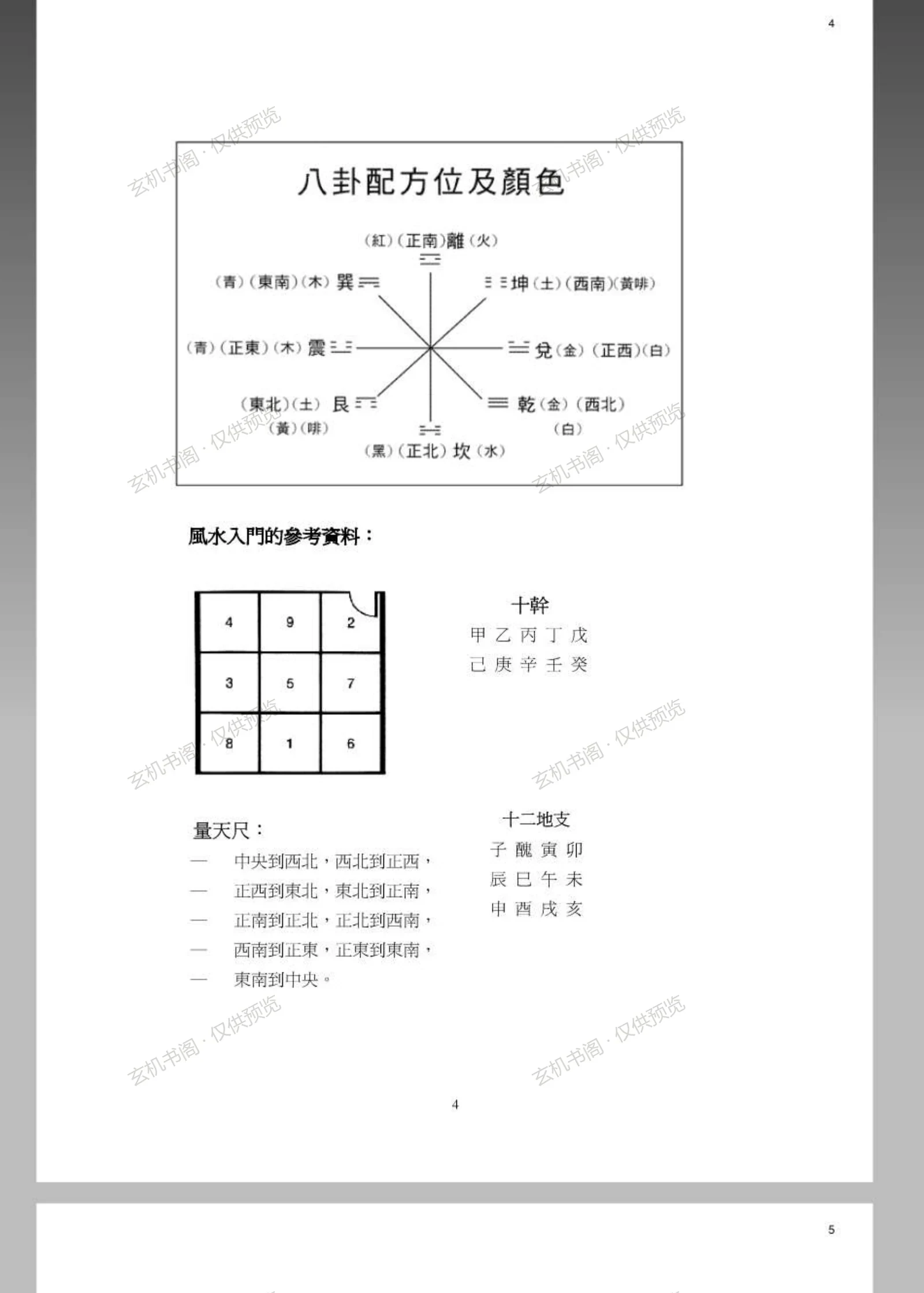
Bagua with directions and colours
Ten stems, twelve branches and the measuring ruler
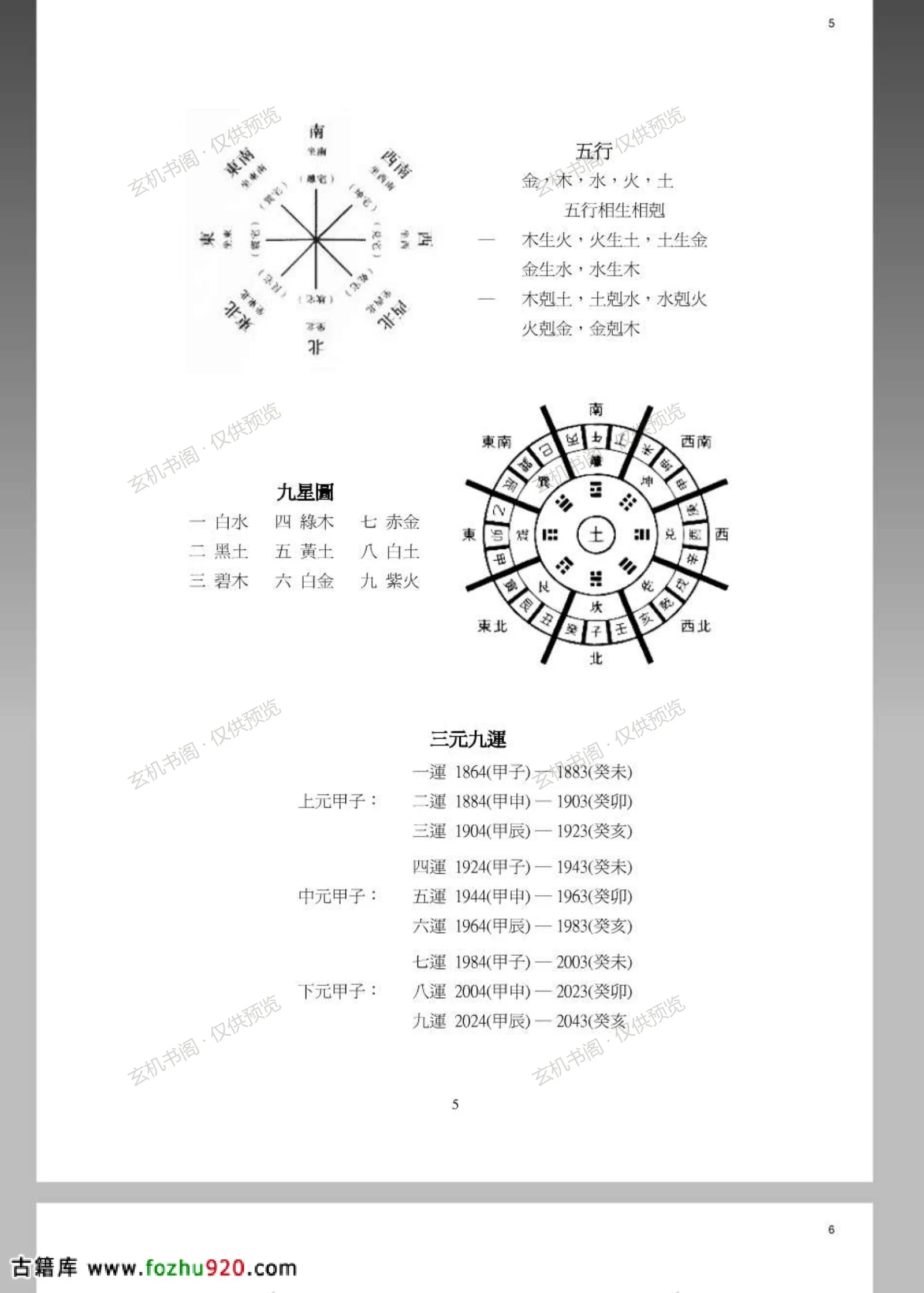
Five-element generation and overcoming, nine-star diagram
Three-yuan nine-period chronology
Office survival methods: feng shui remedies at work
Key Points
Feng shui only assists; fate rests on 'first fate, second luck, third feng shui'
Claims like sharp-corner clashes or black-as-water need conditional understanding
Bagua, five elements, nine stars and three-yuan nine periods form the basic framework
Simple office remedies include water, plants, stones and yellow objects
The author stresses practical verification over armchair theory