Reading guide
Content guideOverview
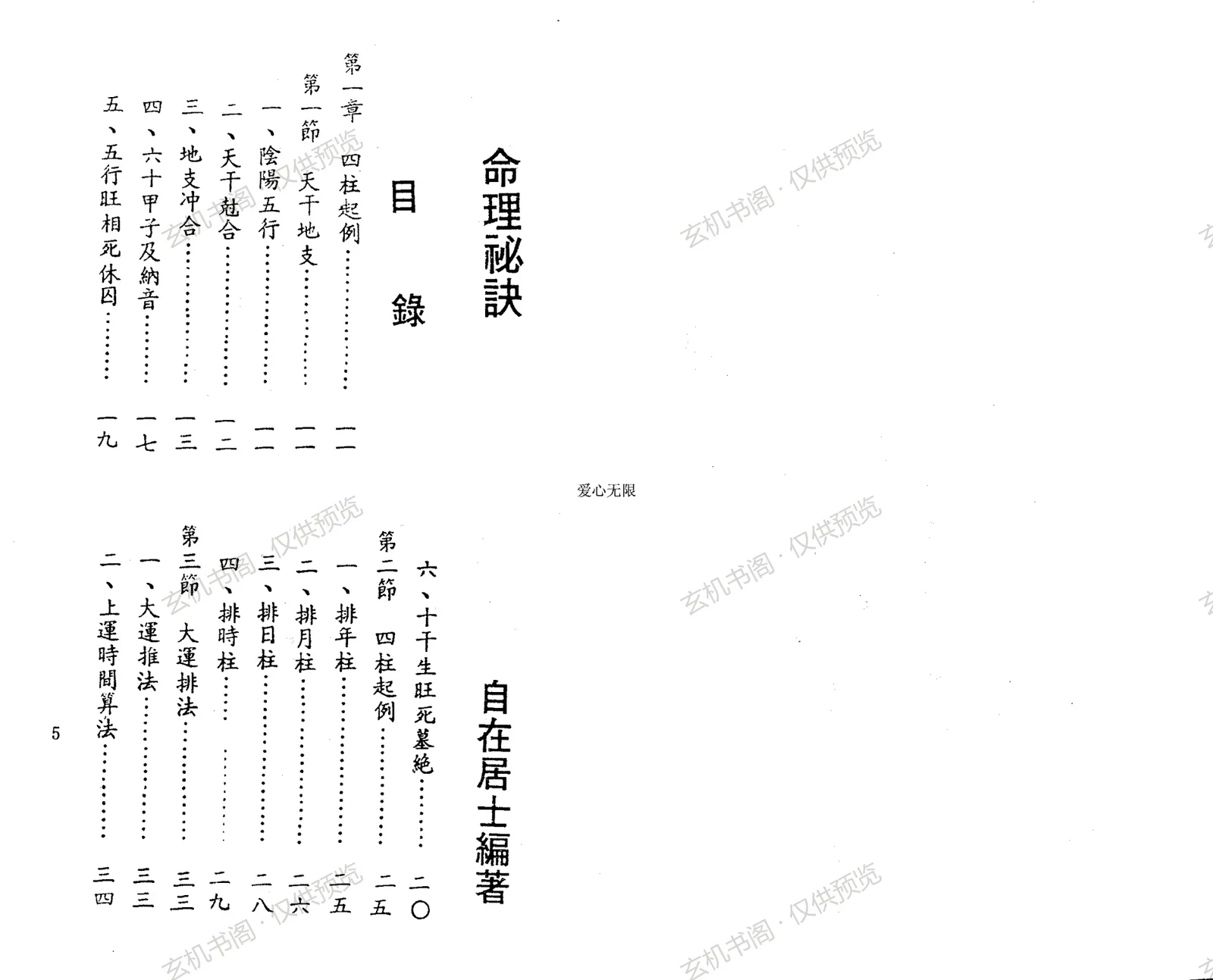
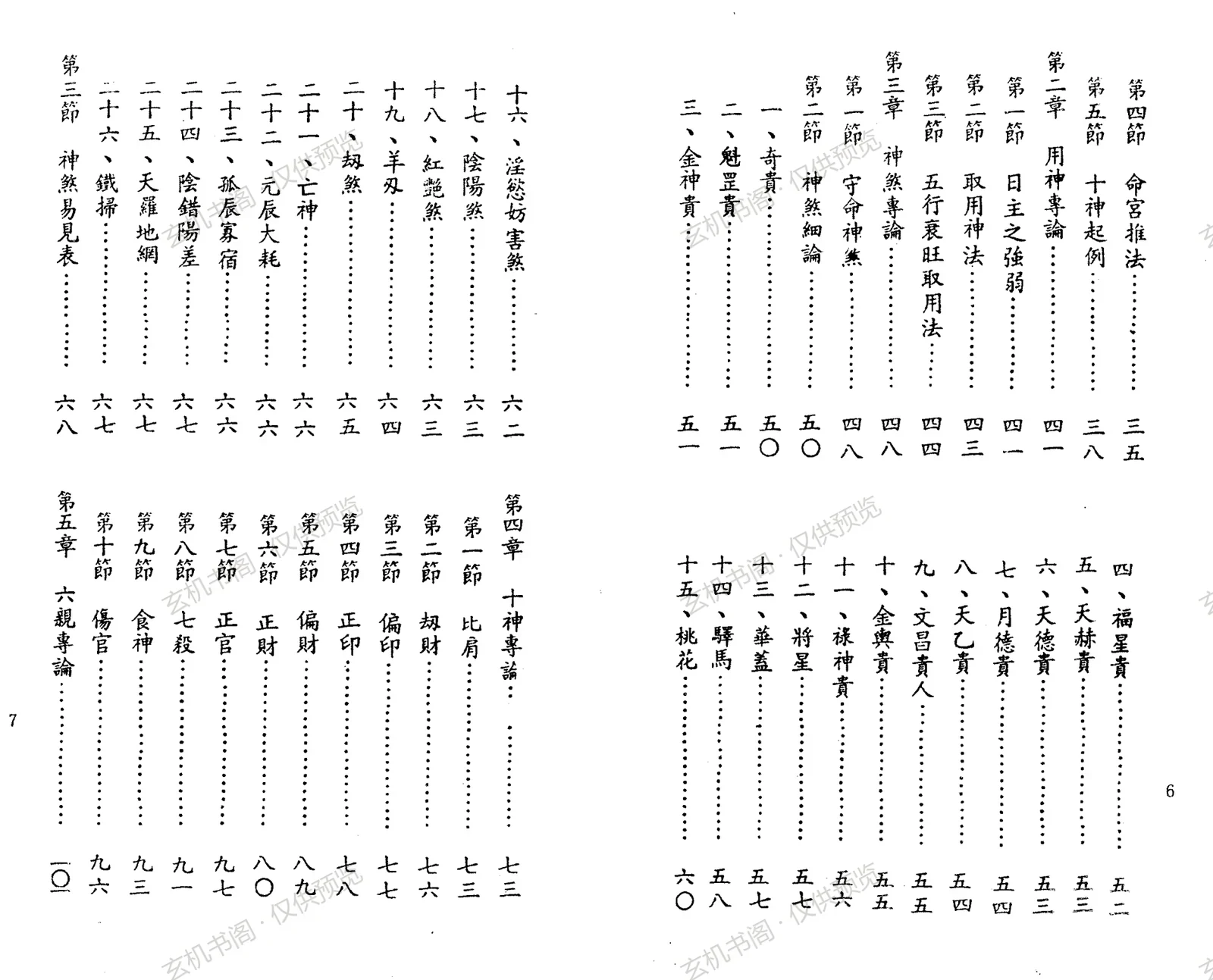
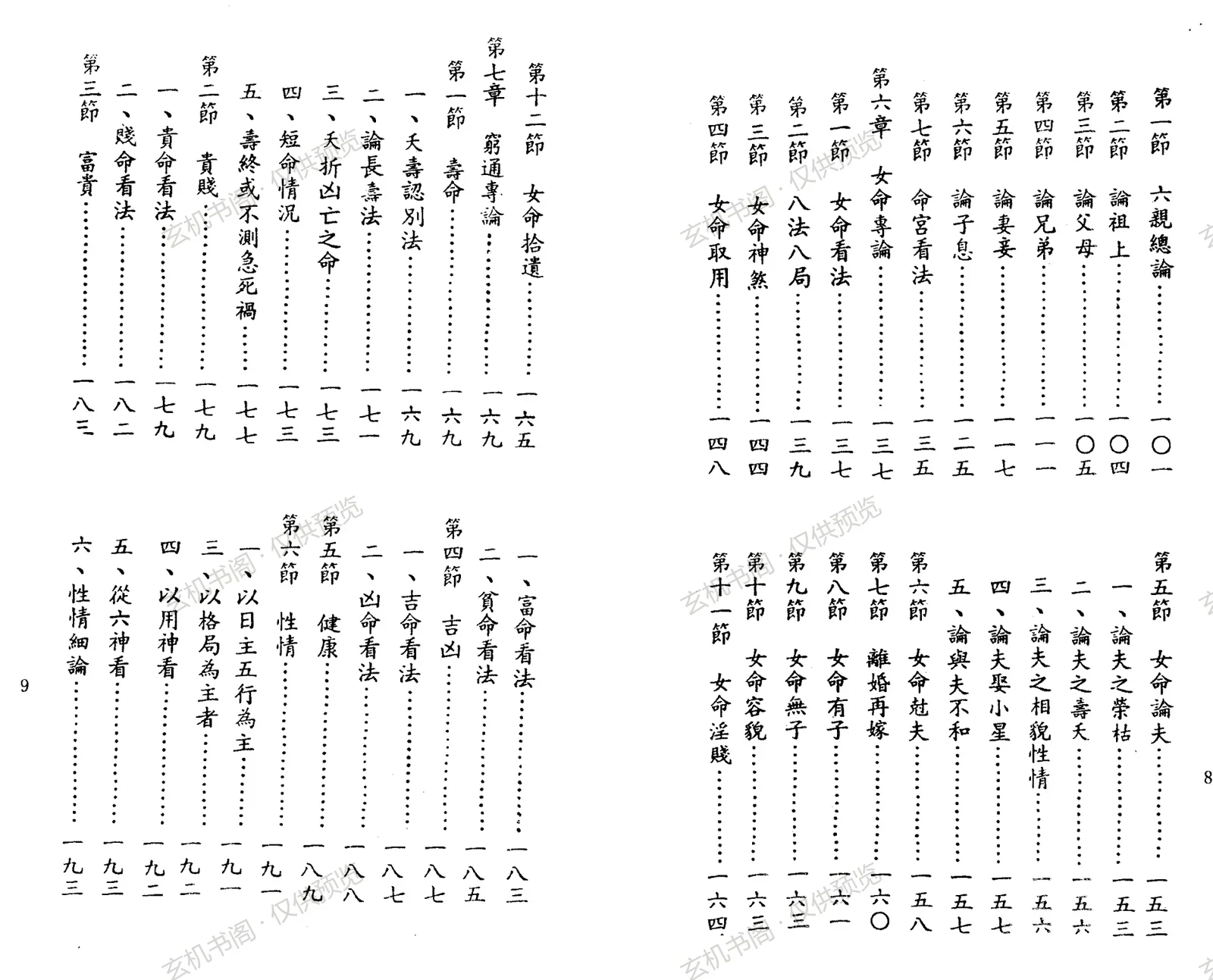
Compiled by Zizai Jushi and issued in a 'Feng Shui Series' (no. 68), this book is subtitled 'formulas and mnemonics of fate calculation, remarkably effective once mastered.' The preface explains that the material began as the author's personal pocket notebook and was published at friends' urging, reaching a fourth edition. The structure follows the Four Pillars (bazi) framework. Chapter 1 covers the fundamentals: yin-yang and the five phases, heavenly stems and earthly branches, their clashes and combinations, the sixty-cycle nayin, and the waxing and waning states of the five phases. Chapter 2 explains chart casting: laying out the year, month, day and hour pillars, plus the method for arranging major luck cycles and calculating their starting time. Chapter 3 turns to the 'useful god,' weighing the strength of the day master and the methods for selecting a useful god by season and phase, followed by an extensive catalogue of auspicious and inauspicious spirits (shensha). Chapter 4 treats the Ten Gods one by one—peer, robber, indirect and direct resource, indirect and direct wealth, direct officer, seven killings, eating god and wounding officer. Chapter 5 discusses the six relations: ancestors, parents, siblings, spouse, children, and the life palace. Chapters 6 to 12 focus on women's charts, including methods of reading, the eight methods and eight configurations, shensha, selection of the useful god, the six relations, judgments on the husband, wealth and poverty, longevity and misfortune, temperament and health. The style is terse and formulaic, heavy on ready-made judgments and light on theoretical exposition—better suited to readers who already know how to cast a chart and want a reference to check against.
Contents
Ch. 1: Foundations—yin-yang, five phases, stems, branches, nayin
Ch. 2: Casting the chart—year, month, day, hour pillars and luck cycles
Ch. 3: The useful god and a detailed catalogue of shensha
Ch. 4: The Ten Gods—peers, resources, wealth, officers, output
Ch. 5: The six relations and the life palace
Ch. 6–10: Women's charts, eight methods, shensha and selection
Ch. 11–12: Husband, wealth and rank, longevity and temperament
Key Points
Mnemonic formulas walk through the whole chart-casting sequence
Dense lists of auspicious and inauspicious spirits with usage notes
Ten Gods treated one by one and tied to family relations
A large section on women's charts, including husband and children
The preface notes it is a cleaned-up personal notebook, not a course