Reading guide
Content guideOverview
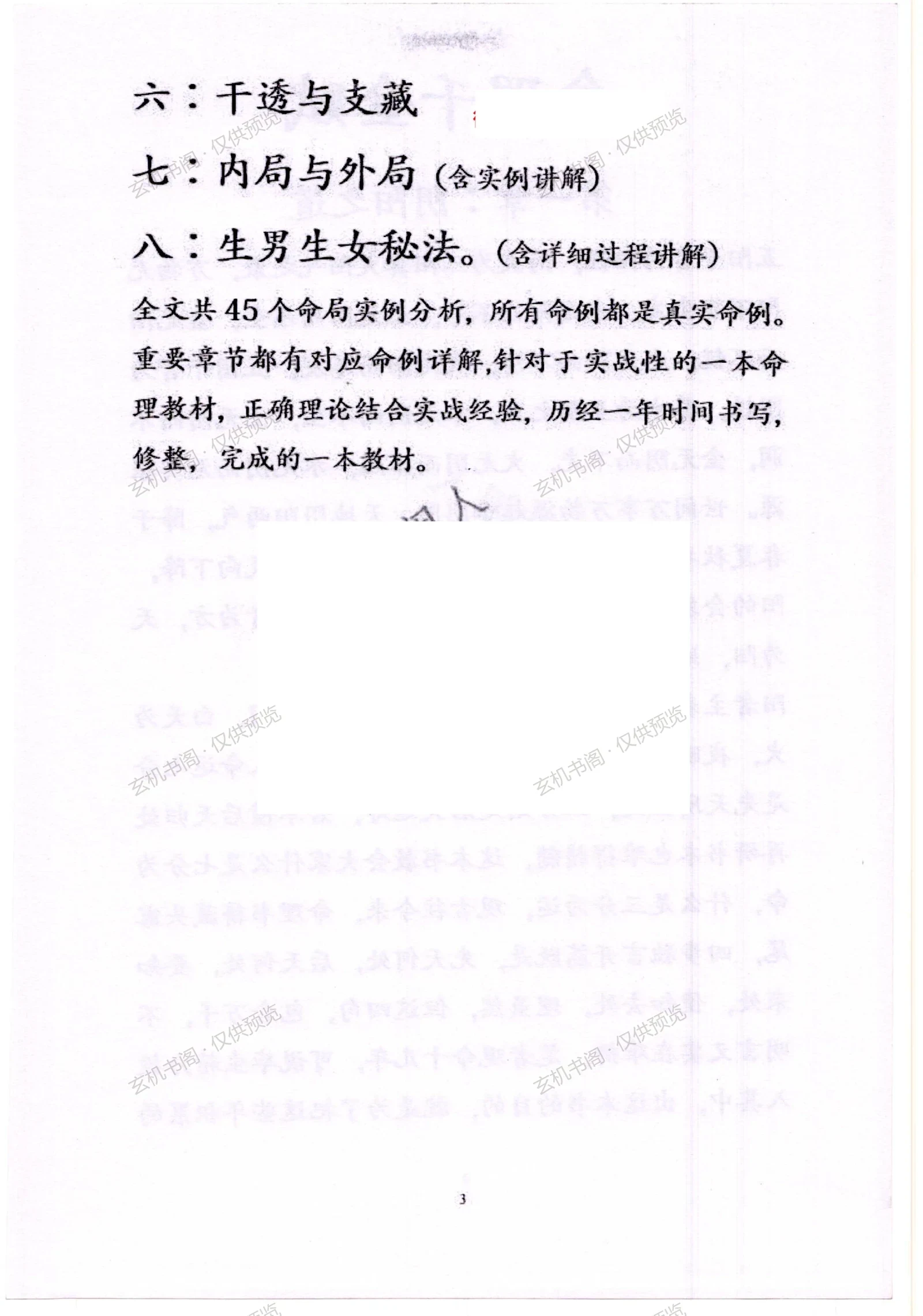
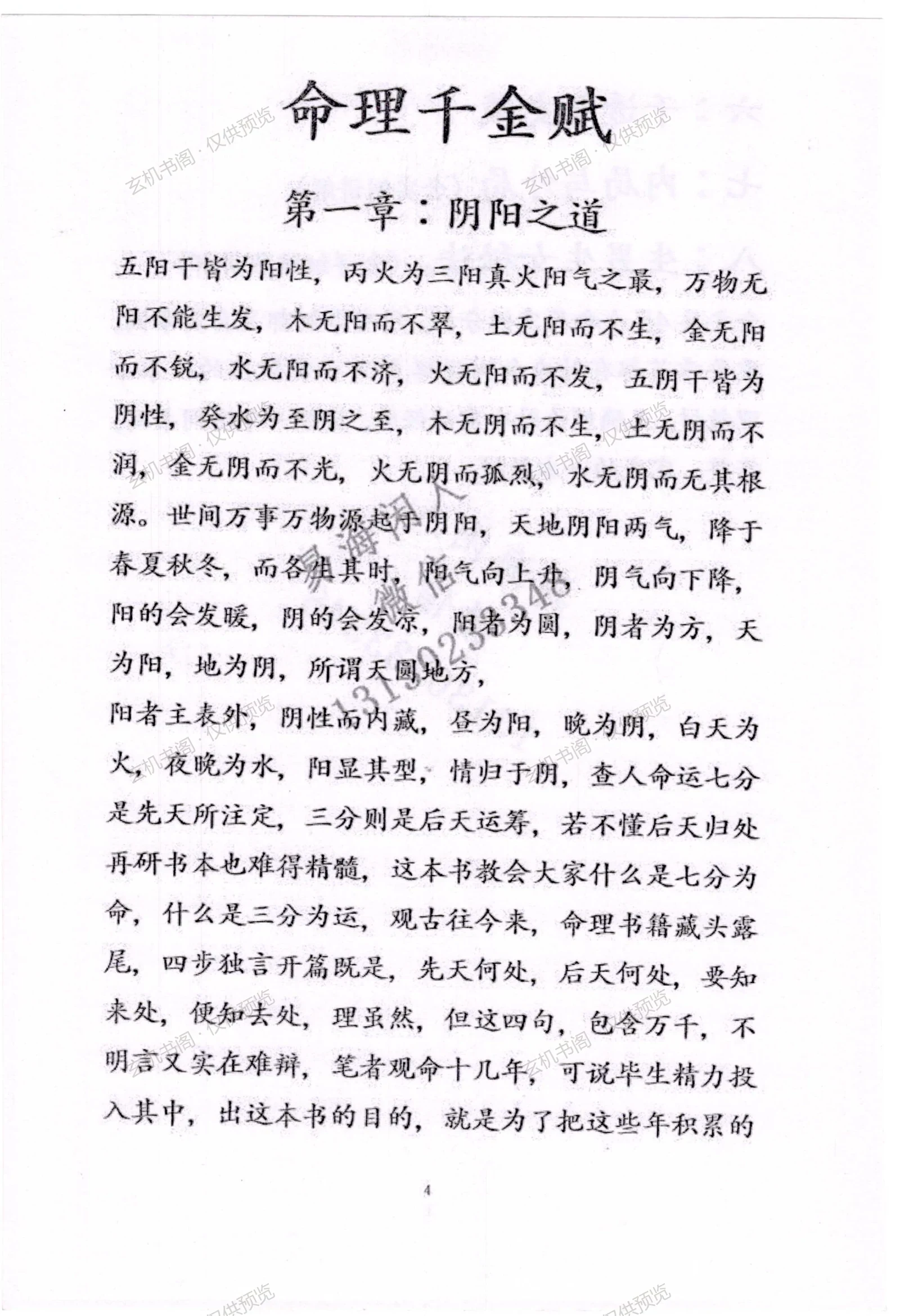
Attributed to Yi Hai Xian Ren, this book centers on BaZi (Four Pillars) fate analysis. It opens with the way of yin and yang, explaining how the five yang stems and five yin stems relate to the growth of all things, and frames destiny as seven parts inborn and three parts cultivated. It then works through the five elements: regional divisions and element-associated cities in China, followed by detailed classification of water, fire, metal, earth and wood industries with combined-industry cases. Chapter four argues that the inborn chart is the body and postnatal conditions the application, examining place, family and career as influences. Chapter five gives a systematic treatment of the Ten Gods in the four pillars. Later chapters cover a secret marriage-matching method, four principles of choosing the useful god (support-and-suppress, bridging, disease-and-remedy, seasonal adjustment), and layers of intent involving primary, protective, unfavorable and hostile gods, plus topics such as stem exposure, hidden branches, inner and outer structure, and traditional sayings about auspicious birthdays. The author states the book contains forty-five real case charts with explanations in key chapters, making it a teaching text that pairs theory with practice.
Contents
Ch.1 The way of yin and yang
Ch.2 Five regional divisions and element cities
Ch.3 Five-element industries and combinations
Ch.4 Inborn as body, postnatal as application
Ch.5 Ten Gods as images in the four pillars
Ch.6 Secret BaZi marriage matching
Ch.7 Four principles for the useful god
Ch.8 Intent, levels and related methods
Key Points
Yin-yang and the five elements frame the whole system
Industries are classified by element and combined use
Place, family and career shape the postnatal chart
The Ten Gods are explained group by group with images
Useful-god selection covers support, bridging, remedy and season
Forty-five real charts illustrate key chapters