Reading guide
Content guideOverview
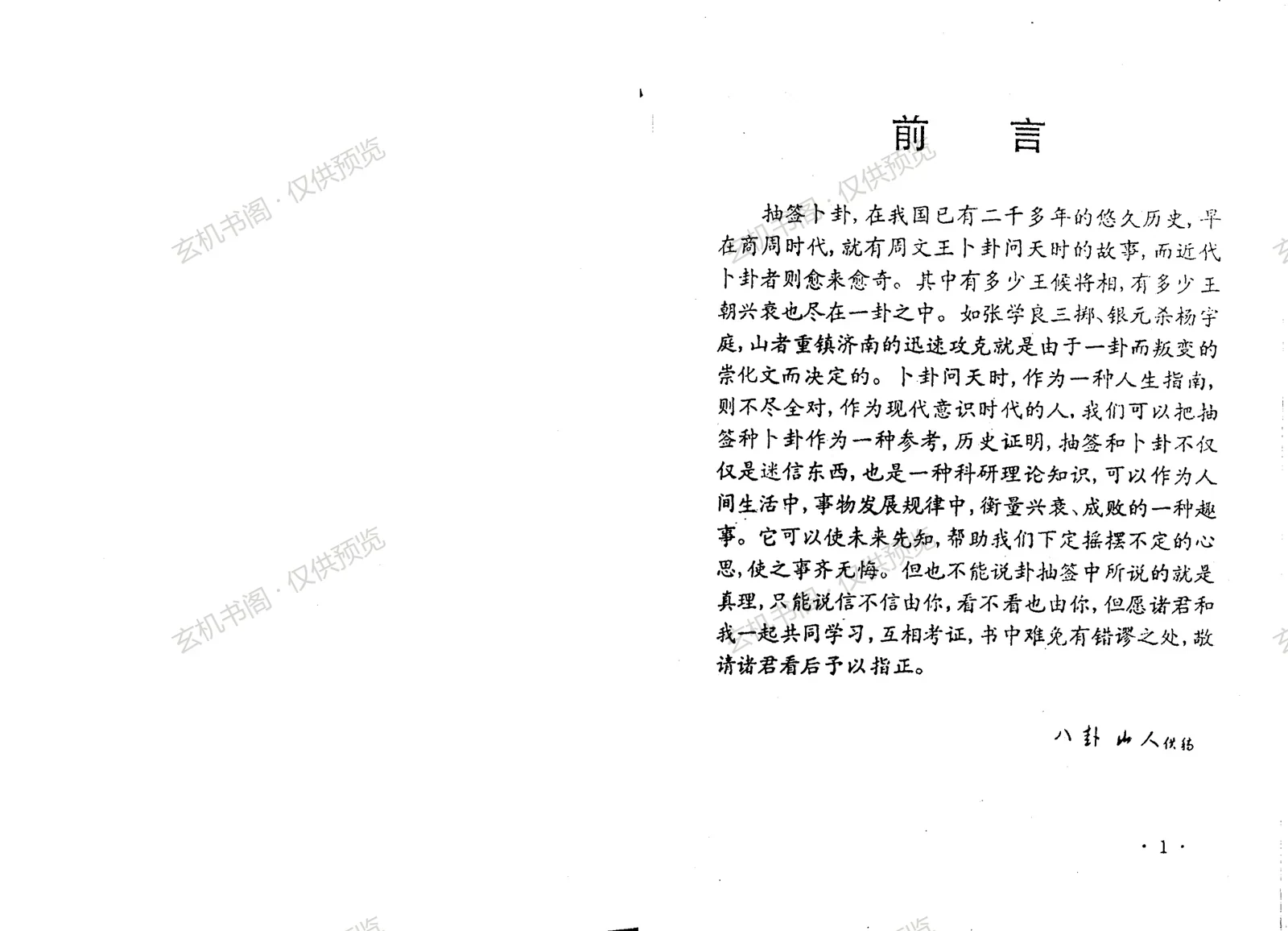
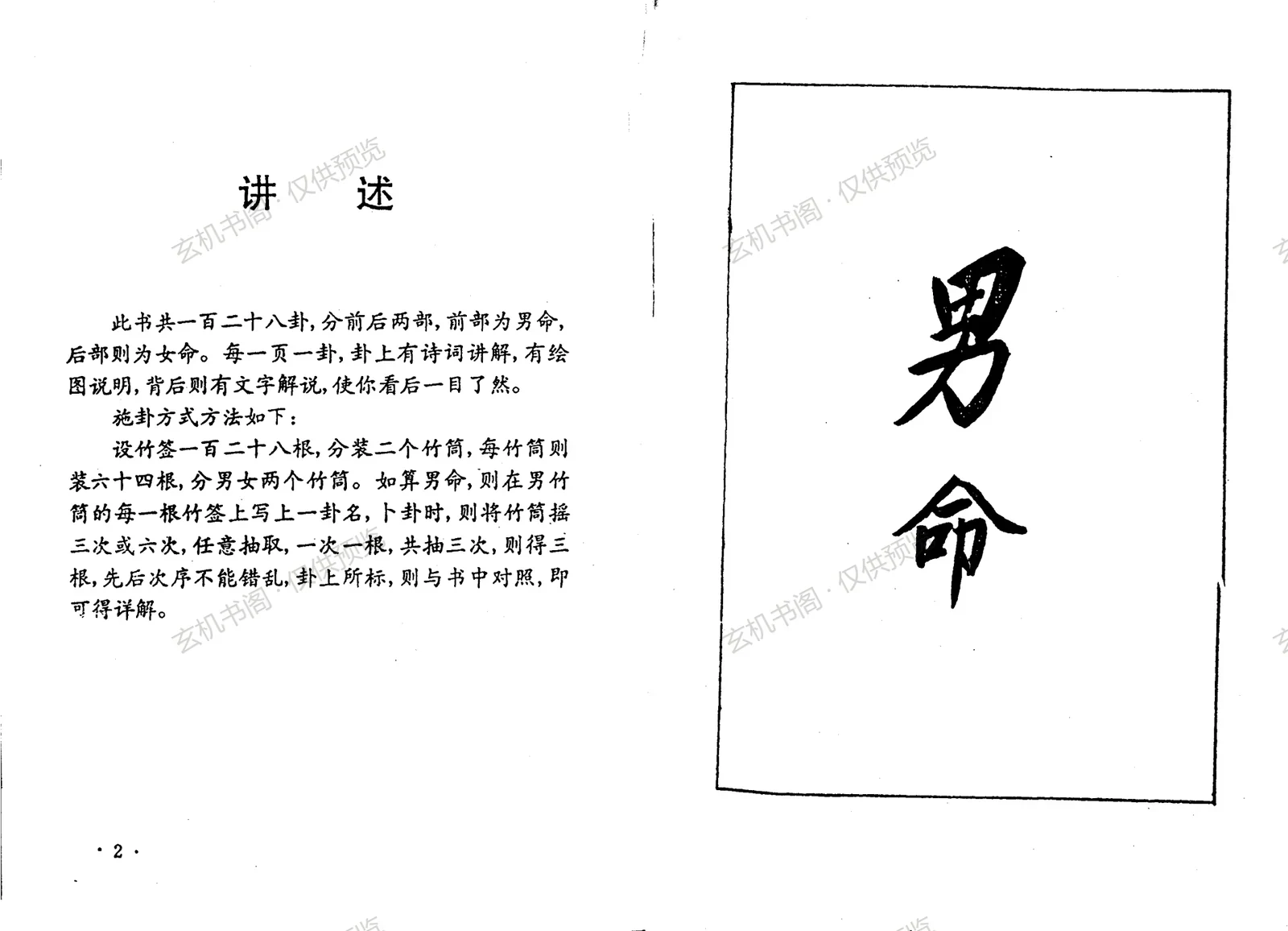
The cover names King Wen of Zhou as author and Shao Kangjie as commentator, published by Zhongzhou Ancient Books Press, with the preface signed by a certain 'Bagua Shanren'. The preface recounts legends of divination from the Shang-Zhou era onward and frames stick-drawing as a practical reference for life decisions rather than pure superstition. The introductory section sets out the structure: 128 hexagrams in all, the first half for male destinies and the second for female destinies, one hexagram per page with a verse, a line illustration and a prose explanation. The method uses 128 bamboo sticks divided into two tubes of 64, one for men and one for women; the tube is shaken three or six times, three sticks are drawn one at a time, and their order is matched against the book. Sample entries such as 'Qian as Heaven One', 'Qian Two: Wind over Heaven' and 'Qian Three: Mountain over Heaven' show a seven-character verse, a figure drawing and a separate plain-language reading, with luck grades marked as top auspicious, auspicious or middling. The book is a practical, illustrated folk fortune-stick handbook useful for studying popular divination and verse oracle literature.
Contents
Preface: origins and uses of stick divination
Introduction: 128 hexagrams in male and female halves
Drawing method: two tubes of 64 sticks, three draws
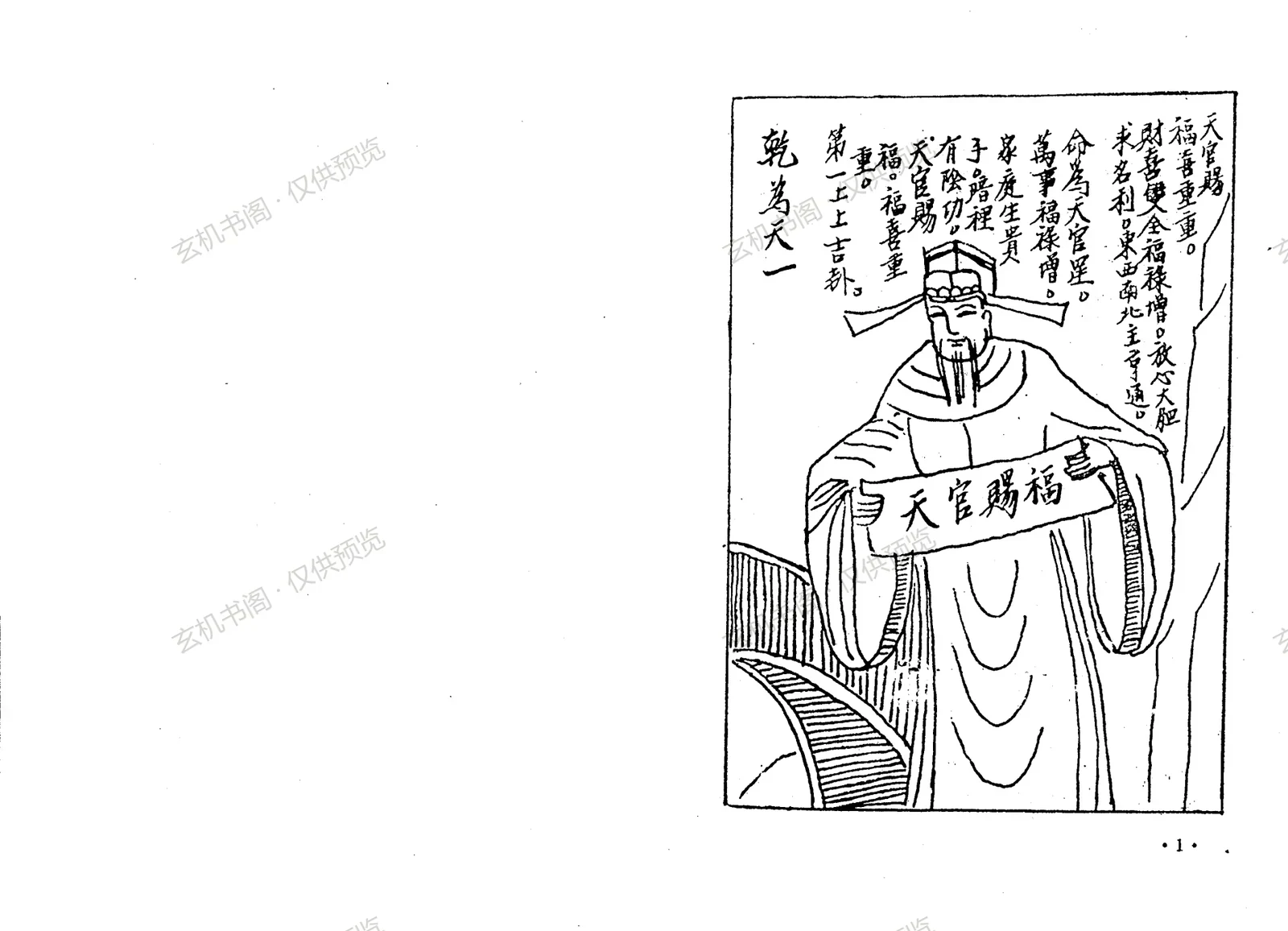
Male section: Qian as Heaven One (Heavenly Official Bestows Blessing)
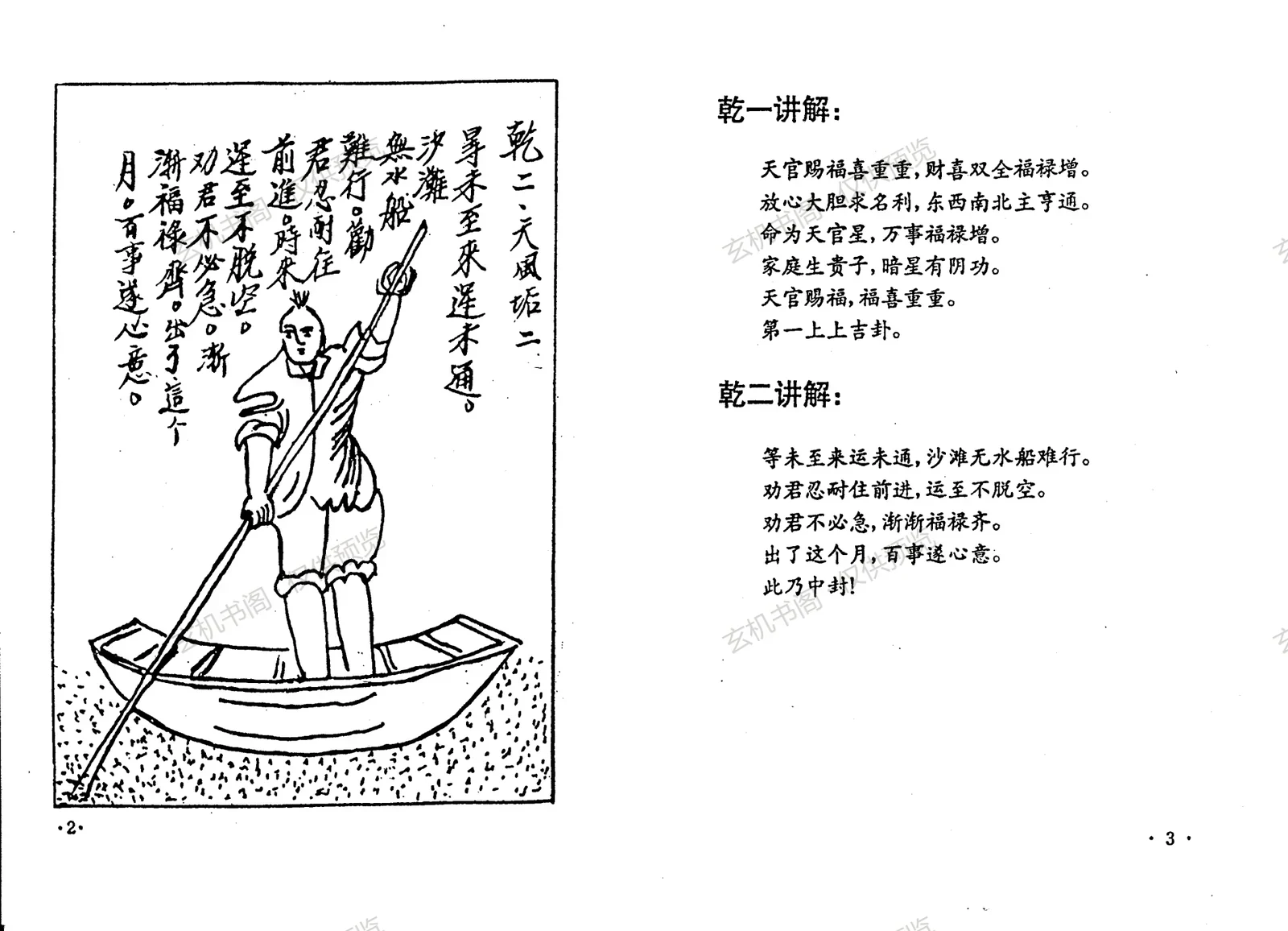
Male section: Qian Two, Wind over Heaven (no water for the boat)
Male section: Qian Three, Mountain over Heaven; Qian Four (bird escapes the cage)
Key Points
128 hexagrams total, 64 for male and 64 for female destinies.
Each entry pairs a verse, a line drawing and a prose explanation.
Three sticks drawn in order from gender-specific tubes form the reading.
Luck grades such as top auspicious, auspicious and middling are noted.
The attributed authors are traditional names attached to a folk compilation.