Reading guide
Content guideOverview
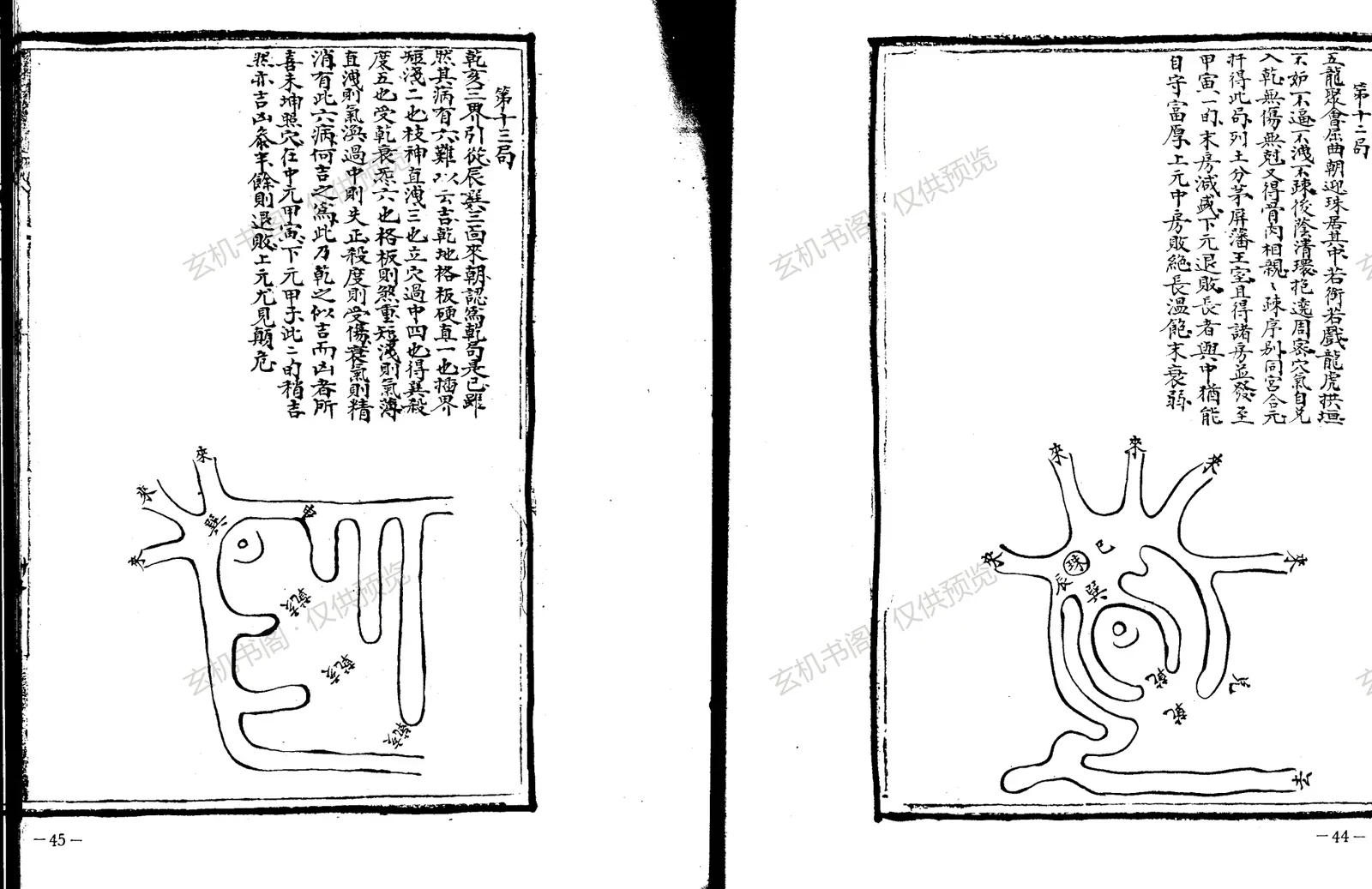
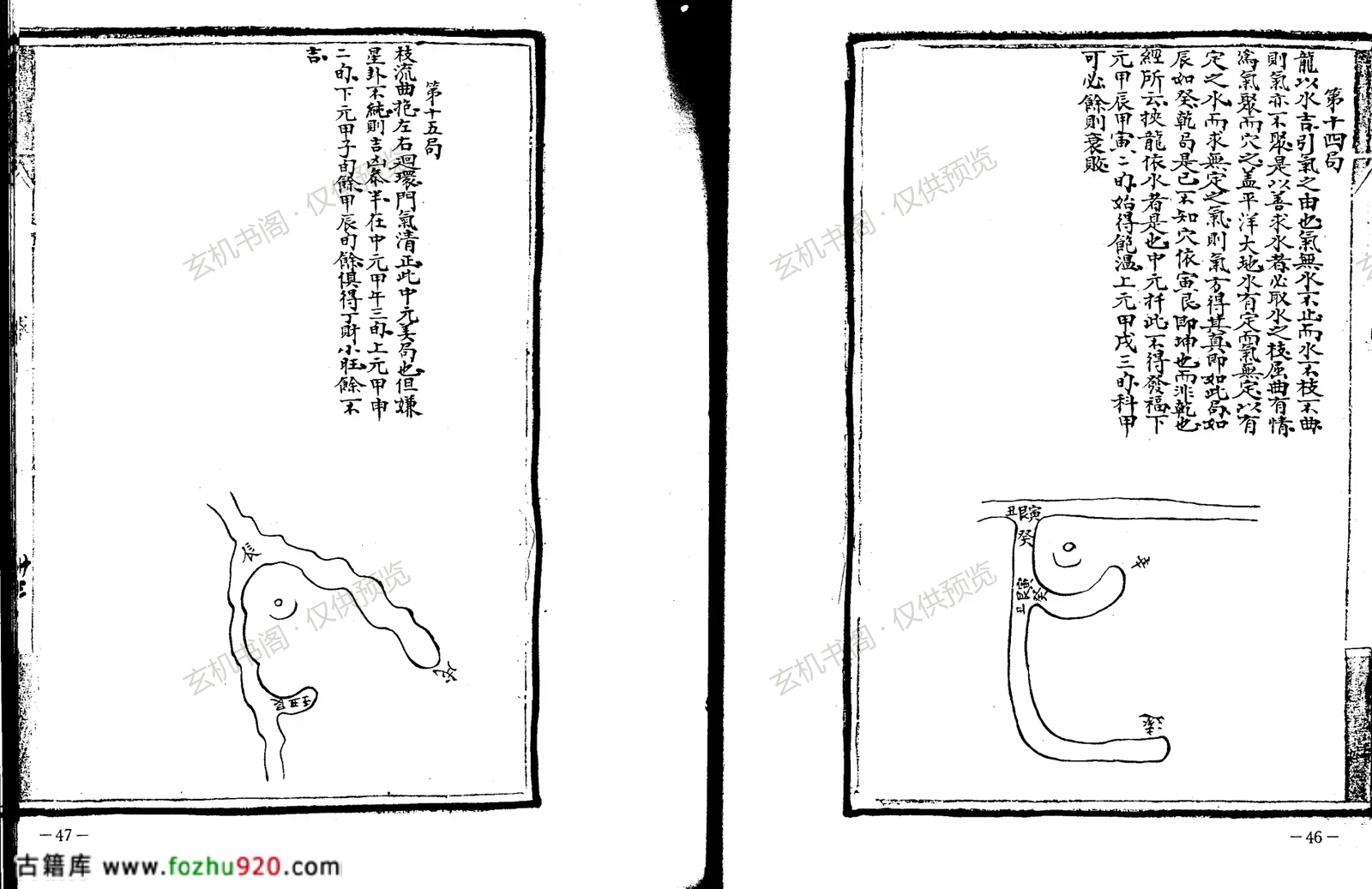
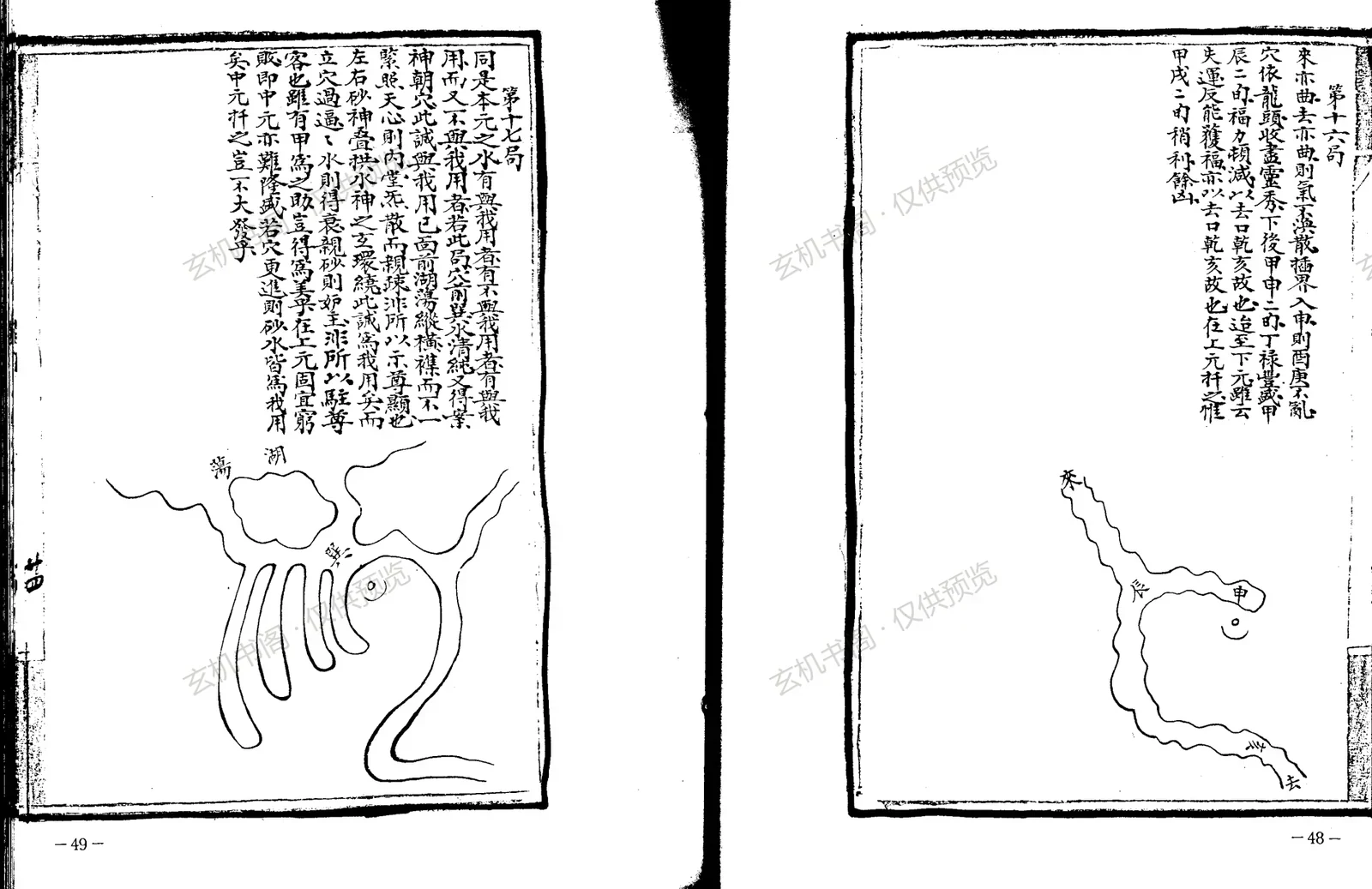
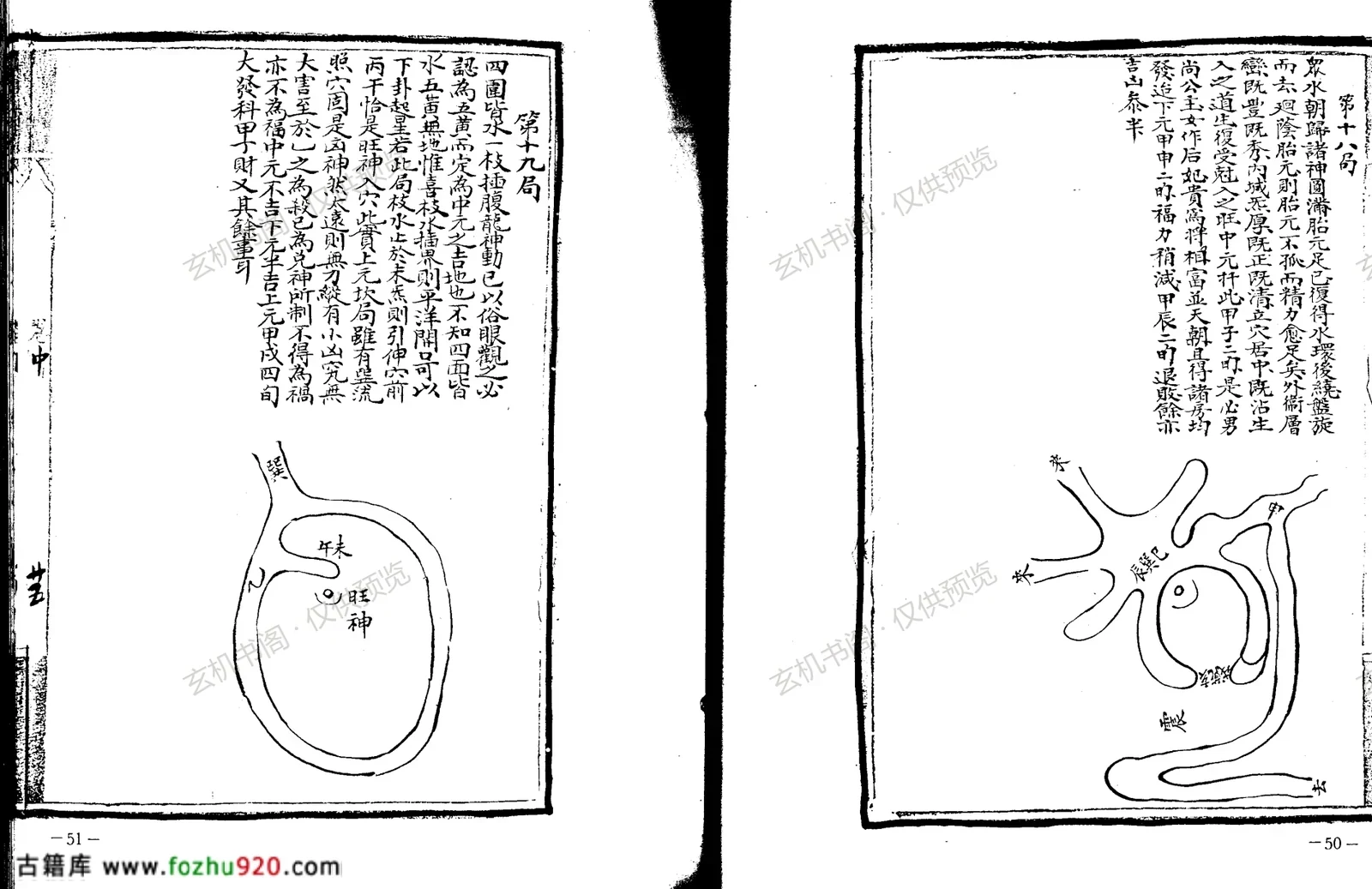
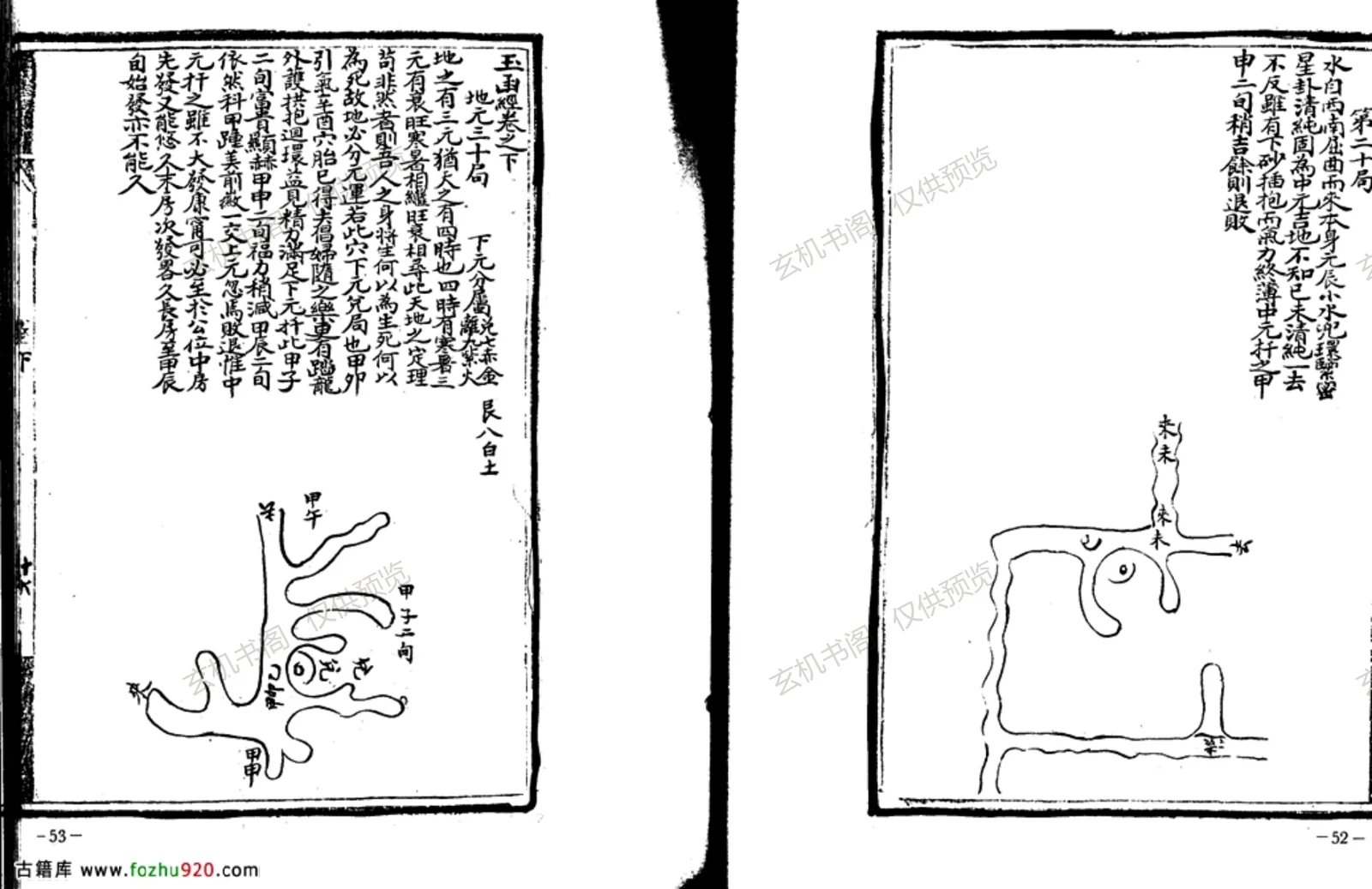
This is the second volume of the Pingyang Dili Yuhan Jing. Its content is arranged in numbered 'layouts' (ju), from the tenth to the twentieth. Each section first names the layout, then uses short verse or prose to explain the relationship between the incoming dragon, incoming and outgoing water, facing direction and the spot of the site, and judges auspiciousness or inauspiciousness, often in connection with the Three Cycles (sanyuan), the sexagenary cycle and the upper, middle and lower periods. The text is accompanied by hand-drawn water-form diagrams marking incoming water, outgoing water, water mouths and site points, showing how flatland sites are determined by water. Terms such as zhongyuan, shangyuan, xiaoyuan, jiazi, jiashen and jiachen recur, indicating a close tie to the Three Cycles and the sixty-year cycle. The book repeatedly stresses that in flatland the water has fixed forms while qi has no fixed form, so one must examine the gathering, scattering and embracing of water before fixing the site. Overall it is a practical text on flatland water methods blending Sanhe and Sanyuan approaches, suitable for readers with some fengshui background; the language is terse and some pages are blurred at the edges, so careful cross-reading with the diagrams is needed.
Contents
Layouts 10–12: incoming situation, dragon forms and water-city coordination
Layouts 13–15: boundary cutting, curved embracing and Sanyuan star placement
Layouts 16–18: water deity, site method and cycle prosperity
Layouts 19–20: surrounding water storage and Sanyuan layout fixing
Diagrams: water forms, incoming/outgoing water and site points
Key Points
Discusses flatland dragon-water coordination layout by layout
Emphasizes incoming water, outgoing water and water mouths to fix the site
Three Cycles and sexagenary cycles run through the judgments
Hand-drawn water diagrams aid reading of flatland terrain