Reading guide
Content guideOverview
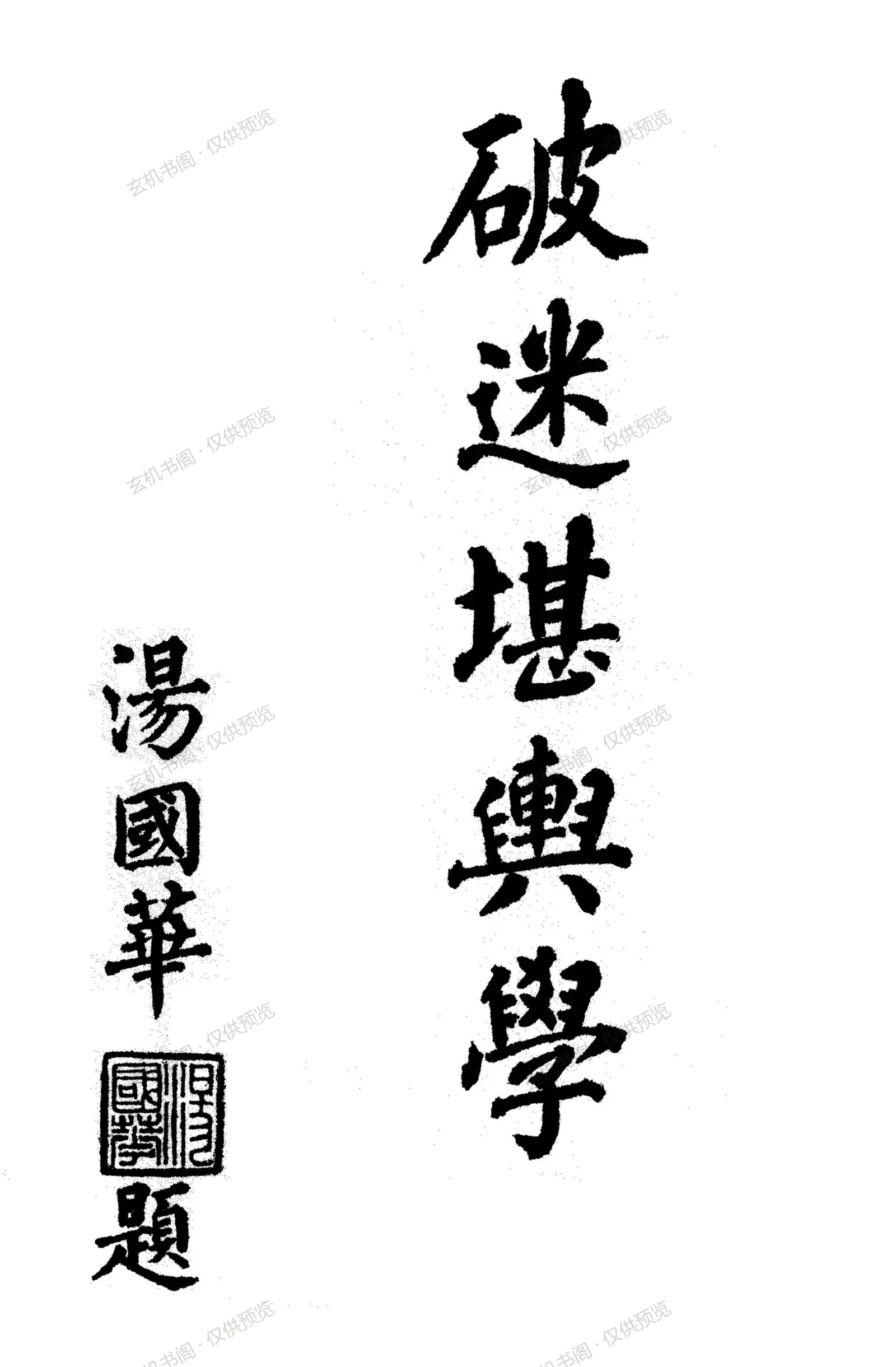
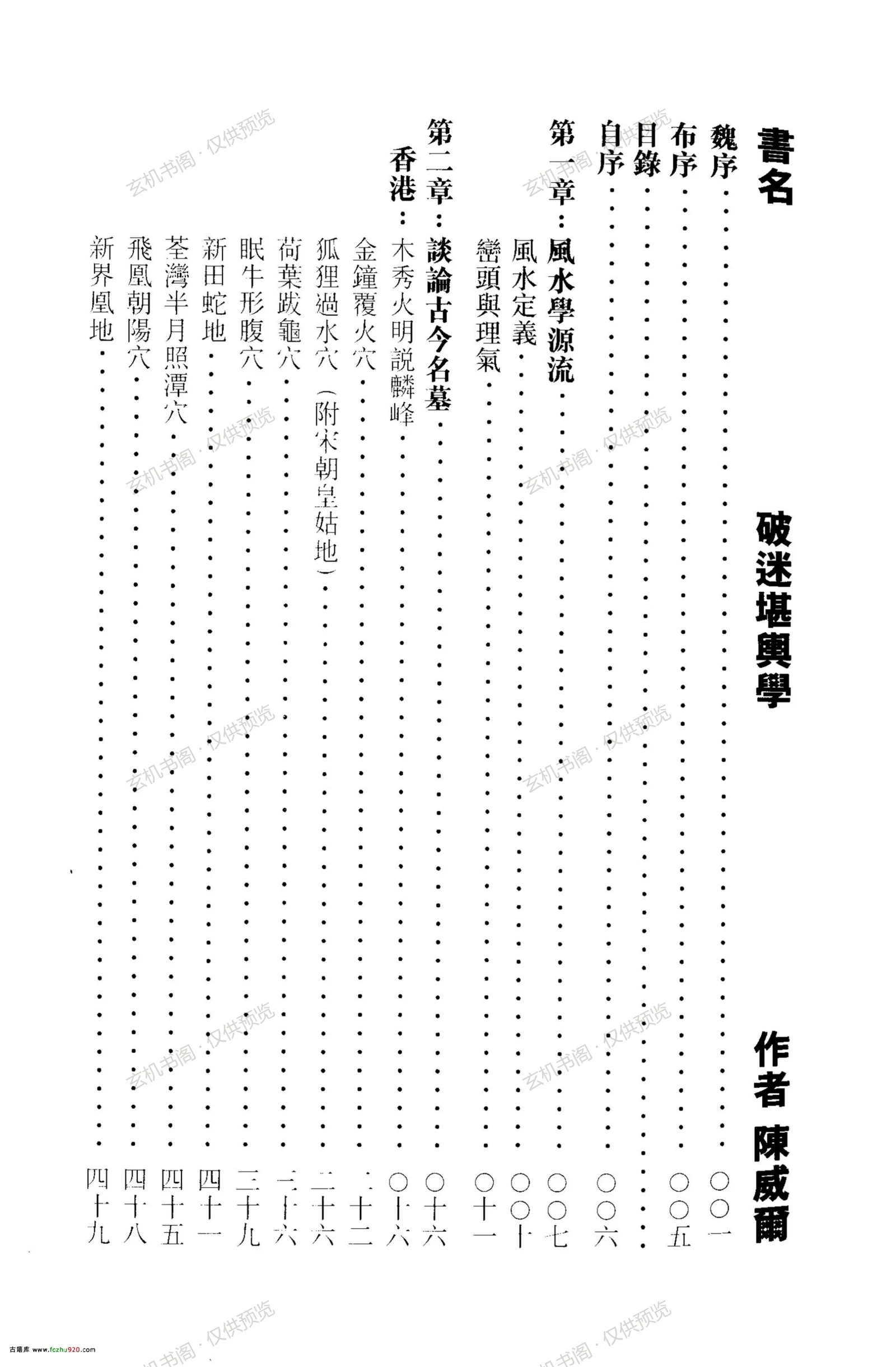
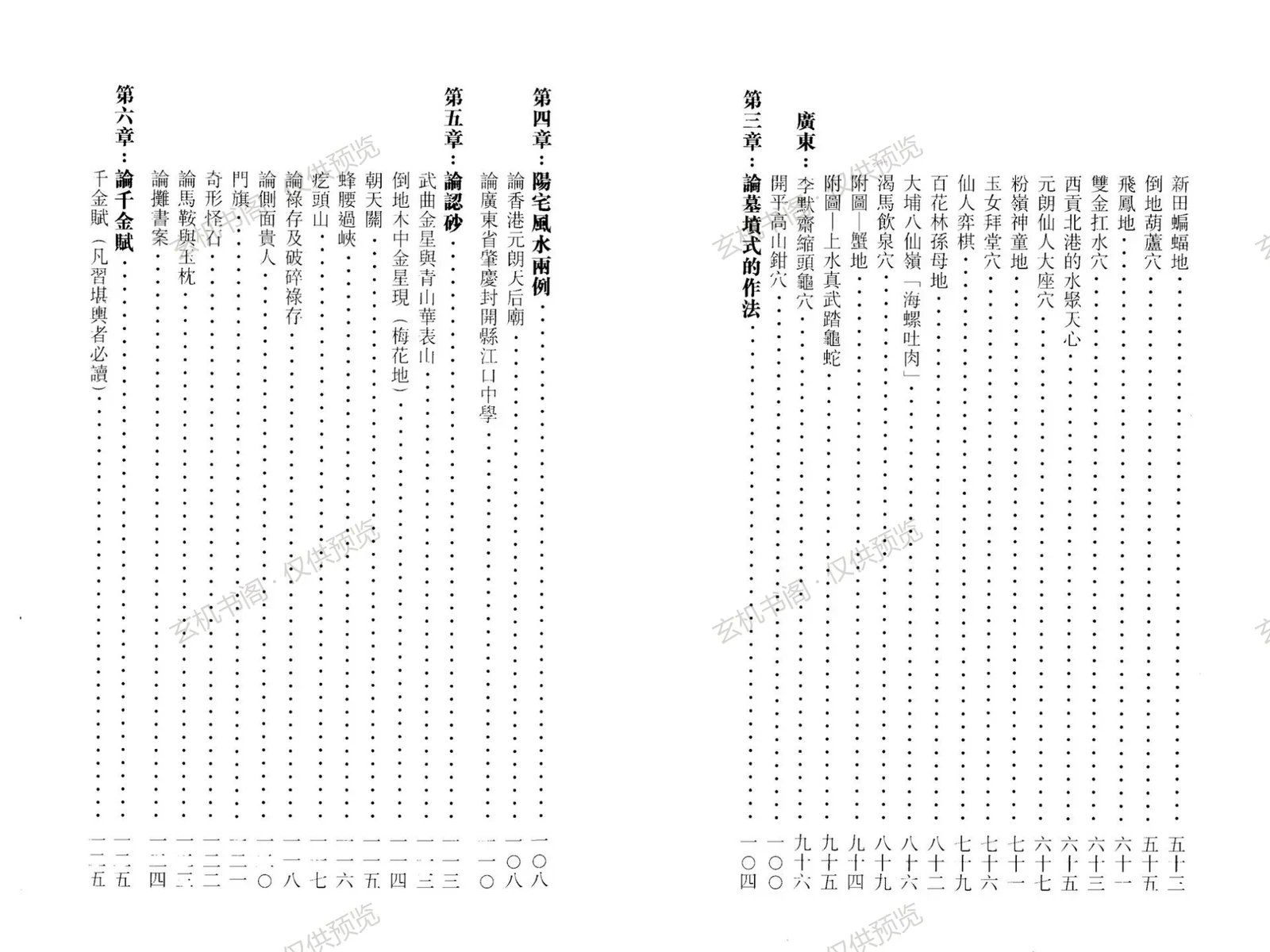
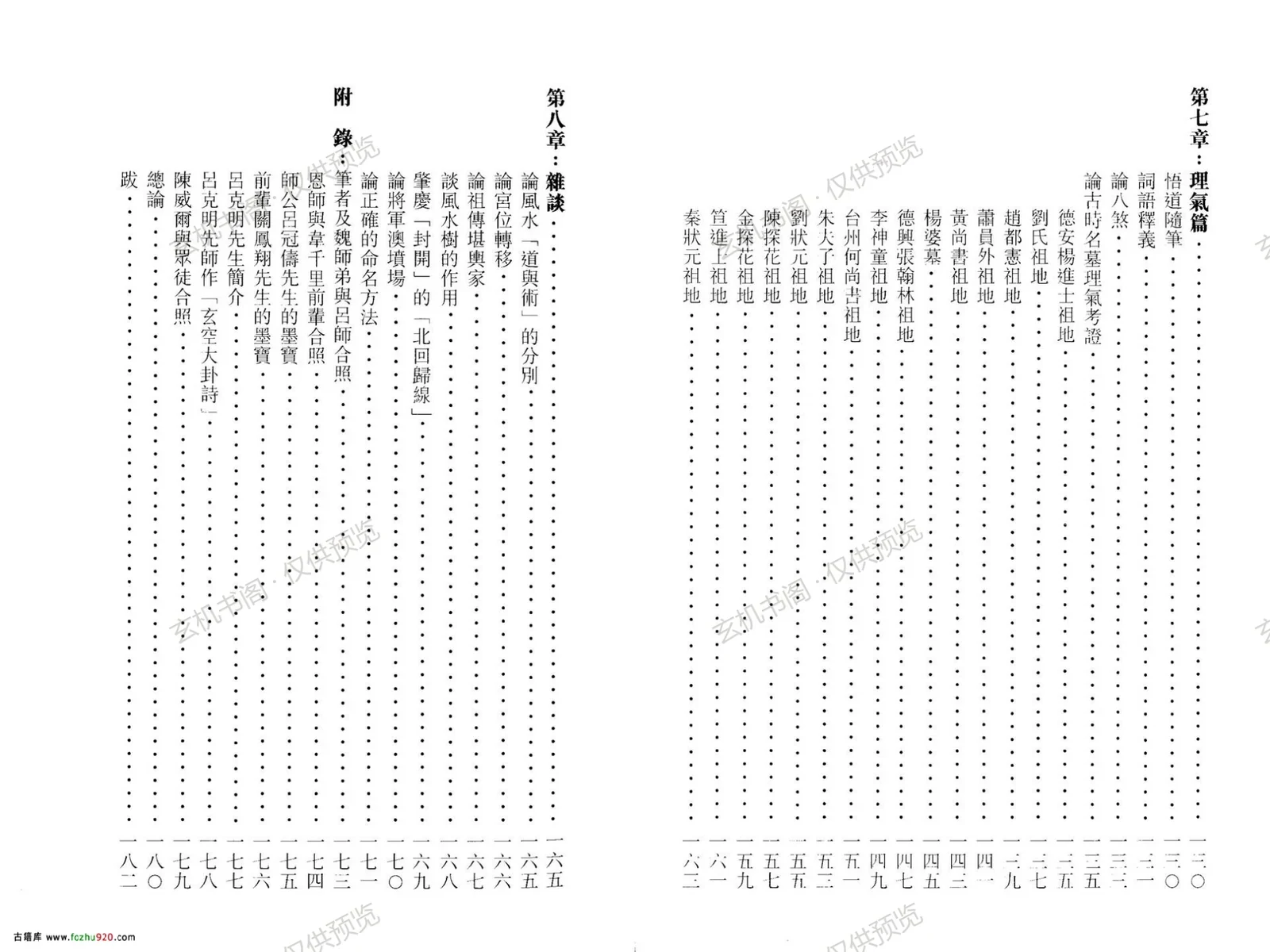
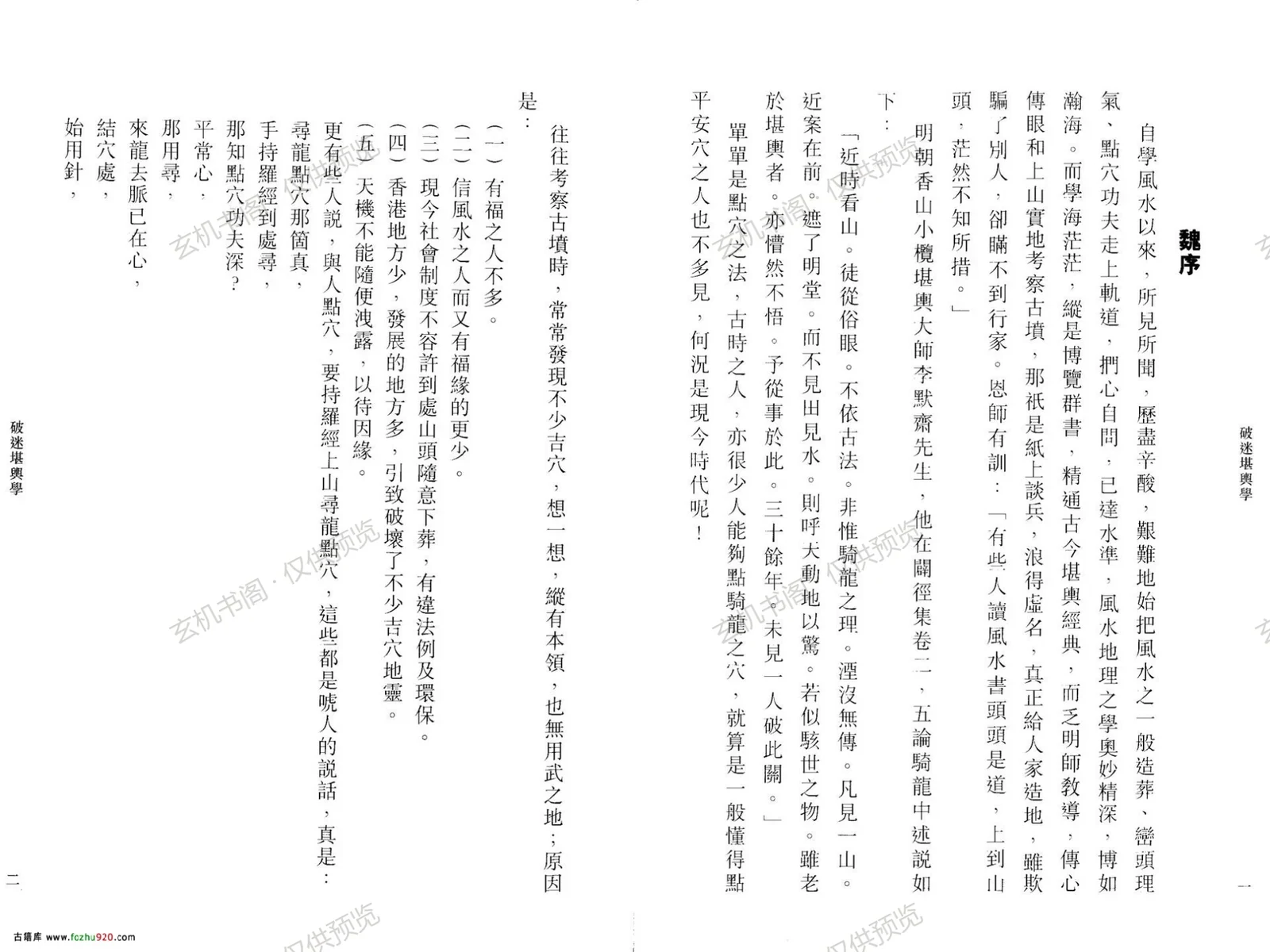
Attributed to Chen Wei'er, with cover calligraphy by Tang Guohua, this book belongs to the Danqing Shushu congshu series. Its table of contents begins with the origins of feng shui, defining terms and discussing the relationship between xingtou (form) and liqi (pattern). It then moves to field studies of famous old graves and sites in Hong Kong, Guangdong, and Taiwan, with named cases such as Muxiu Huoming at Linfeng, the Golden Bell covering fire, the fox crossing water, the sleeping ox, the snake at Xintian, the half-moon reflecting on a pool at Tsuen Wan, and the flying phoenix facing the sun. Later chapters cover tomb construction methods, examples of yangzhai (dwelling) feng shui, the recognition of sha (sand/formations), classic formulas such as the Qianjin fu, a section on liqi, and miscellaneous discussions on the distinction between the way and technique of feng shui, palace shifts, ancestral graves and family fortunes, and the identification of old battlegrounds. An appendix discusses teacher lineages and the correct naming of methods. The preface stresses years of fieldwork and criticizes armchair theorizing and the exploitation of feng shui for profit, making the book useful for the study of Lingnan feng shui cases and the xingtou tradition.
Contents
Ch. 1 Origins of feng shui: definitions, form, and pattern
Ch. 2 Famous old graves in Hong Kong and Guangdong
Ch. 3 Methods of tomb construction
Ch. 4 Cases of dwelling feng shui
Ch. 5 Recognizing sha and five-element formations
Ch. 6 Classic formulas including the Qianjin fu
Ch. 7 Liqi and authentication of famous graves
Ch. 8 Miscellany and appendix on lineages and naming
Key Points
Uses old graves and famous sites in Hong Kong and Guangdong as case studies
Establishes origins and definitions before form, pattern, and construction
Stresses visual field verification and criticizes empty theorizing
Includes old formulas and materials on naming landforms
Appends discussions on lineage, naming, and the way versus technique