Reading guide
Content guideOverview
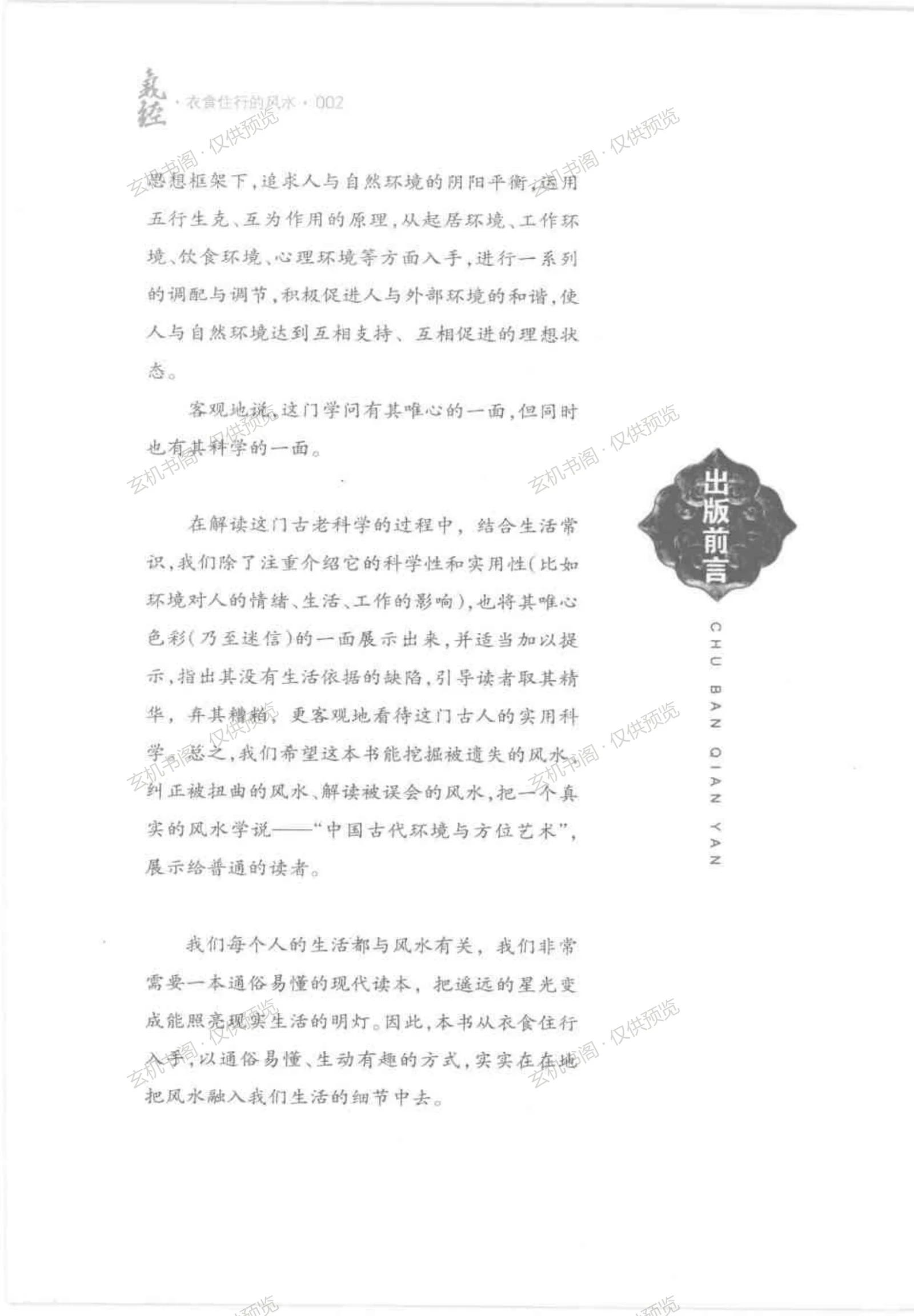
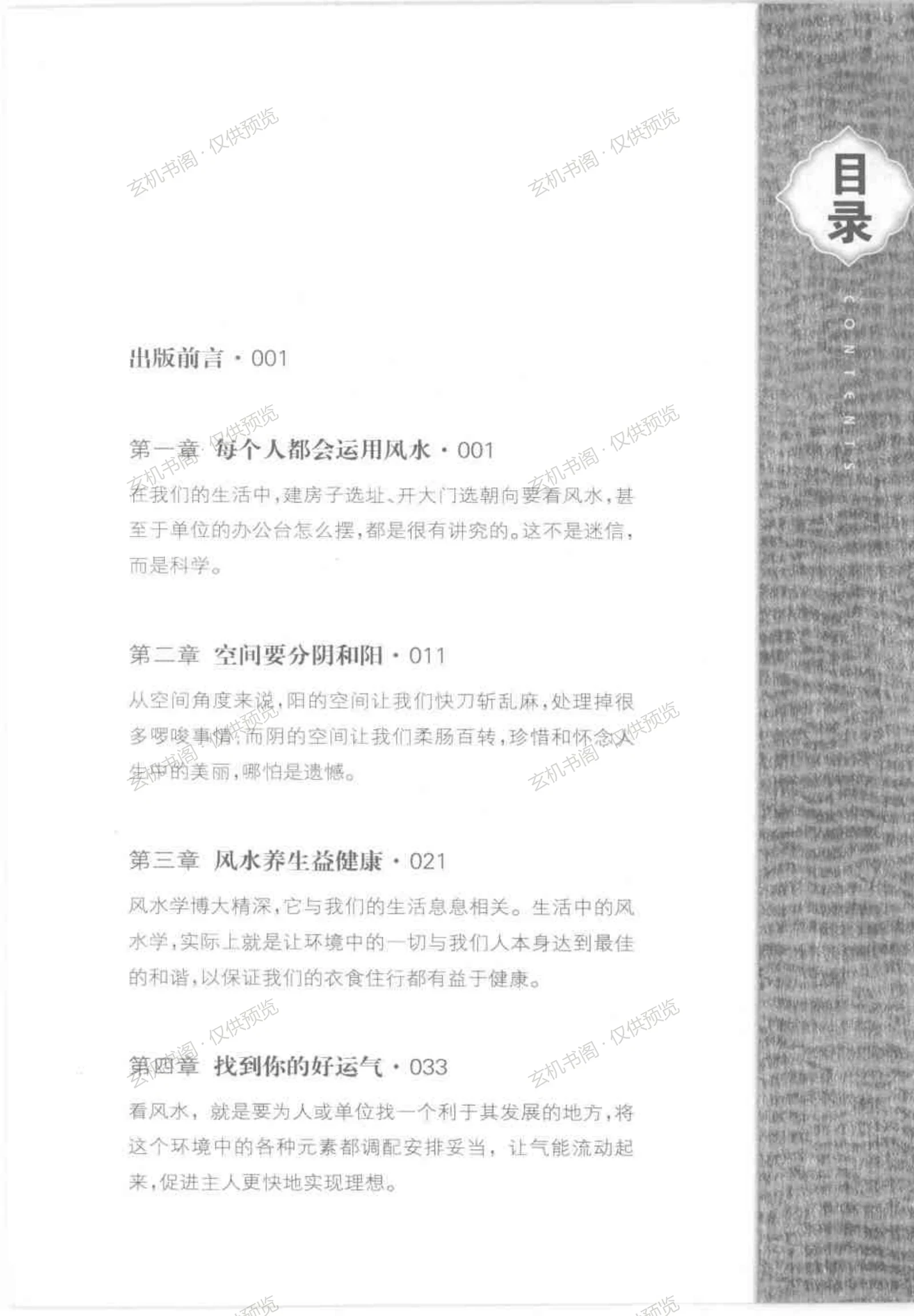
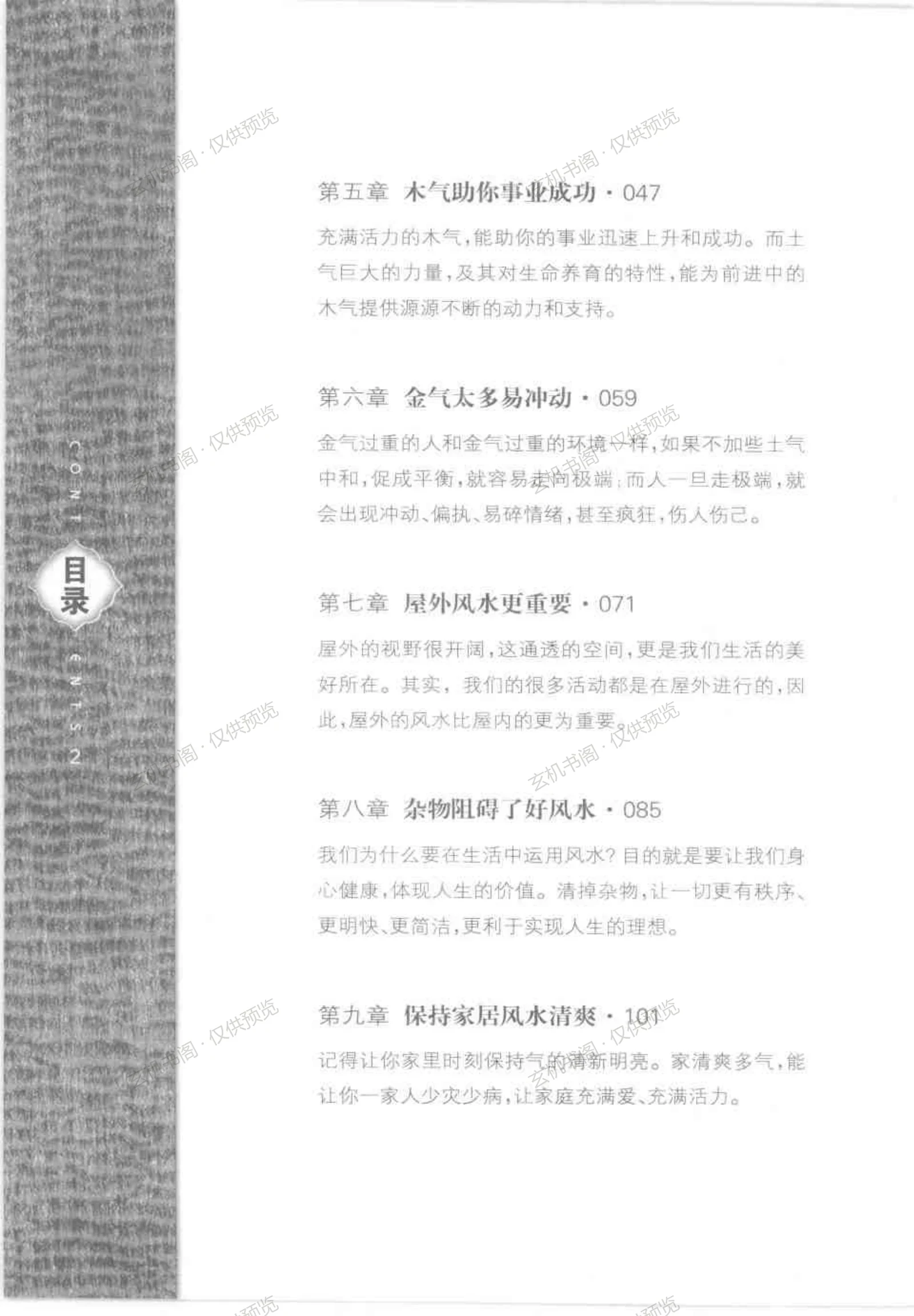
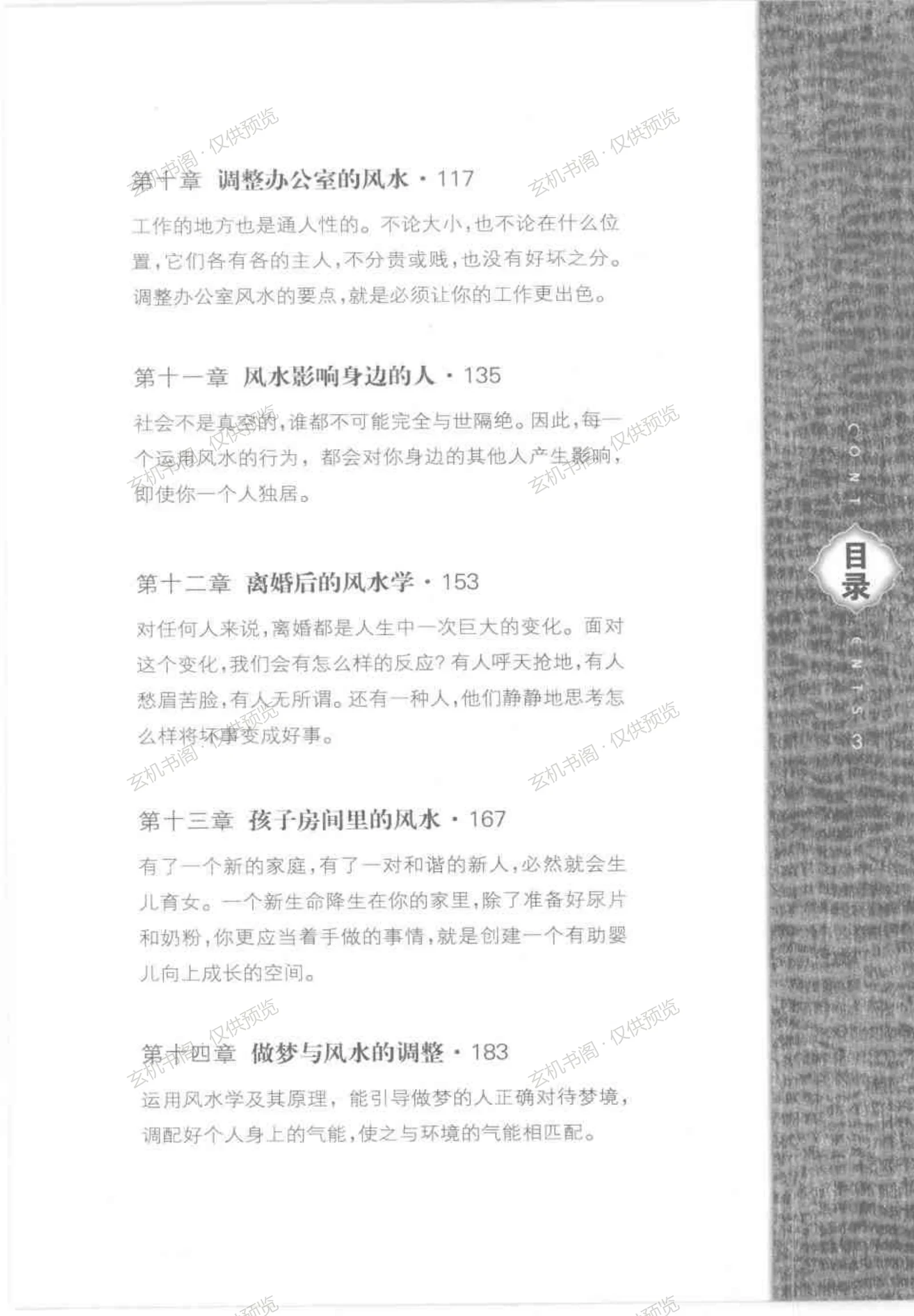
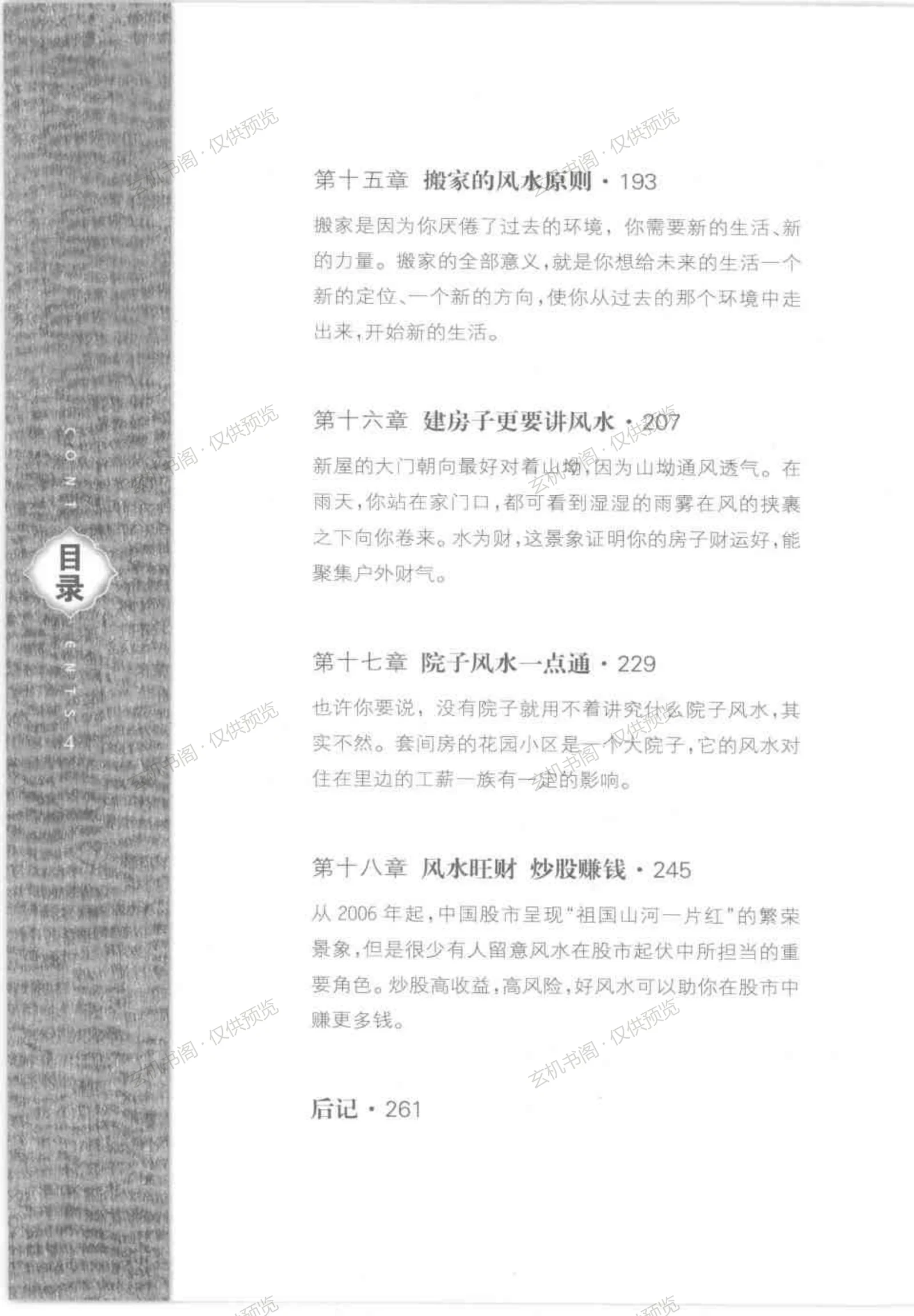
Grounded in the Yijing's yin-yang and five-element framework and the idea of harmony between humanity and nature, this book presents feng shui as a practical study of how people interact with their surroundings. The publisher's preface explains the aim of translating classical ideas into plain language for ordinary readers, acknowledging both the practical side of feng shui and its superstitious elements. The eighteen chapters move from everyday feng shui, spatial yin-yang and health, through five-element qi issues such as wood qi aiding careers and excess metal causing impulsiveness, to outdoor feng shui, decluttering, office layout, the influence of feng shui on people around you, post-divorce feng shui, children's rooms, dream adjustment, moving principles, house building and courtyard feng shui, ending with feng shui for stock trading. Each chapter opens with a short synopsis, making the book easy to browse for beginners.
Contents
Publisher's preface: redefining feng shui and the book's purpose
Chapters 1-4: everyday feng shui, spatial yin-yang, health and good fortune
Chapters 5-9: five-element qi, outdoor feng shui, clutter and home freshness
Chapters 10-14: office, people around you, divorce, children's rooms and dreams
Chapters 15-18: moving, building, courtyards and stock-trading feng shui
Afterword
Key Points
Explains feng shui through yin-yang, five elements and harmony with nature
Covers daily life, office, moving, building and stock trading
Each chapter has a synopsis; plain language for easy browsing
Acknowledges both practical and superstitious aspects, urging discernment
Discusses five-element qi (wood, metal) and spatial yin-yang