Reading guide
Content guideOverview
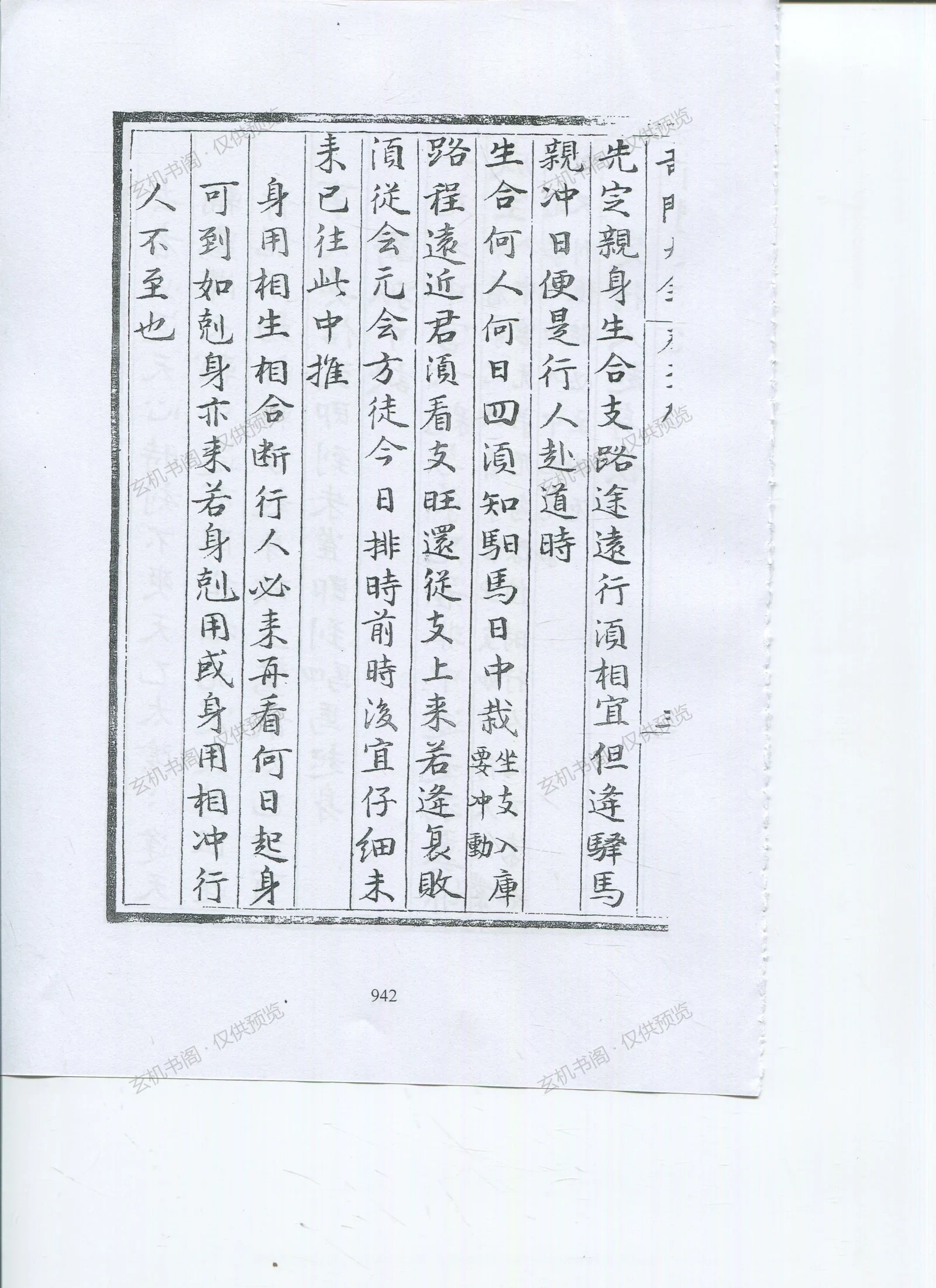
This volume is part of a Qimen Dunjia compilation and is organized by divination topic. It opens with sections on plans, seeking wealth, seeking office, litigation, and travelers, each starting with a seven-character mnemonic verse followed by interlinear annotations. The annotations explain how to select the yong shen (focus spirit), assess strength and weakness, voidness, clashes, and combinations, and interpret supporting and opposing factors. For wealth, a strong, non-void yong shen and wealth star entering its storage indicate gain, while clashing wealth stems scatter it. For office, a flourishing office star together with auspicious spirits such as Qinglong, Zhifu, and Taiyin is emphasized. For travelers, the relationship between the traveler's palace and the querent's palace, along with fu yin, fan yin, voidness, and clashes, determines the timing of return. The verse-and-annotation format reflects the practical method of first fixing the yong shen and then examining its interactions, offering material for students of Qimen divination.
Contents
Plans: judging success by yong shen interactions
Wealth: wealth star storage, voidness, and clashes
Office: flourishing office star and auspicious spirits
Litigation: victory and defeat through officer and ghost factors
Travelers: traveler's palace versus querent's palace for timing
Methods for determining the traveler's departure day
Key Points
Seven-character verses summarize the essentials of each divination topic for memorization.
Divination centers on yong shen interactions, with attention to voidness, clashes, and strength.
Wealth readings stress the wealth star entering storage and avoid void or scattered qi.
Traveler readings compare the traveler's palace with the querent's palace; fu yin and fan yin indicate delay.