Reading guide
Content guideOverview
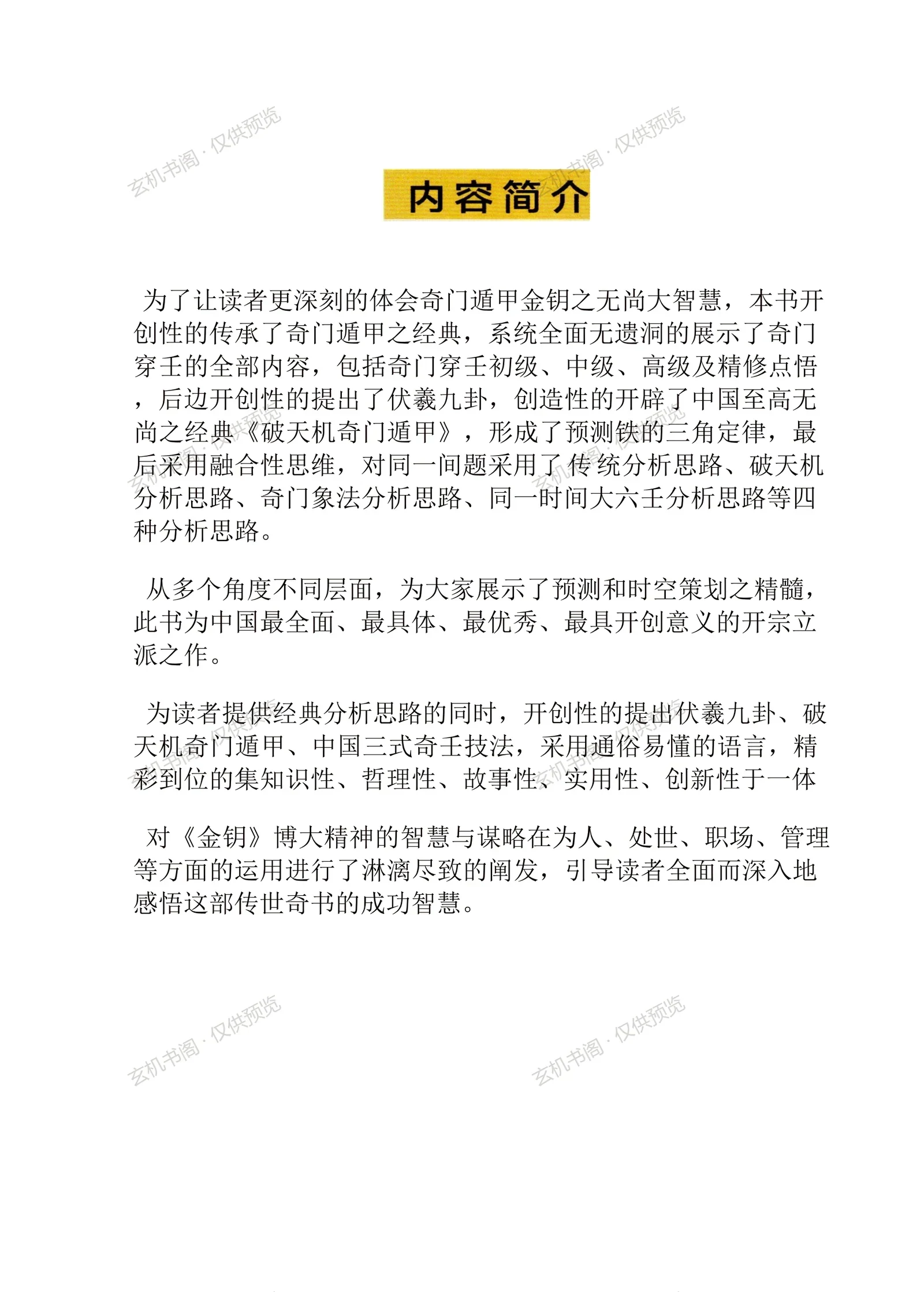
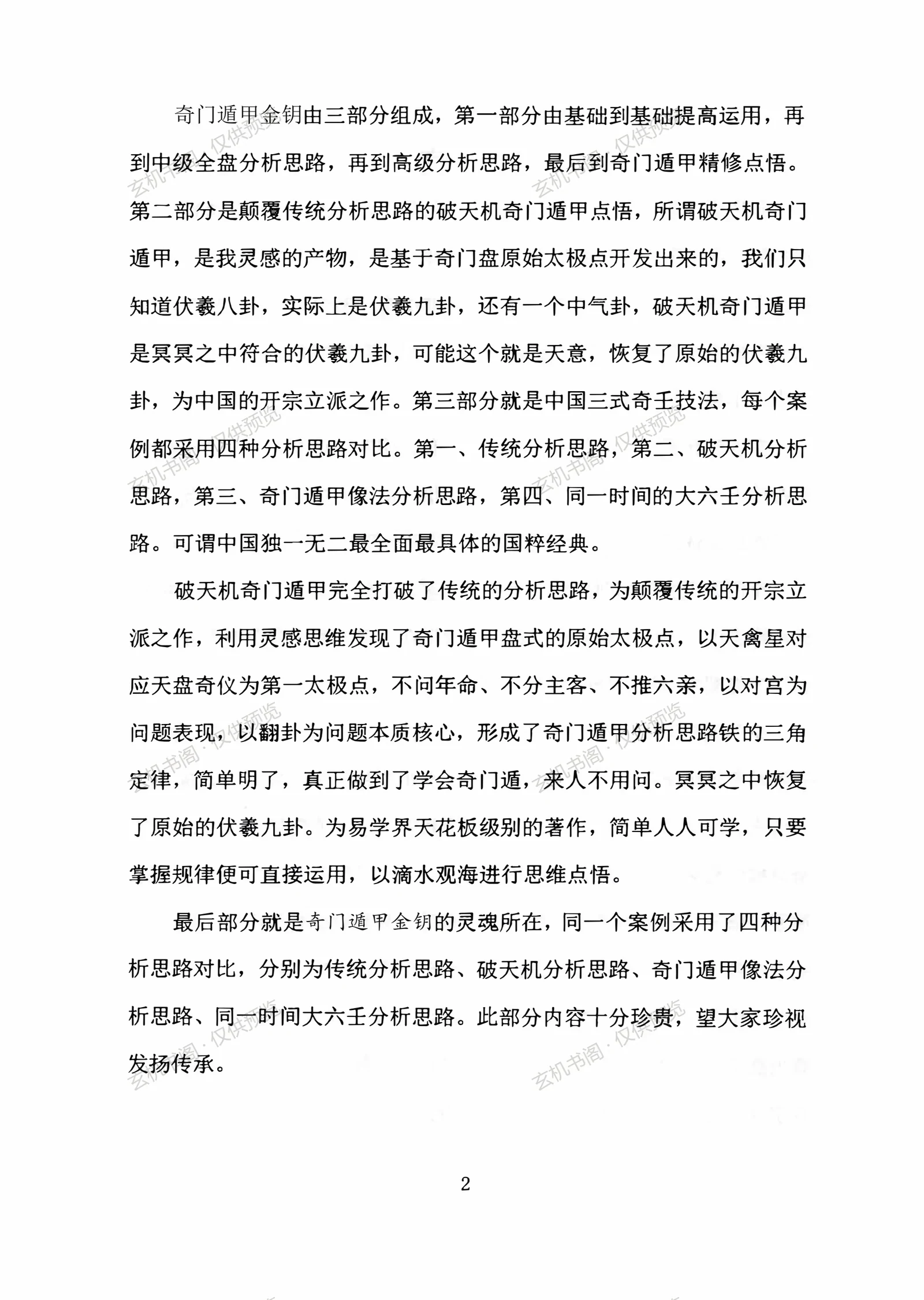
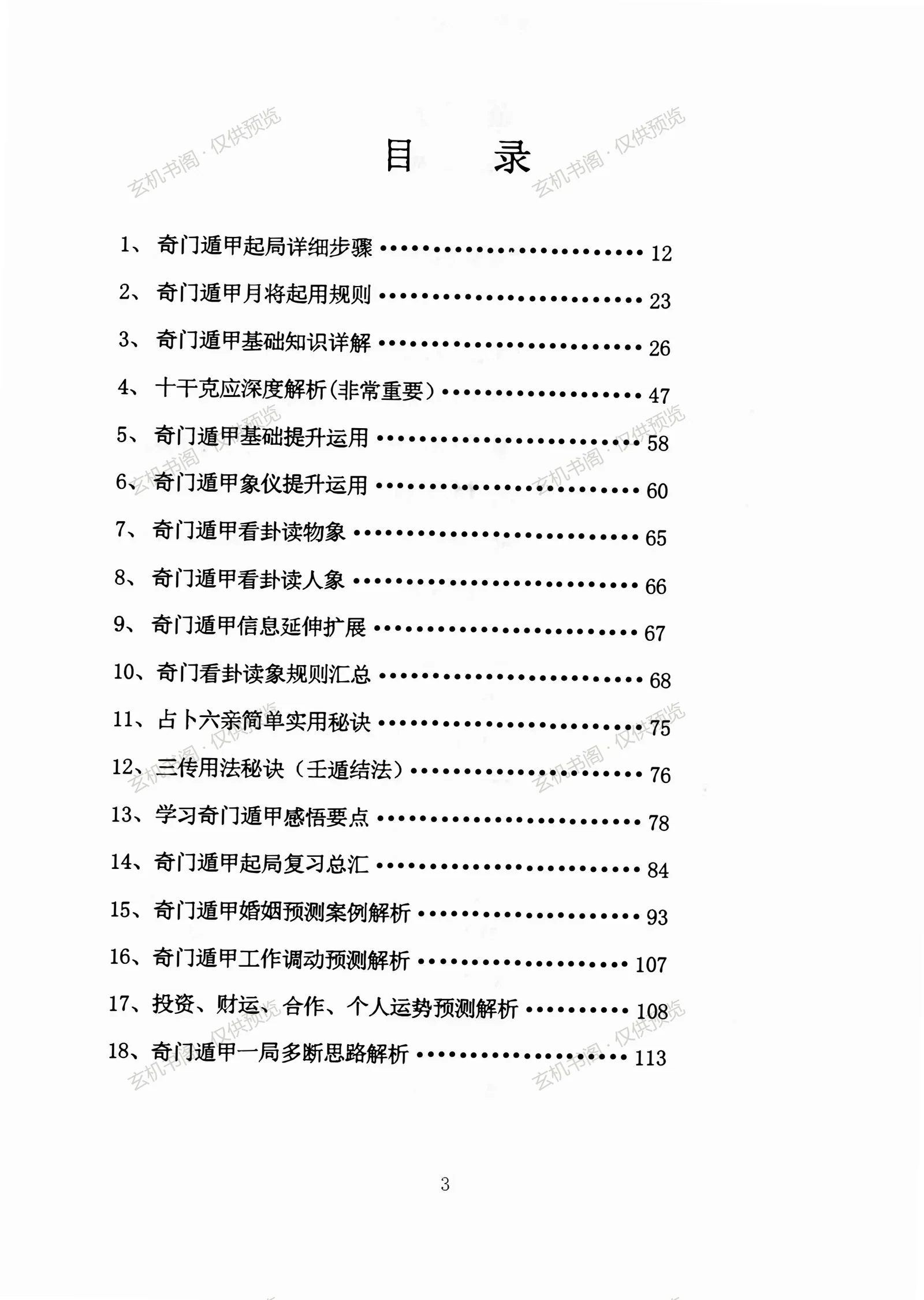
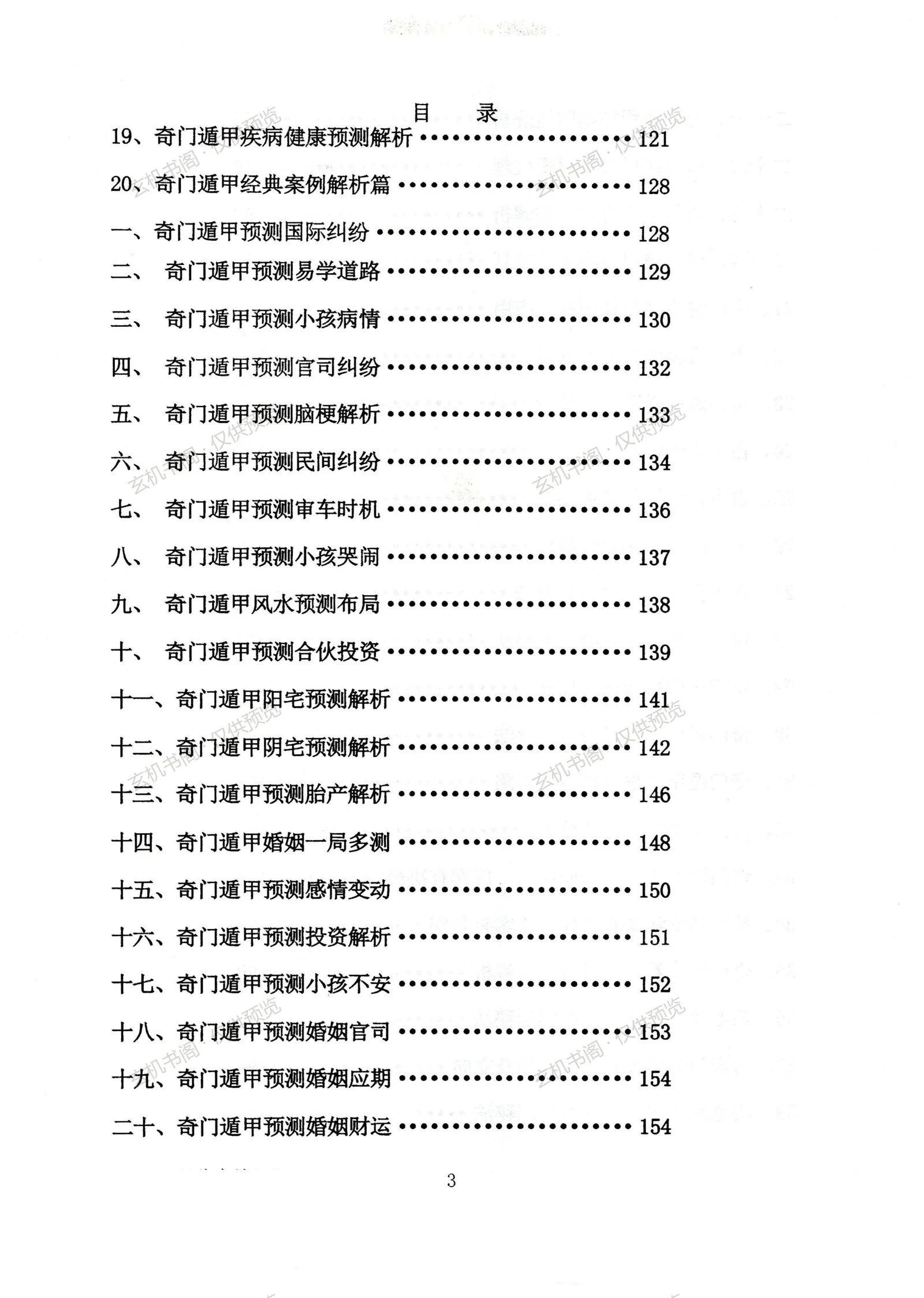
The cover title reads “The Golden Key to Qimen Dunjia,” with the subtitle “Treasured Secret Edition.” The introduction presents Qimen Dunjia and Liu Ren as two interlinked branches of the classical Three Styles, arguing against reducing Qimen to a universal formula. The book has three parts. The first covers chart construction, monthly general placement, foundational knowledge, the ten stems and response signs, image and instrument enhancement, reading rules, and the three transmissions, leading into full-chart analysis. The second introduces “Potianji Qimen Dunjia,” which takes the Heavenly禽 star matched to the heavenly plate's unusual stem as the first taiji point and claims to restore the “Fuxi Nine Gua,” setting aside birth year, host-guest distinction, and six relations, using opposite palaces as manifestations and flipped hexagrams as the core. The third compares four approaches—traditional, Potianji, Qimen image method, and same-time Da Liu Ren—on identical cases. The table of contents lists numerous applied cases on marriage, work, wealth, illness, lawsuits, feng shui, childbirth, and investment.
Contents
Chart construction and monthly general rules
Foundations, ten stems, and image enhancement
Reading objects, people, and extended information
Three transmissions and chart review
Potianji Qimen and Fuxi Nine Gua
Marriage, work, wealth, and illness cases
Lawsuits, feng shui, childbirth, and investment cases
Four-approach comparative case studies
Key Points
Offers a fairly complete groundwork from chart construction to basics.
Presents a self-defined Potianji framework centered on the Heavenly禽 star.
Emphasizes joint Qimen–Liu Ren reading through four comparative approaches.
Includes many applied categories: marriage, wealth, illness, lawsuits.
Claims to use plain-language annotation for beginner-to-intermediate readers.