Reading guide
Content guideOverview
This is the fourth volume in Zhang Zhichun's advanced Qimen (Qi Men Dun Jia) teaching series, an internal research handout dated January 2010, devoted to the study of naming. It opens by weighing the value and function of names, then sets out the highest principles for naming and renaming. The author explicitly rejects the five-grid (wuge pouxiang) method imported from Japan and instead argues for names that match reality and fit propriety, presenting ten case studies involving personal names, company names and a hotel renaming. An appendix reprints a 2009 conference paper defending the study of names, Yijing and feng shui. The opening chapter surveys both camps on whether names affect fate, citing the Zuo Zhuan on naming, the Shu Han reign title Yanxing, Pang Tong's death at Luofengpo and the rebranding of Wanglaoji, and concludes with a dialectical view in which reality determines the name while the name can react back upon reality. Suited to readers with prior grounding in Qimen and Bazi.
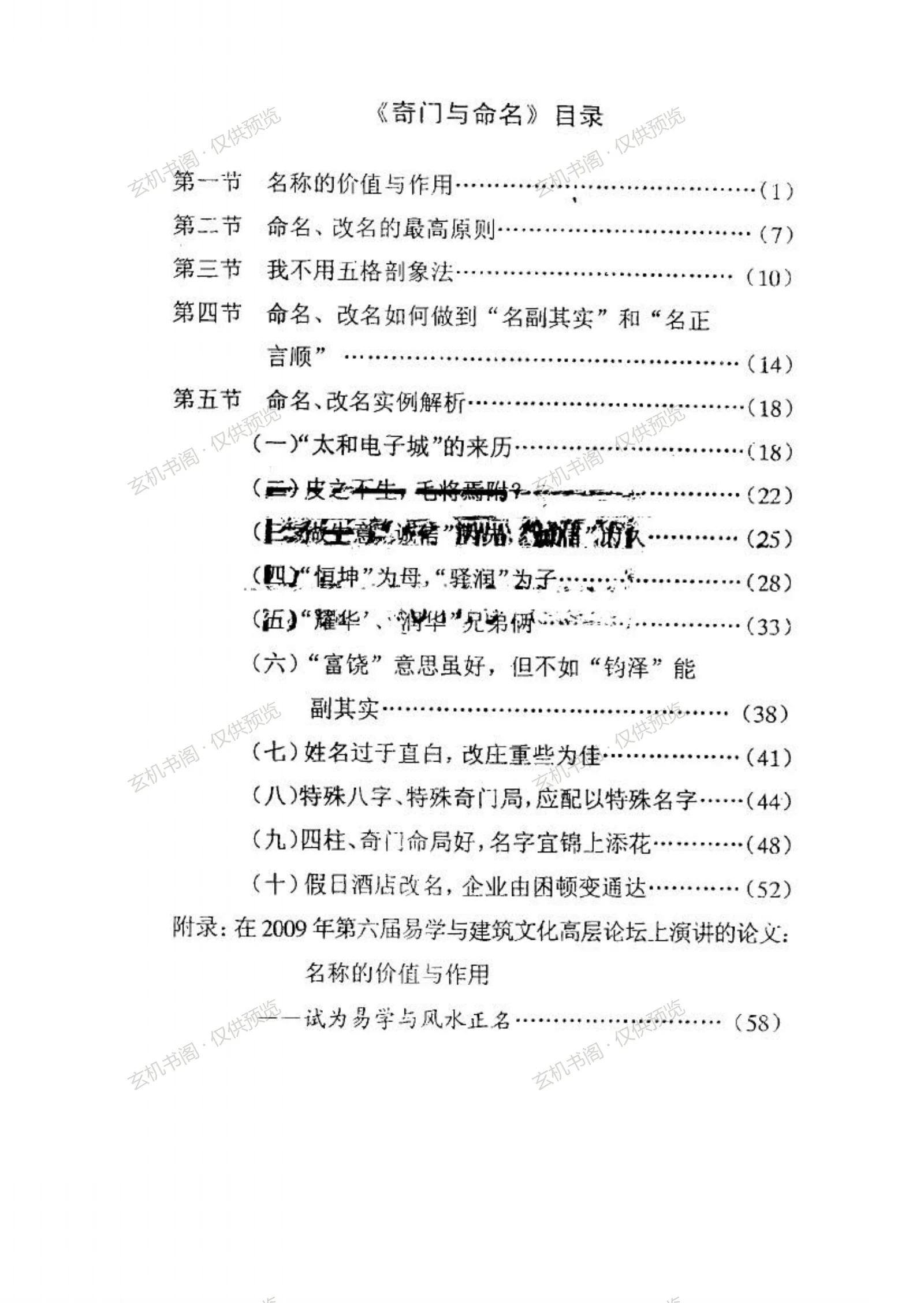
Contents
Section 1: The value and function of names
Section 2: Highest principles of naming and renaming
Section 3: Why I do not use the five-grid method
Section 4: Making names fit reality and propriety
Section 5: Ten case studies in naming and renaming
Appendix: paper on the value of names and defending Yijing and feng shui
Key Points
Builds on the dialectic of name and reality: reality decides the name, which can in turn act back on it
Criticizes the five-grid method and stroke-count naming as departing from the real purpose of destiny studies
Advocates naming in line with Bazi and Qimen charts and their configurations
Ten cases span personal names, company names and hotel renaming