Reading guide
Content guideOverview
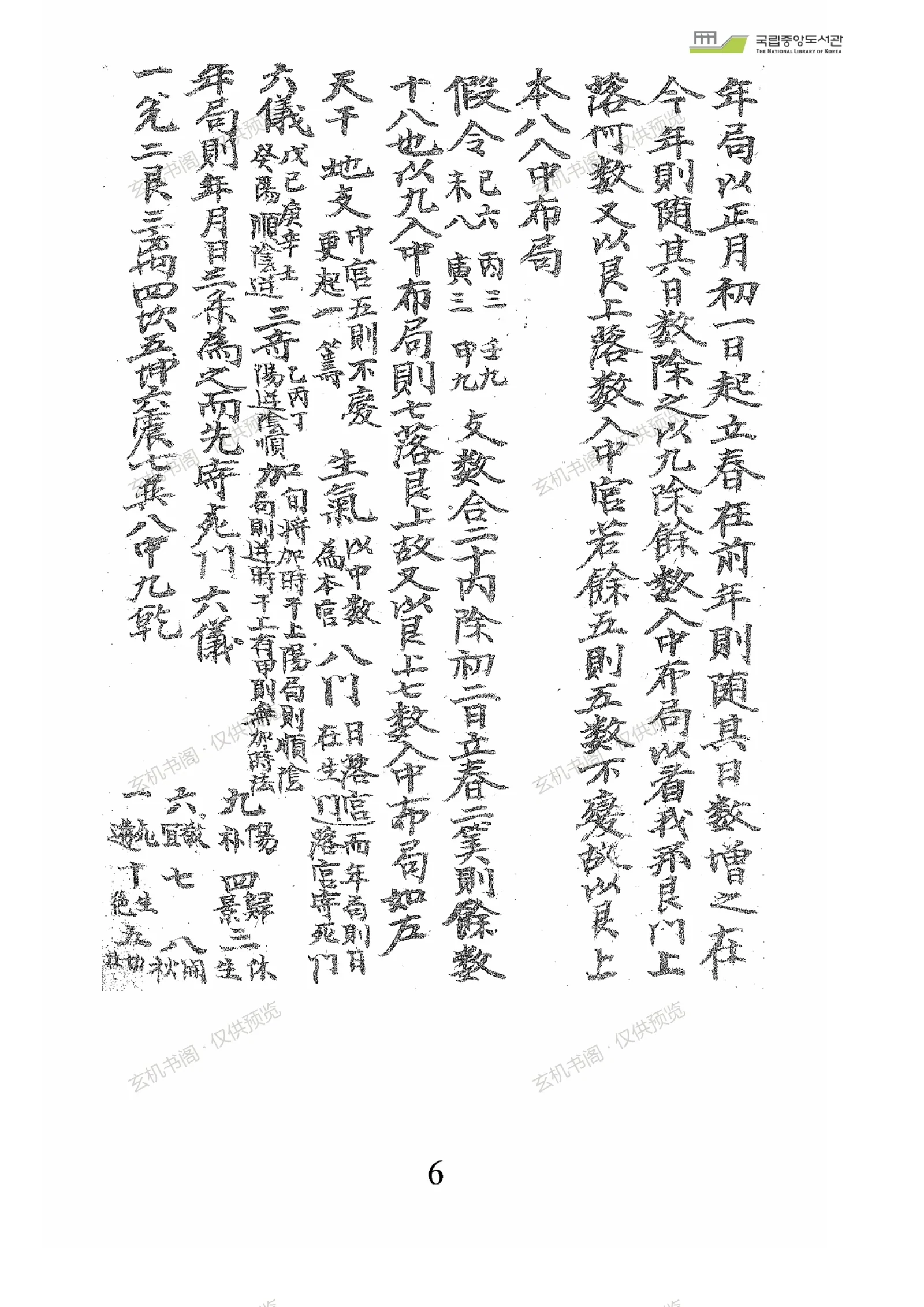
This manuscript deals with the practical procedures of Qimen Dunjia chart placement. It begins by dividing yin dun and yang dun according to the winter and summer solstices, assigning a set of chart numbers to each of the twenty-four solar terms and noting their upper, middle and lower positions. A nine-palace diagram then maps the eight trigrams, six instruments and three wonders, with instructions that yang dun arranges the six instruments forward while yin dun arranges the three wonders backward. The closing section explains how to determine the central palace by dividing year or day numbers by nine and taking the remainder, and touches on intercalation and the adjustment of solar-term boundaries. It is a working reference for checking Qimen layout steps rather than an introductory treatise.
Contents
Twenty-four solar terms and yin-yang dun numbers
Nine-palace layout of the six instruments and three wonders
Eight gates and nine stars assigned to palaces
Forward instruments in yang dun, backward wonders in yin dun
Central-palace placement and intercalation rules
Key Points
Yin and yang dun are divided by the solstices and each solar term is given chart numbers
A nine-palace diagram assigns the six instruments, three wonders, eight gates and nine stars
Yang dun arranges the six instruments forward; yin dun arranges the three wonders backward
Year or day numbers divided by nine determine the central palace
Solar-term boundaries and intercalation require adjustment