Reading guide
Content guideOverview
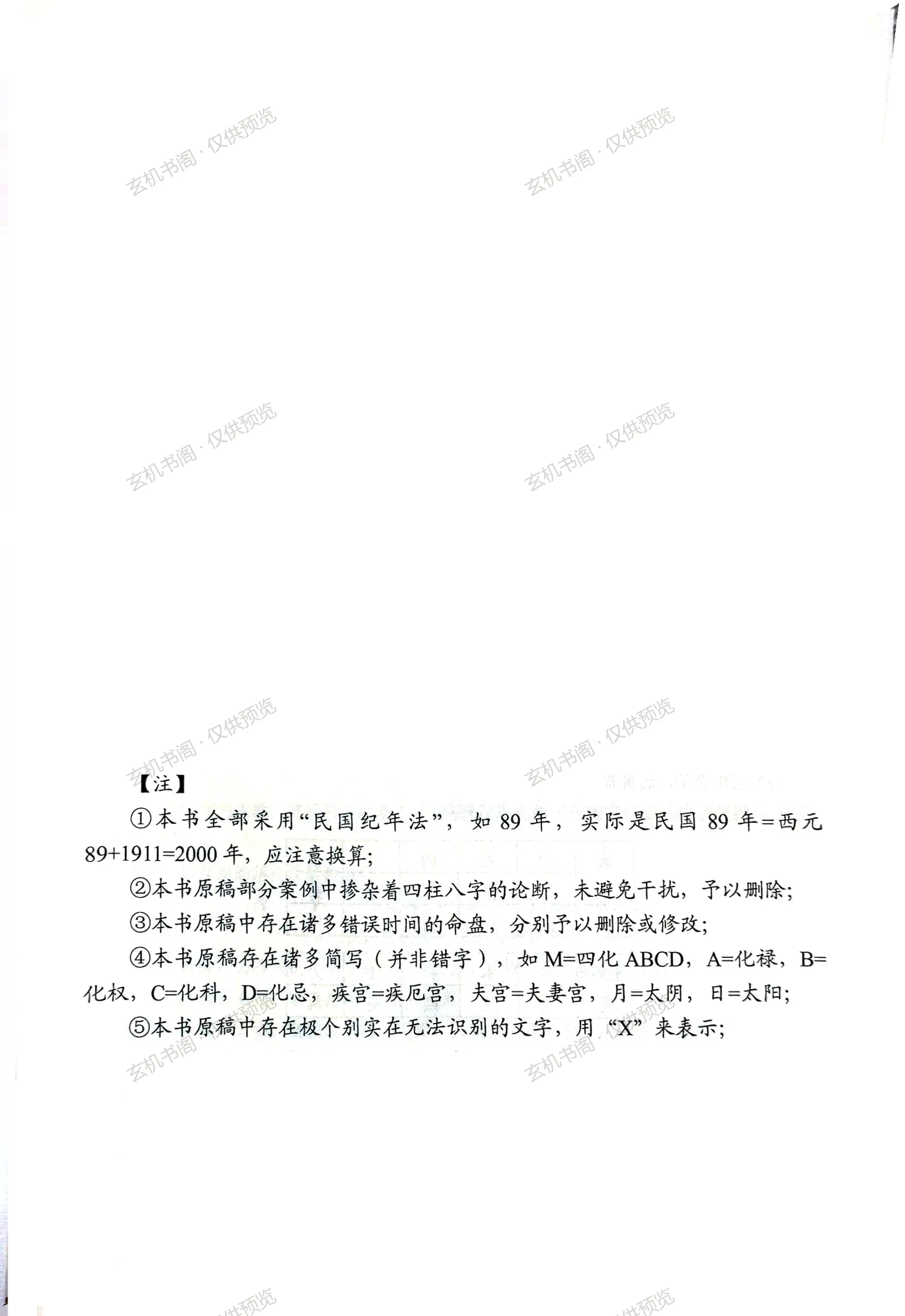
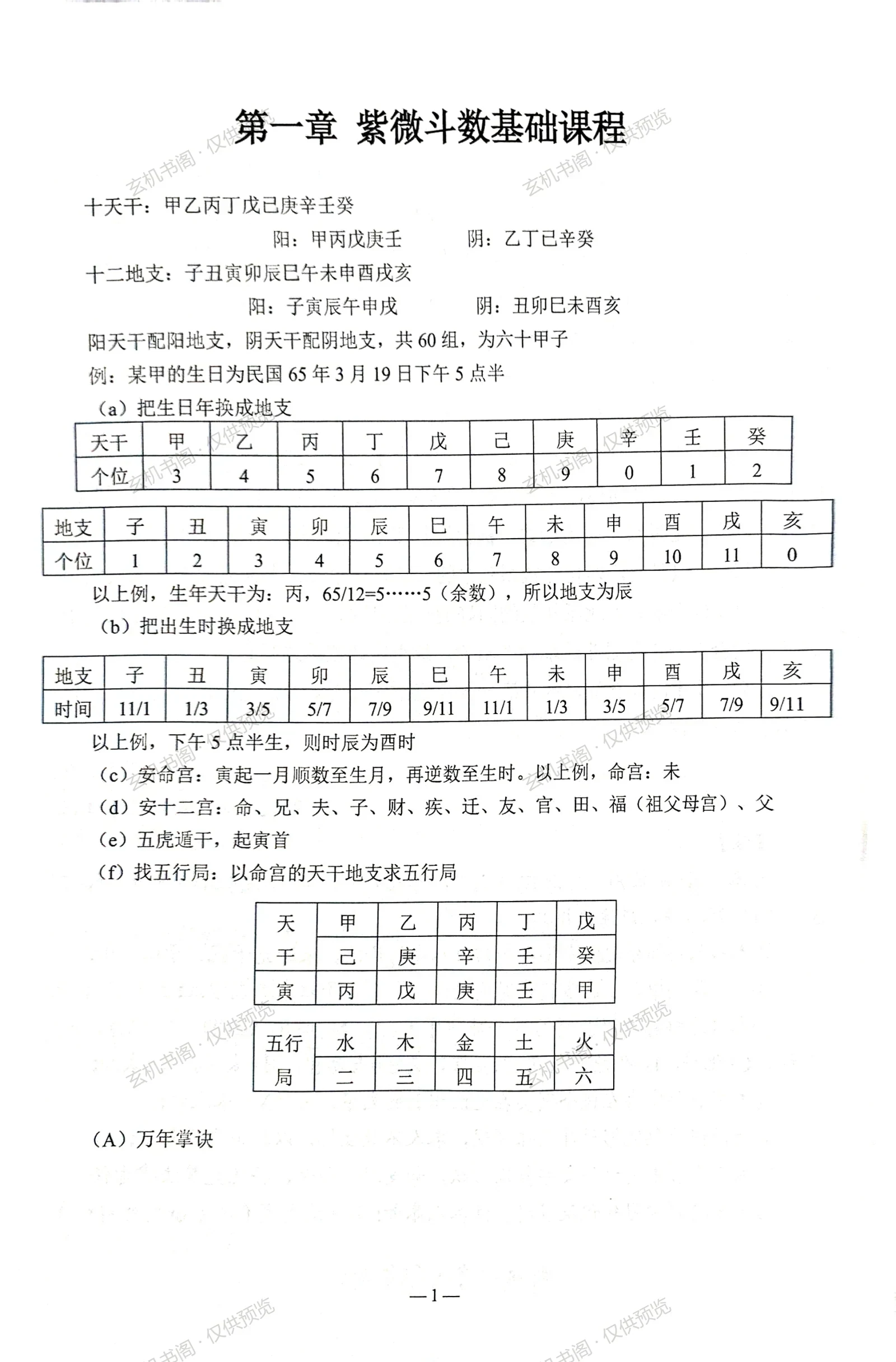
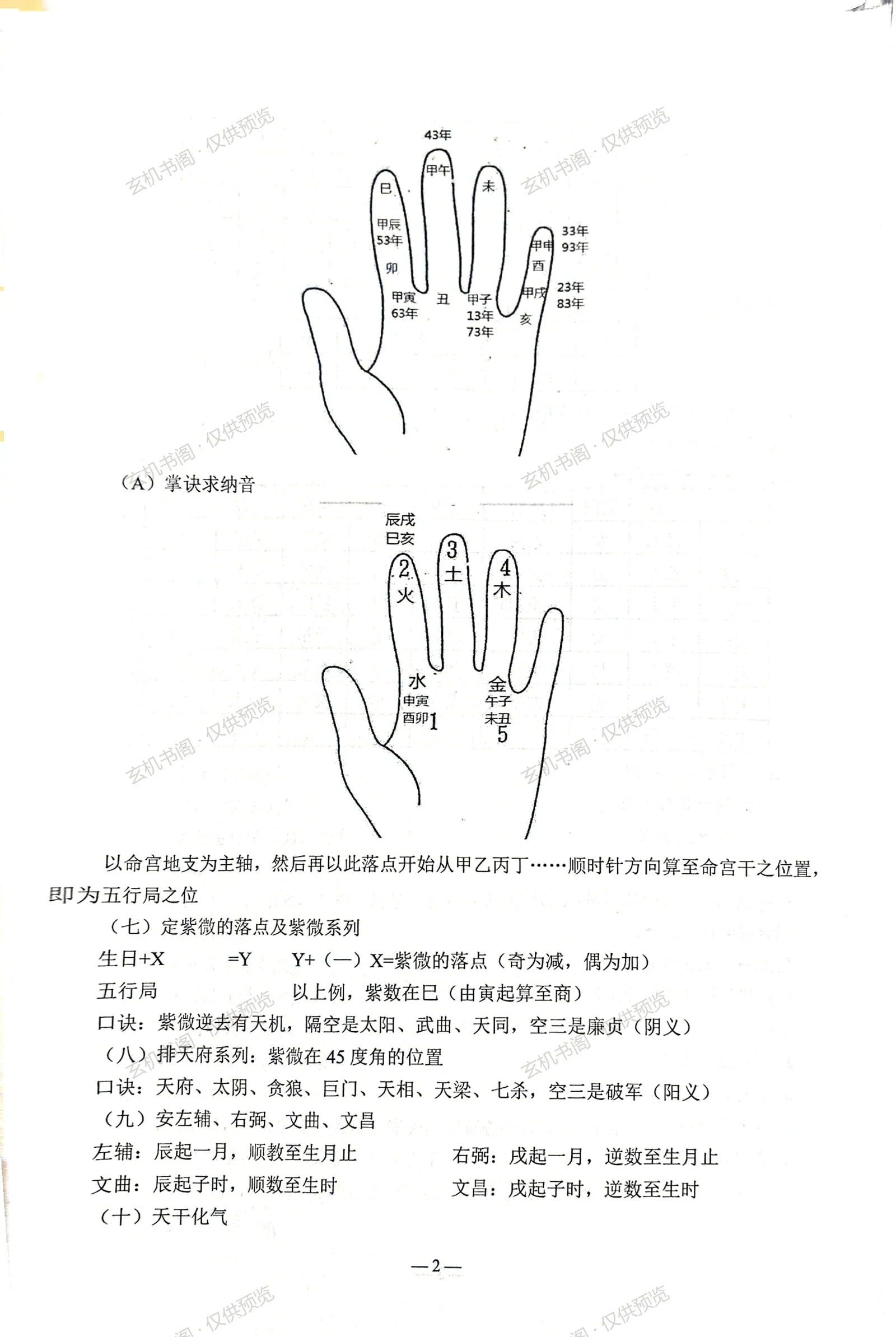
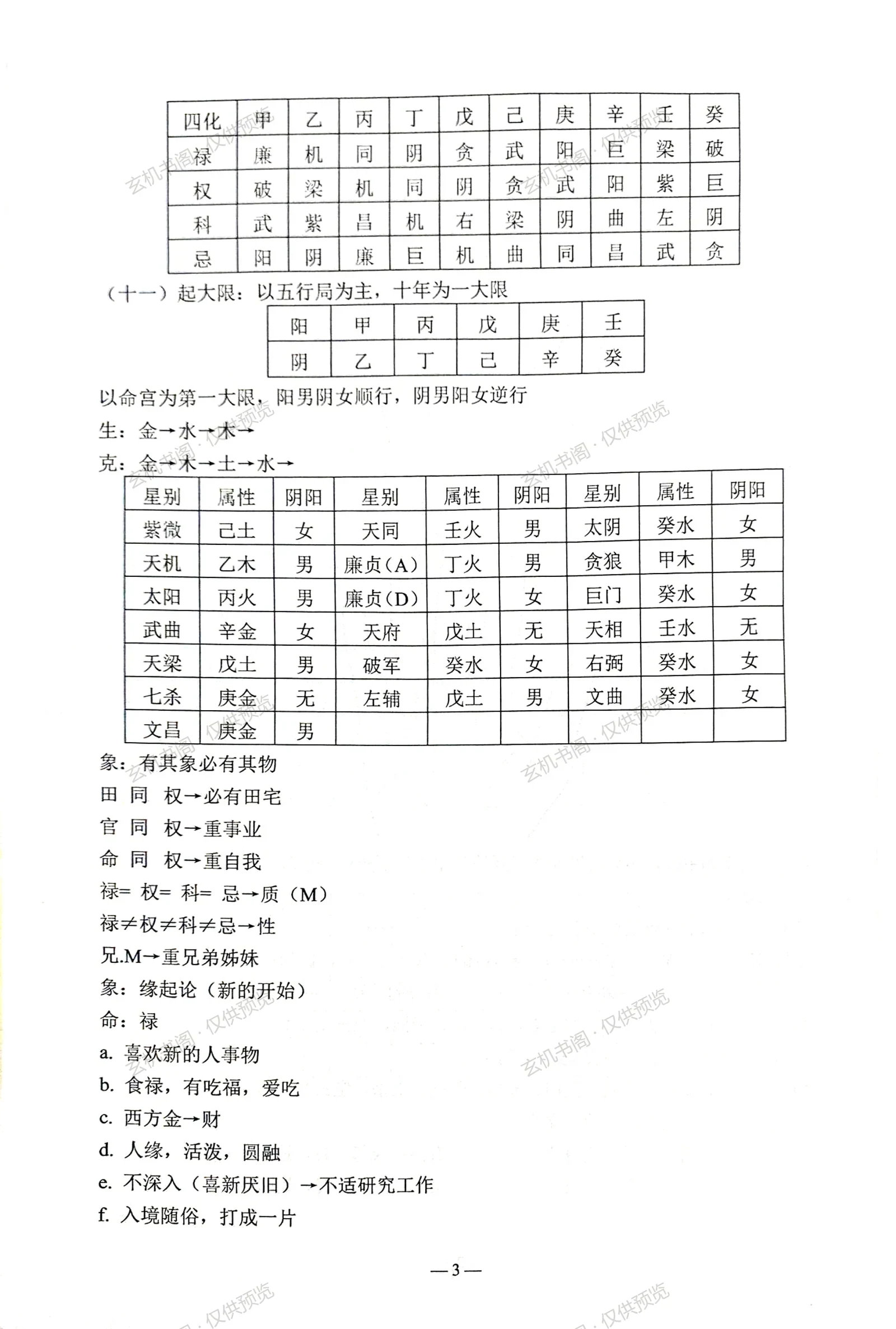
These are organized lecture notes from Cai Minghong's advanced course on Qintian-school Four Transformations Zi Wei Dou Shu. The opening chapters lay out the fundamentals: the ten heavenly stems and twelve earthly branches, the sixty-cycle, converting Republican-era dates and birth hours into branches, placing the Life Palace and the twelve palaces, the Five Tiger escape method, the five-element bureau, the star-placement mnemonics for the Zi Wei and Tian Fu series, the placements of Zuo Fu, You Bi, Wen Qu and Wen Chang, the stem-by-stem Four Transformations table, and the rules for starting major limits. The middle chapters introduce the Hetu and Luoshu and the imagery of the eight trigrams as the theoretical basis for transformation imagery. Later chapters summarize judgment method and basic organization, treating lu, quan, ke and ji as substance and reading imagery by palace. The bulk of the book is a long series of worked chart examples. Editorial notes state that Republican-era dating is used throughout, mixed four-pillar material has been removed, erroneous chart times corrected, and shorthand such as M for the four transformations standardized.
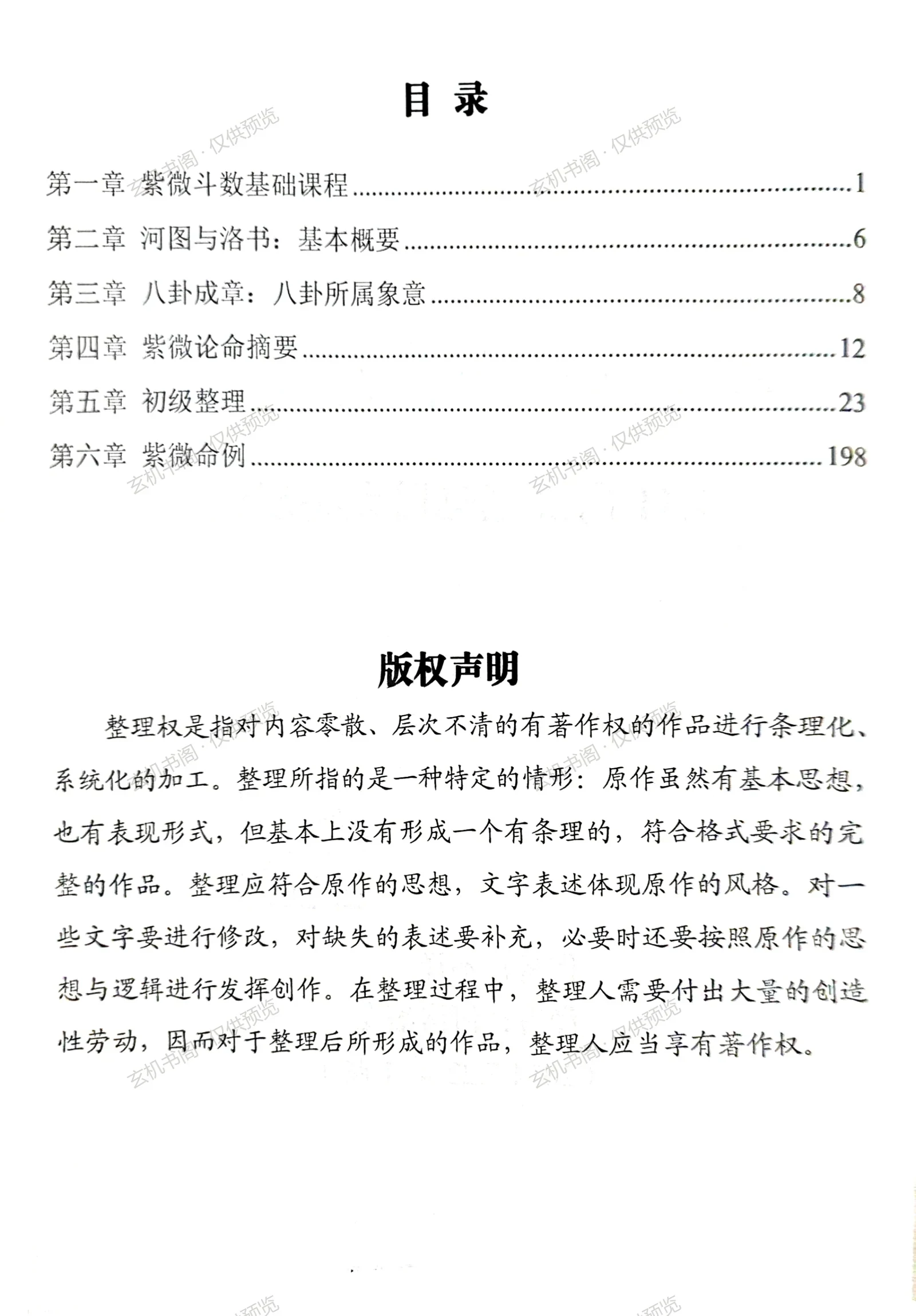
Contents
Ch.1 Fundamentals: stems, branches, Life Palace, five-element bureau, star placement
Ch.2 Hetu and Luoshu: basic outline
Ch.3 The eight trigrams and their imagery
Ch.4 Summary of Zi Wei judgment
Ch.5 Basic organization: transformation imagery across the twelve palaces
Ch.6 Worked chart examples
Key Points
Complete chart-construction sequence from stems and hours to star placement
Stem-by-stem Four Transformations table for lu, quan, ke and ji
Distinguishes the four transformations as substance versus nature
Palace-based imagery, e.g. quan in Property Palace emphasizes real estate
Chart examples form the largest and most practical section