Reading guide
Content guideOverview
This lecture handout by Xu Zengsheng focuses on the interpretation of Hua Ji (transformed忌) patterns in Flying Star Zi Wei Dou Shu. It first defines 'entangled Ji' and 'mutual clash Ji': when two different palaces each emit a Hua Ji that directly opposes the other, the two palaces are said to conflict and fail to harmonize. Case charts illustrate this, including a life story of marriage at 35, an affair at 38, and divorce at 41, read through the Fu De–Cai Bo–Fu Qi relationship. The text also distinguishes 'gossip Ji' (also called resentment Ji), where Lu and Ji transform into each other across opposite palaces, producing unequal treatment. Finally it introduces 'reverse bow Ji,' which arises when a major limit enters the natal trine and the ming–cai–guan palaces overlap, with Ji entering the natal travel, spouse, or fortune palace. The material mixes definitions, examples, exercises, and full chart cases, making it suitable for readers with prior Flying Star basics.
Contents
Definitions of entangled Ji and mutual clash Ji
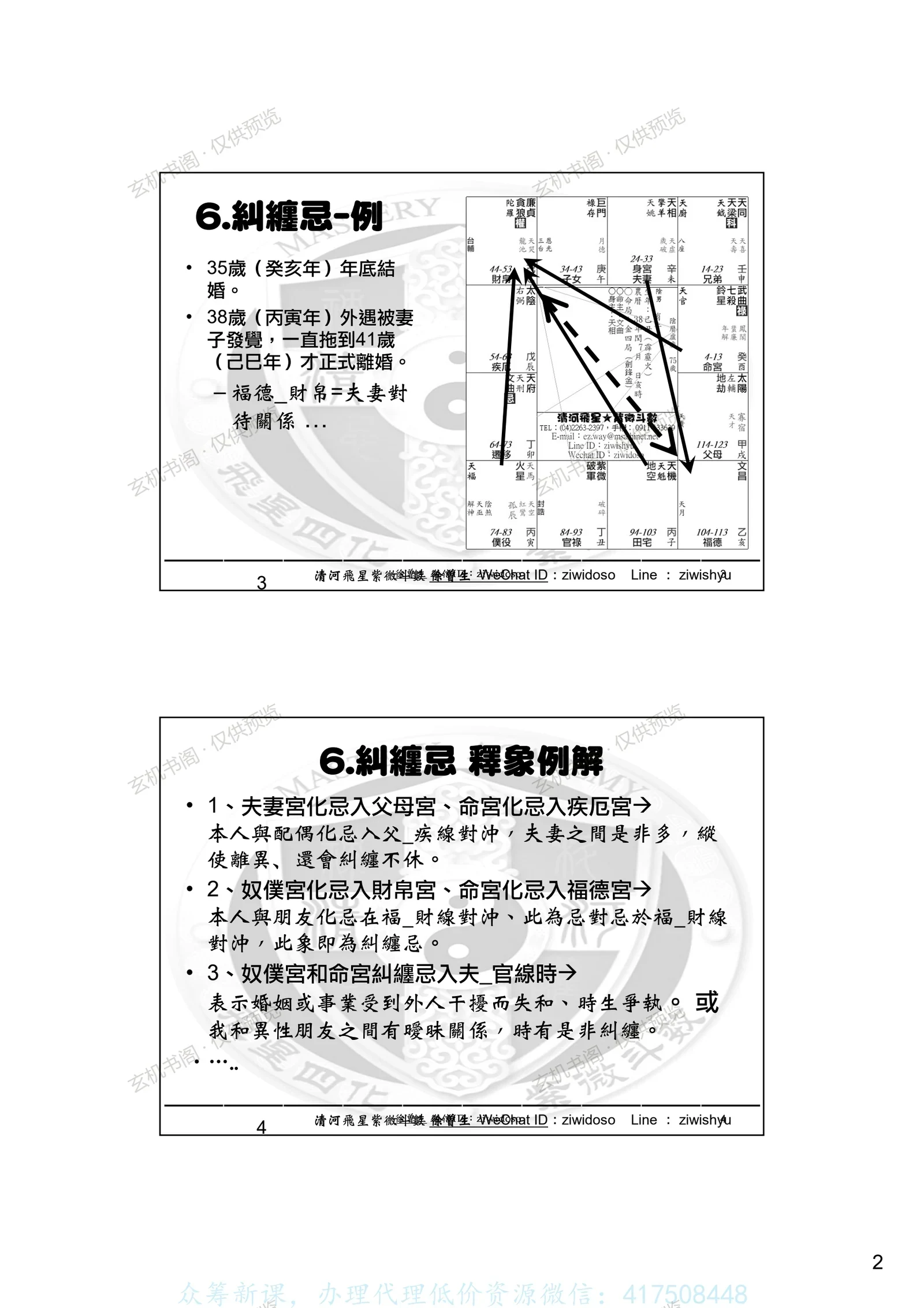
Case: marriage and affair
Interpretive examples of entangled Ji
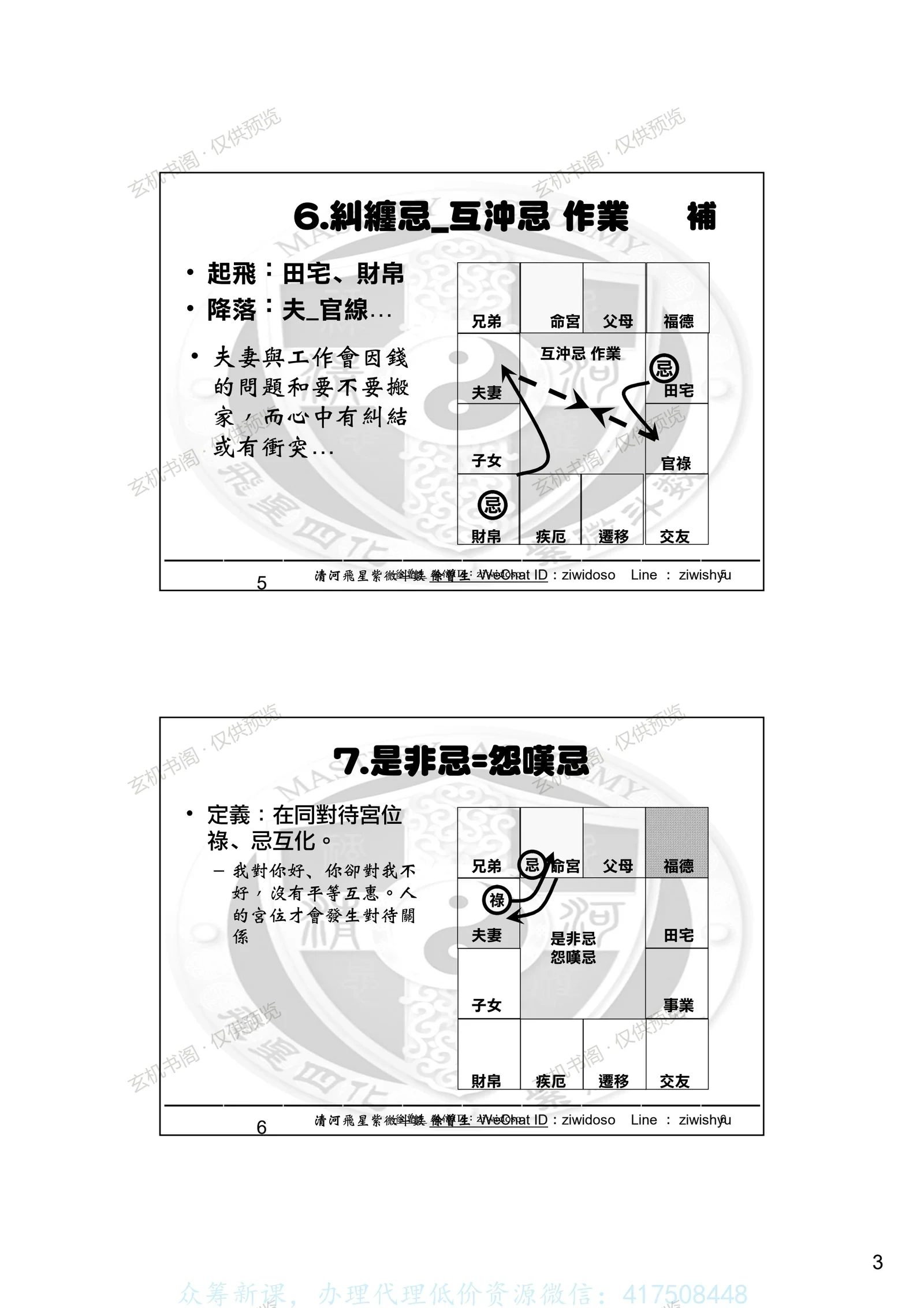
Exercise on mutual clash Ji
Gossip Ji as resentment Ji
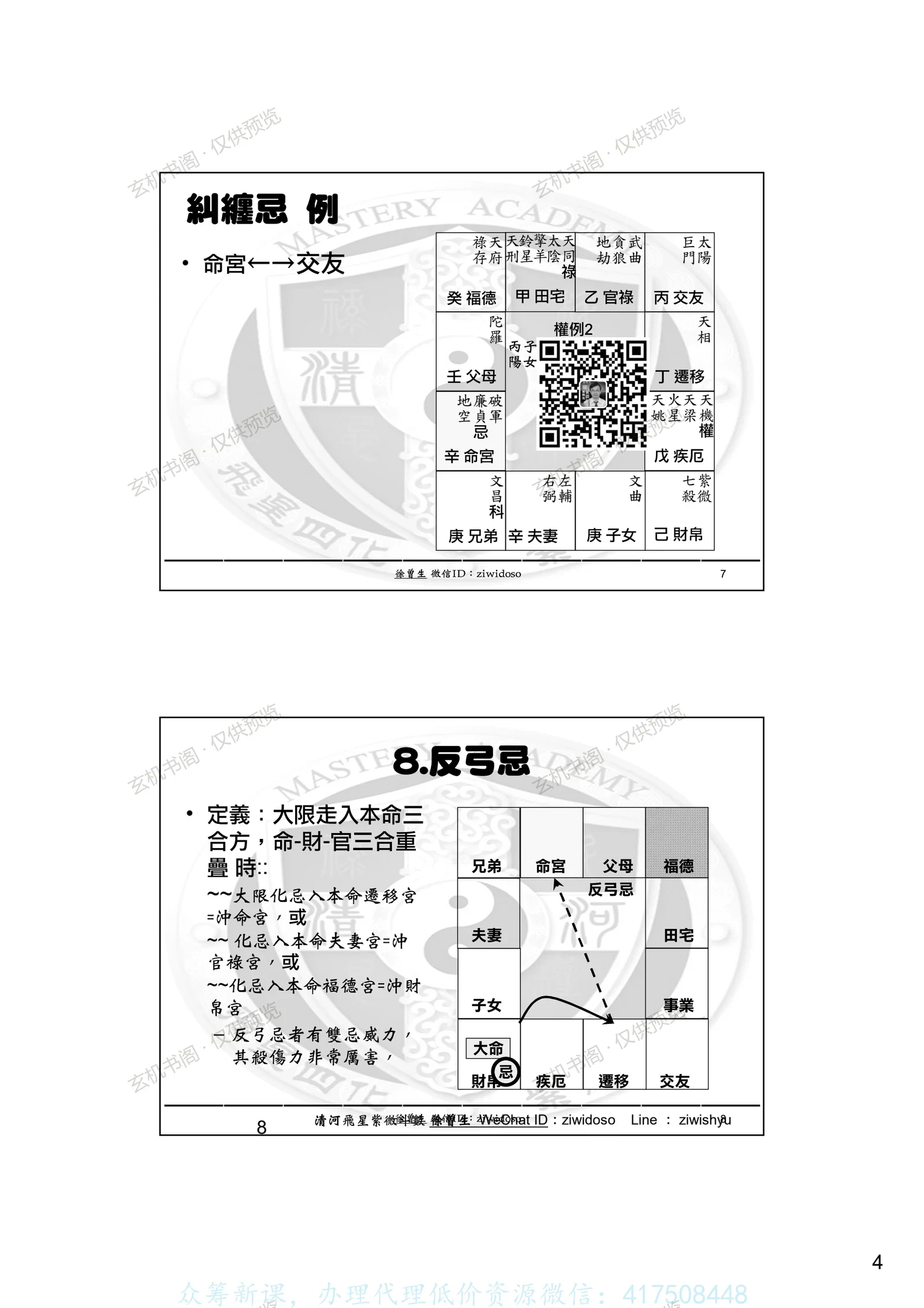
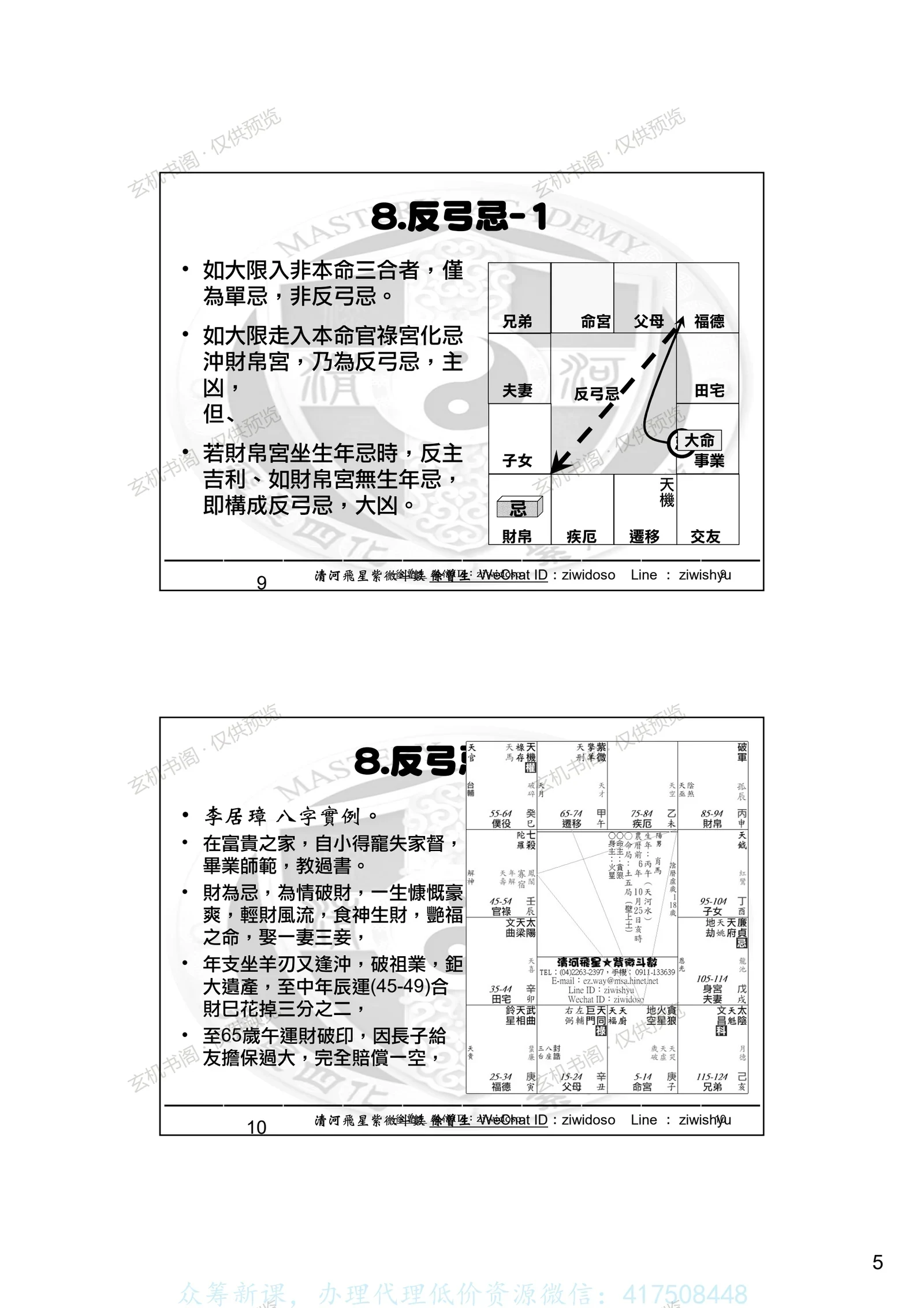
Conditions for reverse bow Ji
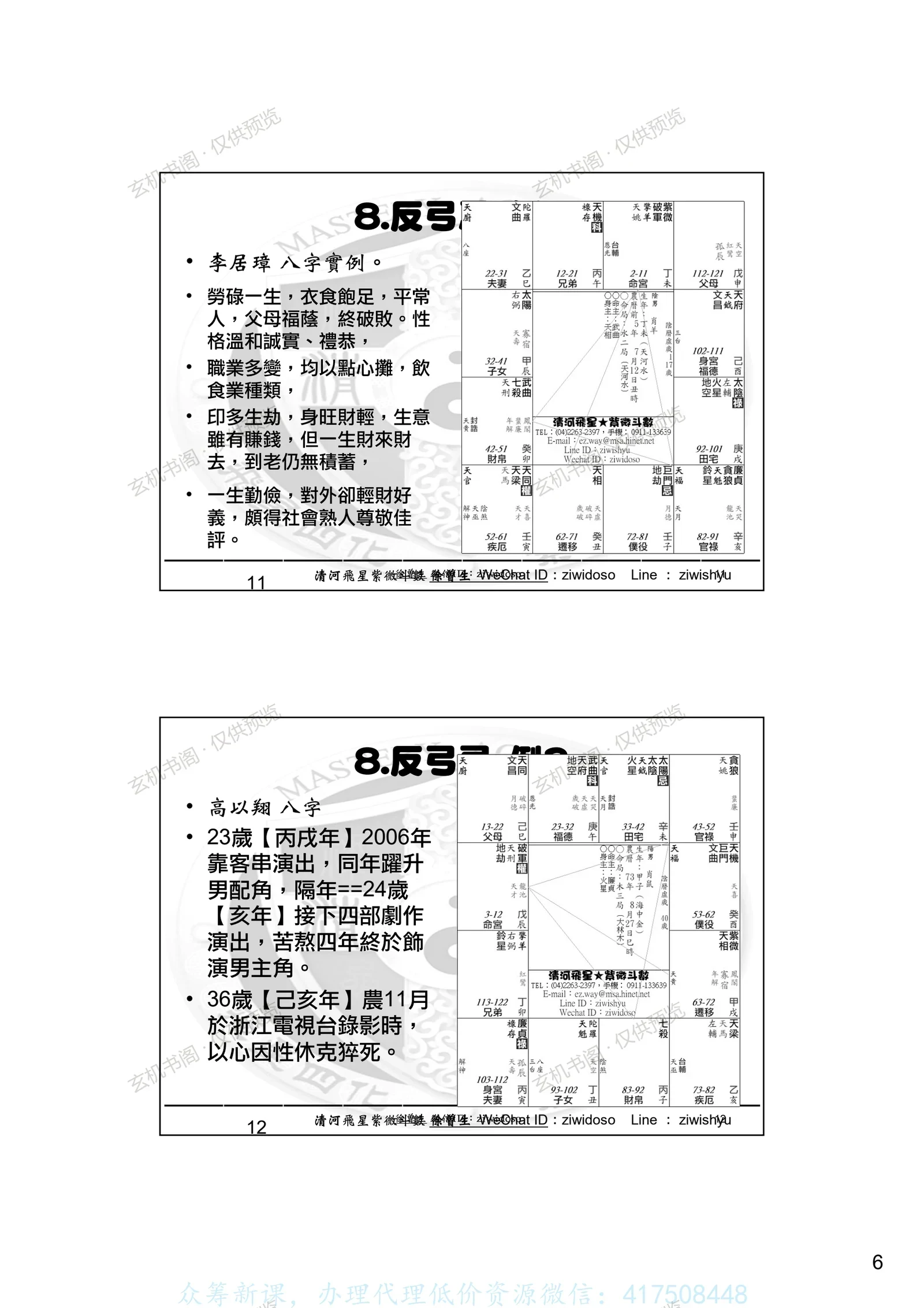
Case study: Li Juzhang
Case study: Gao Yixiang
Key Points
Opposing Hua Ji is the core marker of palace conflict, called entangled or mutual clash Ji.
Entangled Ji often appears in spouse, fortune, and wealth palaces.
Gossip Ji involves Lu–Ji mutual transformation across opposite palaces, indicating unequal treatment.
Reverse bow Ji requires a major limit entering the natal trine with ming–cai–guan overlap.
The book relies heavily on real charts and pattern-to-text comparison.