Reading guide
Content guideOverview
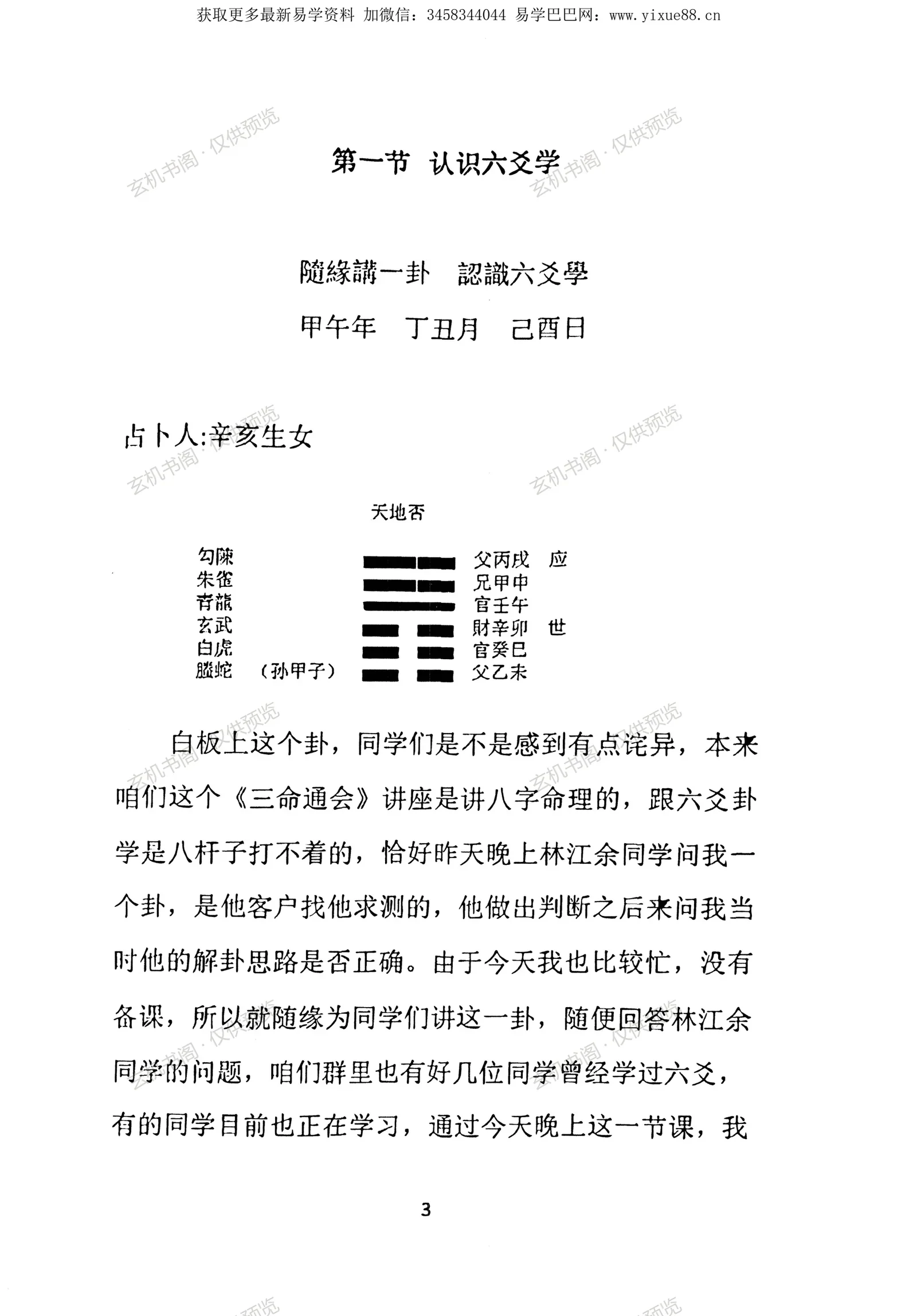
This compact lecture set by Can Kui Xueren opens with a real case: a woman born in a Xinhai year asks about compensation for illegally built factory space, and casts Hexagram Pi with no moving lines. The author reads the overall image first, then walks through the line images one by one—self and response lines, void branches, day clashes, the Dark Warrior spirit—tying each to concrete people and events. The remaining four sections turn to the core topic: what the Harm Officer favors, what it avoids, then the same for the Food God, each illustrated with several birth-data examples. Throughout, the emphasis falls on getting the method right rather than memorizing slogans, and readers see how an experienced practitioner matches hexagram images, six relatives and spirit markers to the actual situation. Suited to readers who already know how to cast and install a hexagram and want to learn useful-god selection and preference judgment.
Contents
Section 1: Getting to know six-yao, the Pi hexagram case
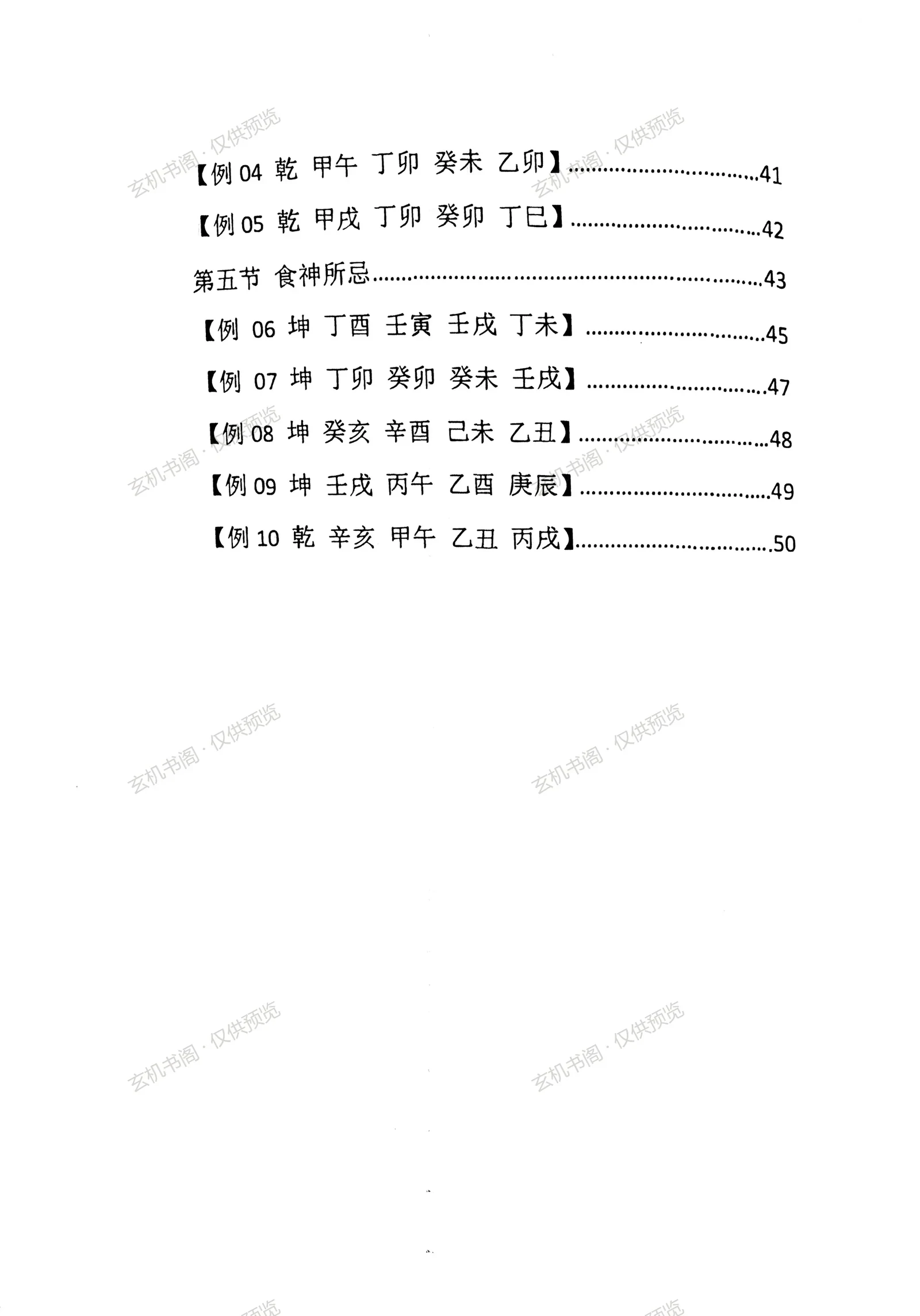
Section 2: What Harm Officer favors, cases 1-5
Section 3: What Harm Officer avoids, cases 6-10
Section 4: What Food God favors, cases 1-5
Section 5: What Food God avoids, cases 6-10
Key Points
Real cases drive the exposition from whole image down to individual lines
Read the overall pattern first, then locate the useful god
Self/response, void, clash and Dark Warrior mapped to real people
Food God and Harm Officer each split into favored and avoided sections
Wealth holding the self line does not mean the money is in hand