Reading guide
Content guideOverview
This is a lecture handout from Xu Zengsheng's Qinghua Flying Star Zi Wei Dou Shu series. The visible pages introduce the lecturer's background and then move into chart construction: the required birth data (gender, date, time, and place), a blank chart layout showing the twelve palaces and earthly branches, and computer charting settings. Practical rules are given for leap months (split at day 15), the zi hour rollover (starting at 23:01), and overseas birth times. The core section explains the Life Palace, Siblings Palace, and Spouse Palace, including the Flying Star idea that one palace can carry multiple derived meanings. It serves as an entry-level guide to chart making and palace interpretation in the Flying Star school.
Contents
Lecturer Xu Zengsheng's background and publications
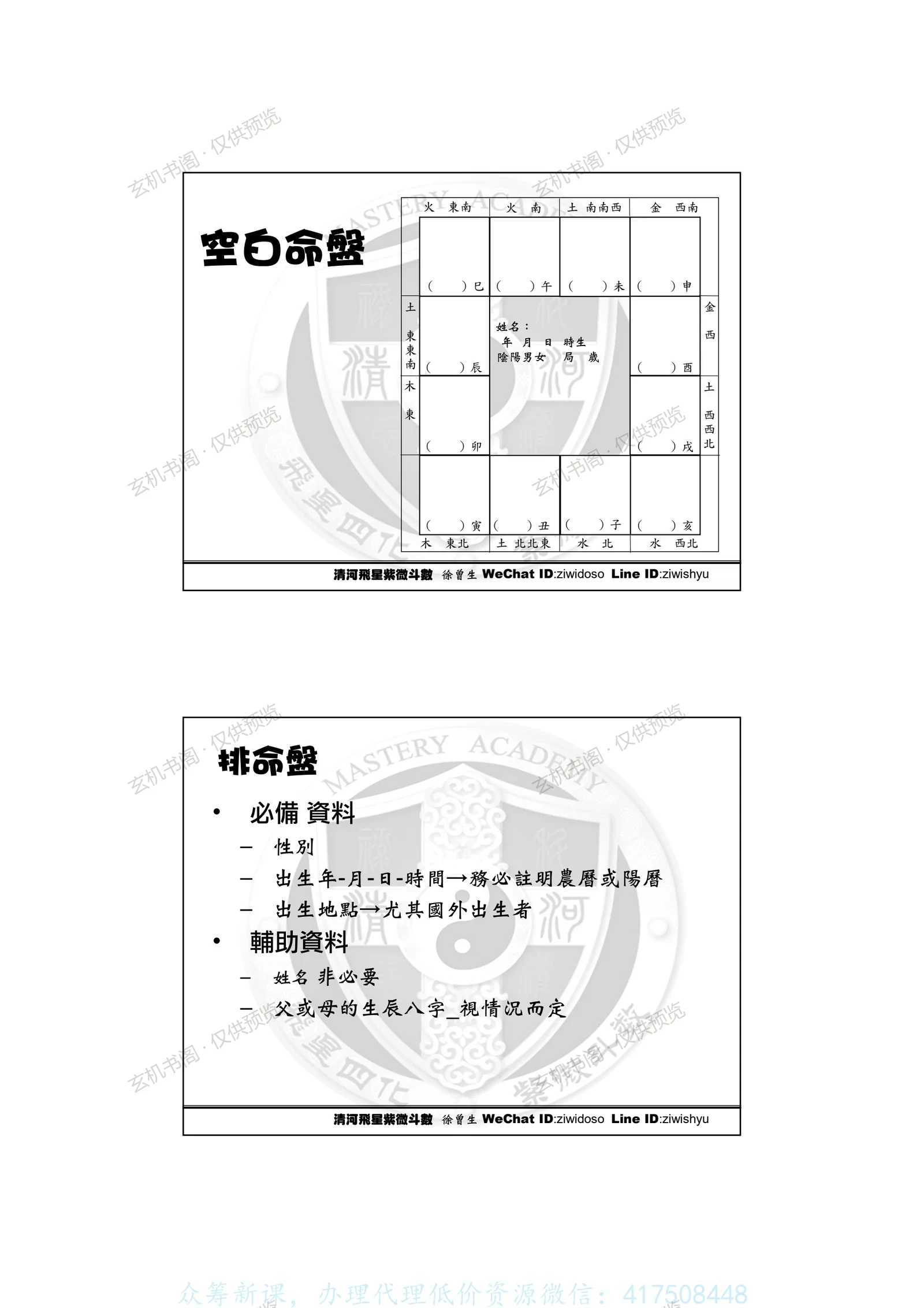
Blank chart and the twelve palaces with earthly branches
Required and auxiliary birth data
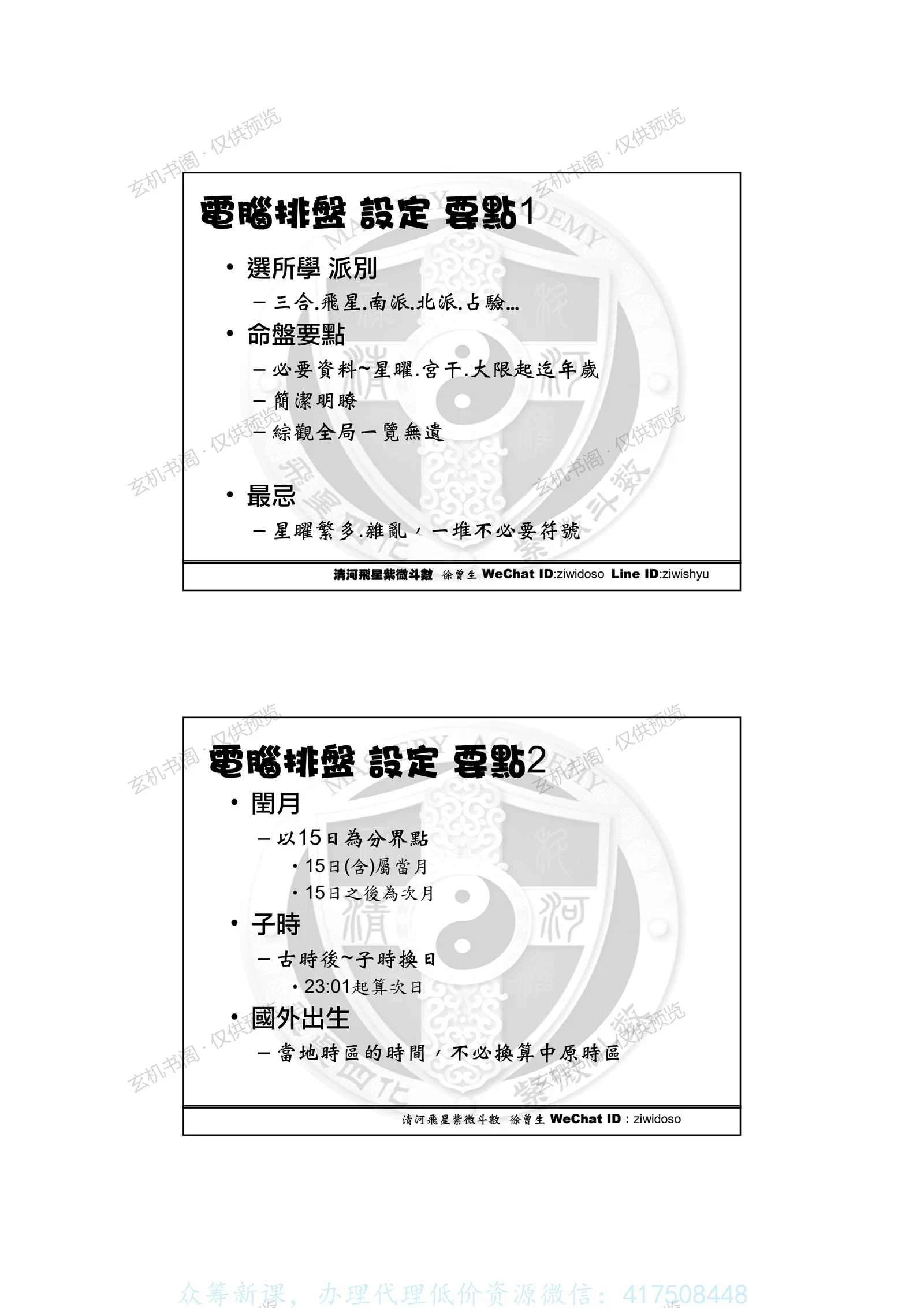
Computer charting: school selection and chart essentials
Leap month, zi hour rollover, and overseas time zones
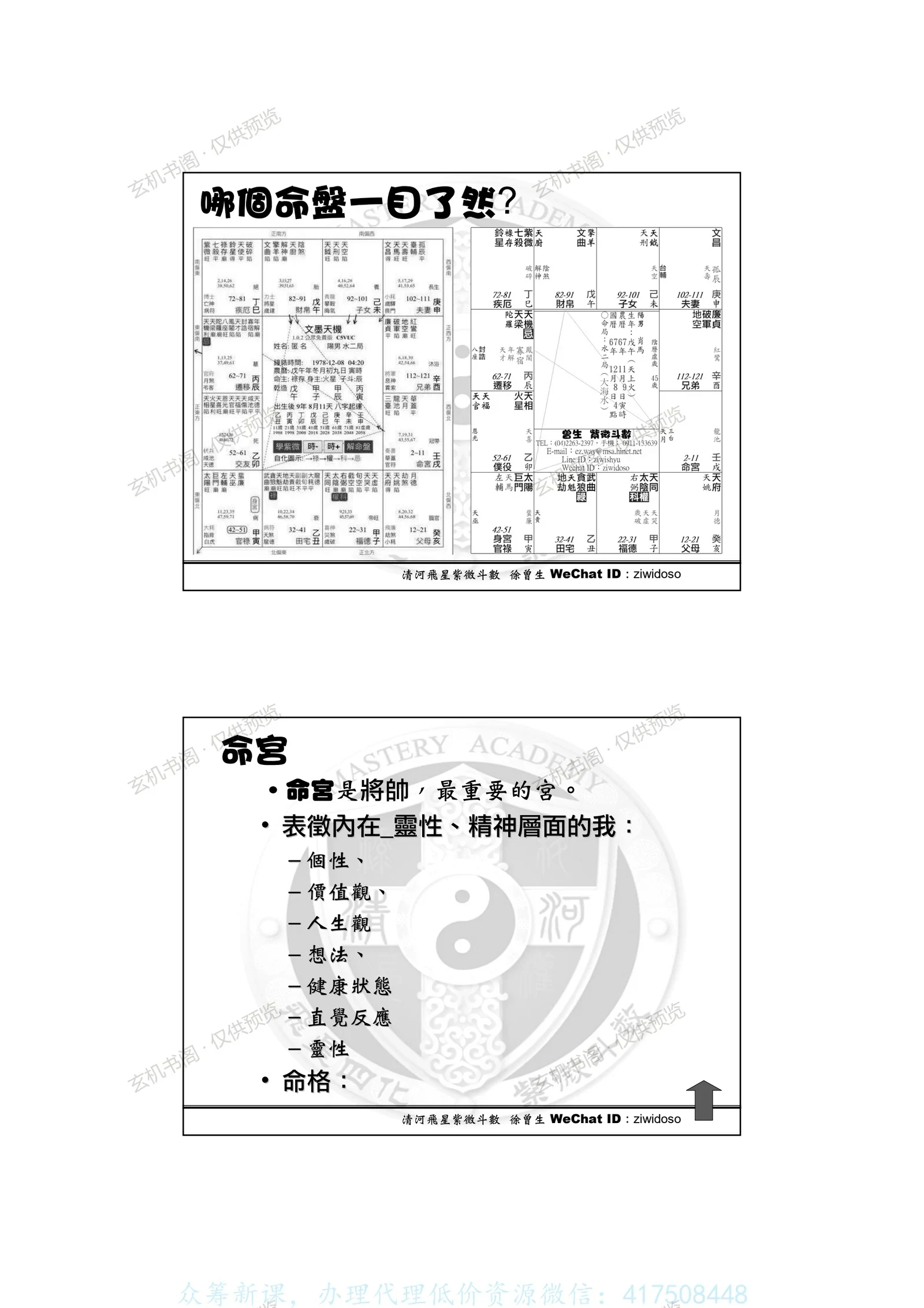
Sample chart and the meaning of the Life Palace
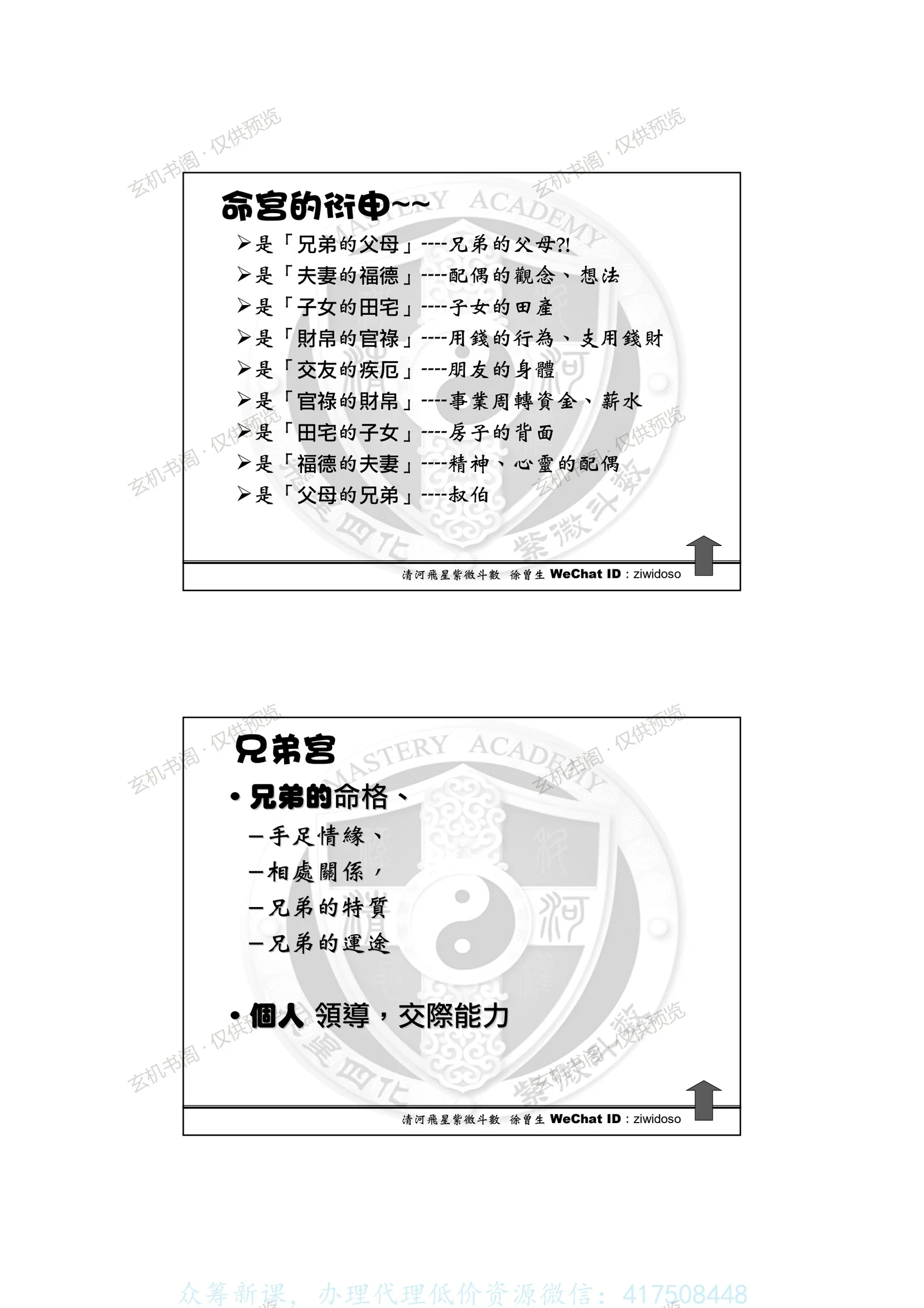
Derived meanings of the Life Palace
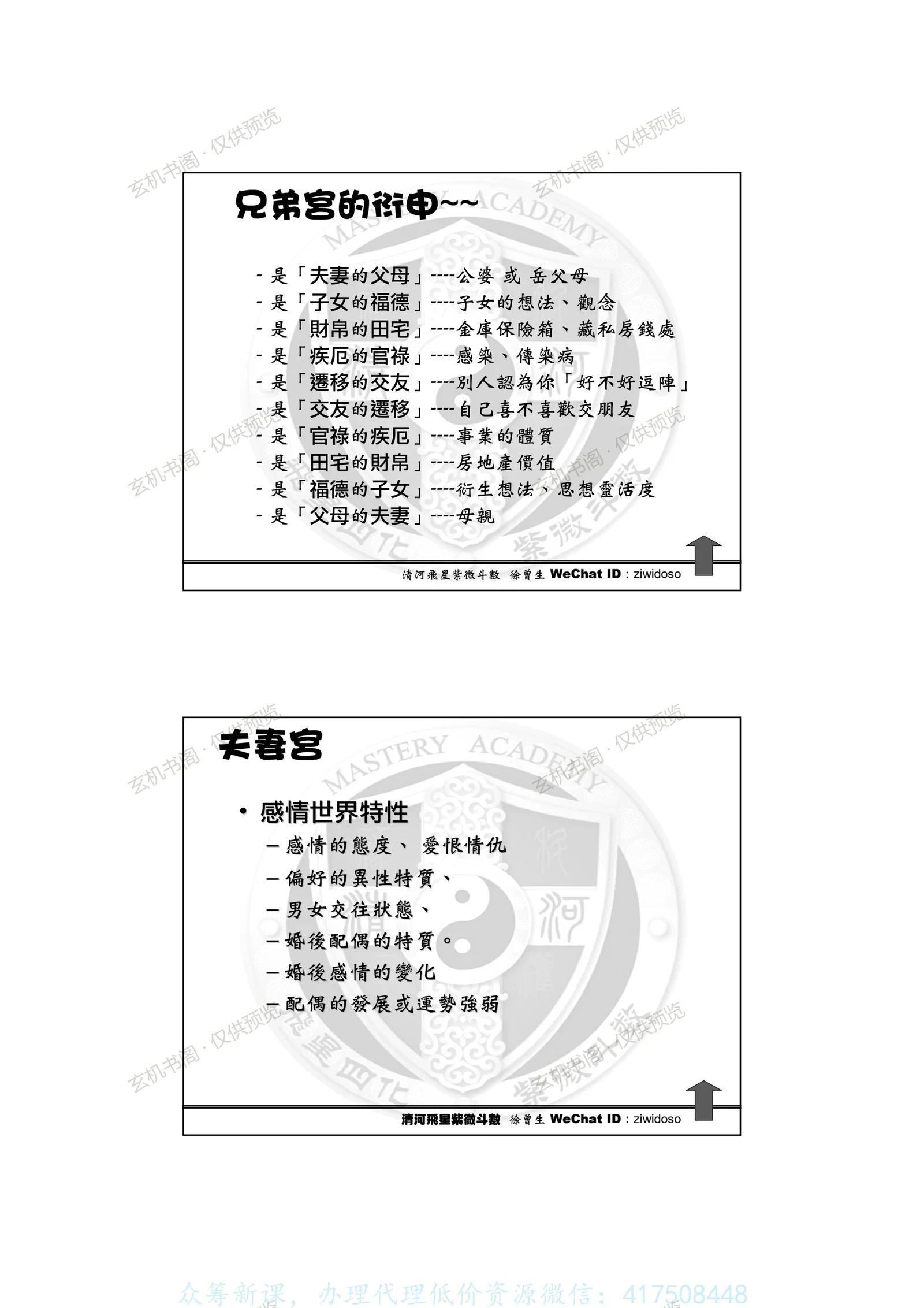
Meanings of the Siblings and Spouse palaces
Key Points
Charting requires gender, birth date and time (solar or lunar), and birthplace.
Choose a school before computer charting; keep the chart clear and uncluttered.
Leap months split at day 15: up to and including the 15th counts as the current month.
The zi hour starts at 23:01 for the next day; overseas births use local time.
The Life Palace reflects personality, values, worldview, health, and spirituality.
The Flying Star school stresses derived palace meanings, where one palace serves many roles.