Reading guide
Content guideOverview
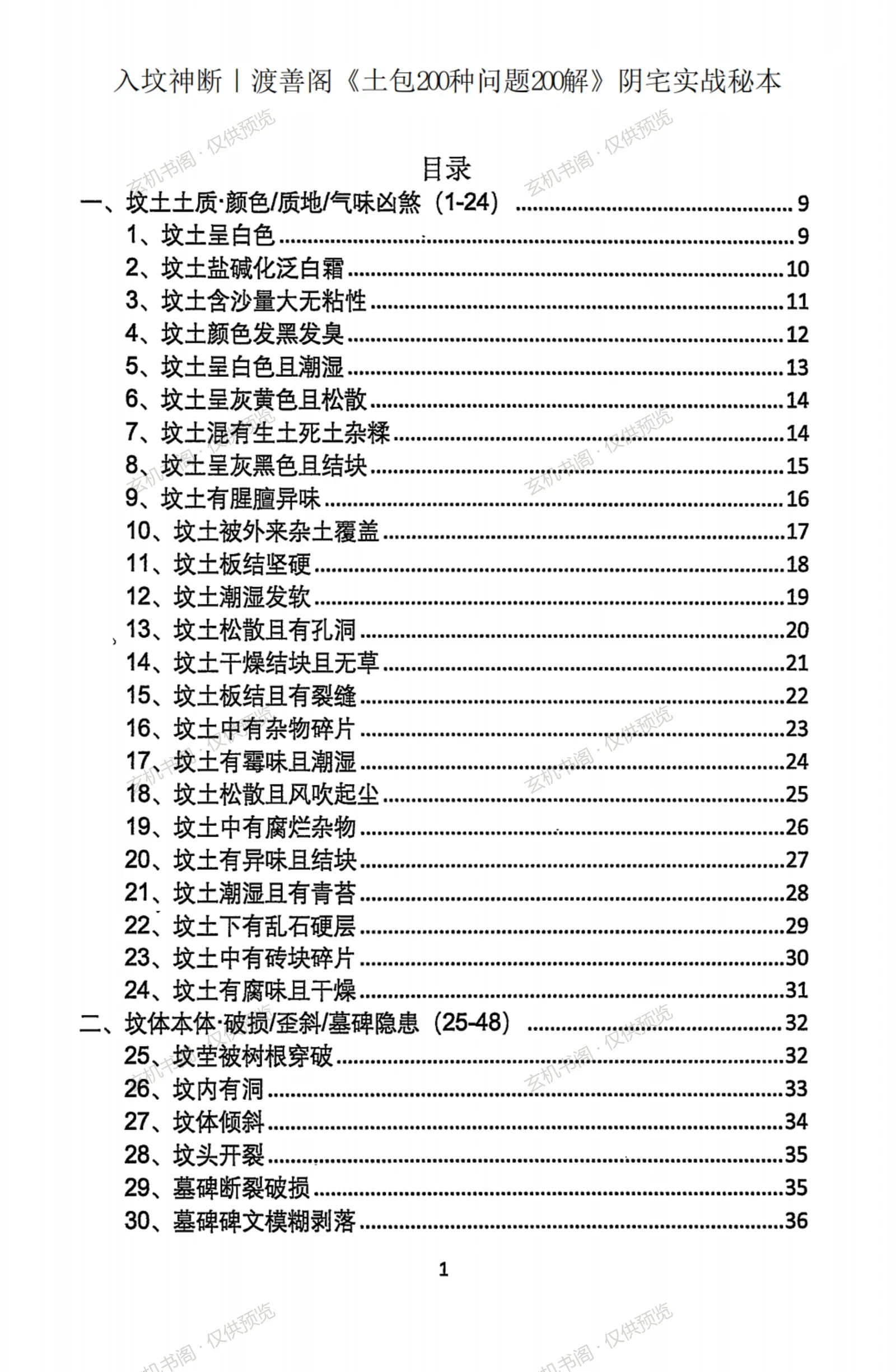
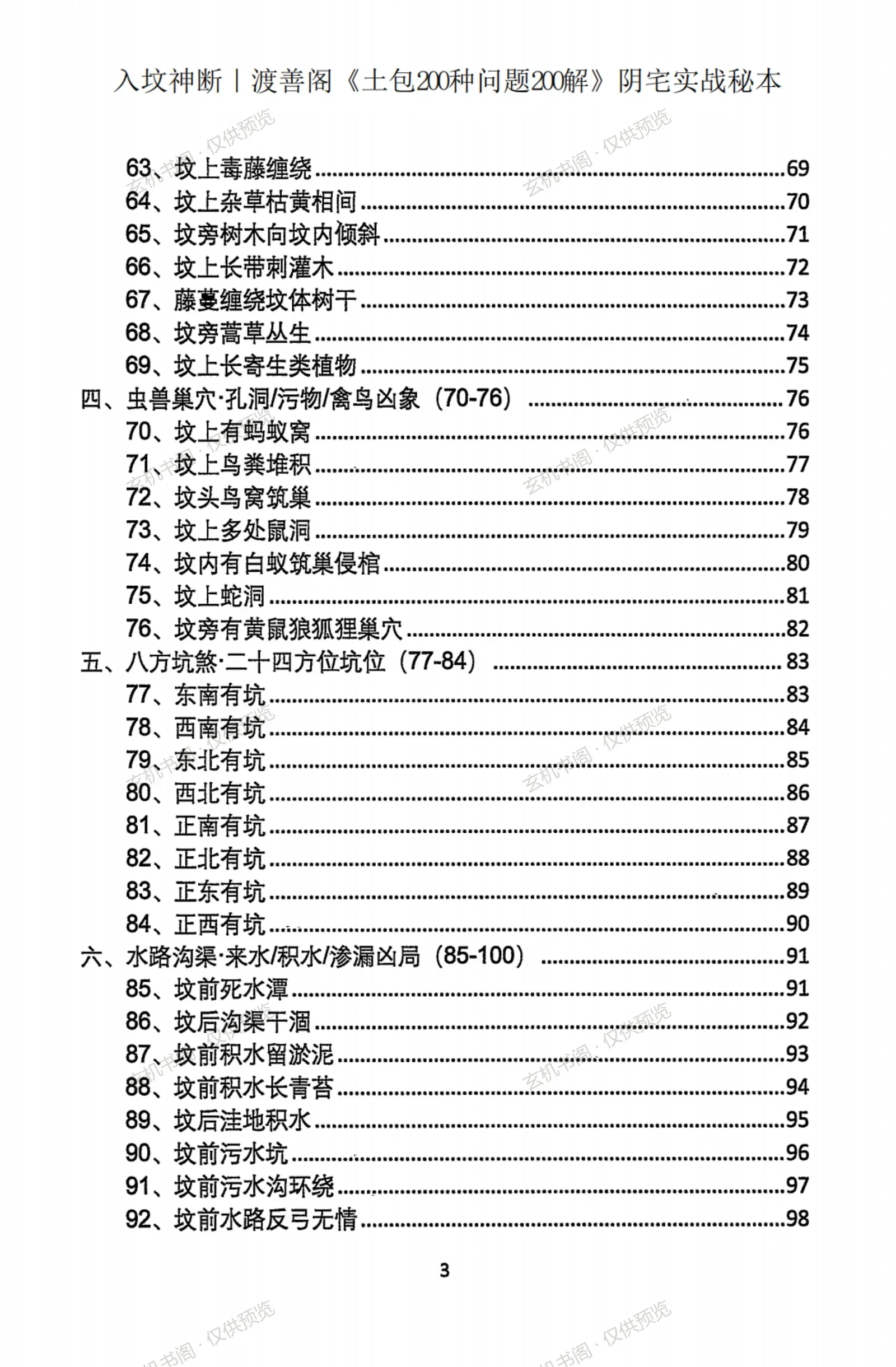
This field manual organizes the visible anomalies of earthen grave mounds into numbered problem-and-answer entries. The contents divide the material into six groups: soil quality, color, texture and odor; damage, cracking, tilting and inscription defects of the mound itself; vegetation, weeds, vines and poisonous plants; insect and animal burrows, holes and waste; surrounding pits by the eight directions and twenty-four positions; and water channels, pooling and seepage. Each entry names the observed sign and reads it as an omen, with redress suggestions. It is positioned as a practical inspection aid rather than a systematic treatise on yin-house theory.
Contents
Soil color, texture and odor omens (items 1–24)
Mound damage, tilt and inscription defects (items 25–48)
Vegetation, vines and poisonous plants (items 49–69)
Insect, animal and bird burrow signs (items 70–76)
Pits in the eight directions and twenty-four positions (items 77–84)
Water channels, pooling and seepage patterns (items 85–100)
Key Points
Judges earth energy by soil color, smell and compaction
Checks mound cracks, collapse, seepage and exposed coffins
Reads plant growth and poisonous vines as omens
Uses directional pits and water flow to assess fortune
Lists each anomaly with a reading and a suggested fix