Reading guide
Content guideOverview
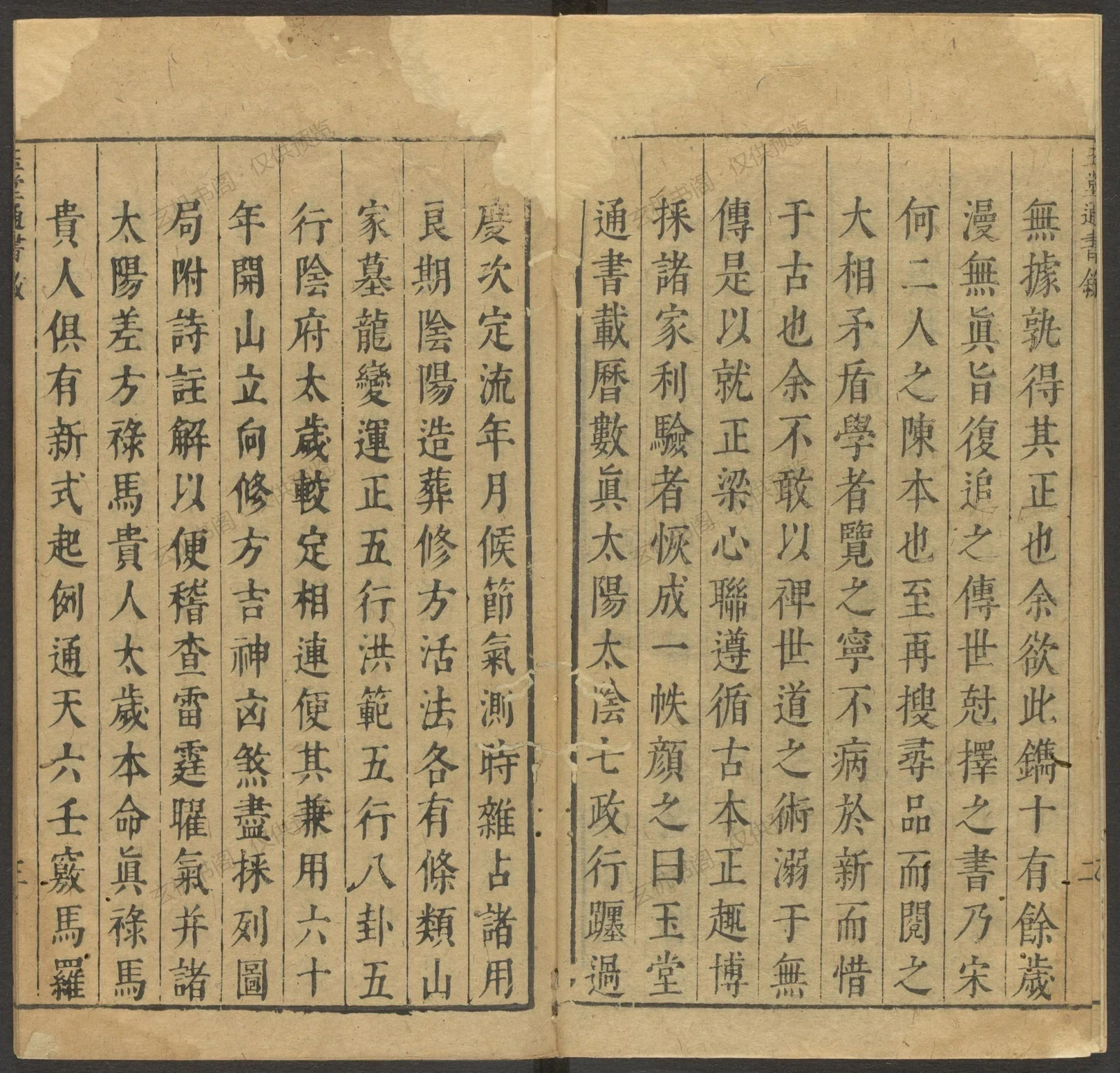
This volume, titled San Ding Lifa Yutang Tongshu and attributed to Liang Xinlian, is a revised and expanded edition of an earlier day-selection almanac. Its preface traces the origins of calendrical and divinatory arts back to Fuxi and the Yellow Emperor, criticizes the confusion of popular pseudo-texts, and explains that Liang compiled the present work from an ancient orthodox edition while testing it against various schools. The preface lists major sections such as the Fawel Tongshu, Doushou Tongshu, Shiyong Tongshu, Hetu-Luoshu diagrams, calendrical theory, and Qimen Dunjia. The main text covers seasonal and monthly periods, yin-yang burial and construction methods, mountain-dragon cycles, Five Elements and Hongfan, Bagua, the sixty Jiazi, Tai Sui, the seven luminaries, noblemen and horse stars, thunder and lightning spirits, and Qimen Dunjia layouts. It is a practical almanac compendium valuable for studying traditional Chinese day-selection systems and the structure of popular tongshu literature, though its dense terminology requires some background in calendrics and selection arts.
Contents
Preface: origins of calendrics and purpose of the almanac
Sections on Fawei, Doushou, and Shiyong tongshu
Hetu-Luoshu diagrams and calendrical theory
Qimen Dunjia layouts and methods
Seasonal periods and yin-yang burial/construction
Mountain-dragon cycles and Five Elements
Bagua, sixty Jiazi, and Tai Sui spirits
Noblemen, horse stars, thunder spirits, and selection essentials
Key Points
Calendrics as framework, day selection as application
Preface criticizes confused popular texts and explains revision
Includes Fawei, Doushou, Shiyong, Hetu-Luoshu, Liqi, and Qimen sections
Detailed rules for burial, construction, mountain dragons, and spirits
Useful for studying traditional tongshu structure and folk selection arts