Reading guide
Content guideOverview
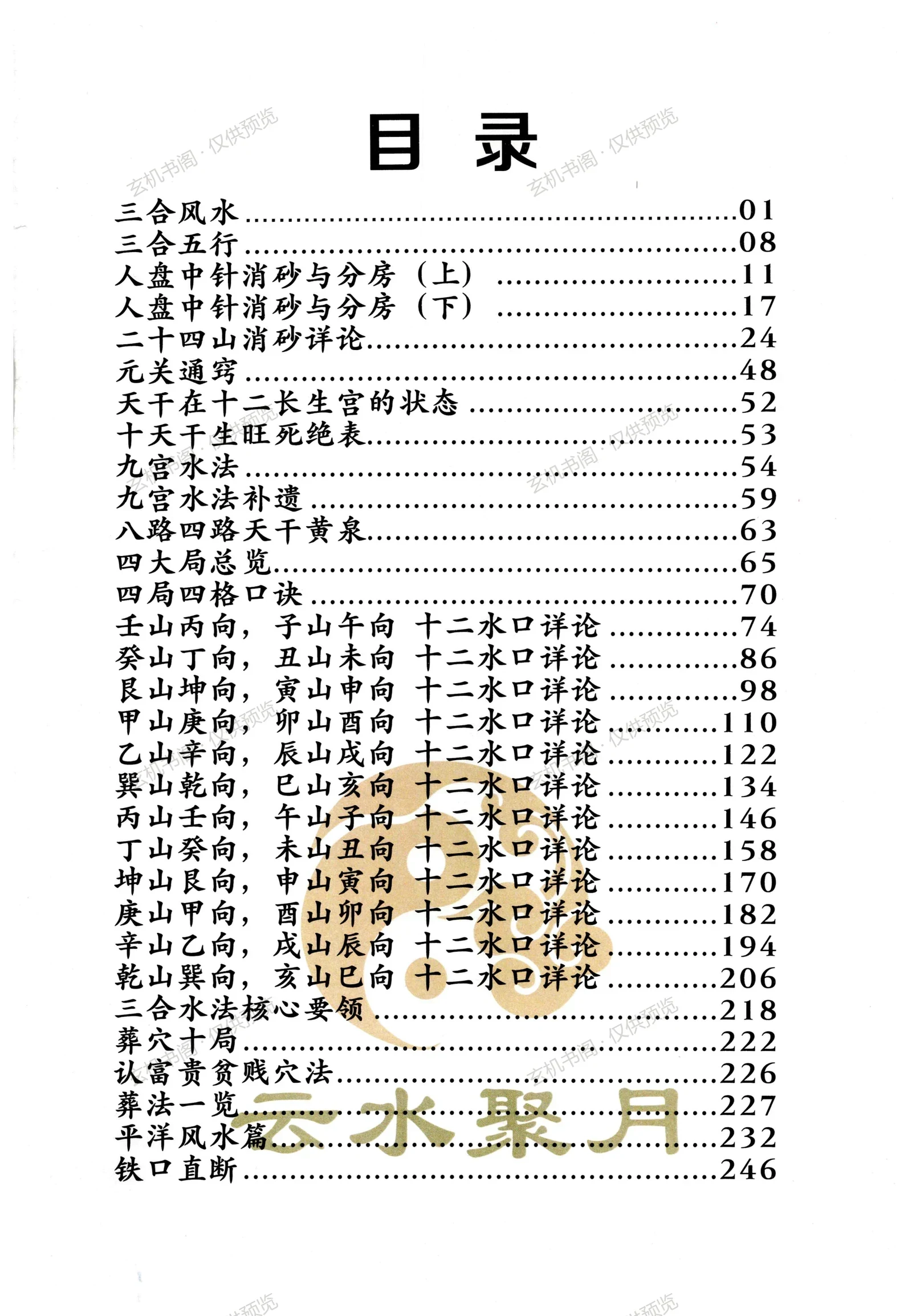
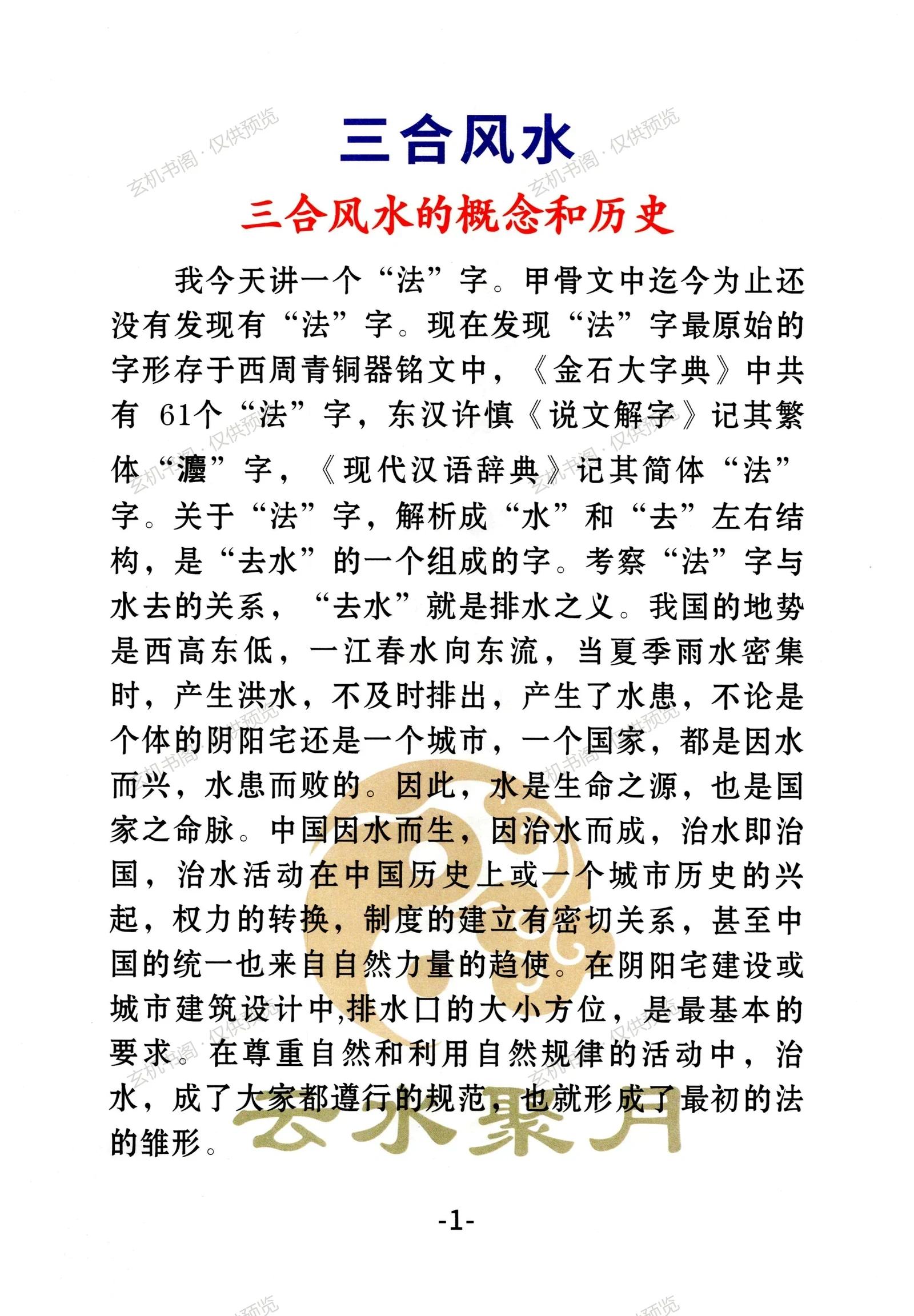
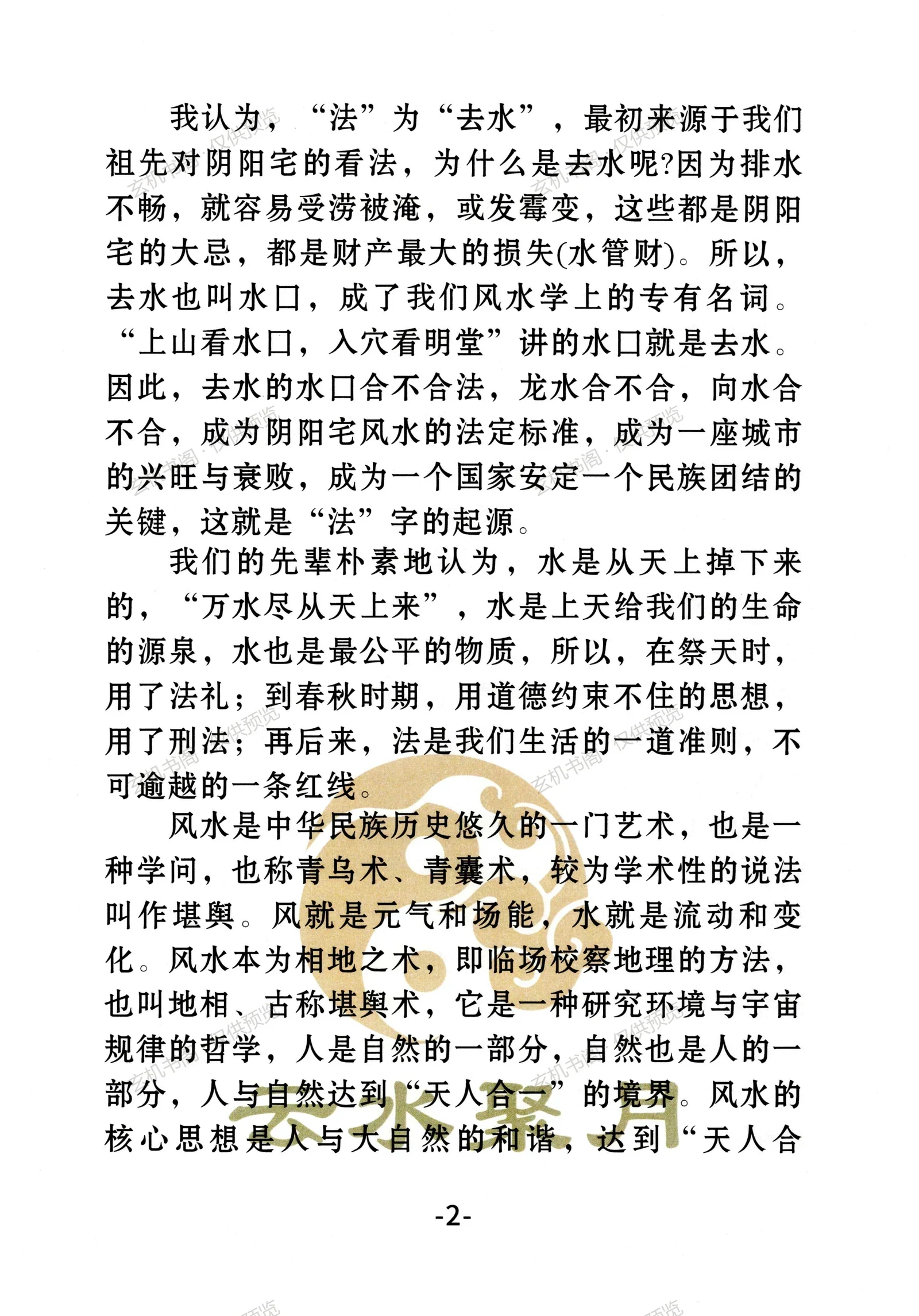
Sanhe Baolu is a compiled text devoted to the Sanhe (Three Harmonies) school of Chinese feng shui. Its table of contents begins with foundational concepts of Sanhe feng shui and the Sanhe five elements, then moves into practical form-school topics such as needle-based sand elimination and chamber allocation across the twenty-four mountains. The core of the book examines the Nine Palaces water method, the Yellow Spring paths of the heavenly stems, and the four great configurations, before treating in detail the twelve water-mouth judgments for each of the twenty-four mountain orientations. Later sections cover the essential principles of Sanhe water method, ten burial configurations, methods for identifying auspicious and inauspicious sites, a survey of burial techniques, flatland feng shui, and direct oral judgments. The opening essay traces the etymology of the character fa (law/method) to the idea of draining water, framing the dragon-water-orientation triad as the heart of the tradition and citing Yang Junsong's Yujing on the need for dragon, orientation, and water to accord.
Contents
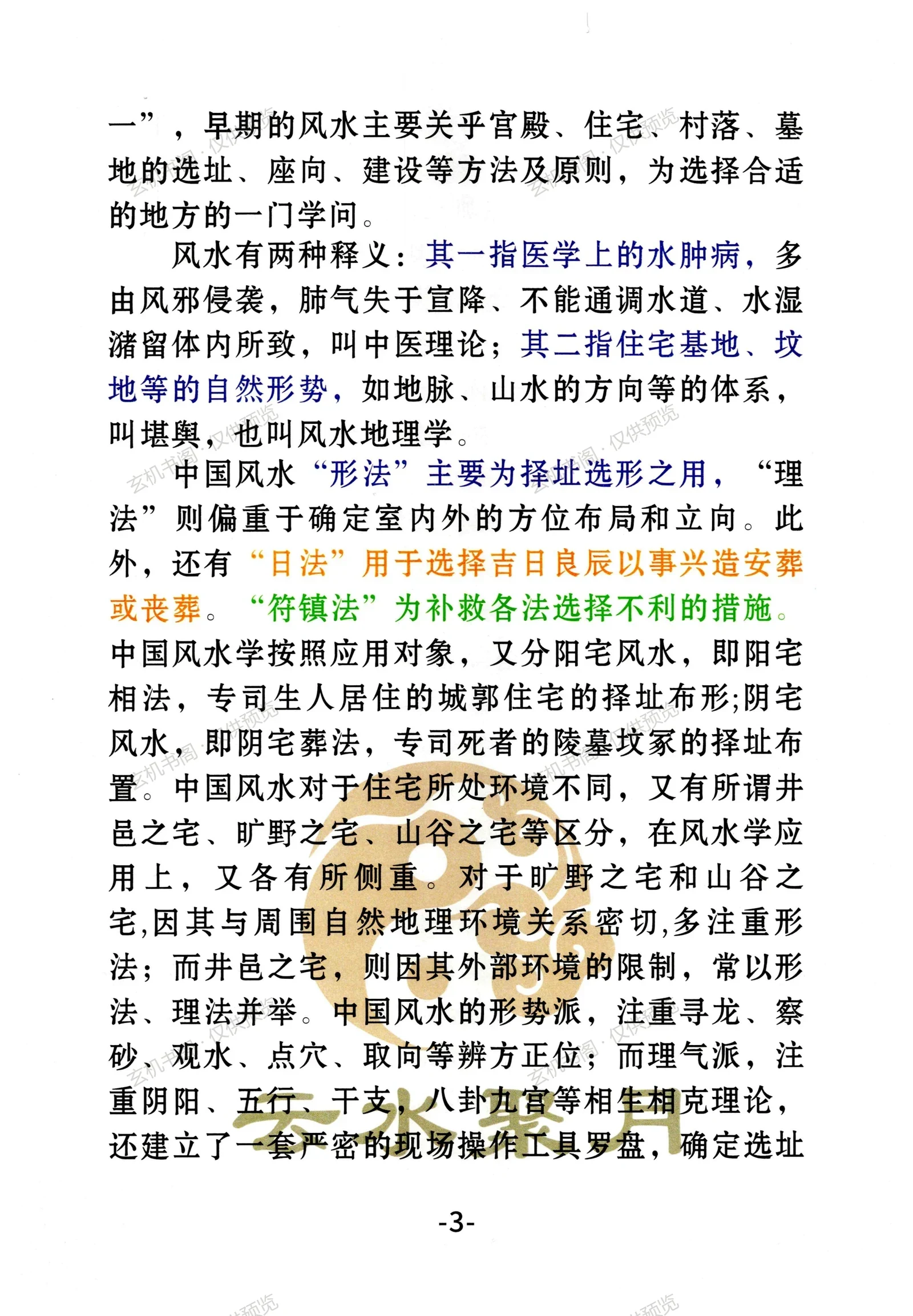
Concepts and history of Sanhe feng shui
Sanhe five elements and sand elimination by mountain
Nine Palaces water method, Yellow Spring, four configurations
Twelve water-mouth judgments for each of the twenty-four orientations
Core principles of Sanhe water method and ten burial configurations
Identifying auspicious sites and survey of burial methods
Flatland feng shui and direct oral judgments
Key Points
Dragon, water, and orientation must accord as the governing principle
Detailed water-mouth judgments for all twenty-four mountain orientations
Covers sand elimination, chamber allocation, and Nine Palaces water method
Includes yin-house burial configurations and flatland yang-house siting
Opening essay links the character fa to drainage and water mouths