Reading guide
Content guideOverview
This section covers Stage 15 of Volume 4 of Sanming Tonghui, running from Lesson 561 on the preferences and taboos of Jia and Yi wood through Lesson 571 on the poems for the six Bing days. Each lesson presents a general discussion or verse, followed by original commentary and numerous case charts (Examples 1 to over 90) illustrating how to assess day stems in relation to their sitting branches, monthly commands, hourly pillars, and luck cycles. Lessons 561–562 address Jia and Yi wood preferences and luck cycles; 563–566 cover the poems and wealth-official rules for the six Jia and six Yi days; 567–568 append commentary on the Jia and Yi wood poems from Ditiansui; and 569–571 turn to Bing and Ding fire, their luck cycles, and the poems for the six Bing days. The dense terminology of Ten Gods, lu-ming, clashes, combinations, and wealth-official-seal makes it suitable for readers already grounded in Bazi fundamentals.
Contents
L561: General preferences of Jia and Yi wood
L562: Luck-cycle fortunes for Jia and Yi days
L563: Poems for the six Jia days
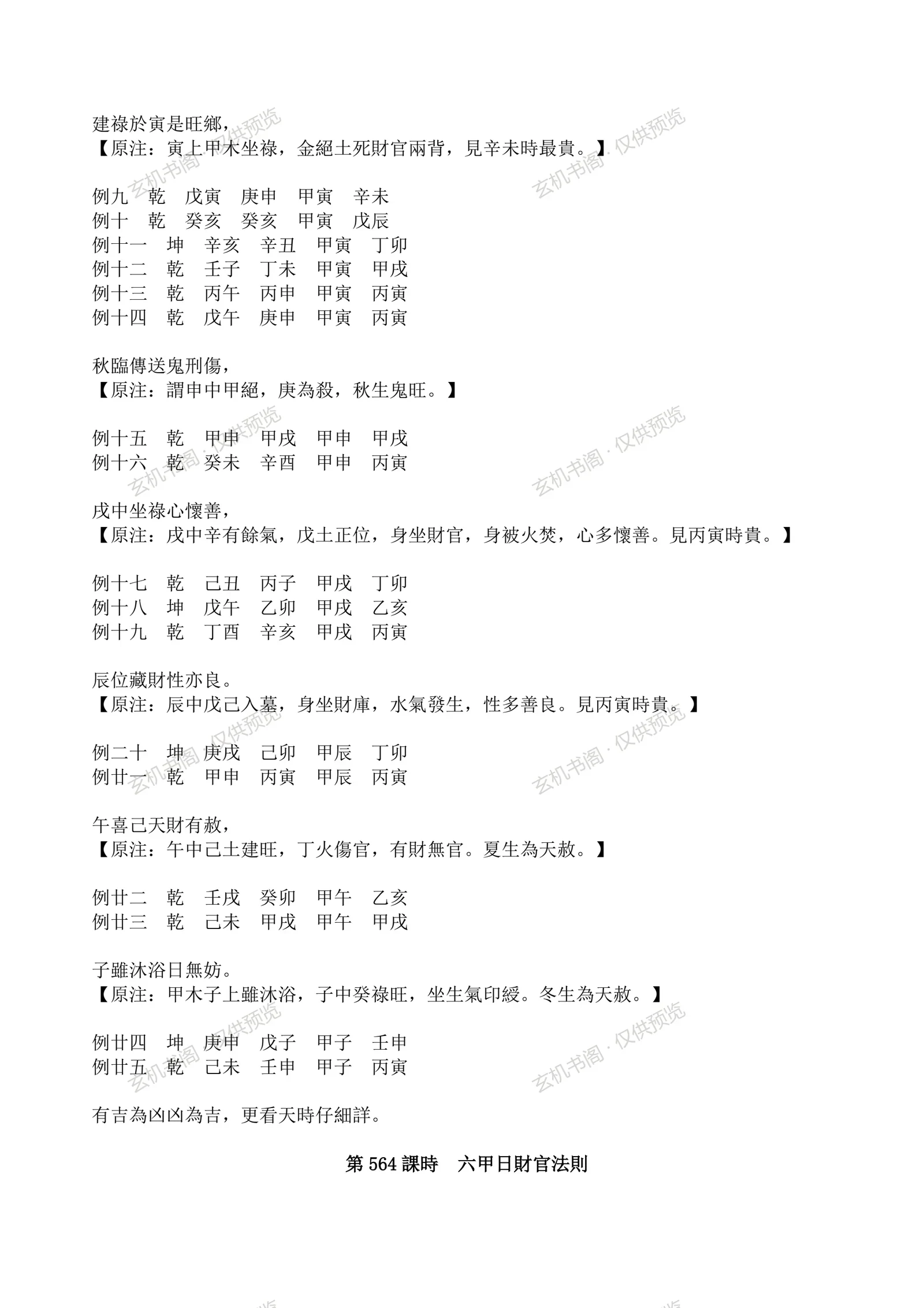
L564: Wealth-official rules for the six Jia days
L565: Poems for the six Yi days
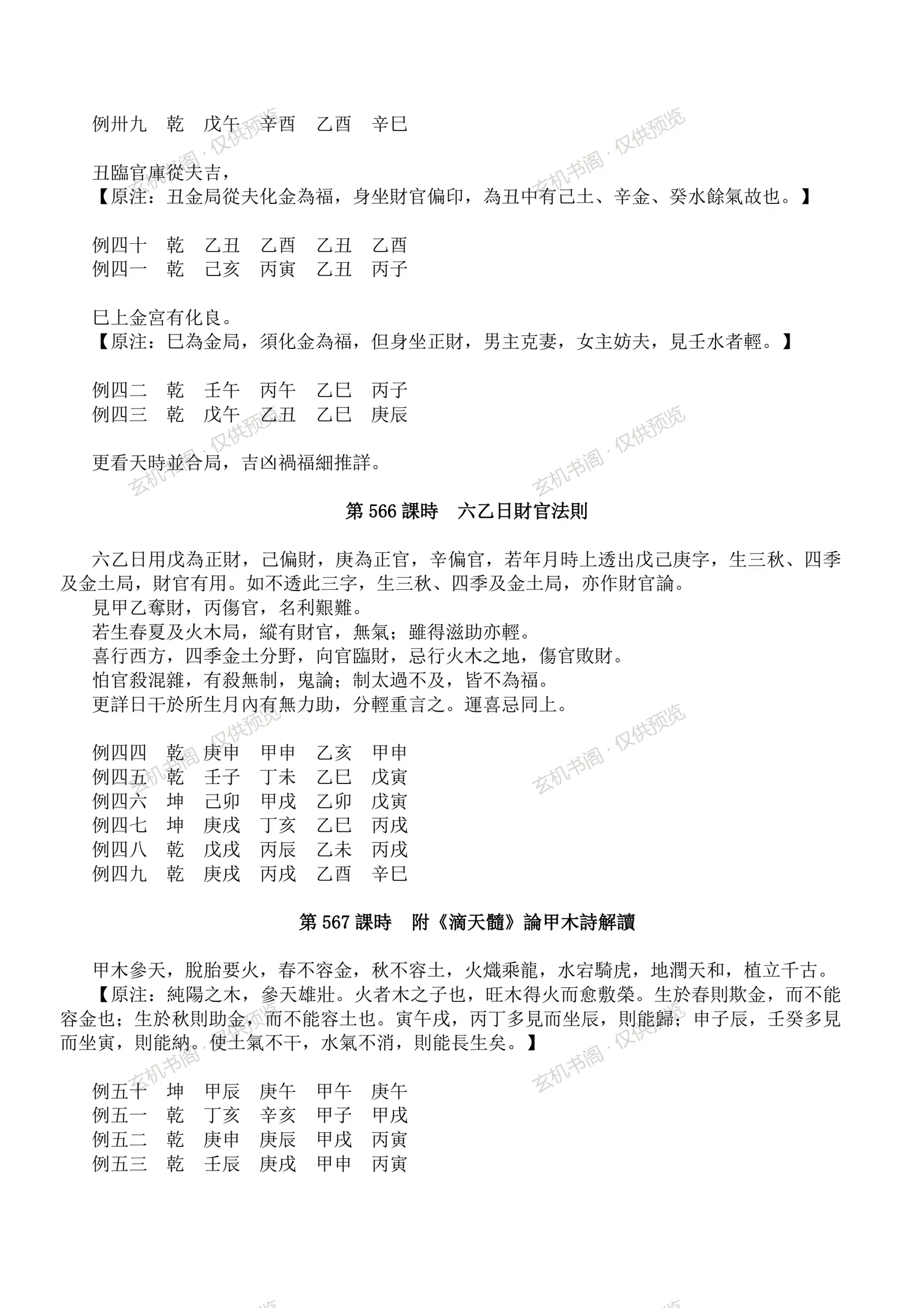
L566: Wealth-official rules for the six Yi days
L567–568: Ditiansui Jia and Yi wood poems explained
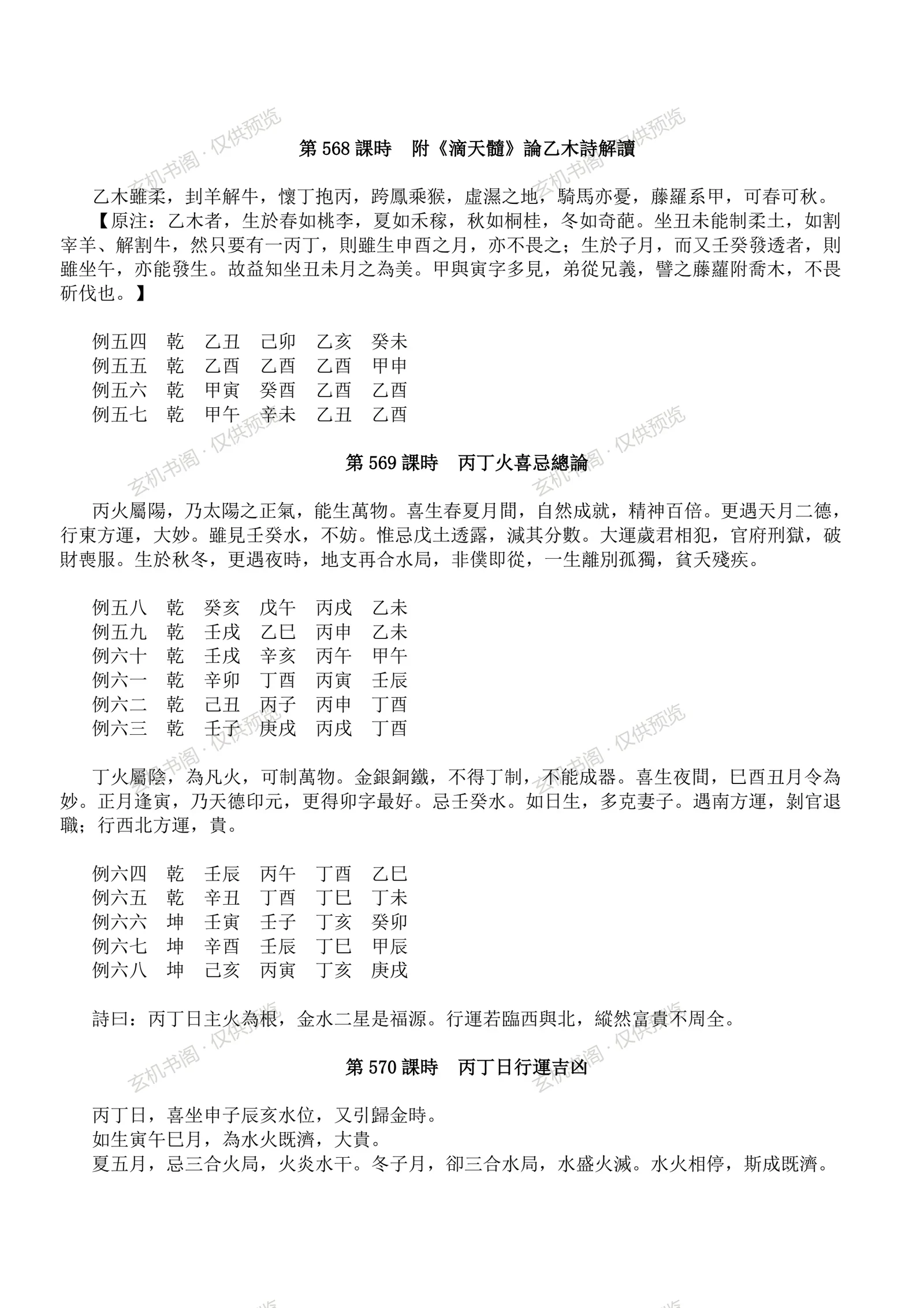
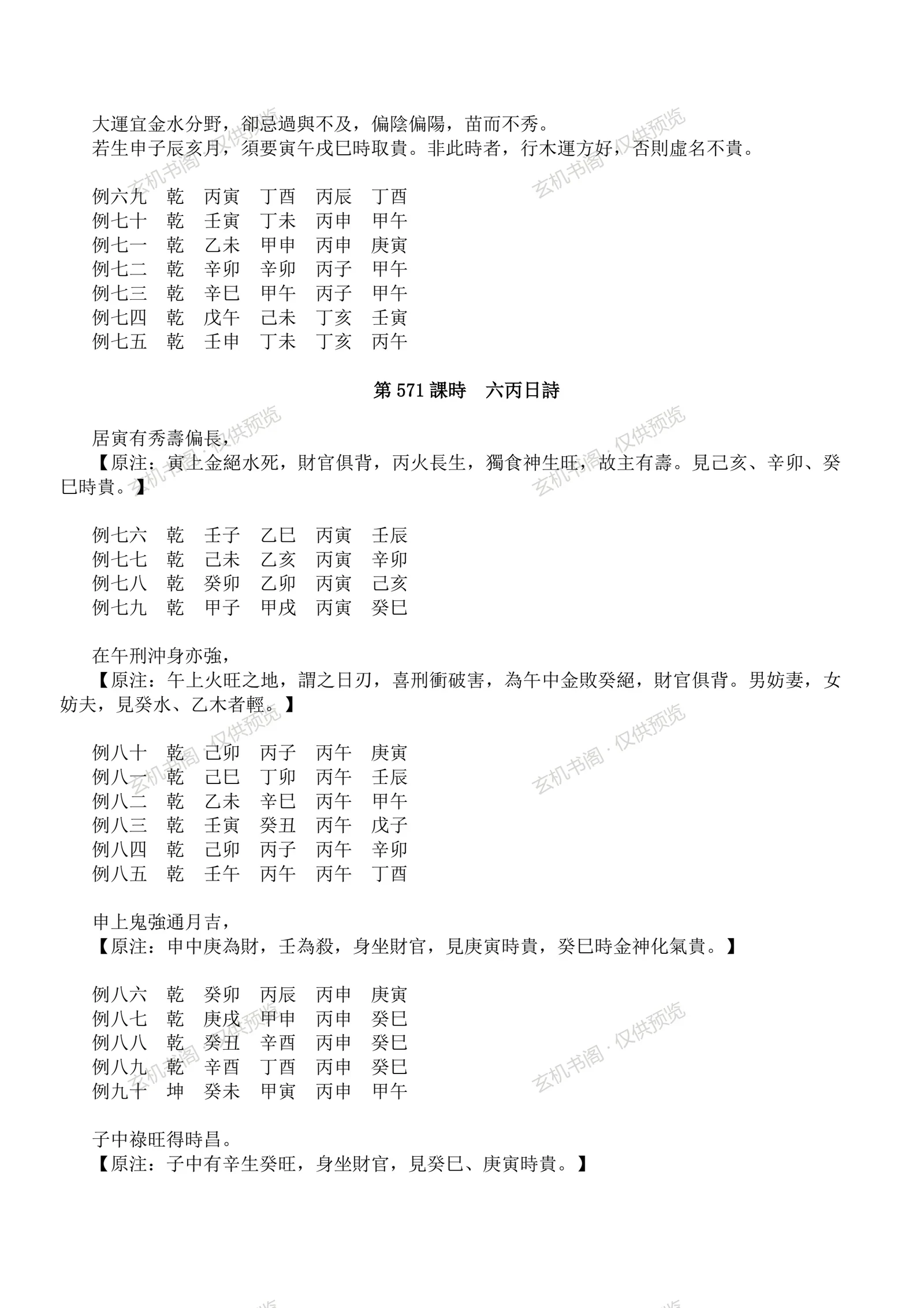
L569–571: Bing-Ding fire preferences, luck cycles, and six Bing day poems
Key Points
Centers on the day stem, judging preferences by sitting branch, month, and hour.
Emphasizes coordinating luck cycles with the four pillars, avoiding excess and deficiency.
Uses many case charts to demonstrate selection of wealth, official, and seal.
Appends Ditiansui Jia and Yi wood poems with commentary on wood nature.
Separate poems for the six Jia, six Yi, and six Bing days outline branch-specific fortunes.