Reading guide
Content guideOverview
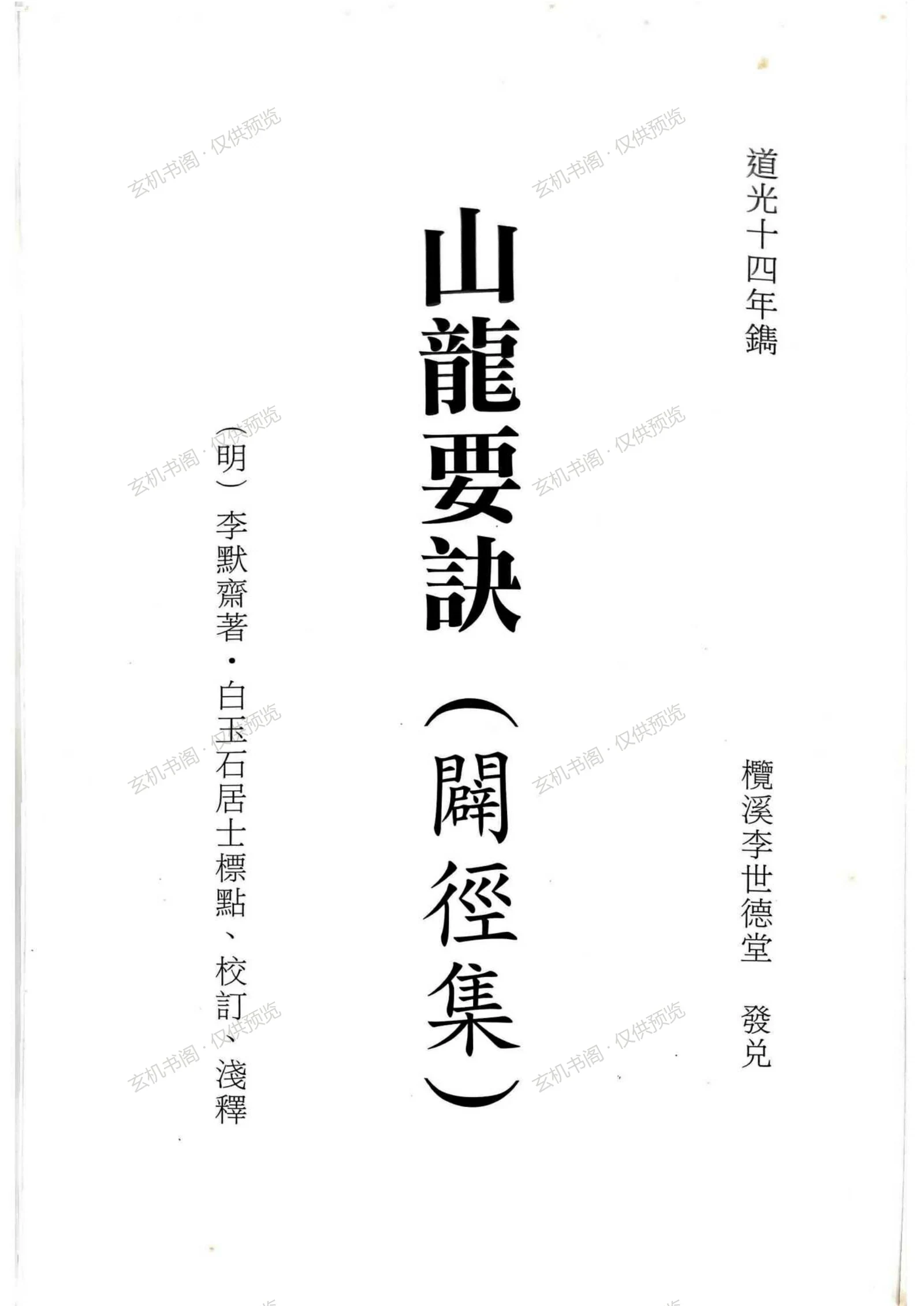
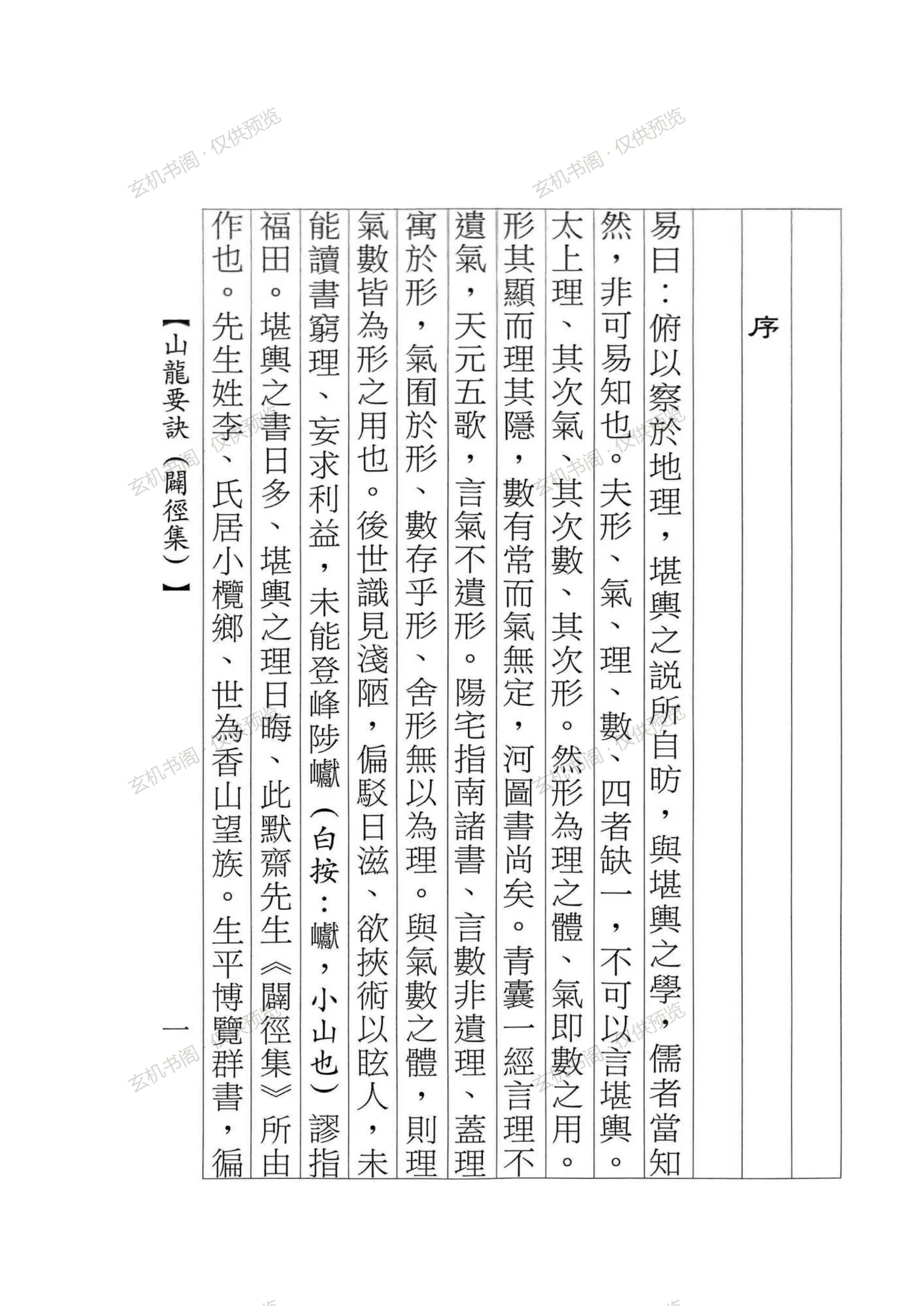
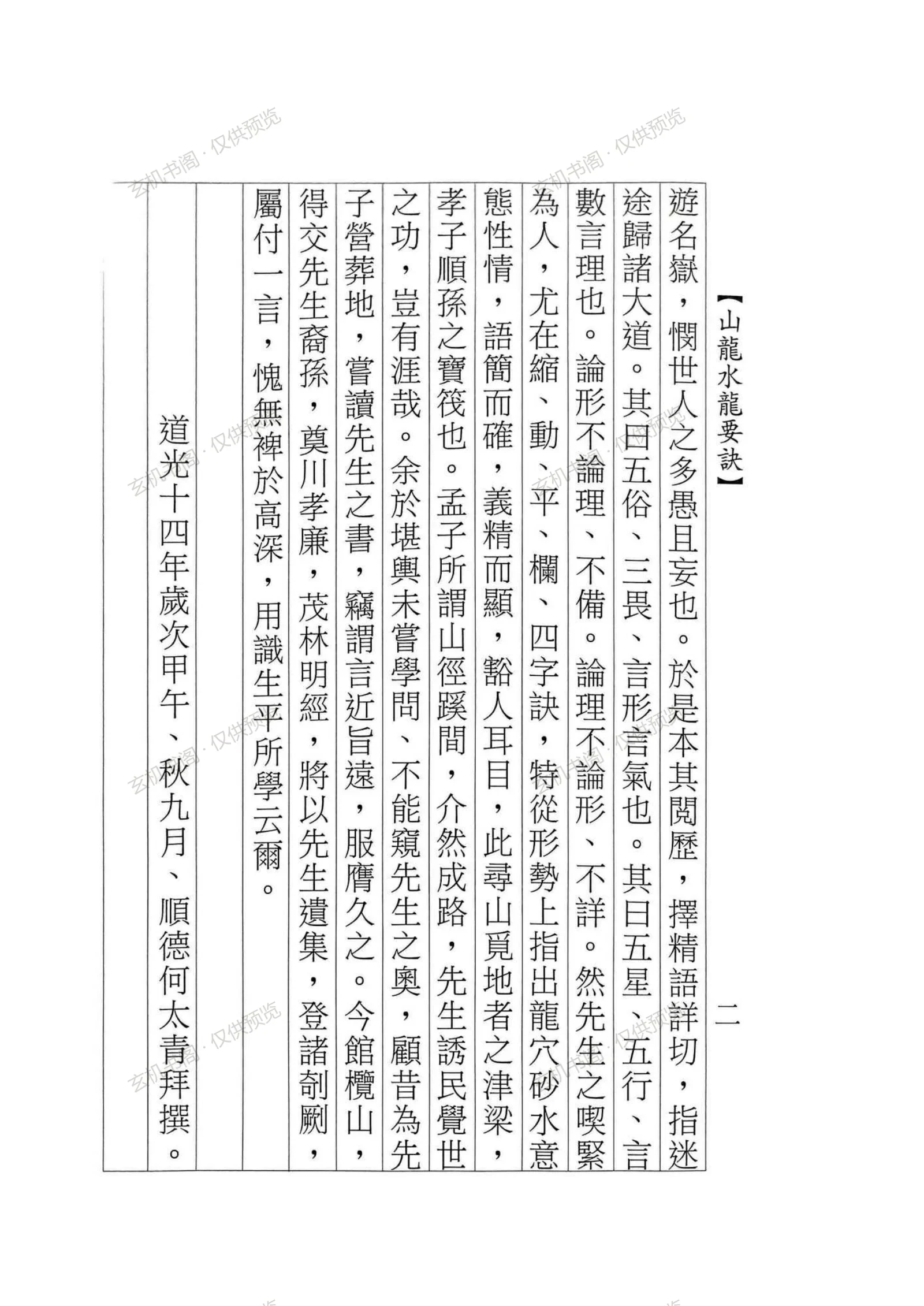
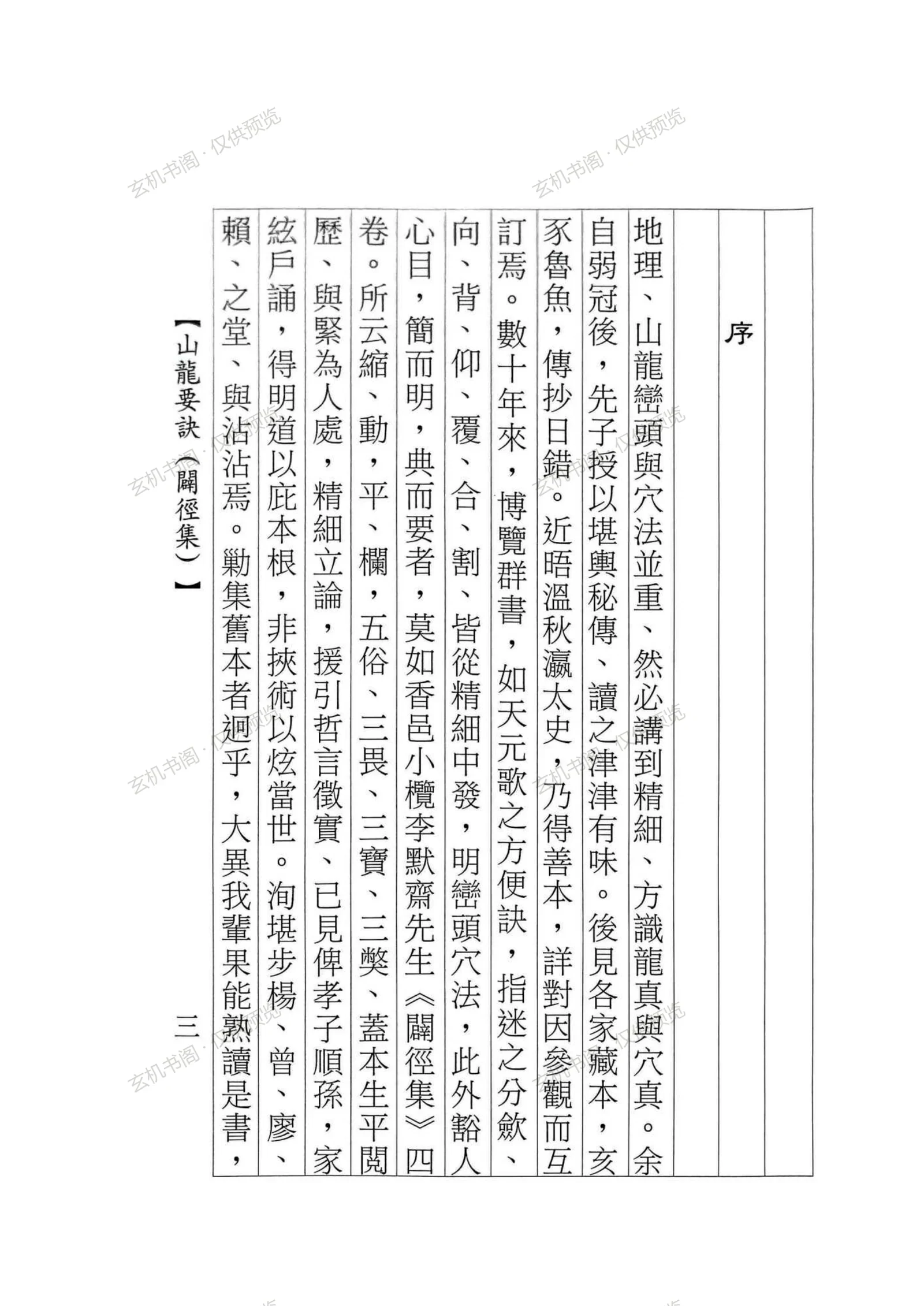
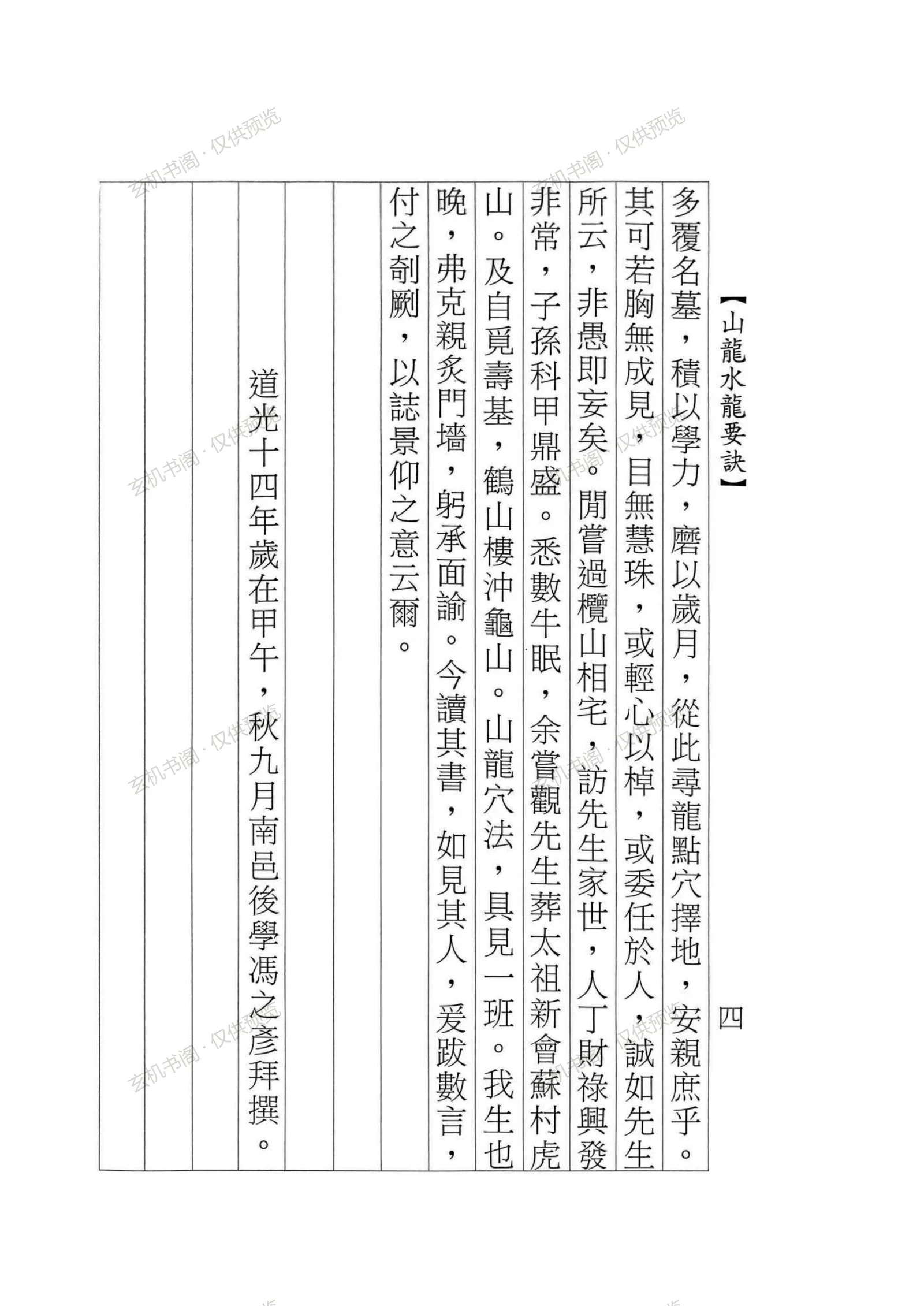
This is a Daoguang 14 (1834) edition of a Form School (xingshi) fengshui text. The cover reads Shān Lóng Shuǐ Lóng Yào Jué, while the inner title page reads Shān Lóng Yào Jué (Pì Jìng Jí), attributed to Li Mozhai of the Ming. Two prefaces from 1834, by He Taiqing of Shunde and Feng Zhiyan of Nanhai, discuss the relations among form, qi, principle, and number, and praise Li's concise treatment of dragon, lair, sand, and water. The main text sets out practical rules for identifying mountain dragons and water dragons and for siting the lair, with entries on the Five Stars, Five Phases, the Five Vulgarities, the Three Fears, the Three Treasures, and the Three Faults. Only the cover, title page, and prefaces were available for this description.
Contents
Cover: Essentials of Mountain and Water Dragons
Title page: Shan Long Yao Jue (Pijing Ji), by Li Mozhai
Preface by He Taiqing on form, qi, principle, and number
Preface by Feng Zhiyan on Li Mozhai and the book
Main text: rules for mountain and water dragons and siting
Key Points
Form School approach centered on dragon, lair, sand, and water.
Prefaces insist form, qi, principle, and number must all be considered.
Includes lists such as the Five Stars, Five Vulgarities, Three Fears, Three Treasures.
Li Mozhai was a Ming native of Xiangshan, Guangdong.
Printed in 1834 with two prefaces.