Reading guide
Content guideOverview
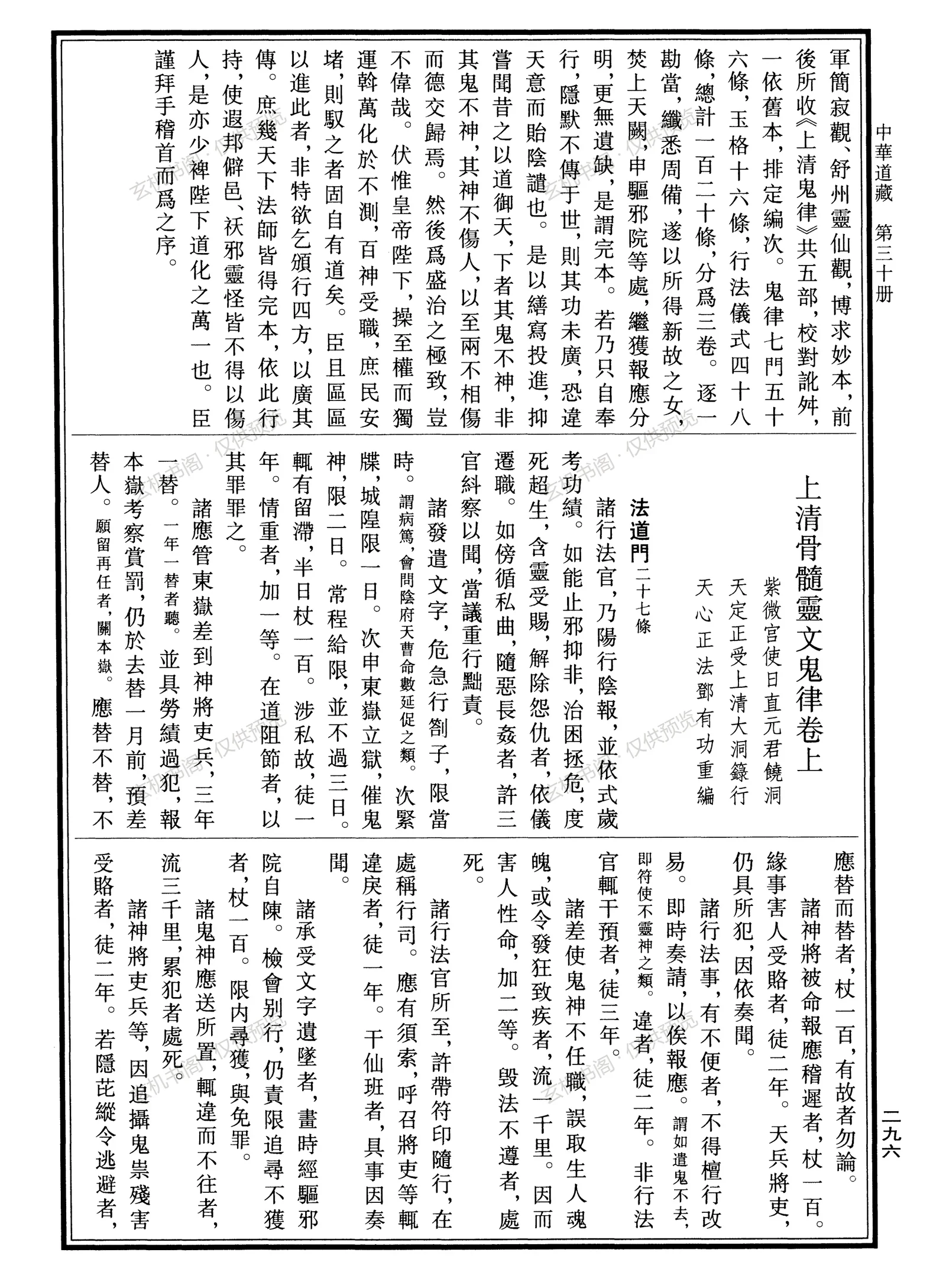
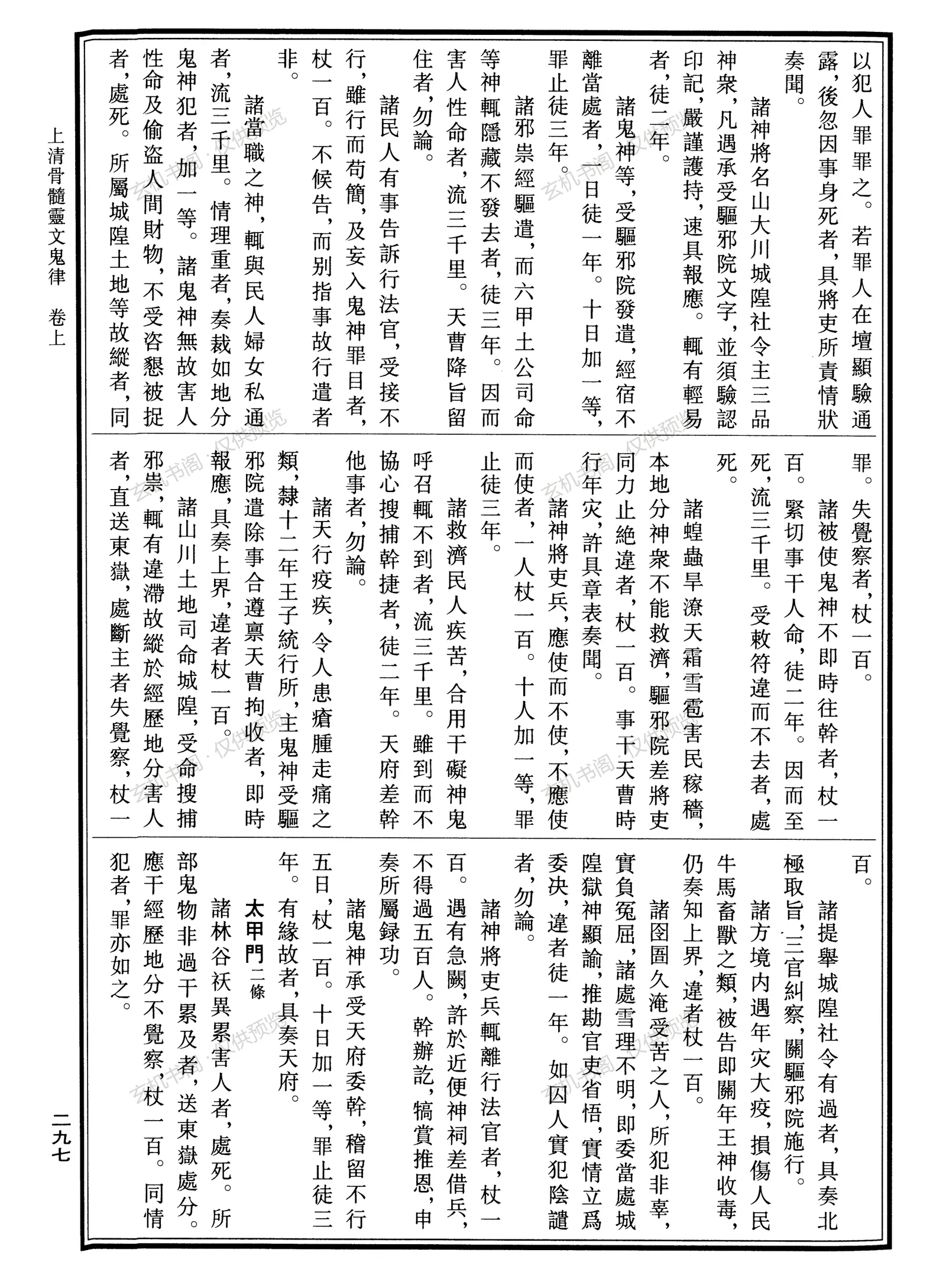
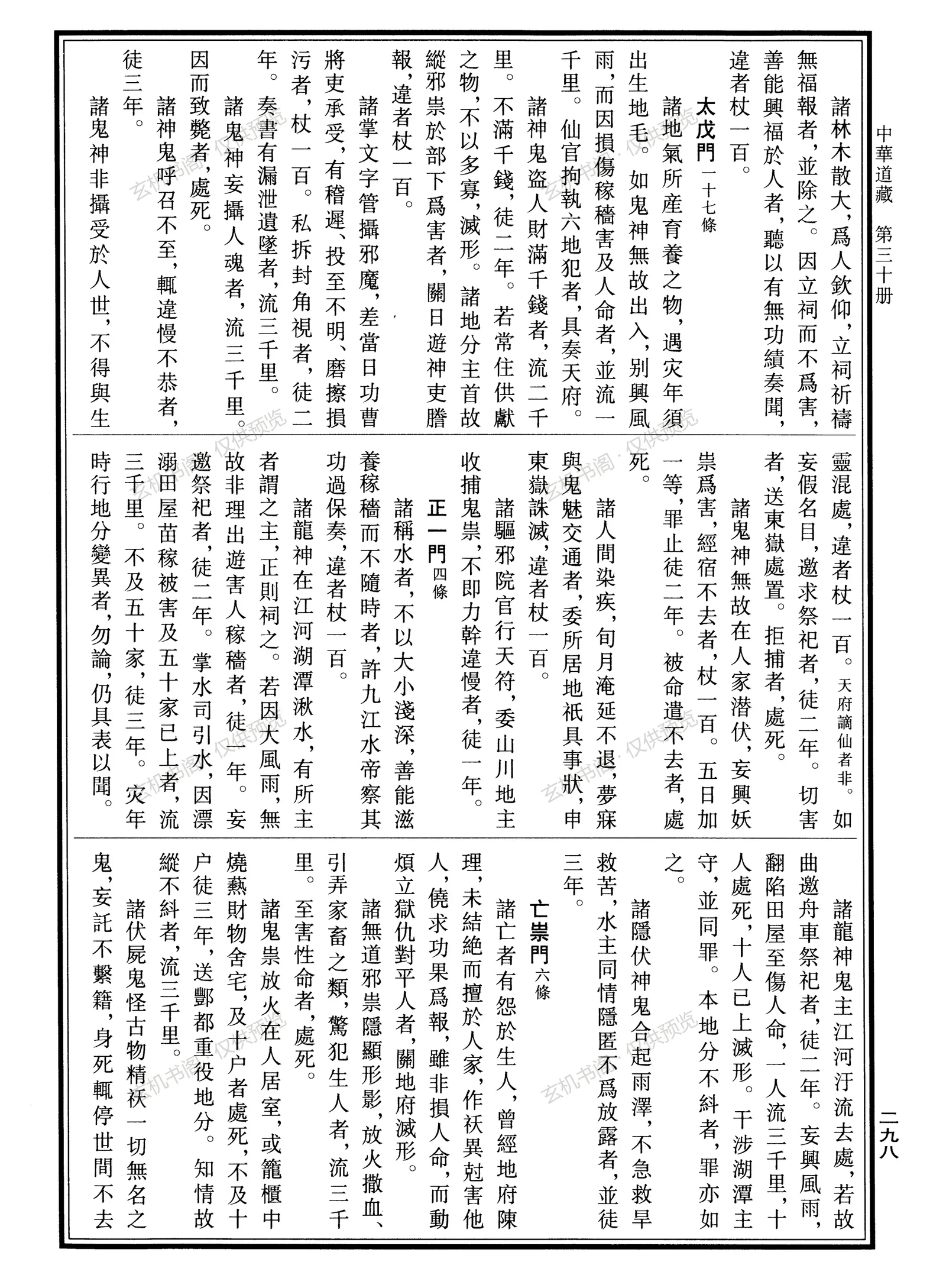
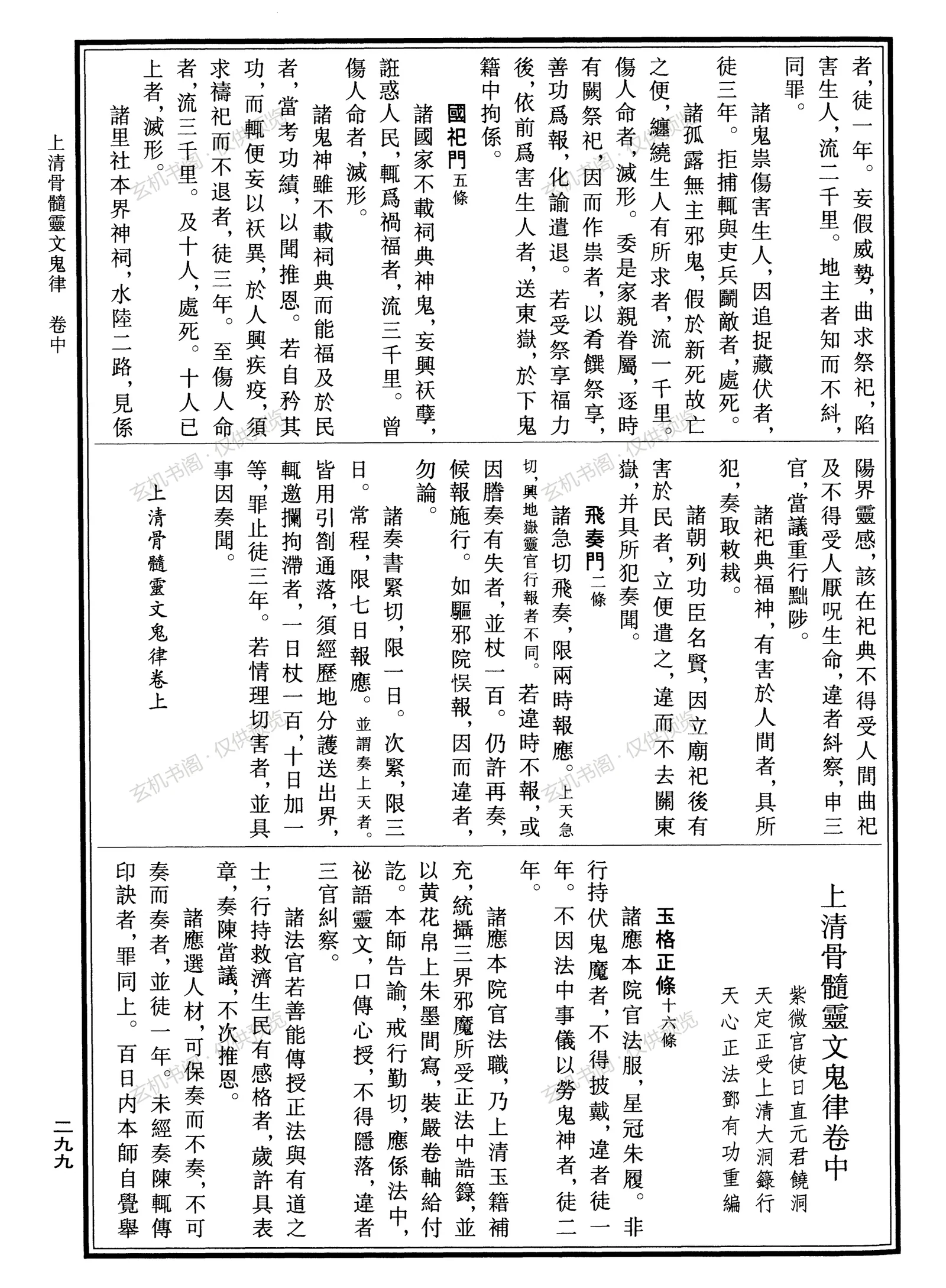
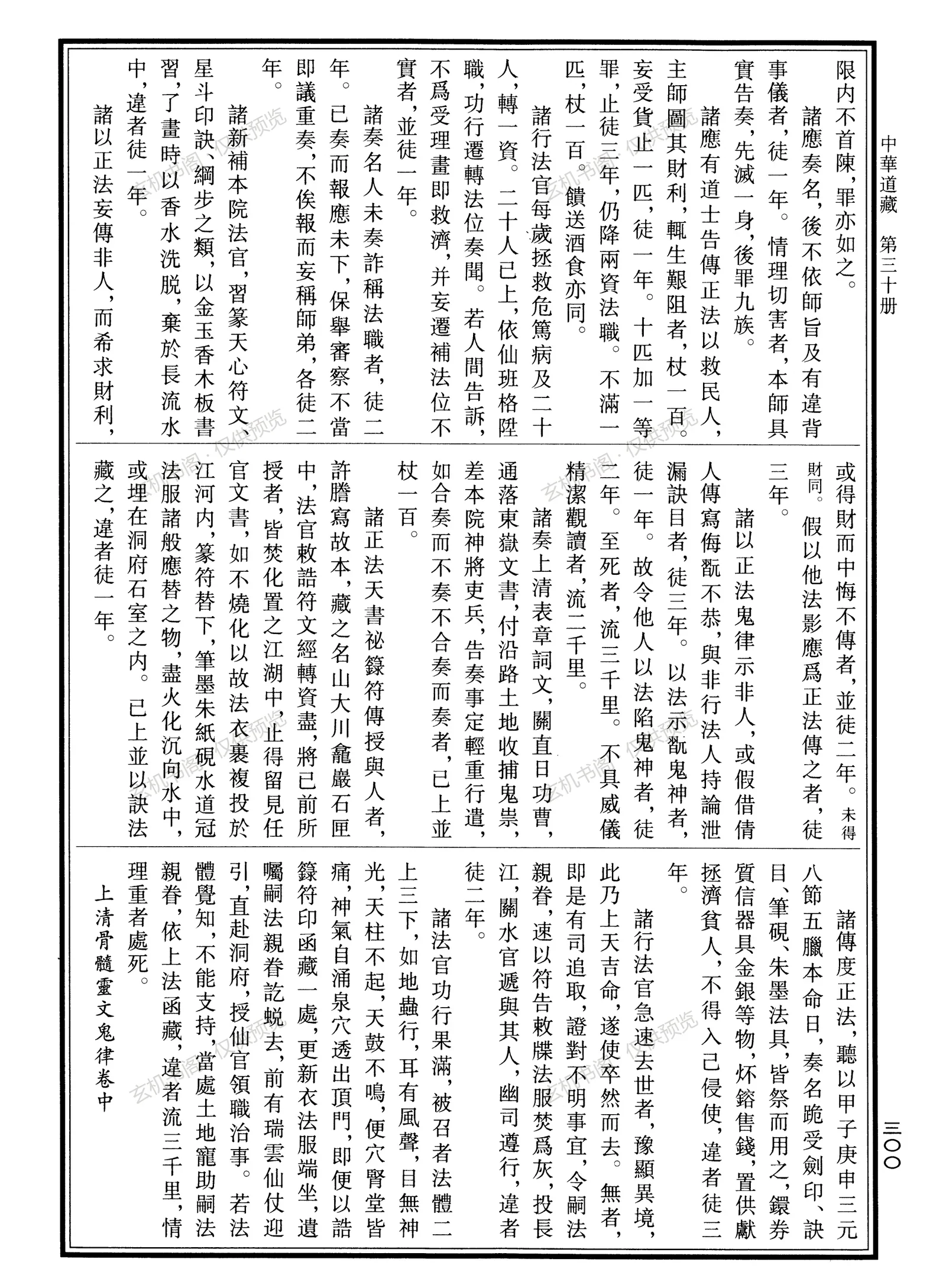
This text is a significant Southern Song Daoist classic from the Shangqing tradition, focusing on the legal and regulatory framework of Daoist ritual practice. The core of the work, the 'Ghost Laws,' describes how celestial laws are used to command and govern spirits, ensuring the orthodoxy and efficacy of rituals. The visible table of contents reveals multiple sections, such as the 'Fadao' (Dharma Path) chapter, which outlines rules for practitioners and penalties for violations; the 'Taijia' chapter, dealing with rewards and punishments for spirits and specific rituals like rain-making; the 'Guosi' (State Sacrifices) chapter, addressing state and local deity worship; the 'Feizou' (Flying Memorials) chapter, detailing protocols for submitting petitions to heaven; and the 'Yuge' (Jade Statutes), which lists the primary precepts for conducting rituals. The book prescribes specific punishments for practitioners who fail in their duties, act out of selfishness, or transmit teachings improperly, reflecting a highly regulated and serious approach to Daoist magic. It holds significant value for the study of Daoist precepts, ritual practices, and the history of the Shangqing school during the Southern Song dynasty.
Contents
Preface: Explaining the origin and importance of the Ghost Laws
Fadao Chapter: Rules for practitioners and penalties for violations
Taijia Chapter: Rewards and punishments for spirits, and details on rain-making and exorcism rituals
Guosi Chapter: Regulations for state sacrifices and local deities
Feizou Chapter: Protocols and time limits for heavenly petitions, with associated penalties
Yuge Statutes: Specific precepts and guidelines for ritual conduct
Key Points
Establishes rules for practitioners, including timely ritual performance and prohibiting unauthorized transmission.
Clarifies the duties and penalties for deities such as immortals, city gods, and earth gods.
Details the procedures and taboos for various rituals, including rain-making and healing.
Emphasizes the seriousness of Daoist transmission, requiring formal ordination and preventing private teaching.