Reading guide
Content guideOverview
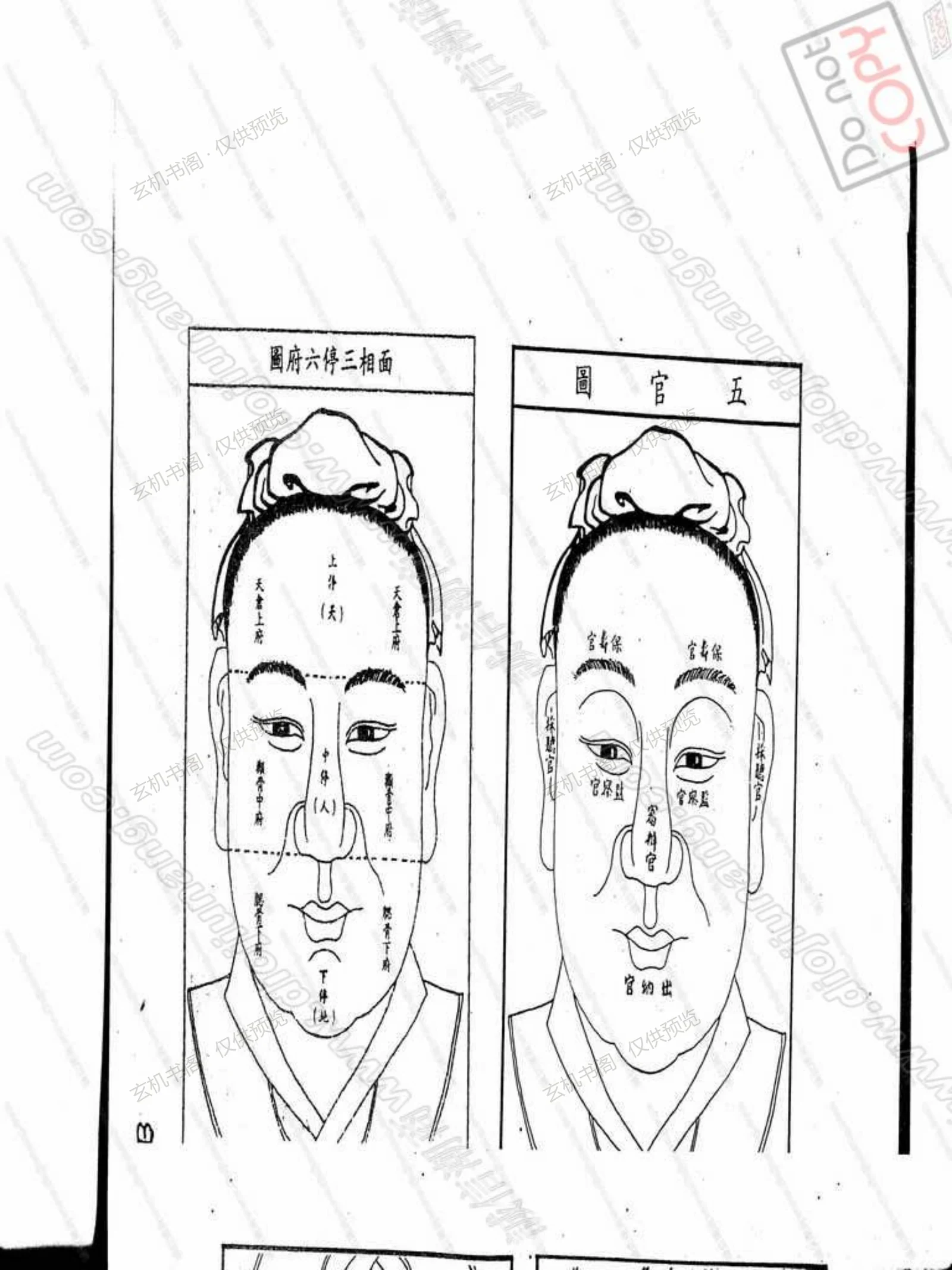
This is a lecture-style work on facial physiognomy by Xiao Xiang Jushi. The opening essay, 'Brief Talks on Physiognomy,' discusses the relationship between physiognomy and destiny, temperament, and health, stressing that physiognomy should not be judged by a single feature but through a synthesis of the five offices, complexion, and facial regions. The main body is dominated by diagrams, including the internal-external Five Elements positional chart, the seventy-five annual positions chart, the table of fifty-seven facial positions, the sixty-three palaces chart, the three zones and six palaces chart, the five offices chart, the twelve palaces chart, and the five peaks, four waterways, five stars, and six luminaries chart. These systematically label facial regions, Five Elements attributions, annual ages, and six-relations palaces, making the book a lecture-style textbook of traditional face reading. It is suitable for readers with some background in physiognomy who wish to consult terminology and positional systems.
Contents
Brief Talks on Physiognomy: overview of physiognomy, destiny, temperament, and health
Internal-external Five Elements positional chart: facial Five Elements zones
Seventy-five annual positions chart: annual ages and corresponding regions
Table of fifty-seven facial positions and sixty-three palaces chart
Three zones and six palaces chart; five offices chart
Twelve palaces chart; five peaks, four waterways, five stars, and six luminaries chart
Key Points
Lecture-style organization with diagrams and text cross-referencing for easy lookup.
Emphasizes synthesis of five offices, complexion, and regions rather than single features.
Systematically maps facial Five Elements attributions to annual positions.
Collects classic diagrams of three zones, six palaces, five offices, twelve palaces, and five peaks and four waterways.