Reading guide
Content guideOverview
Titled Water Dragon Formula and attributed on the cover to Jiang Dahong of the Ming dynasty, with notes by Baiyu Jushi, this short work explains how to find dragon veins and determine burial or settlement sites in flat, water-rich terrain. It contrasts mountain dragons, which are read through rock and soil, with water dragons, which are read through rivers, lakes, streams and ponds: the flow, gathering and curvature of water reveal where energy collects. Quoting Jiang's verses and commenting on them one by one, Baiyu Jushi draws on examples from the North China Plain, the Yangtze and Han rivers, the Huangpu and the Wei to show why towns and cities often form where two or three waters meet. It is a concise introduction to the water-dragon approach within Jiang's fengshui tradition.
Contents
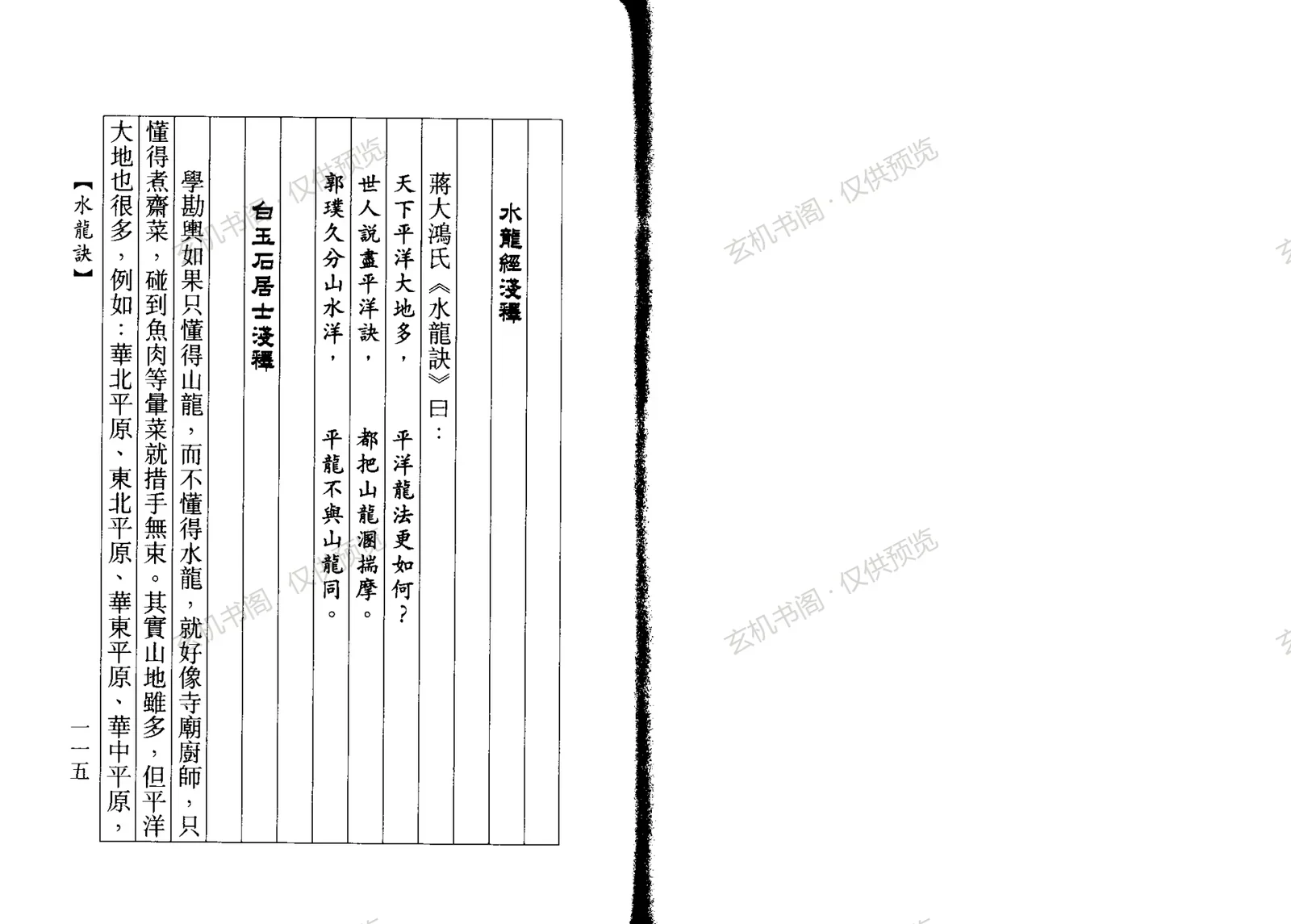
Water Dragon Classic explained: mountain versus water dragons
Jiang's formula: in the plains, water is the dragon
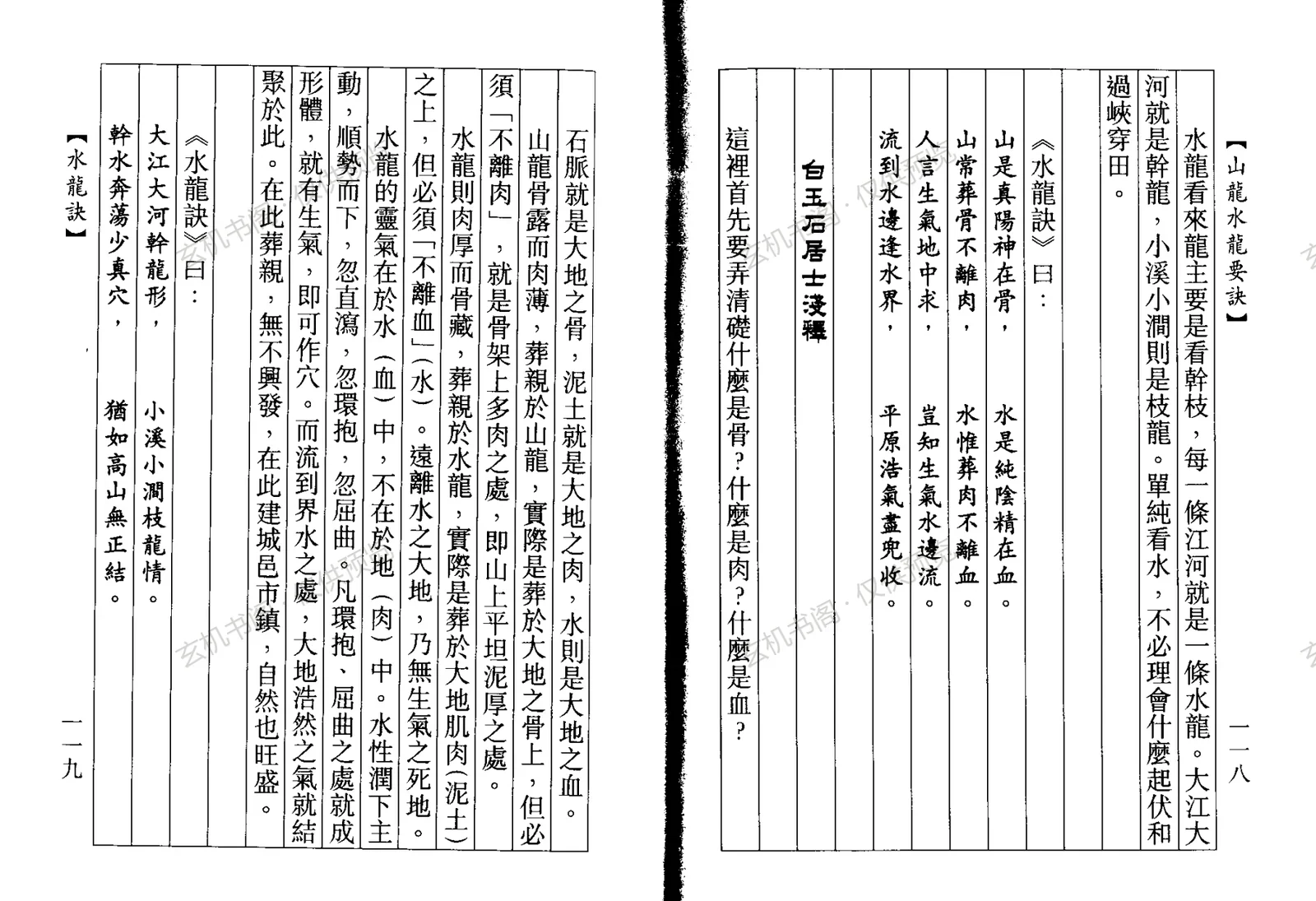
Essentials: branches, trunks and boundary water
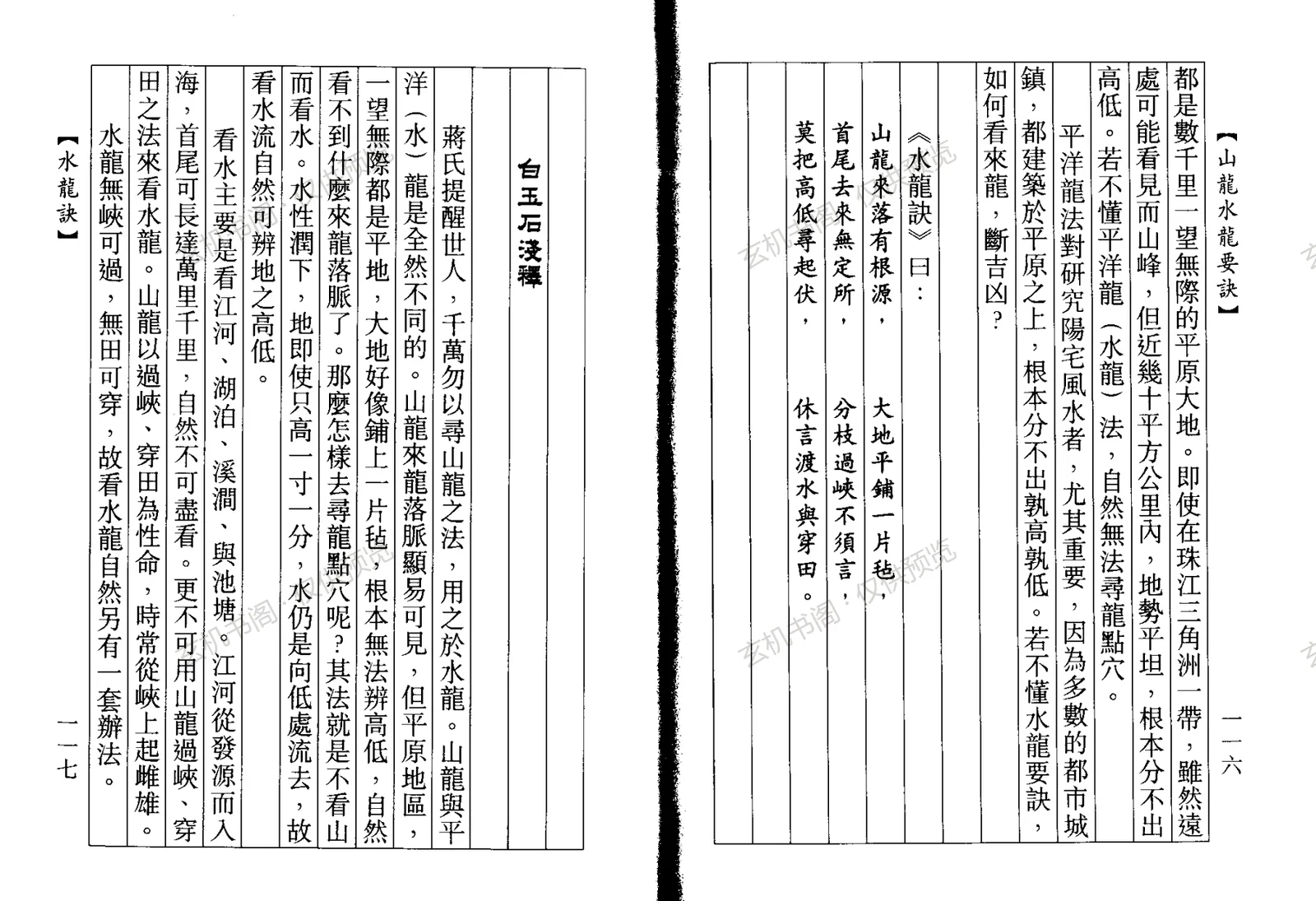
Reading the dragon: trunks, branches and passes
Siting: where water gathers, energy gathers
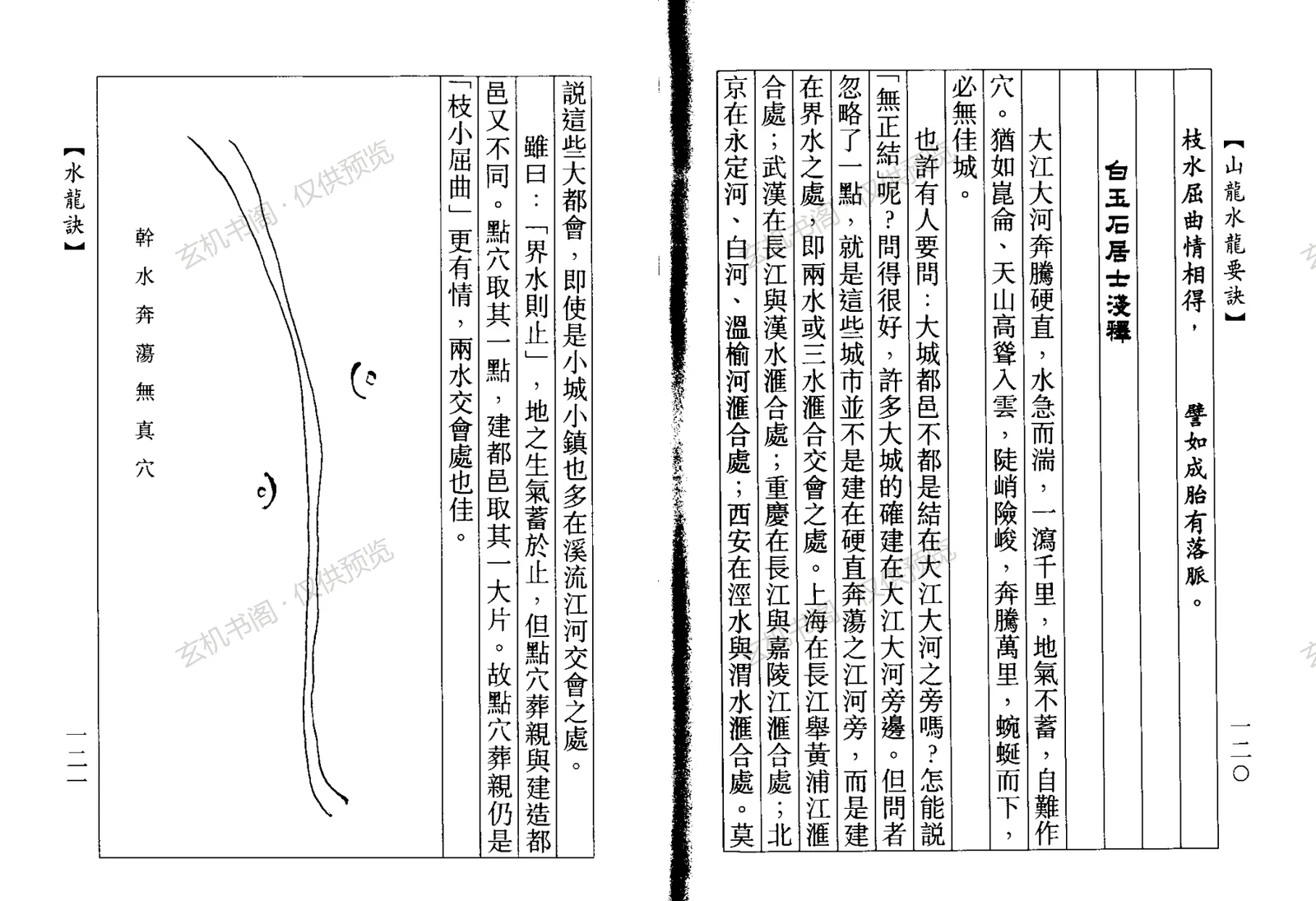
Diagrams of curved branches and confluences
Key Points
Mountain dragons use rock and soil; plains dragons use water as the dragon
In flat land, read water flow and gathering before locating a site
Curving, embracing water is favoured; straight, rushing water is avoided
Towns often form at the confluence of two or three waters
A site should sit low with higher water behind to store energy