Reading guide
Content guideOverview
Compiled by Nanpai Sansu from Siyu Dubu's audio lectures on the Wenmo Tianji platform, this document is a study resource for the Sanhe school of Zi Wei Dou Shu. The preface notes that the original audio has been taken offline, giving the notes some rarity value. The visible text concentrates on the 'minor stars': it first states the general principle that minor stars are always supporting players, lack the five elements and temple/fallen concepts, and take their auspicious or inauspicious nature from the major and auxiliary stars in the same palace. It then examines the six lunar-series stars—Tianxing, Tianyao, Jieshen, Tianwu, Tianyue, and Yinsha—one by one, before turning to the time-series stars Taifu and Fenggao and comparing their level with San Tai Ba Zuo and En Guang Tian Gui. The discussion centers on star nature, palace combinations, and the triggering role of the four transformations, making it suitable for readers with a foundation in Zi Wei Dou Shu who wish to deepen their understanding of minor-star interpretation.
Contents
Preface: source of the audio course and compilation notes
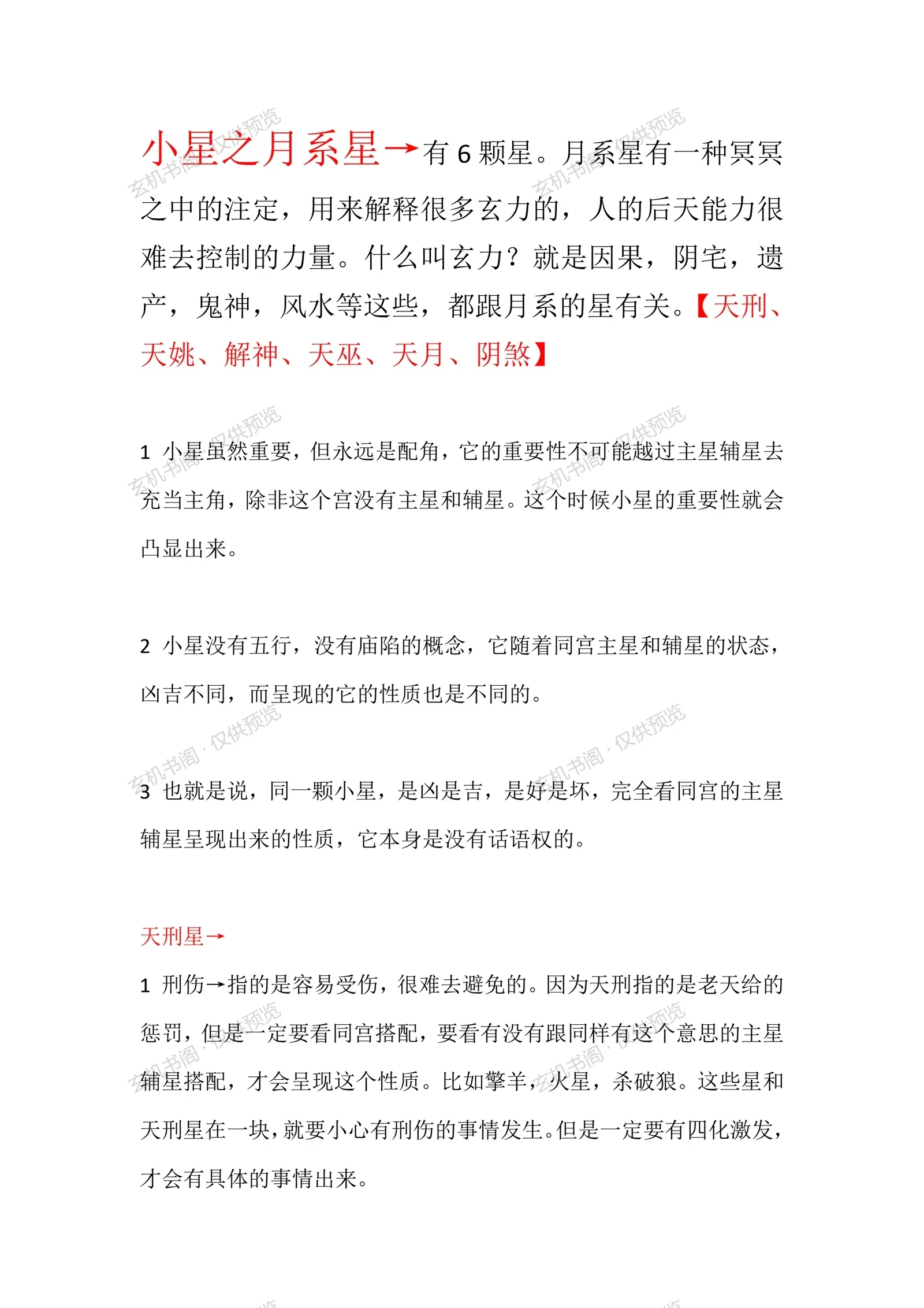
General principles of minor stars: supporting role and no five elements
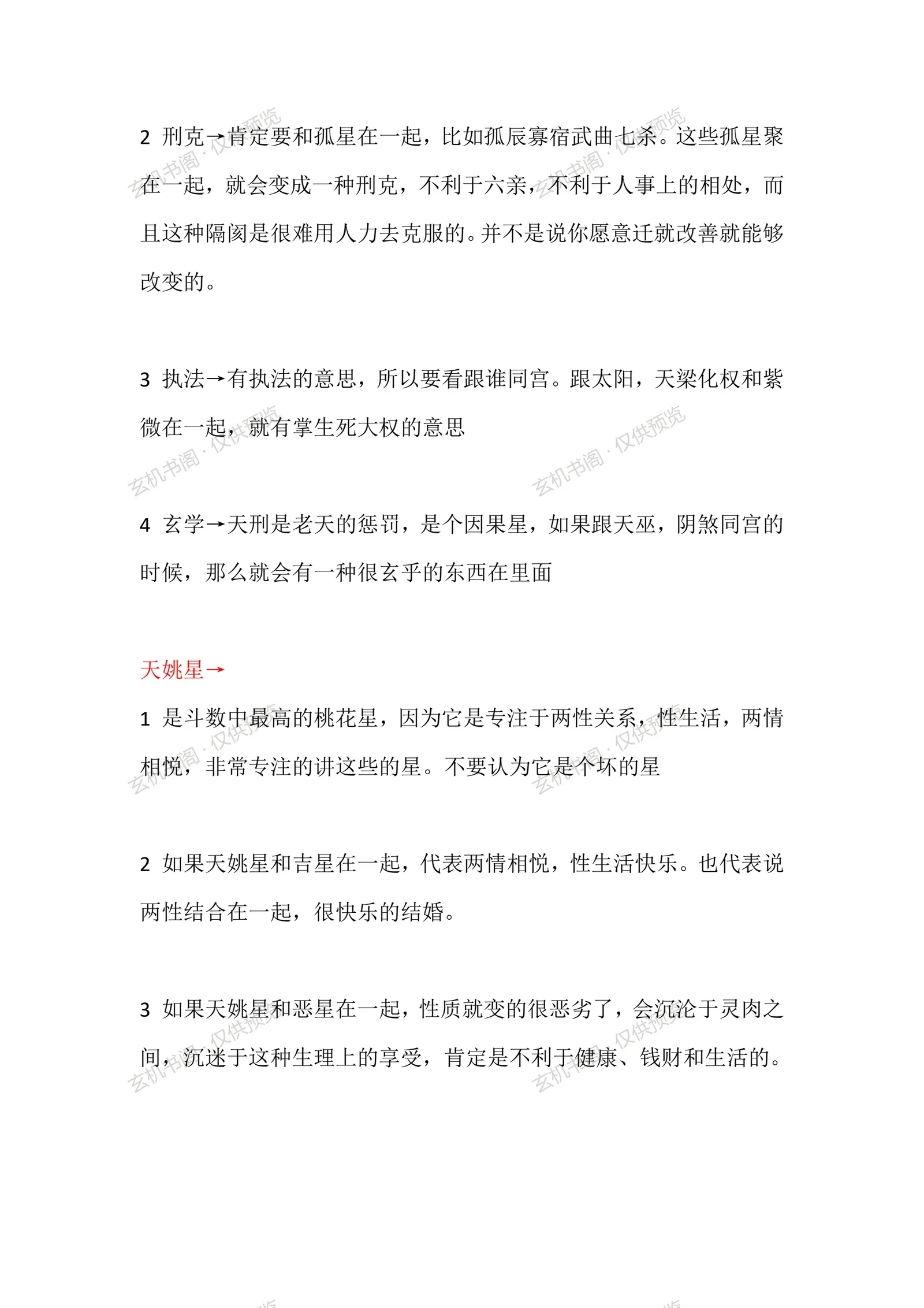
Lunar-series star Tianxing: injury, conflict, and authority
Lunar-series star Tianyao: nature of romantic and sexual relations
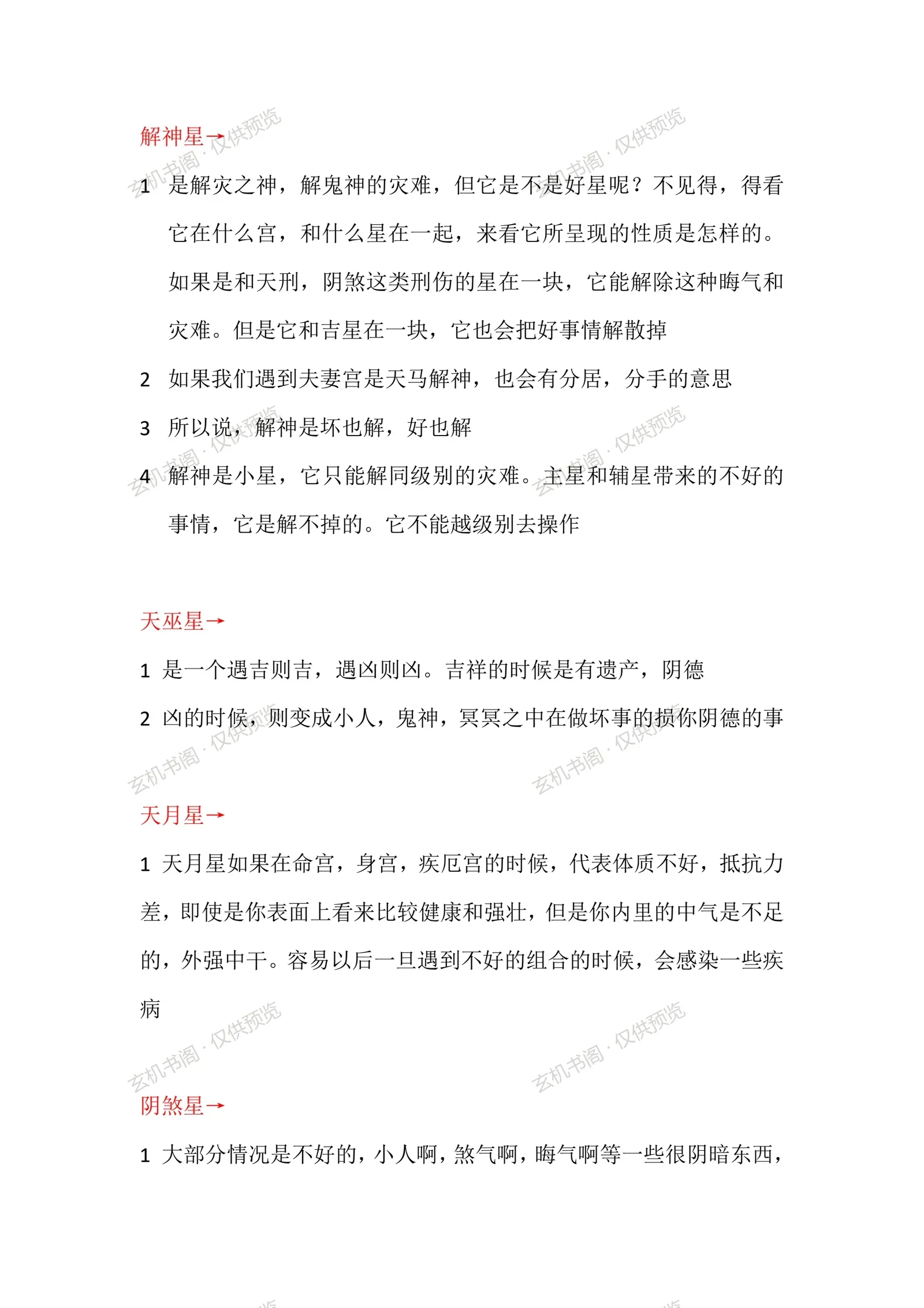
Lunar-series stars Jieshen, Tianwu, Tianyue, Yinsha
Time-series stars Taifu and Fenggao as auxiliaries
Key Points
Minor stars are always supporting players; their nature depends on major and auxiliary stars in the same palace
Minor stars have no five elements or temple/fallen status and no independent voice
Tianxing indicates injury and requires combinations with Yang, Huo, or Sha Po Lang to manifest
Tianyao is the highest peach-blossom star, behaving very differently with good versus malefic stars
Jieshen resolves both good and bad but cannot override major-star afflictions