Reading guide
Content guideOverview
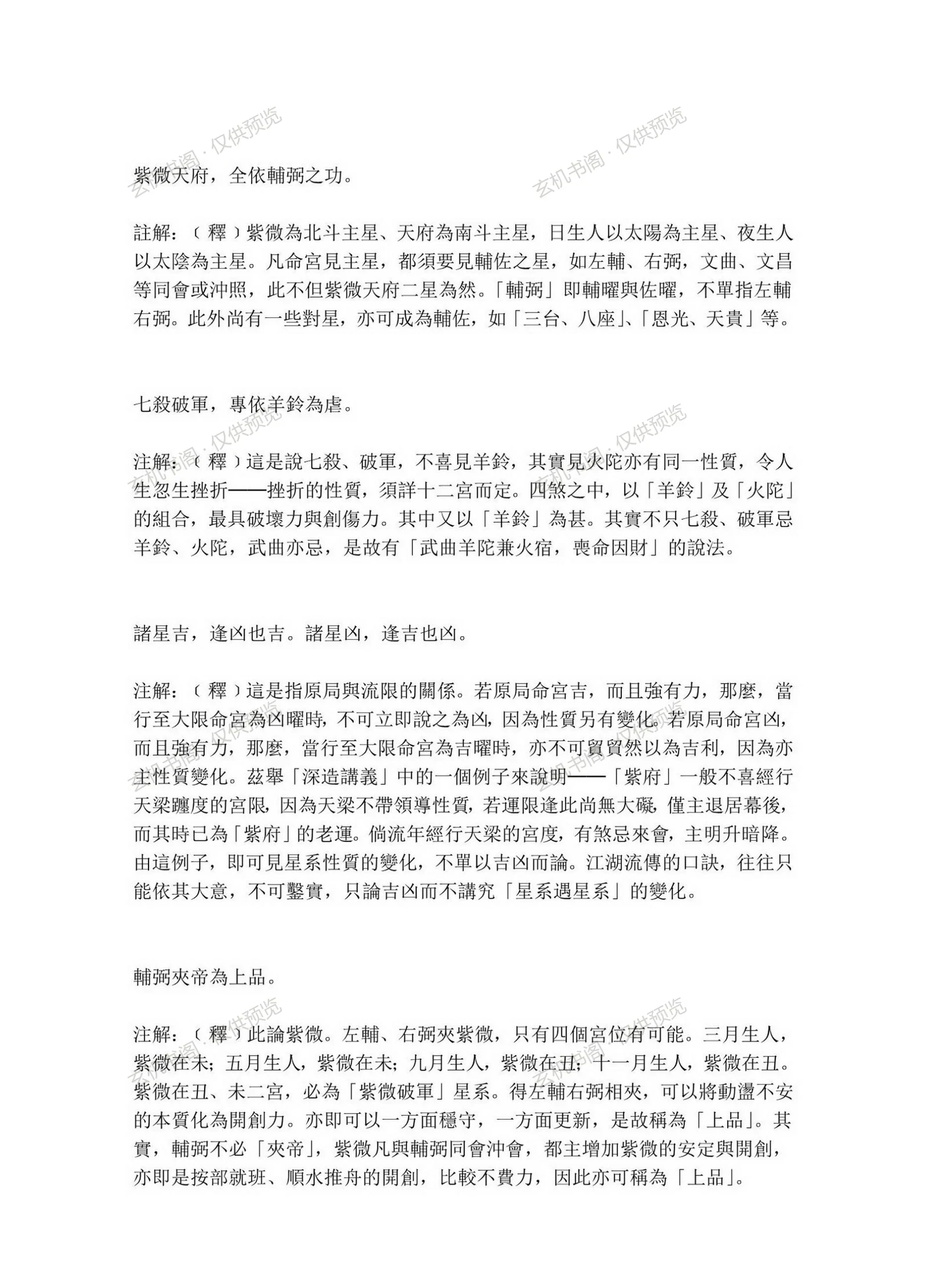
This book is an annotated edition of Taiwei Fu, a foundational verse text in Zi Wei Dou Shu. The preface explains that the commentary draws on Wang Tingzhi’s Baxi Lou manuscript and an early Republican-era lithograph of the Dou Shu Quan Shu, while deliberately preserving variant readings from Qing-dynasty popular traditions. The main body alternates between the original verses and explanatory notes, covering topics such as the distribution of stars across the twelve palaces, the thirty-six positions of temple/bright/fallen ratings, the importance of the body and life palaces and the Fu De palace, the role of Zi Wei as the emperor star, the wealth-related Wu Qu star system, the clashes and breakages of Lu and Ji transformations, the “empty horse,” the “reversed” sun and moon, the “Lu-horse crossing,” and the reliance of Zi Wei and Tian Fu on assistant stars versus the reliance of Qi Sha and Po Jun on Yang Ling and Huo Xing. The annotations identify the sixty star-combinations of the Zhongzhou school, analyze how original-chart, major-limit, annual, and monthly transformations interact, and caution against reducing star judgments to fixed slogans. The book is suited to readers with some prior knowledge of Zi Wei Dou Shu who want to understand the original verse text and the Zhongzhou school’s reasoning more deeply.
Contents
Preface: manuscript, lithograph, and popular editions used
The Taiwei star name and its comparison to the Zi Wei emperor seat
Star domains and the sixty star-combinations: fixed positions of Zi Wei and Wu Qu–Qi Sha
Stars spread over twelve palaces, thirty-six ratings: temple, bright, favorable, fallen, and star interactions
Body and life palaces as the root; the Fu De palace as the source of life pattern
Zi Wei’s motion and the difference from the five planets: setting the Dou Shu chart
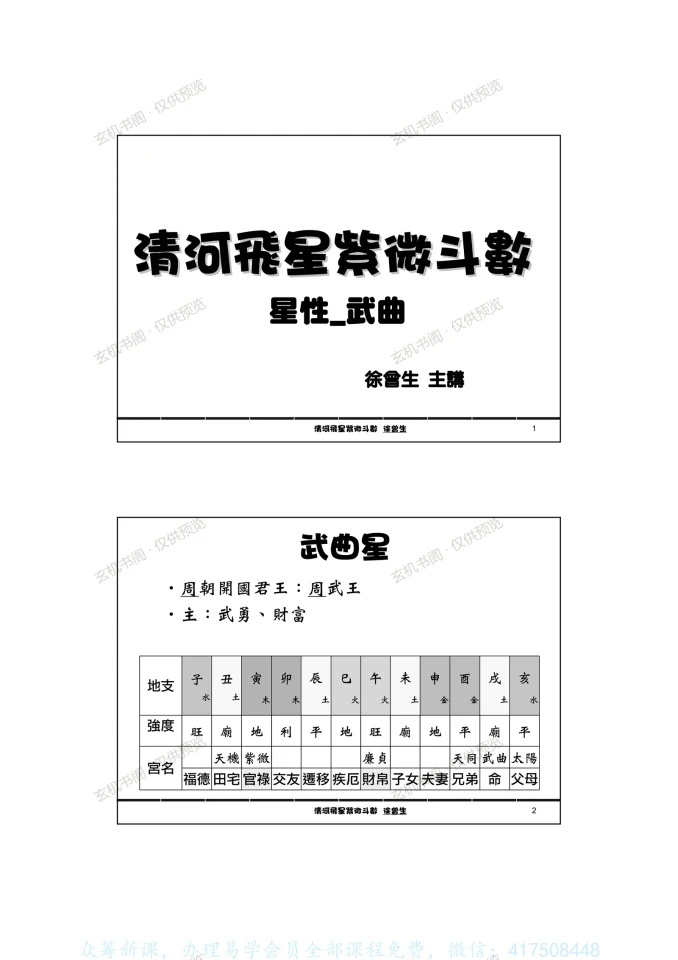
Wu Qu and the wealth treasury; greedy wolf meeting empty stars
Lu clashing and breaking, the empty horse, reversed sun and moon, Lu-horse crossing
Zi Wei and Tian Fu relying on assistants; Qi Sha and Po Jun relying on Yang Ling; auspicious and inauspicious stars
Key Points
Uses the Zhongzhou school’s sixty star-combinations to explain the original text and fixed star patterns.
Distinguishes the severity of clashes among original-chart, major-limit, annual, and monthly Lu/Ji transformations.
Identifies “star domains” with the sixty star-combinations and rejects arbitrary single-star judgments.
Shows how star qualities change with combination, e.g., empty stars may turn into artistic talent.
Compares Wang Tingzhi’s Shenzao Jiangyi and the Dou Shu Quan Shu annotations.