Reading guide
Content guideOverview
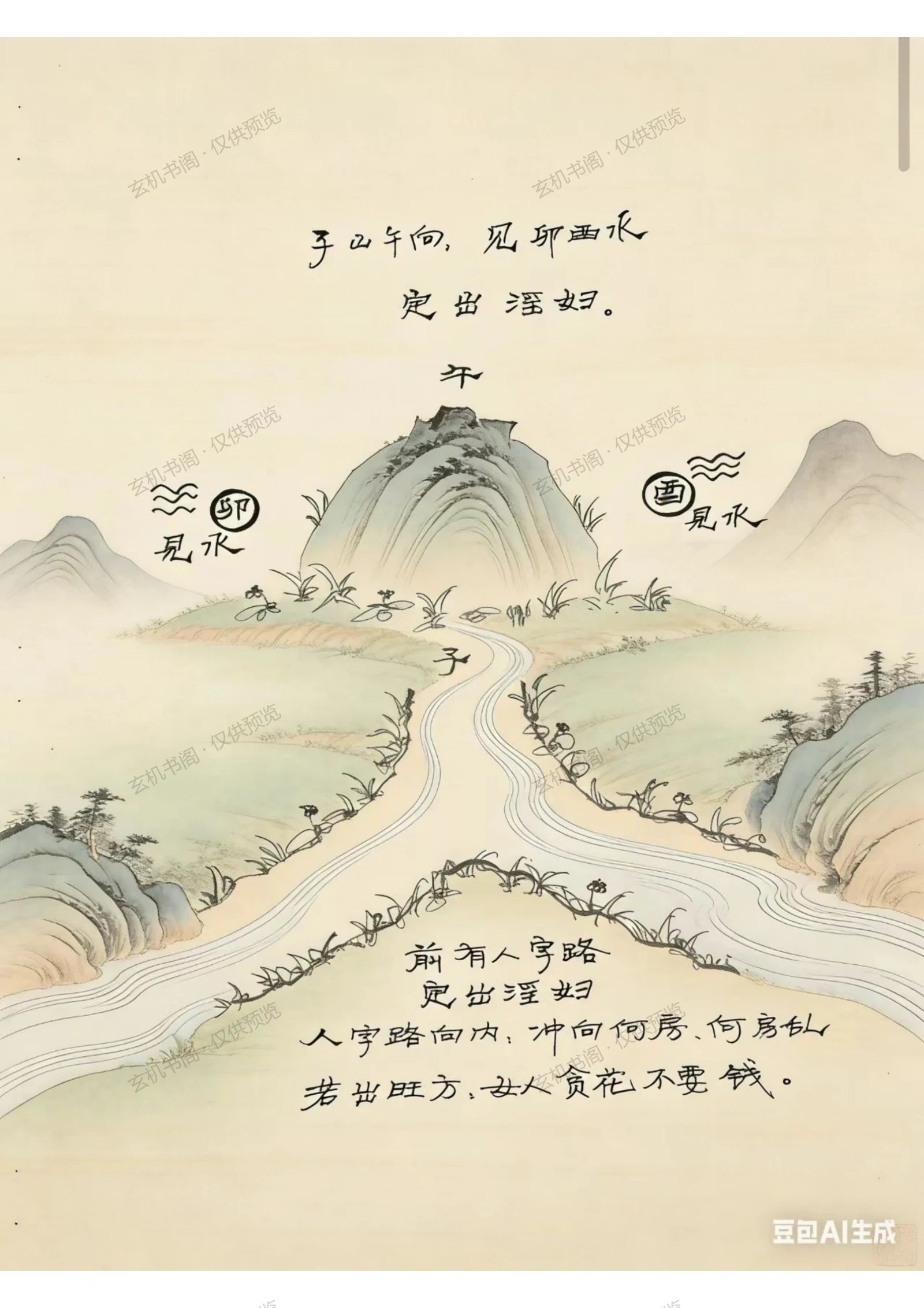
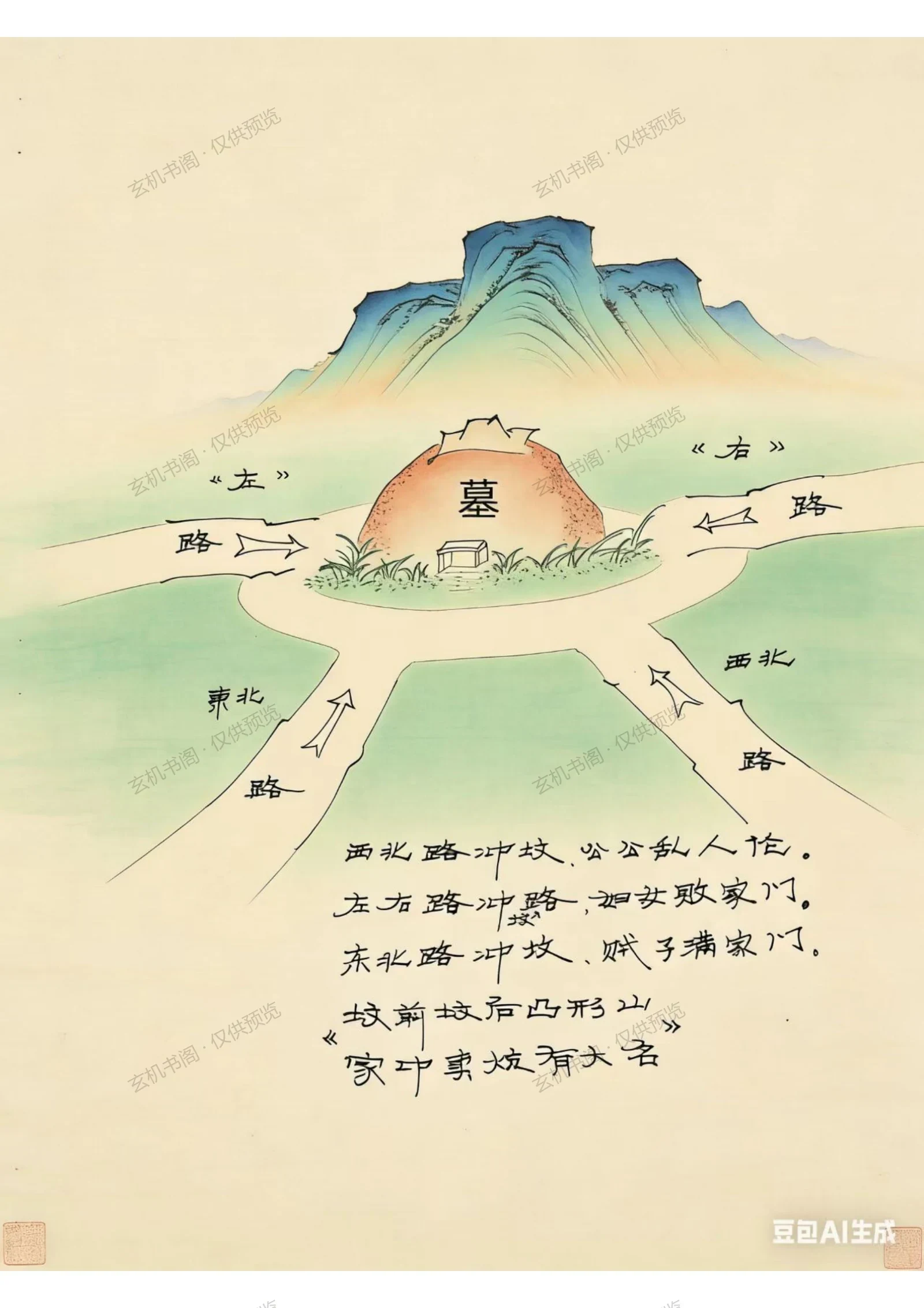
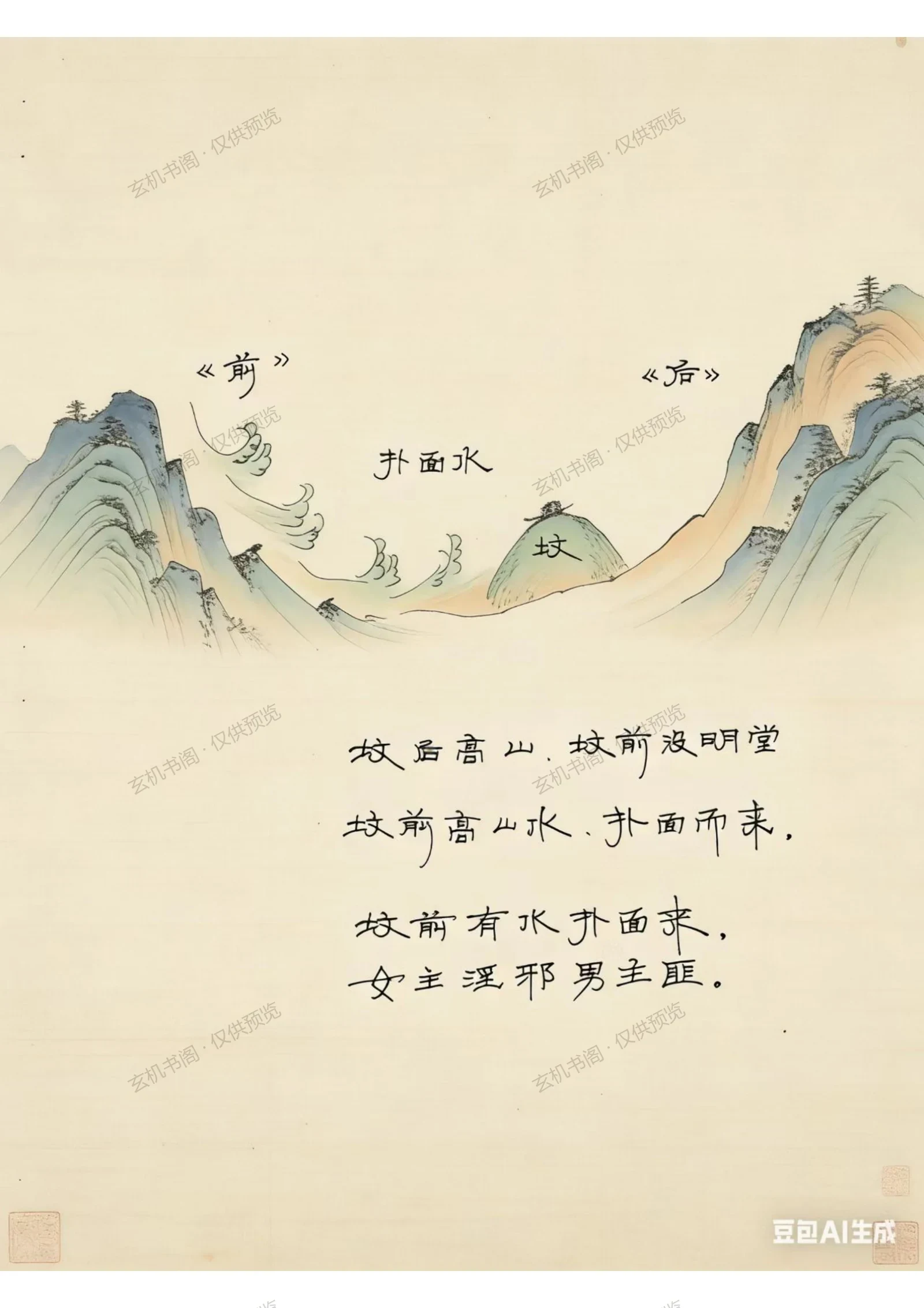
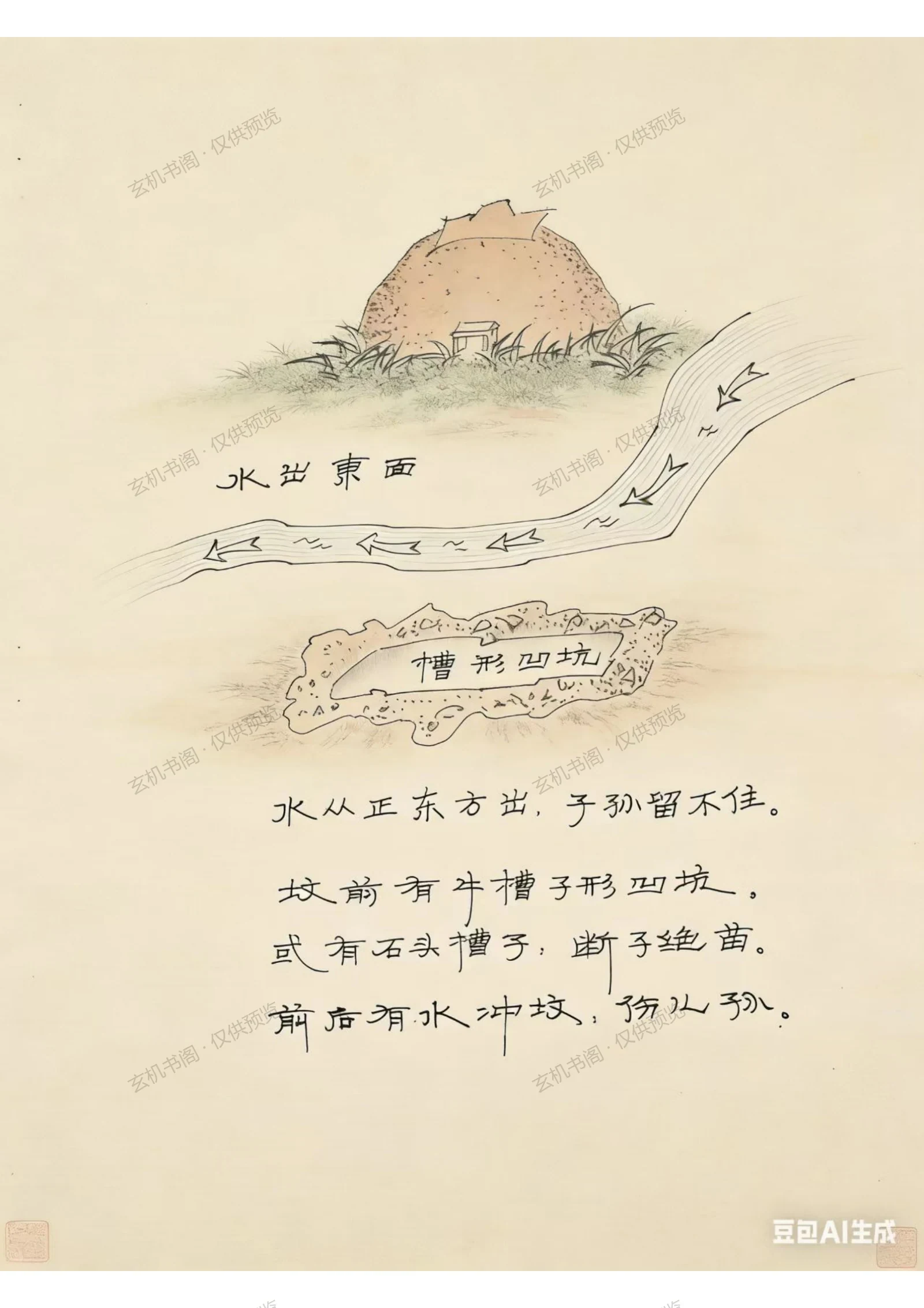
Titled Wang Fen Duan (Judging Graves by Appearance), this illustrated booklet focuses on the external landforms around graves and how they are read to predict descendants' fortunes. Simple landscape sketches are paired with handwritten verdicts: a path worn over the grave suggests descendants being bullied and limited in career; a Zi-shan Wu-xiang grave with Mao and You water is said to produce licentious women; a herringbone path in front of the grave is judged by direction and by which branch of the family is affected; roads rushing at the grave from the northwest, east, or west each carry distinct verdicts; high mountains with no bright hall and water rushing head-on are said to bring licentiousness to women and banditry to men; water exiting due east means descendants will not stay, and trough-shaped pits or stone troughs before the grave are read as signs of extinction of the line. The work belongs to the xingshi (landform) school of yin-zhai feng shui, relies on mnemonic verdicts rather than systematic reasoning, and is best treated as a document of folk divination and custom rather than practical guidance.
Contents
A path over the grave: descendants bullied
Zi-shan Wu-xiang with Mao-You water: licentious women
Herringbone path before the grave: verdicts by direction and branch
Roads rushing the grave from northwest, east, and west
No bright hall and water rushing head-on
Water exiting due east and trough-shaped pits: extinction
Key Points
Verdicts based on external landforms: roads, water, pits, mountains
Judgments assigned by direction and by family branch
Line drawings for on-site comparison
Plain mnemonic language in folk style
Landform school; little liqi content