Reading guide
Content guideOverview
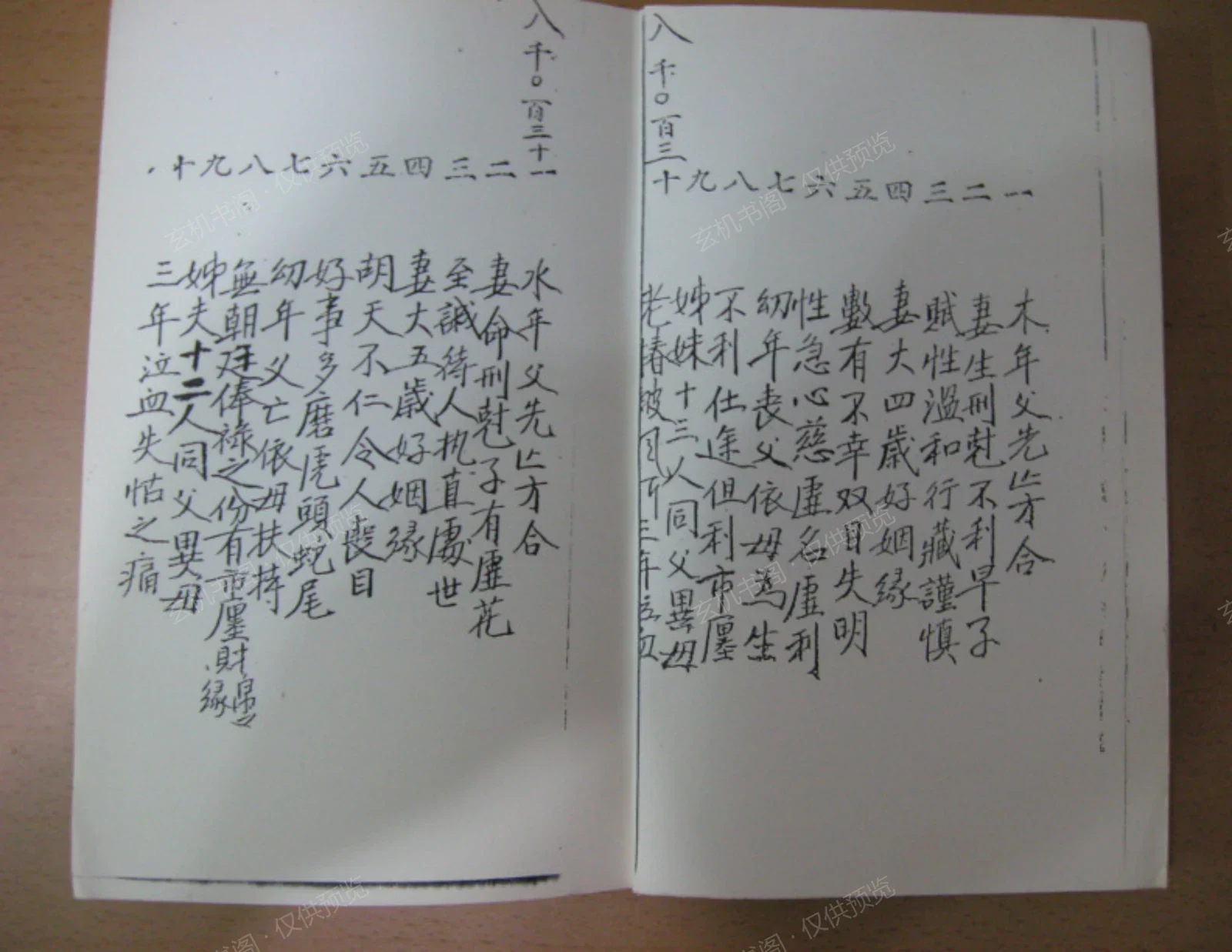
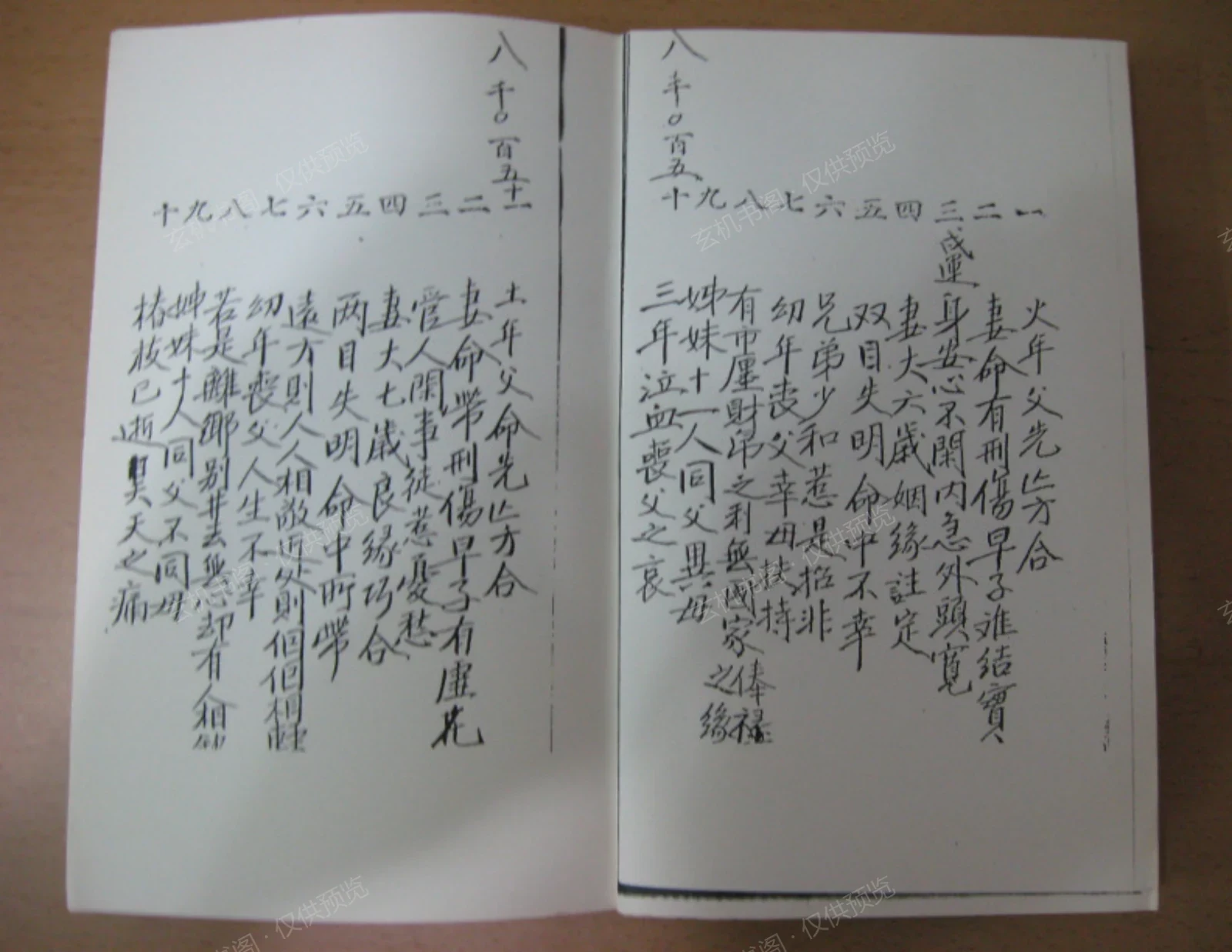
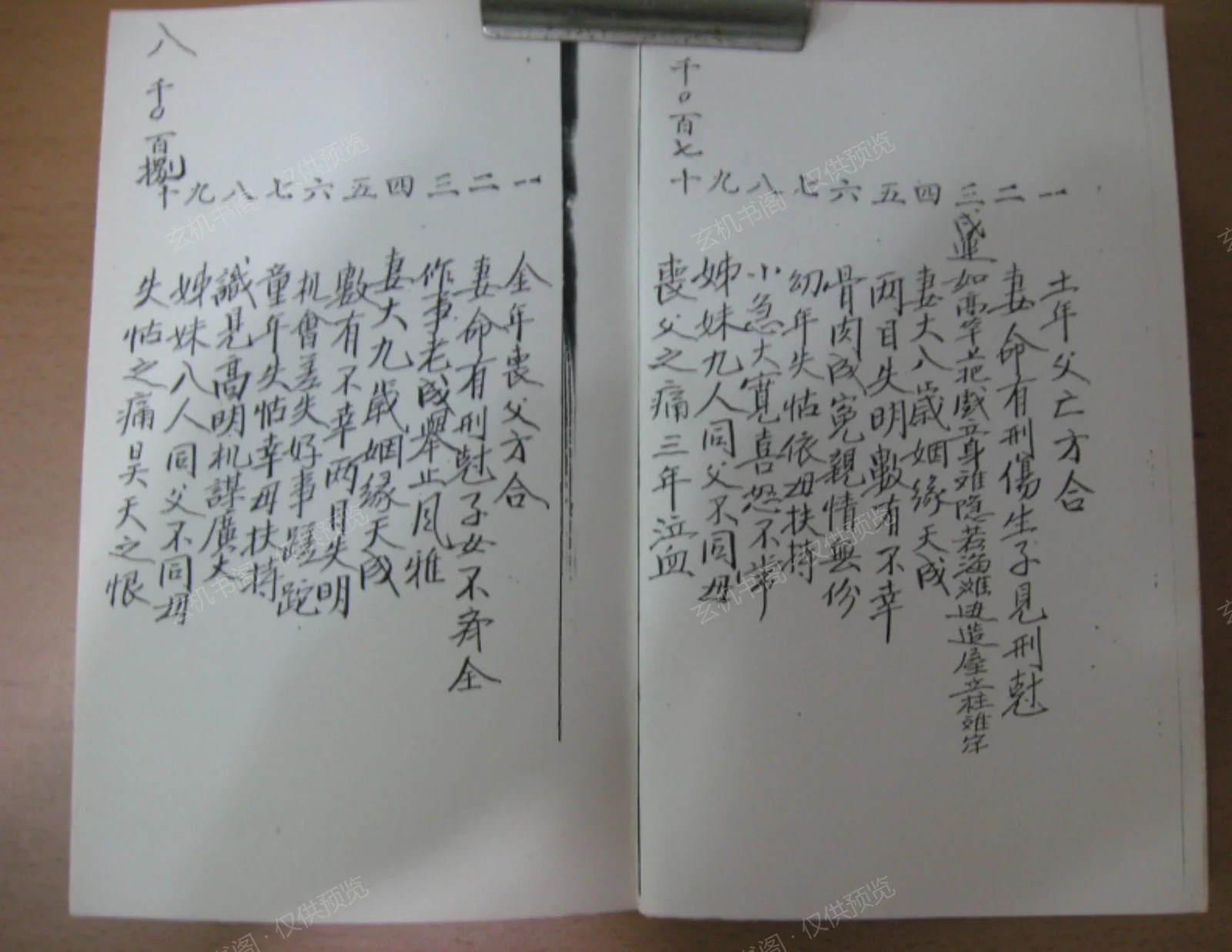
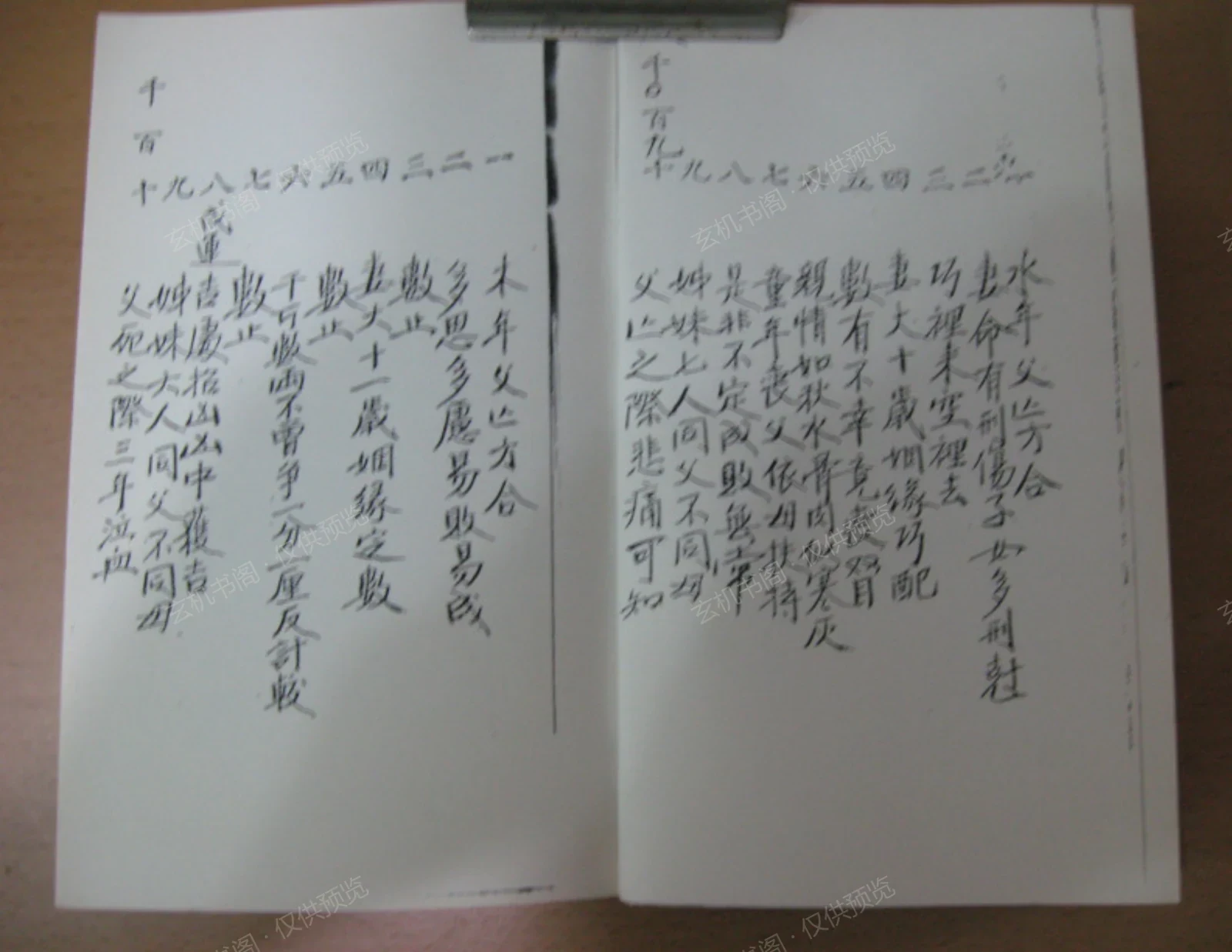
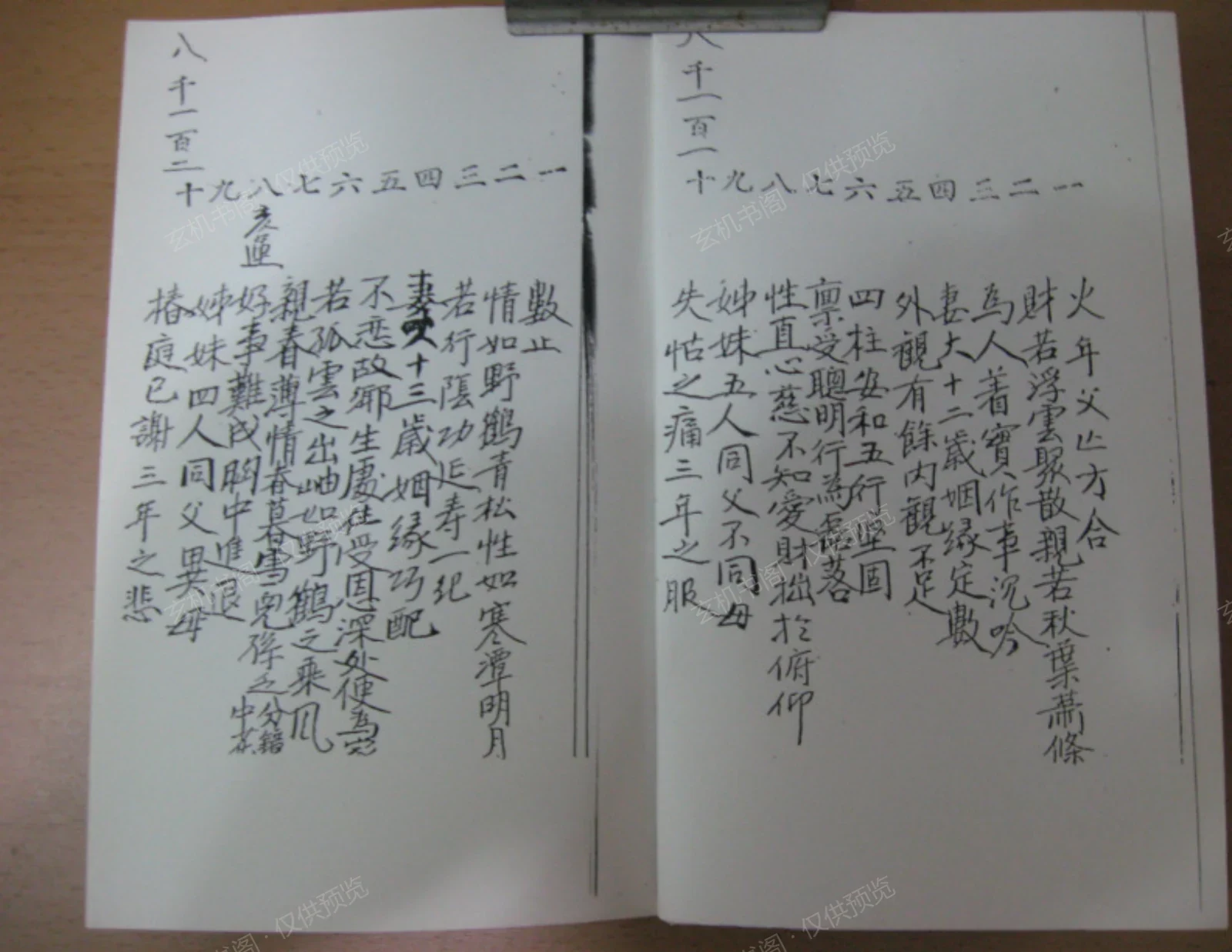
The six visible pages are entirely handwritten, with no title page, preface, or author name; only volume and page headings such as 'Ba Wei Ji' and 'Ba Qian Ling Bai' appear at the top. The text is divided into numbered entries from one to ten, each a short verse-like pronouncement on major life matters: parents, siblings, marriage, children, temperament, longevity, and wealth. Phrases like 'the wife's fate bears injury' or 'the parents' years then align' read as blunt auspicious or inauspicious judgments. Rather than a systematic treatise on fate calculation theory, this appears to be a working collection of oral-formula judgments used by a folk diviner. Its value lies in preserving the raw form of folk fate-reading formulas and in serving as material for studying manuscript culture and the structure of verdict-style fortune texts; however, the entries lack explanation or annotation, so readers must supply their own framework to understand how they were applied.
Contents
Volume, page, and entry numbering
Numbered verdict entries from one to ten
Judgments on parents and siblings
Judgments on marriage, children, and lifespan
Judgments on temperament, wealth, and late life
Key Points
Handwritten manuscript with no title, author, or preface.
Entries arranged by number, each a short fate-reading formula.
Content centers on relatives, marriage, children, lifespan, and wealth.
A working collection of folk verdicts rather than a theoretical treatise.