Reading guide
Content guideOverview
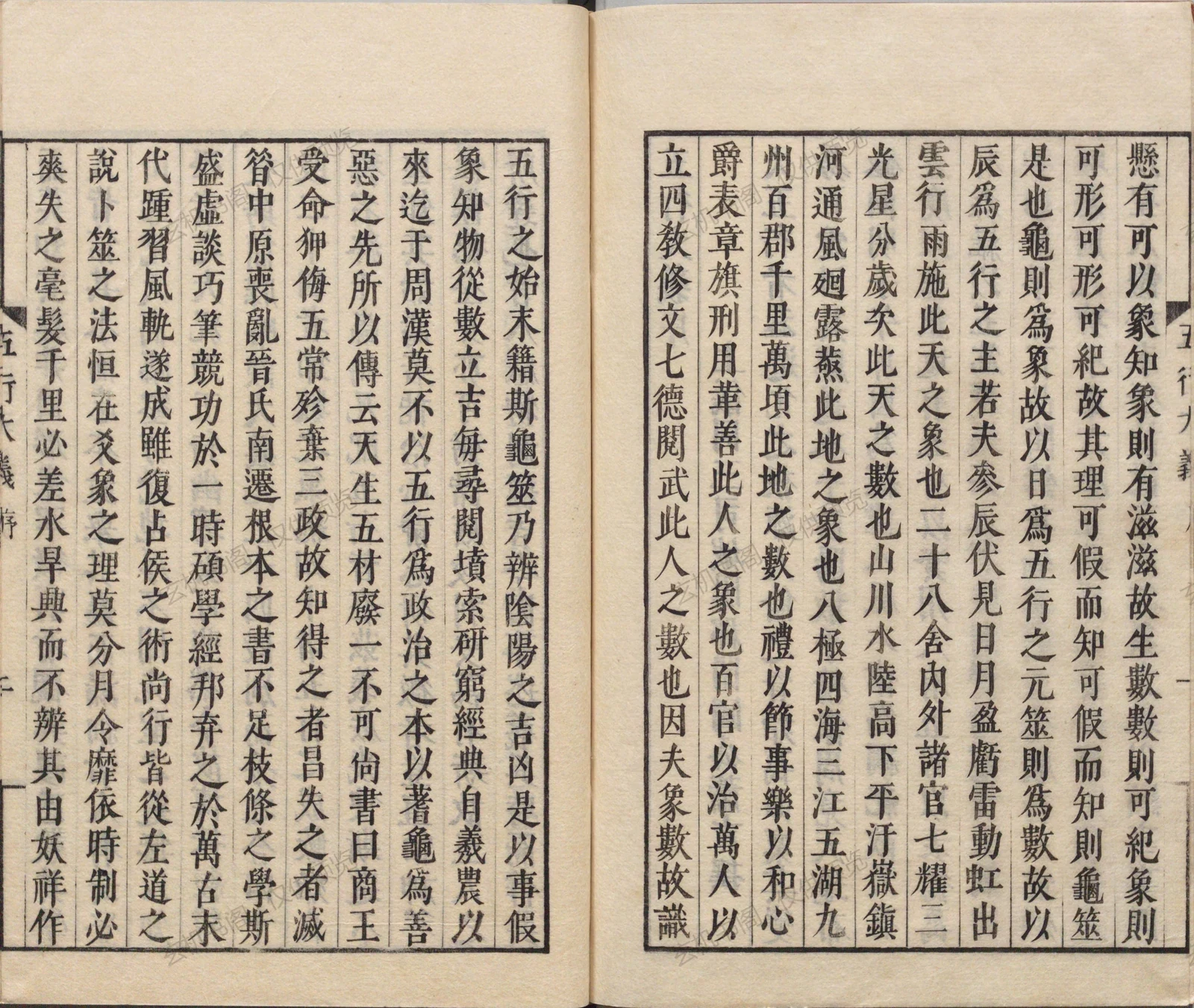
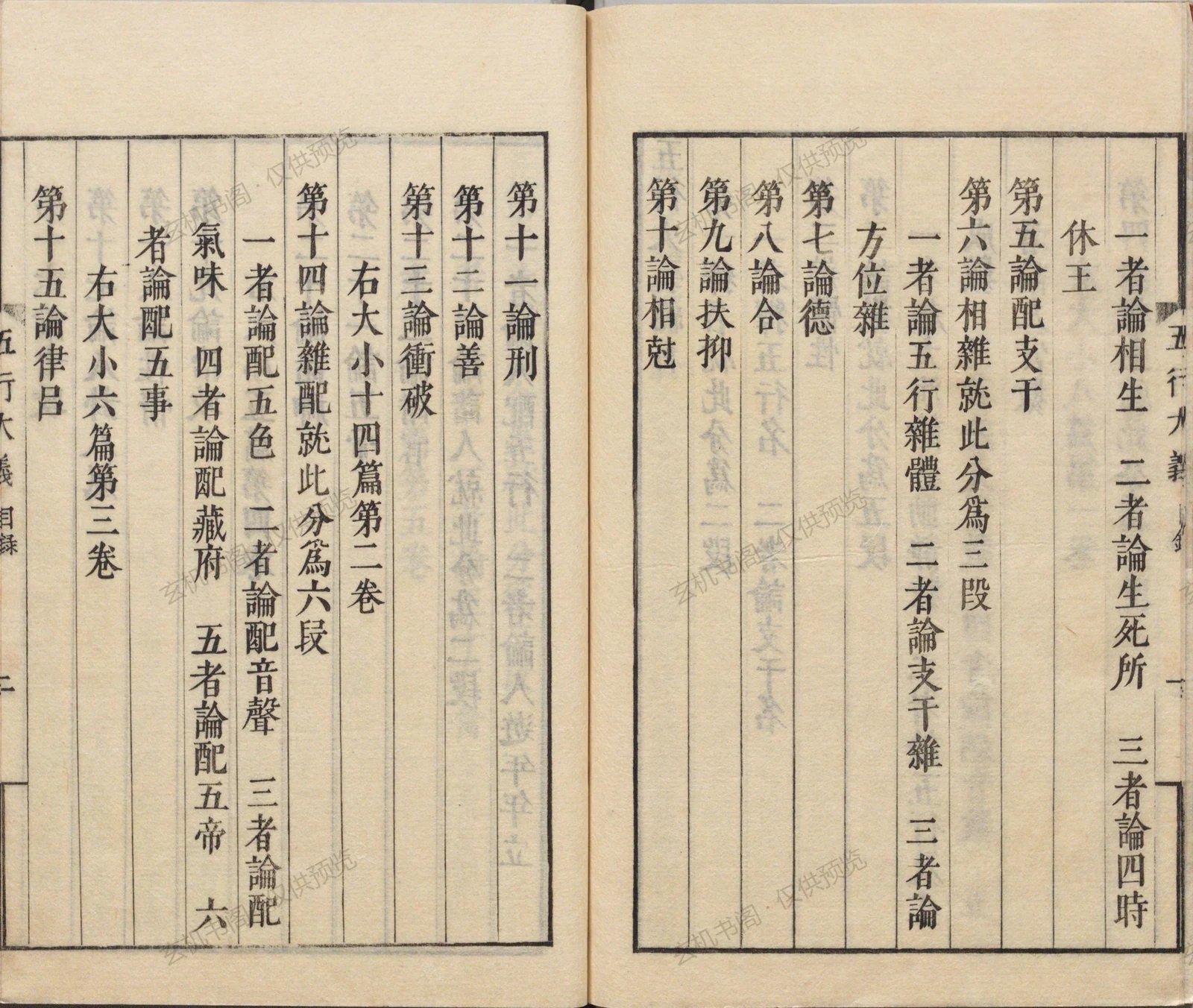
This is Xiao Ji's Great Meaning of the Five Elements, preserved in the first volume of the Japanese Yi Cun Cong Shu series. The preface presents the Five Elements as the root of creation and the foundation of human order, with sages establishing images to reveal their principles. The main text is organized into twenty-four sections covering the names and meanings of the Five Elements and the stems and branches; their natures and generative numbers; numerical systems including the Great Expansion, stems and branches, pitch-notes, and the nine palaces; mutual generation and overcoming, life and death, seasonal ascendancy; correspondences with stems and branches, colors, sounds, tastes, viscera, emperors, affairs, and pitch standards; and the categories of virtue, combination, support and restraint, punishment, harm, clash, and miscellaneous correspondences. Drawing extensively on classical and historical sources, it integrates yin-yang, Five Elements, calendrical, musical, and directional knowledge into a unified framework, making it a key text for the study of Han-era Five Elements doctrine and traditional numerology. This high-resolution reproduction preserves the appearance of the Japanese movable-type edition from the Kansei to Bunka eras.
Contents
Preface: origins of the Five Elements and purpose of the work
Section 1: explaining names of the Five Elements and stems-branches
Section 2: distinguishing natures and bodies
Section 3: numerical principles, Great Expansion, stems-branches, pitch-notes, nine palaces
Section 4: mutual generation, life-death, seasonal ascendancy
Sections 5-10: correspondences, stems-branches, virtue, combination, support, overcoming
Sections 11-14: punishment, harm, clash, miscellaneous correspondences
Section 15: pitch standards, in three fascicles
Key Points
Builds a systematic framework of names, natures, numbers, and correspondences for the Five Elements
Integrates stems-branches, pitch-notes, directions, and seasons into a Five Elements system
Twenty-four clearly organized sections facilitate reference
Provides theoretical grounding for later numerology, medicine, and calendrical studies
Japanese Yi Cun Cong Shu movable-type edition with textual and bibliographic value