Reading guide
Content guideOverview
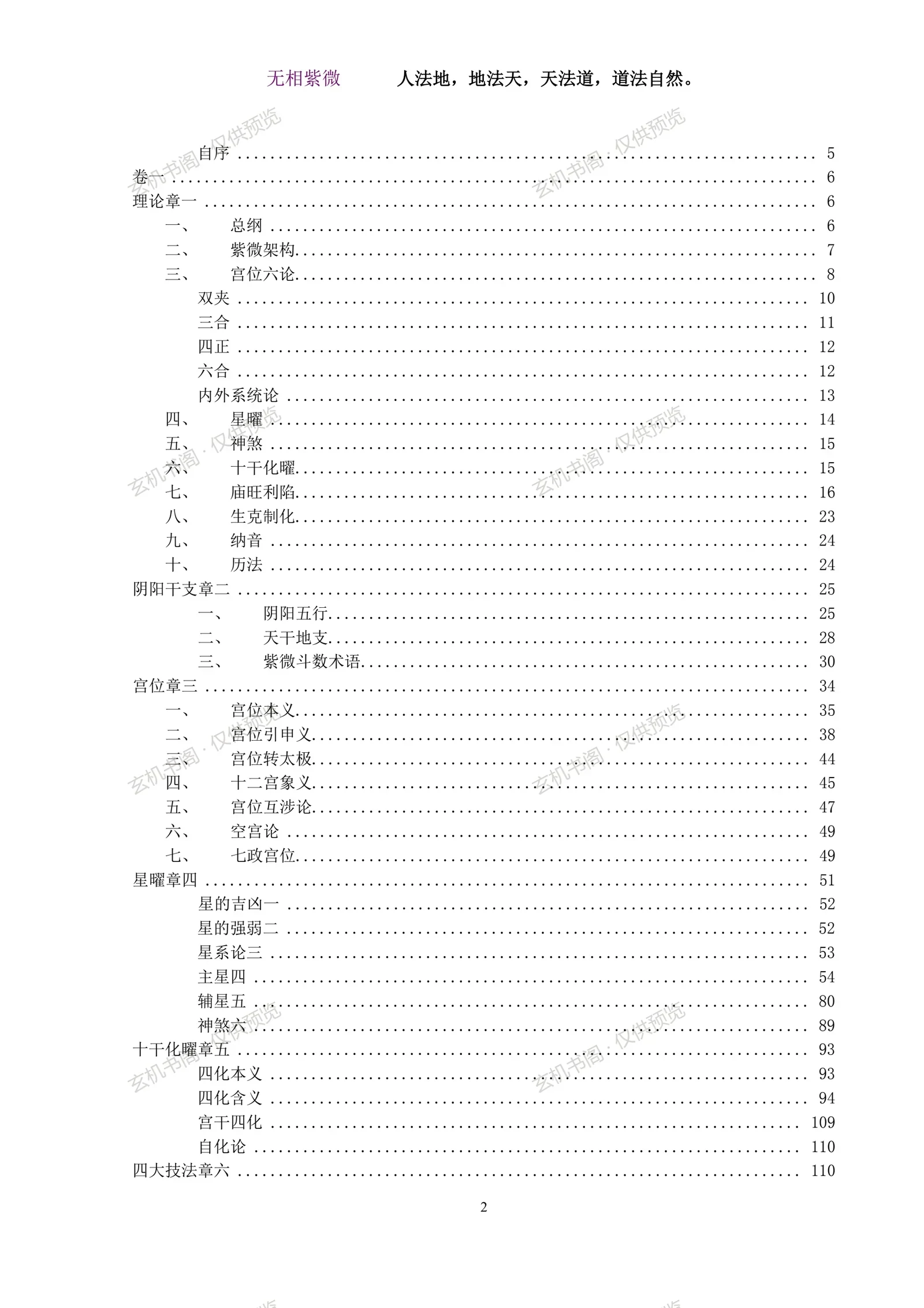
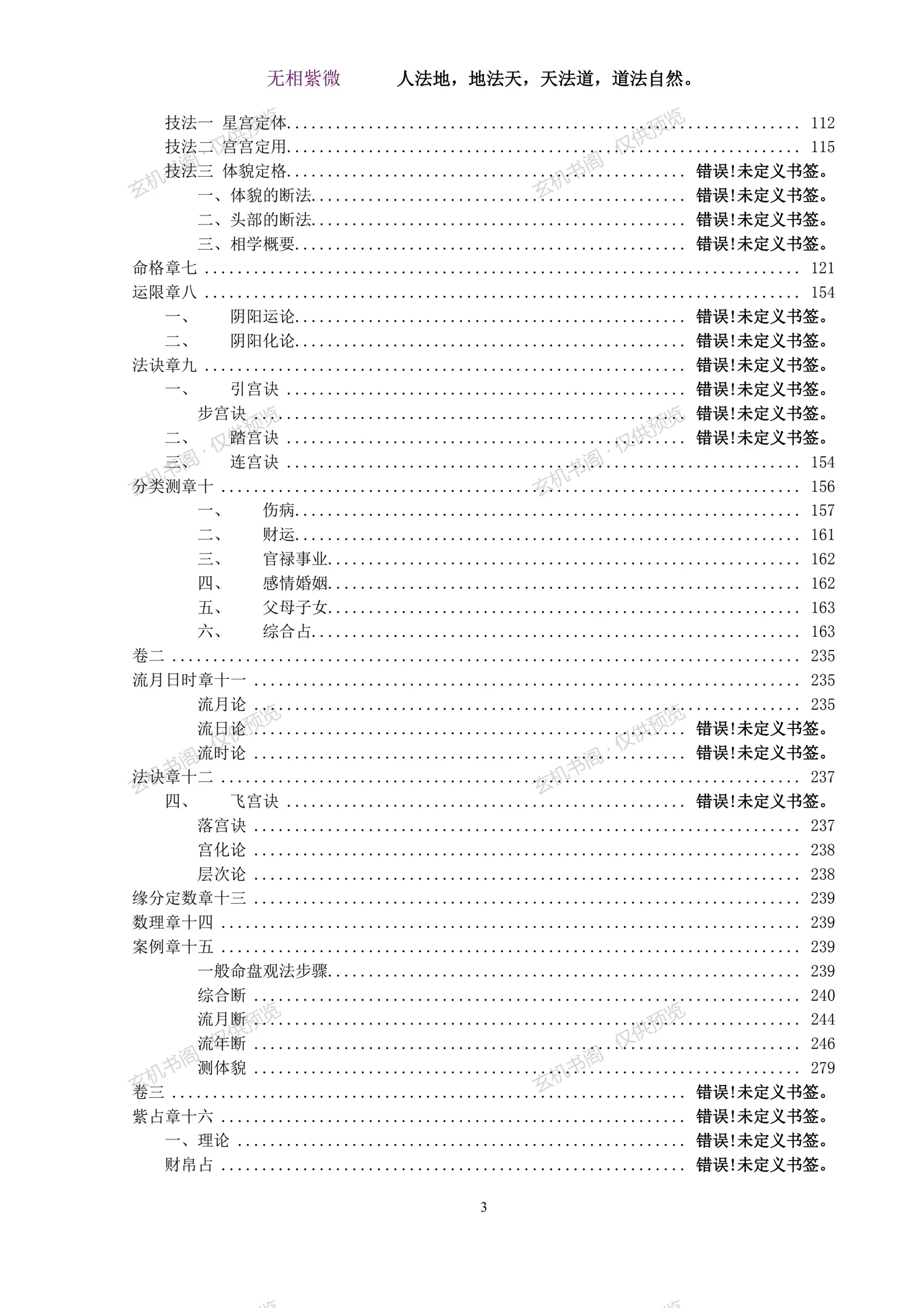
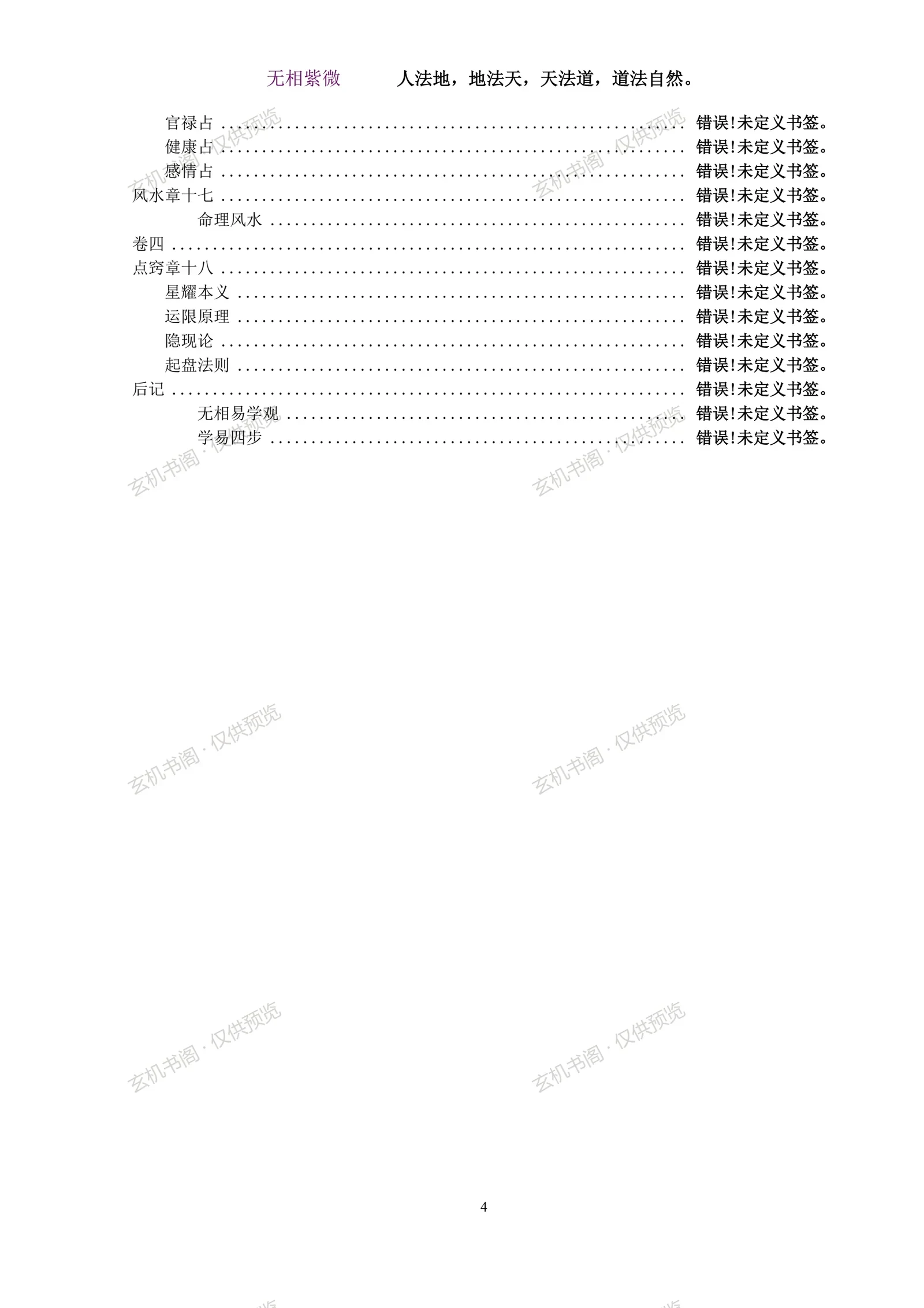
This excerpt is an internal lecture text of the Wuxiang school of Ziwei Doushu, attributed on the cover to Liu Wandong and Mingji Wuxiang. The opening motto, 'The source of the Dao embraces all schools; wondrous return to the Dharma-mark,' and the preface explain that the Wuxiang school follows the Daodejing's 'humans follow earth, earth follows heaven, heaven follows the Dao, the Dao follows nature,' seeking to perceive the formless Dao through observable 'marks.' The book is organized into four volumes: Volume One covers theory, yin-yang and stems-branches, palaces, stars, ten-stem transformations, four major techniques, destiny patterns, luck cycles, methods, and categorical readings; Volume Two includes monthly, daily, and hourly methods, further methods, affinity and number sections, and case studies; Volume Three covers Ziwei divination and fengshui; Volume Four is a point-guiding section. The visible main text argues that in Ziwei the main stars represent heaven, the earthly branches form the earth plate, and the twelve human-affairs palaces form the human plate, with natal-palace nayin, stem-based lu, and branch-based ming forming the three powers. The detailed table of contents suits readers with basic Ziwei knowledge who want to study palace interactions, four transformations, and the school's divination system.
Contents
Preface and origins of the Wuxiang school
Theory: general principles, structure, six palace discussions
Yin-yang, stems-branches, and Ziwei terminology
Palace meanings and the twelve palaces
Star auspiciousness, strength, and star systems
Ten-stem four transformations and palace-stem transformations
Four techniques, destiny patterns, and luck cycles
Categorical readings: illness, wealth, marriage, and more
Key Points
Explains the chart through the three powers: main stars as heaven, branches as earth, and the twelve palaces as human affairs
The six palace discussions include double夹, triple harmony, four cardinal points, six harmonies, and inner-outer systems
Emphasizes four transformations and the use of Lu, Yang, and Tuo while distinguishing main and auxiliary stars
The table of contents shows four volumes spanning theory, techniques, categorical readings, and cases
Places Ziwei alongside fengshui, physiognomy, and Qimen as part of the broader Wuxiang school system