Reading guide
Content guideOverview
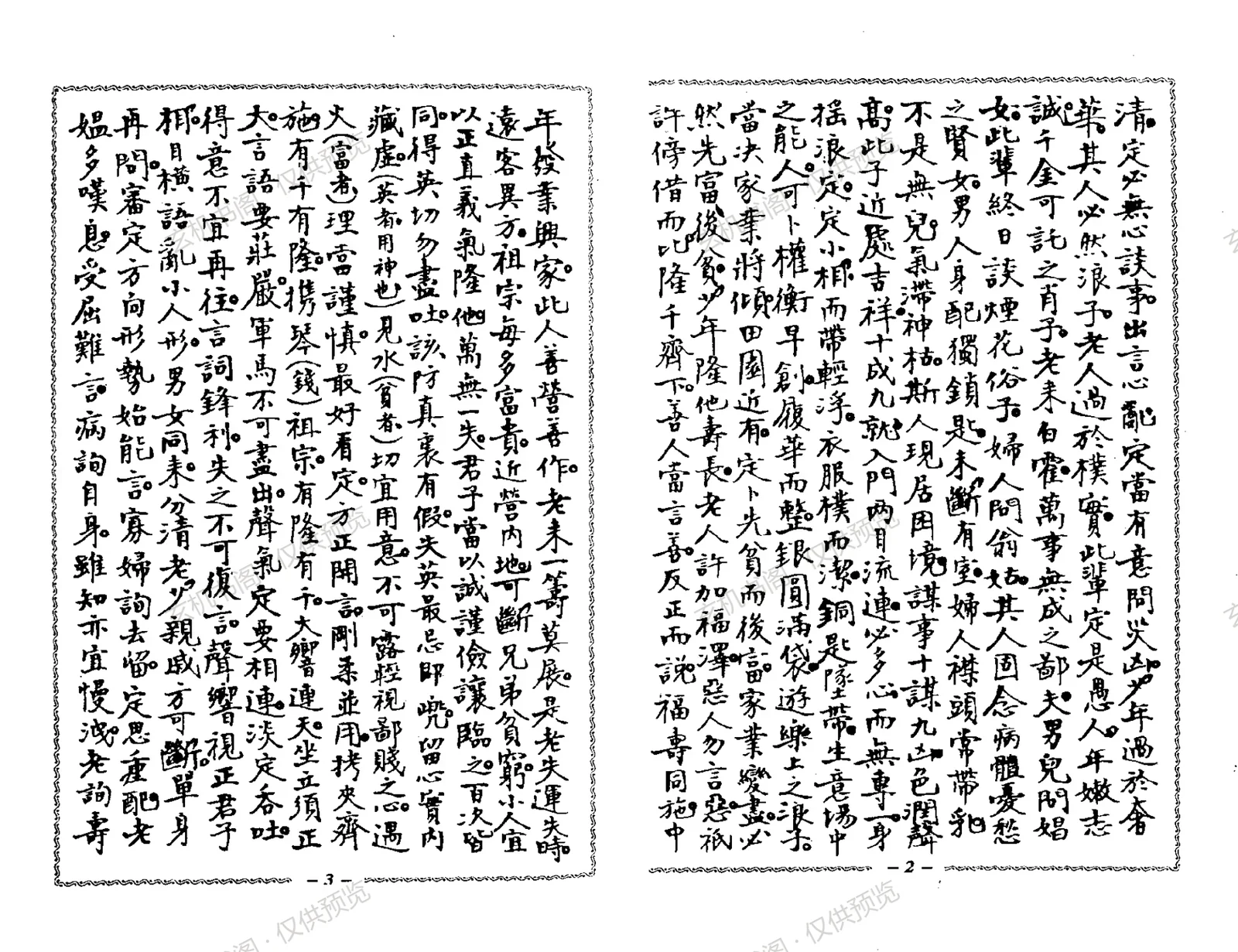
Compiled by the Taiwanese divination author Fang Xuan, this book claims to preserve the oral formulas of the blind fortune-teller Fang Ran, a late Qing/early Republican figure from Nanhai, Guangdong. Its core is Zi Wei Dou Shu (Purple Star Astrology), but the material is arranged as rhymed seven-character verses rather than prose analysis. The table of contents moves through the twelve palaces—wealth, siblings, property, children, subordinates, spouse, health, travel, career, fortune, appearance—alongside the ten heavenly stems, then turns to specific querents: children, elders, women asking about marriage, poor households, maids, and questions of illness, death, and wealth. The verses are terse and full of blind-school jargon such as junma and ganjie, requiring contextual reading. The present copy is a two-page-per-sheet photocopy with a cover attributed to Fang Xuan and a preface by Lin Ranzhi dated the summer of the jimao year. It is useful for studying the verse-based transmission of Zi Wei Dou Shu and the language of blind-school fortune-telling in Taiwan.
Contents
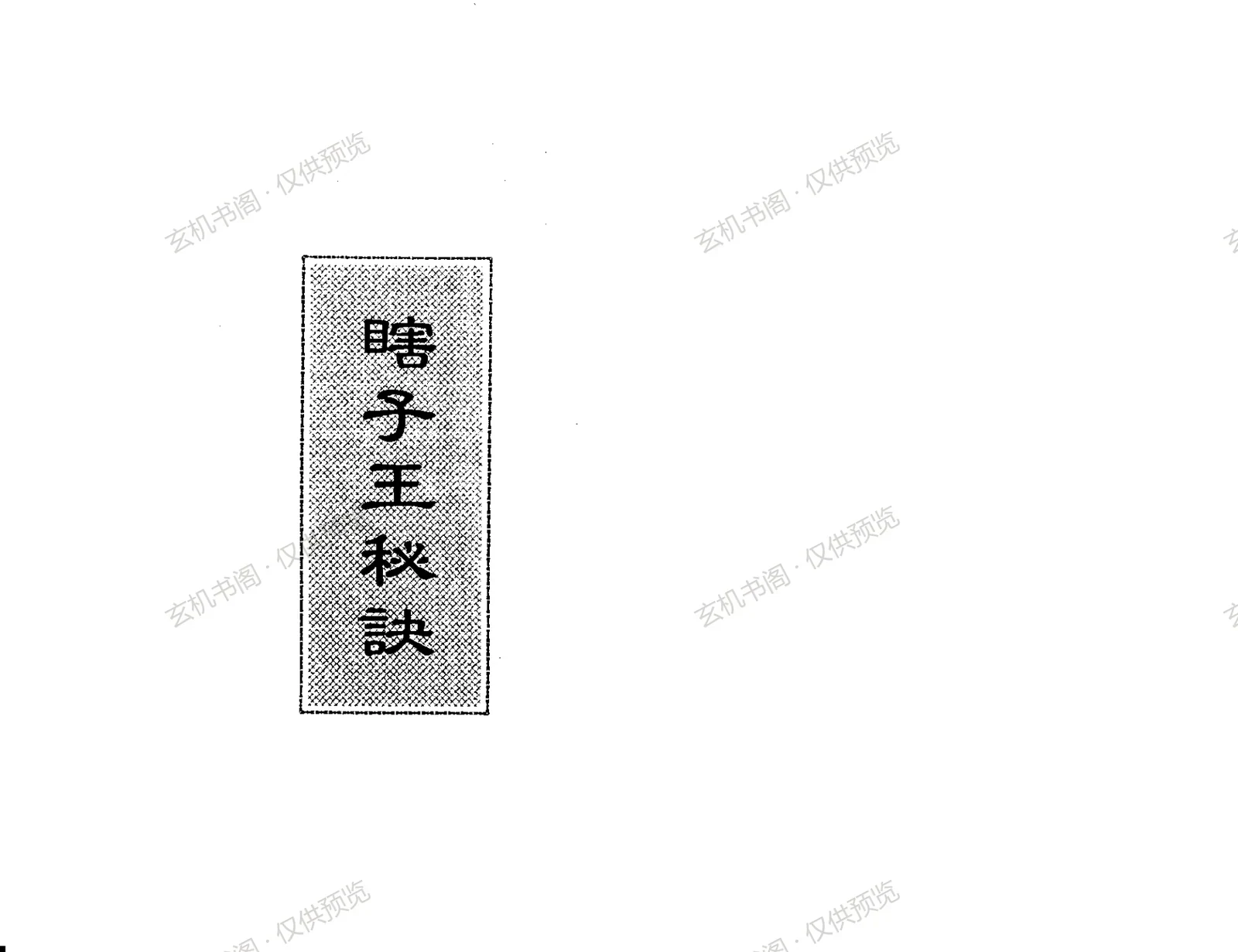
Cover and title page: Blind King's Secret Formula, Golden Verses of Dou Shu
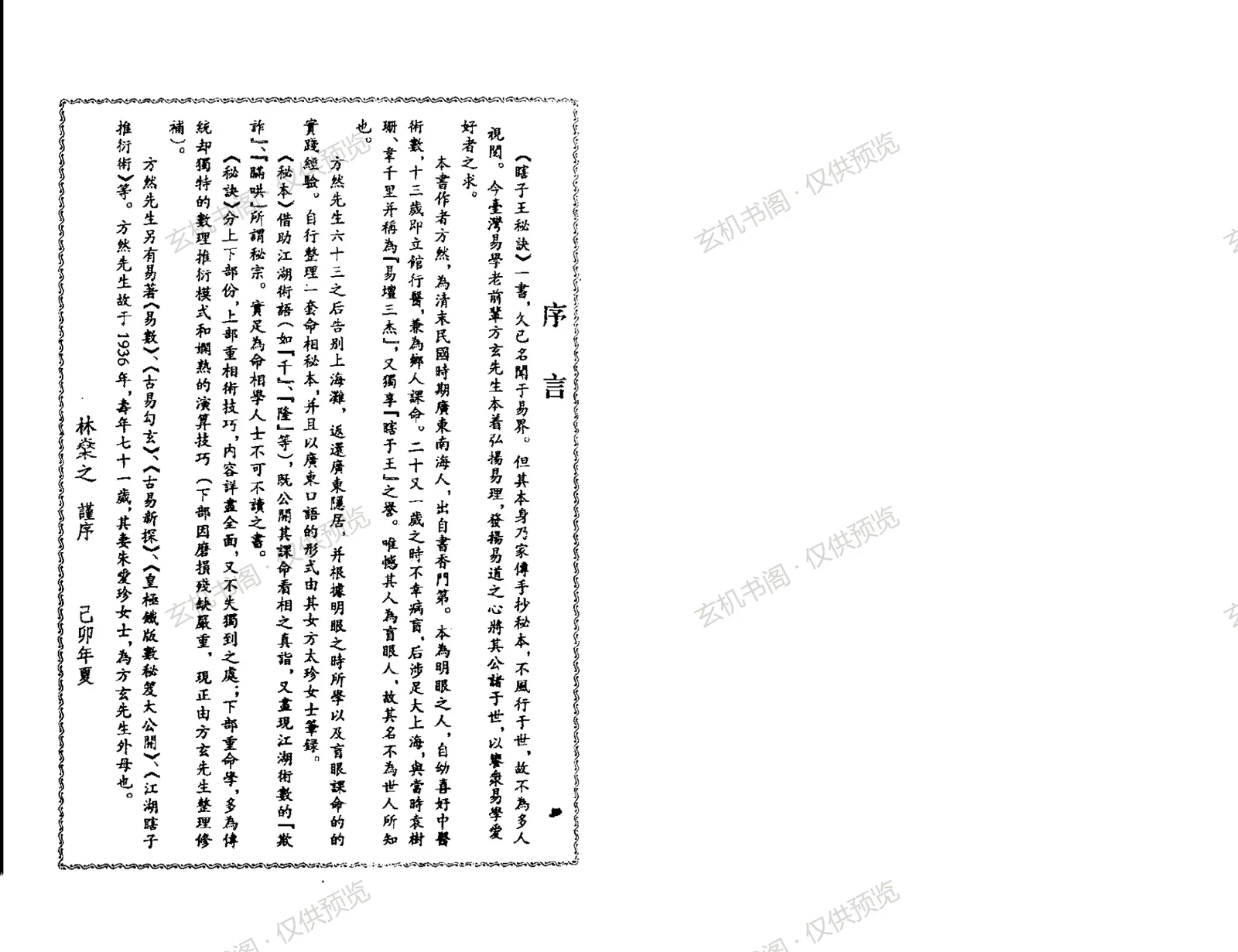
Preface by Lin Ranzhi on Fang Ran's blind-school lineage
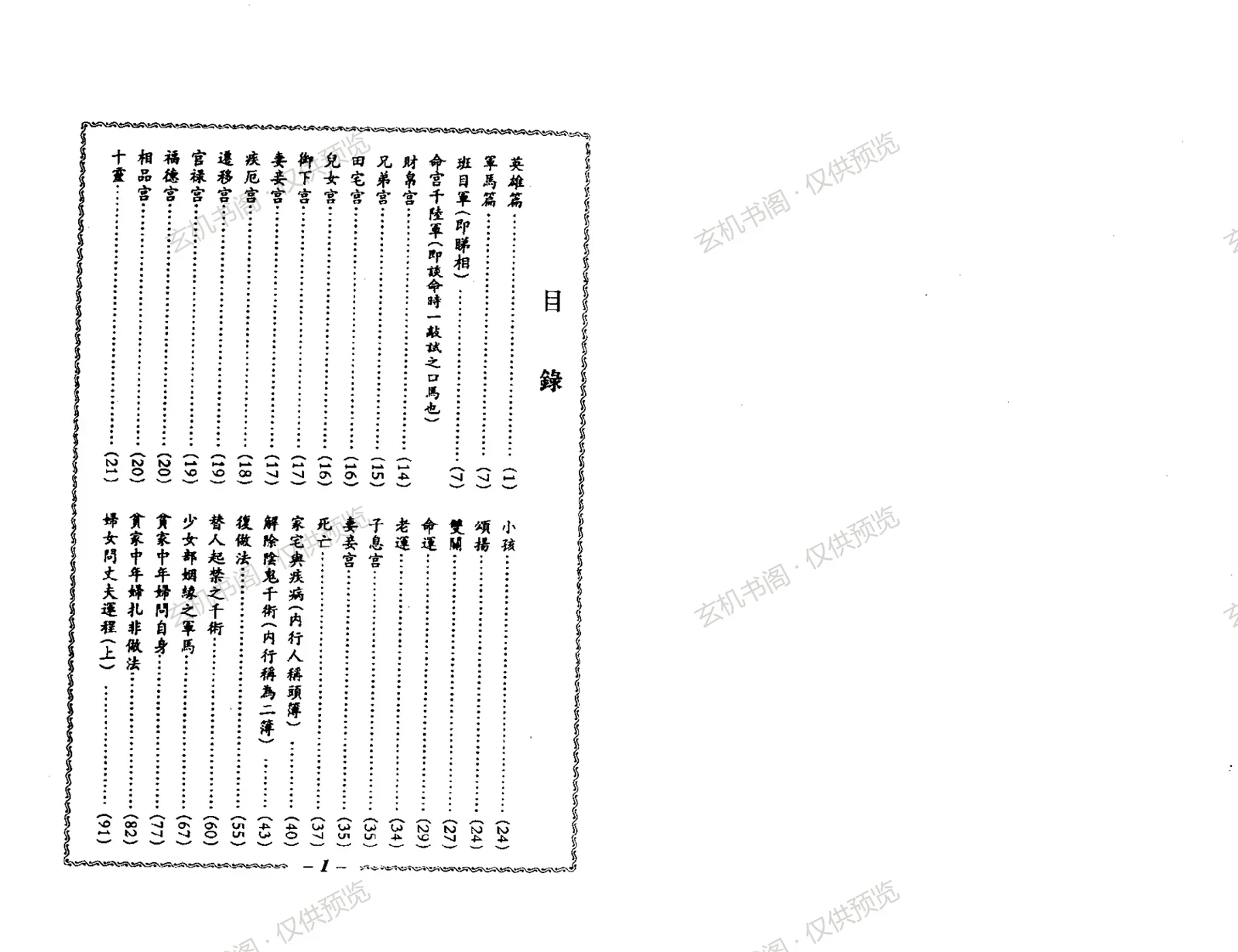
Contents: Hero chapter, Junma chapter, Banri jun, etc.
Contents: wealth, siblings, property, children, spouse palaces
Contents: ten stems, children, fate, old age, death
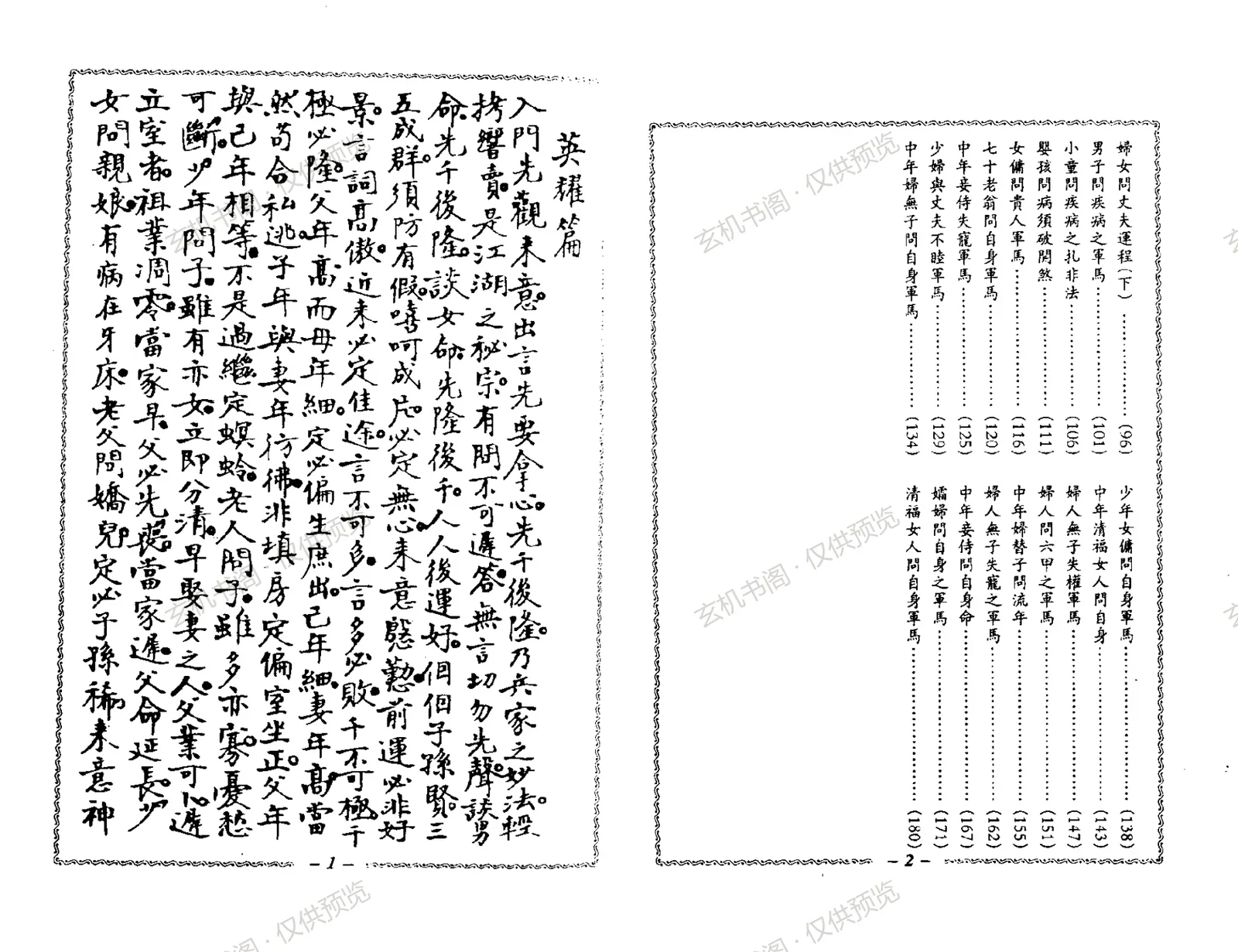
Contents: women, marriage, illness, poverty queries
Main text: Hero chapter verses in seven-character lines
Key Points
Organized around the twelve palaces of Zi Wei Dou Shu
Formulas written as seven-character rhymed verses for memorization
Traces to the blind master Fang Ran of Nanhai, Guangdong
Divided by querent identity: male, female, old, young, rich, poor
Contains blind-school jargon such as junma and ganjie