Reading guide
Content guideOverview
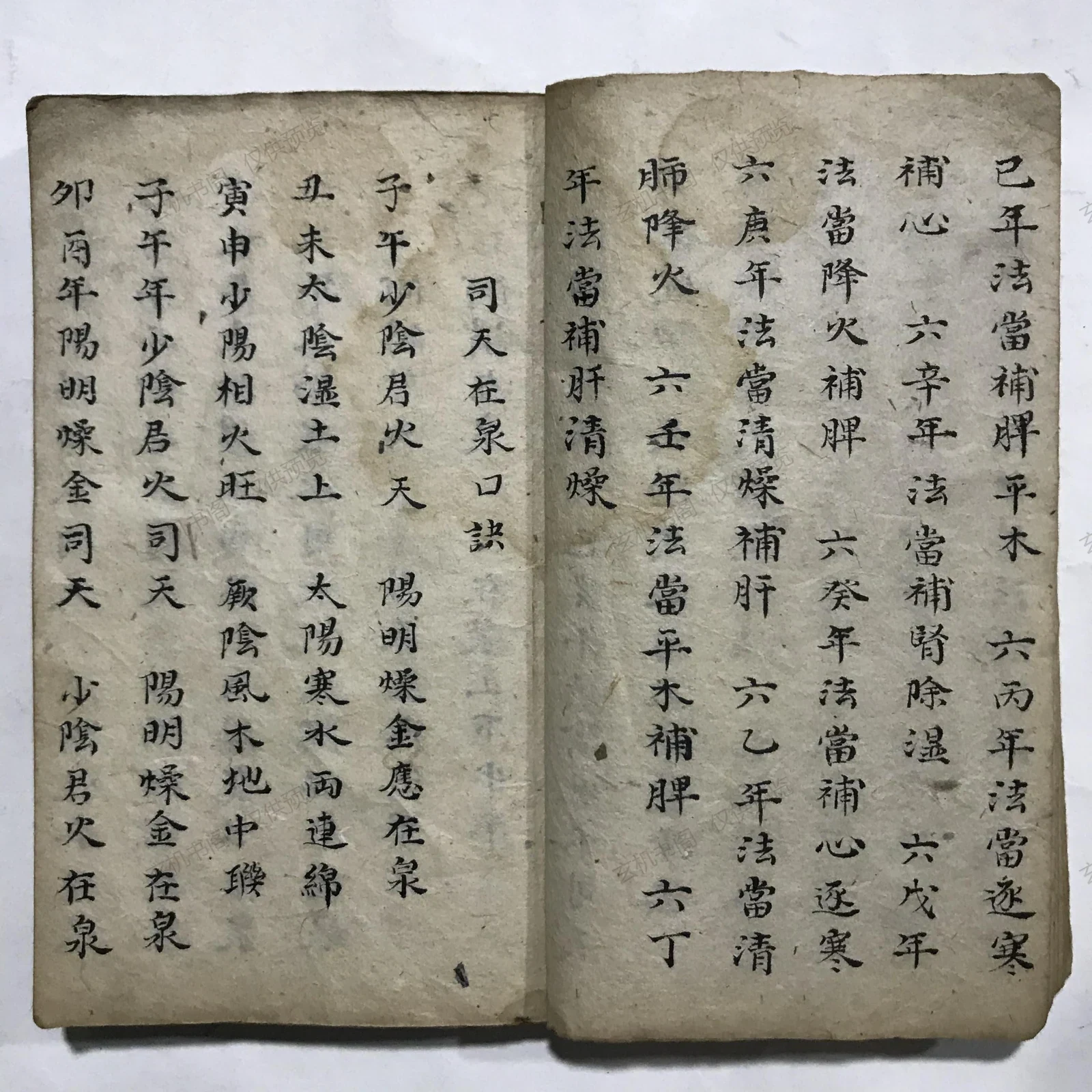
The visible pages show that this is not a simple physiognomy manual. It opens with a discussion of the mutual generation and overcoming of the five phases, listing the sequence from wood generating fire through metal overcoming wood, then relates the five movements and six qi to the circulation of qi in the human body. Later pages turn to seasonal qi and treatment, citing the principle that one must first attend to the qi of the year and not contravene heavenly harmony. A song on the heavenly stems and transformative qi gives the correspondences jia-ji to earth, yi-geng to metal, bing-xin to water, ding-ren to wood, and wu-gui to fire, while the six qi of wind, summerheat, dampness, dryness, cold, and fire are linked to the body. The final pages present verses on the earthly branches and yearly qi, followed by oral formulas for the governing and residing qi of each year, with treatment advice such as using bitter warmth, acrid coolness, tonifying the spleen and pacifying wood, or clearing dryness and supplementing the liver. Overall it is a manuscript compilation on five movements and six qi with visceral patterns and seasonal treatment, organized around mnemonic songs and oral formulas.
Contents
On the mutual generation and overcoming of the five phases
Five-phase sequence and the qi of the human body
Seasonal use of qi and establishing the year first
Song of the heavenly stems and transformative qi
Song of the six qi, yearly movements, and earthly branches
Oral formulas for governing and residing qi with yearly treatment principles
Key Points
Five-phase generation and overcoming provides the framework
Five movements paired with stems: jia-ji earth, yi-geng metal, bing-xin water, ding-ren wood, wu-gui fire
Six qi of wind, summerheat, dampness, dryness, cold, and fire correspond to bodily qi
Yearly governing and residing qi are listed with treatments such as warming, clearing, or tonifying the spleen