Reading guide
Content guideOverview
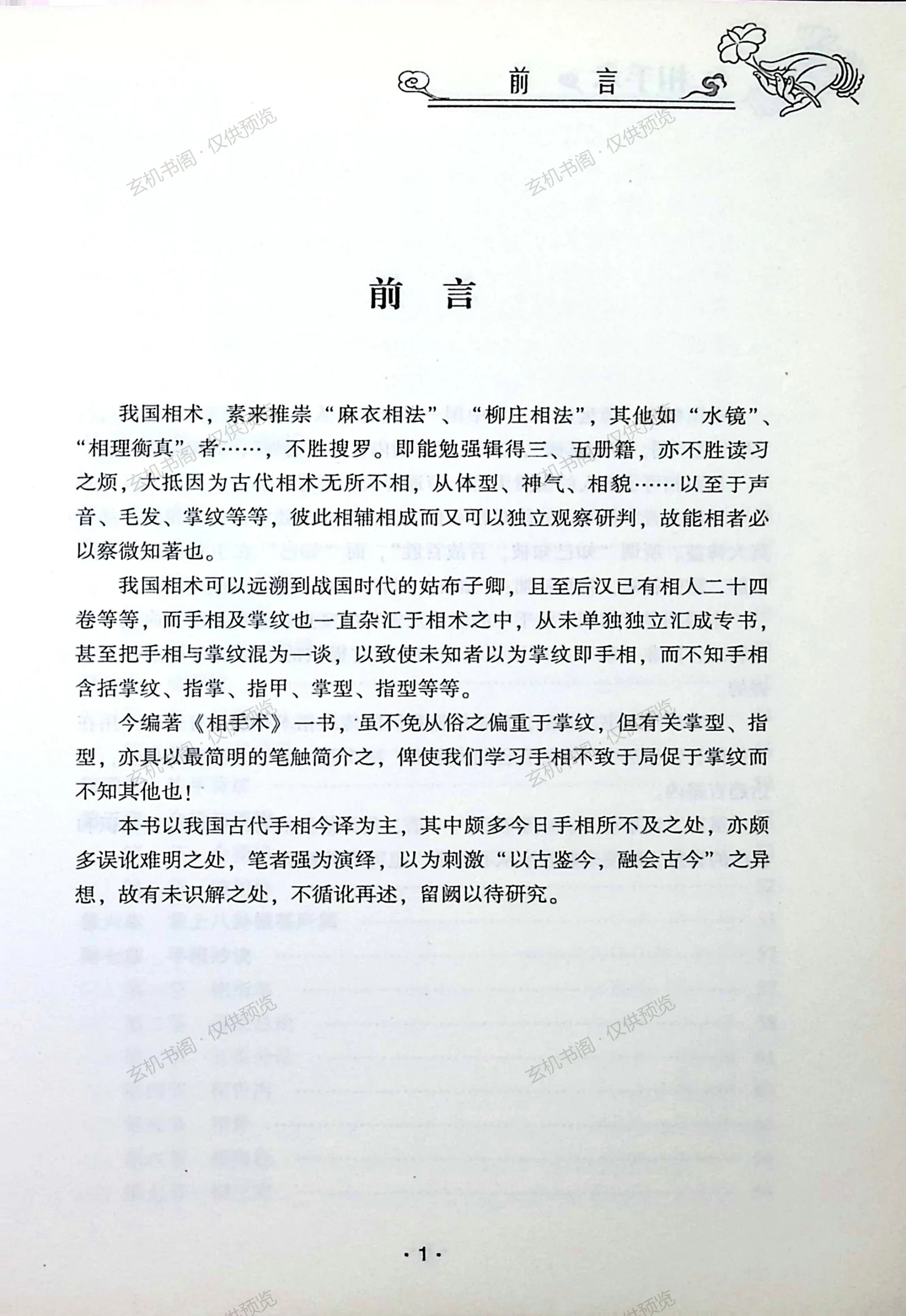
This is a palmistry manual by Shao Weihua, framed by Yijing theory and aimed at beginners. The preface notes that Chinese physiognomy has many schools, such as the Mayi and Liuzhuang traditions, and that palm reading was long mixed into general physiognomy rather than treated as its own subject. The author explains that the book is mainly a modern translation of classical palm-reading texts, concentrating on the lines while also briefly covering palm shapes, finger shapes and nails so readers do not mistake palmistry for palm lines alone. The author's preface stresses that physiognomy can help one understand oneself and others, and hopes this traditional knowledge will be put to practical use in daily life. The cover marks it as an illustrated, revised, concise reader.
Contents
Preface: origins of physiognomy and why palmistry stands alone
Author's preface: reading people and using tradition in daily life
The eight trigrams and twelve palaces on the palm
A brief look at palm shapes, fingers and nails
Classical palm-reading texts translated, centered on the lines
Key Points
Uses Yijing theory as the interpretive frame
Focuses on palm lines while covering shapes and nails
Built mainly on modern translations of classical texts
Illustrated and positioned as a concise beginner's reader
Stresses practical use in reading people and social life