Reading guide
Content guideOverview
This illustrated physiognomy manual by Li Juming presents face reading as an accumulated empirical craft rather than occult mystery. The preface traces the tradition through classical texts such as the Maji Xiangfa, Taqing Shenjian, and Bingjian, then the main section introduces the Three Zones and Twelve Palaces, facial terminology, annual fortune charts, and the cross-shaped face-reading method. Subsequent chapters examine face shapes, the forehead, forehead lines, and hairline. With 380 picture examples, the book is designed for reference and visual comparison, making it useful for beginners who want to learn how physiognomists name and interpret facial regions.
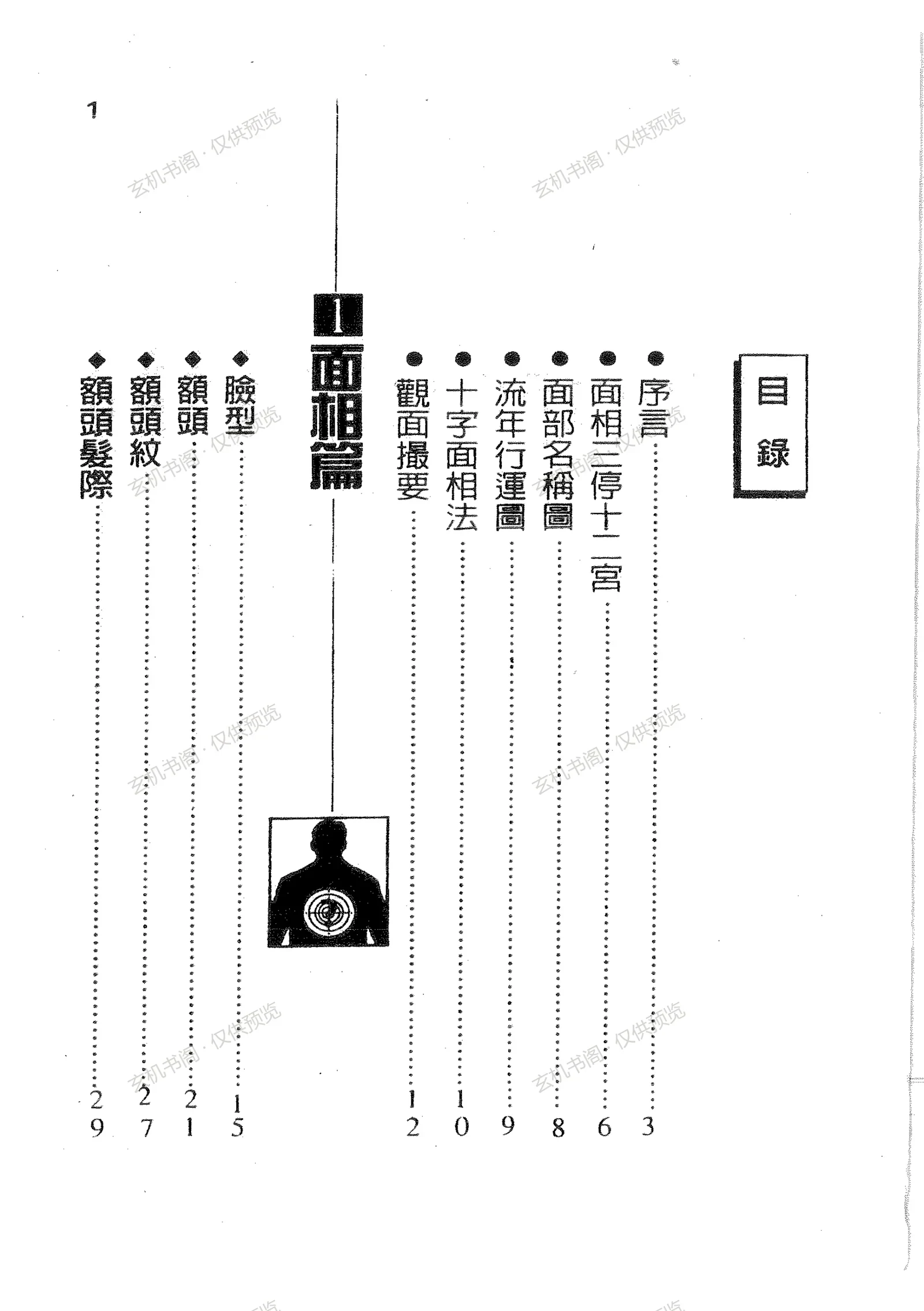
Contents
Preface: the art of reading people and classical sources
Three Zones and Twelve Palaces
Facial terminology and annual fortune charts
Cross-shaped face-reading method and overview
Face shapes and the forehead
Forehead lines and hairline
Key Points
Uses 380 illustrated examples to explain facial regions
Builds on the Three Zones, Twelve Palaces, and annual charts
Frames physiognomy as accumulated experience, not superstition
Surveys classical texts such as Maji Xiangfa and Bingjian
Starts from local features: face shape, forehead, lines, hairline