Reading guide
Content guideOverview
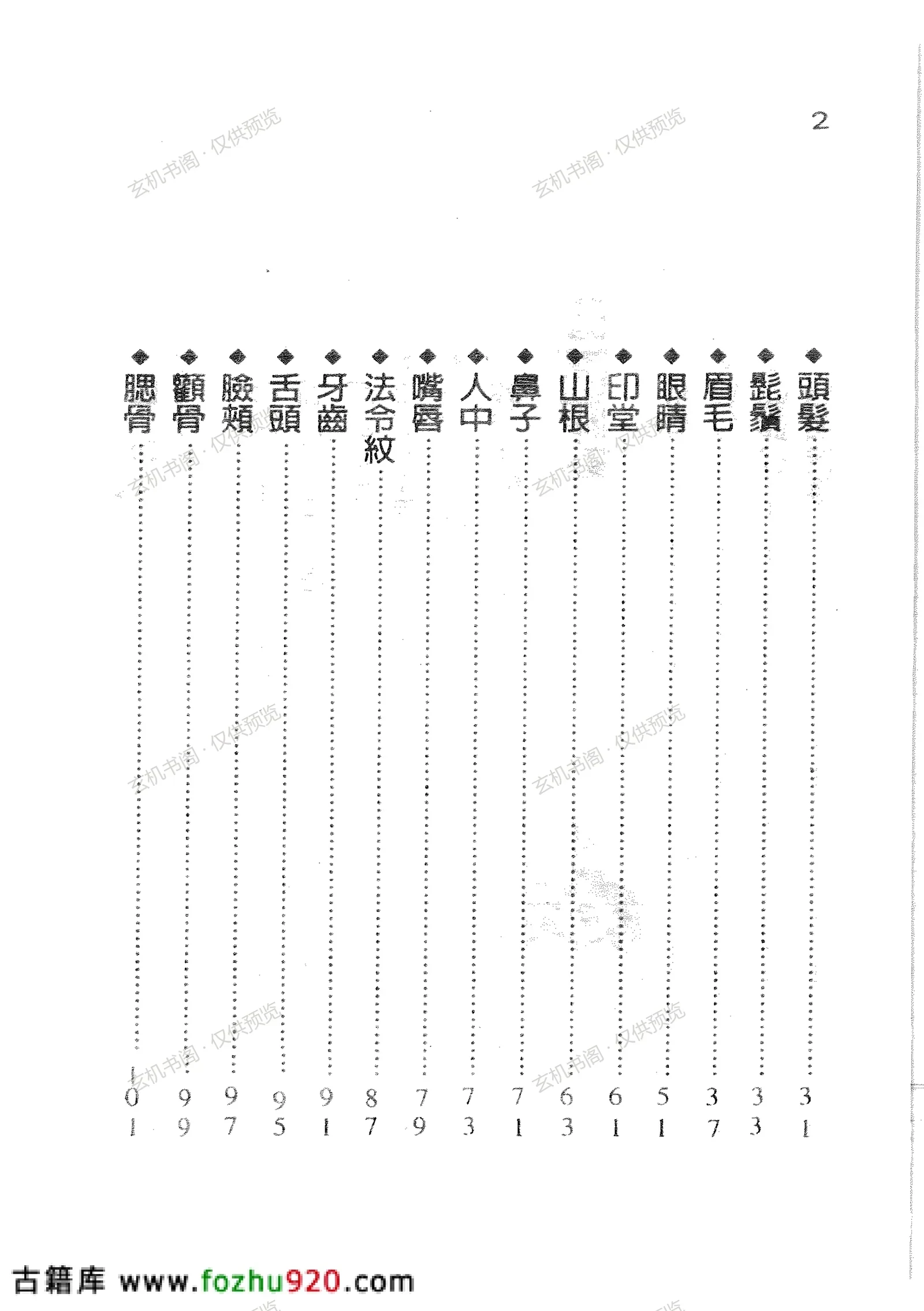
This is an illustrated introductory guide to Chinese physiognomy by Li Ju-ming. The cover states that it contains 380 fully illustrated examples. The book explains how to observe a person's character and fortunes through facial features, body build, hair, complexion, moles, and palm lines. In the preface, physiognomy is presented as a practical art of reading people, built on experience accumulated over centuries rather than on superstition, and it traces the tradition through classical texts such as the Maji Xiangfa, Taiqing Shenjian, and Bingjian. The table of contents shows that the main body begins with a face-reading section covering the Three Zones and Twelve Palaces, facial terminology diagrams, yearly fortune charts, the cross-shaped face-reading method, and an overview of face observation, followed by detailed discussions of face shapes, the forehead, hairline, forehead lines, eyebrows, eyes, the yintang, the root of the nose, the nose, the philtrum, lips,法令 lines, teeth, tongue, cheeks, cheekbones, and jawbones. The illustrated format makes it suitable for readers who want a structured reference to traditional face reading.
Contents
Preface: physiognomy as a practical art of reading people
Face section: Three Zones and Twelve Palaces
Facial terminology and yearly fortune charts
Cross-shaped face-reading method and observation overview
Face shapes, forehead, hairline, and forehead lines
Eyebrows, eyes, yintang, nose root, and nose
Philtrum, lips, teeth, and tongue
法令 lines, cheeks, cheekbones, and jawbones
Key Points
Uses 380 illustrated examples for easy cross-reference
Preface traces classical physiognomy texts and stresses practical use
Face section organized by Three Zones, Twelve Palaces, and yearly positions
Detailed analysis of forehead, brows, eyes, nose, mouth, cheekbones, and jaw
Also covers body physiognomy, hair, complexion, moles, and palm lines