Reading guide
Content guideOverview
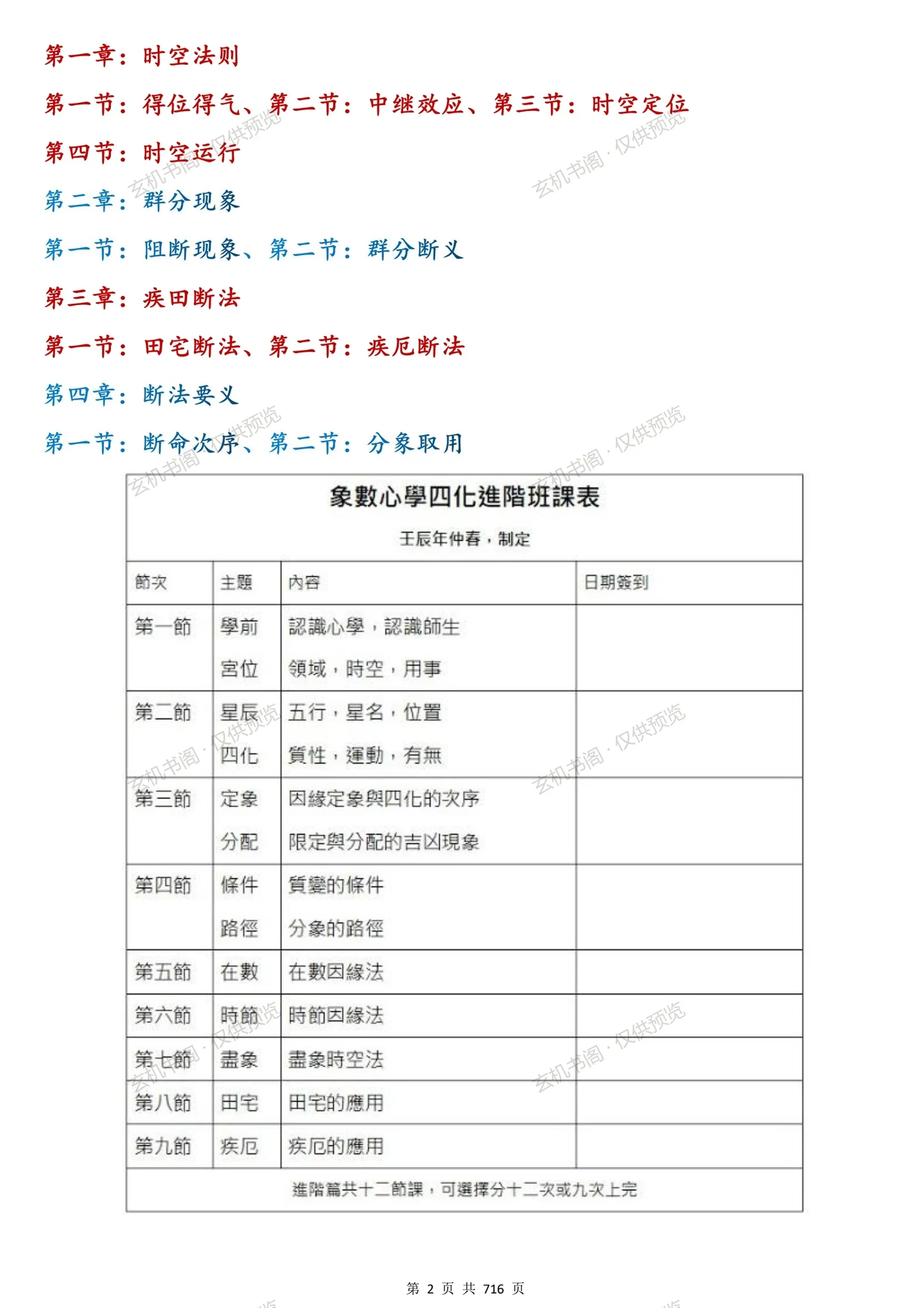
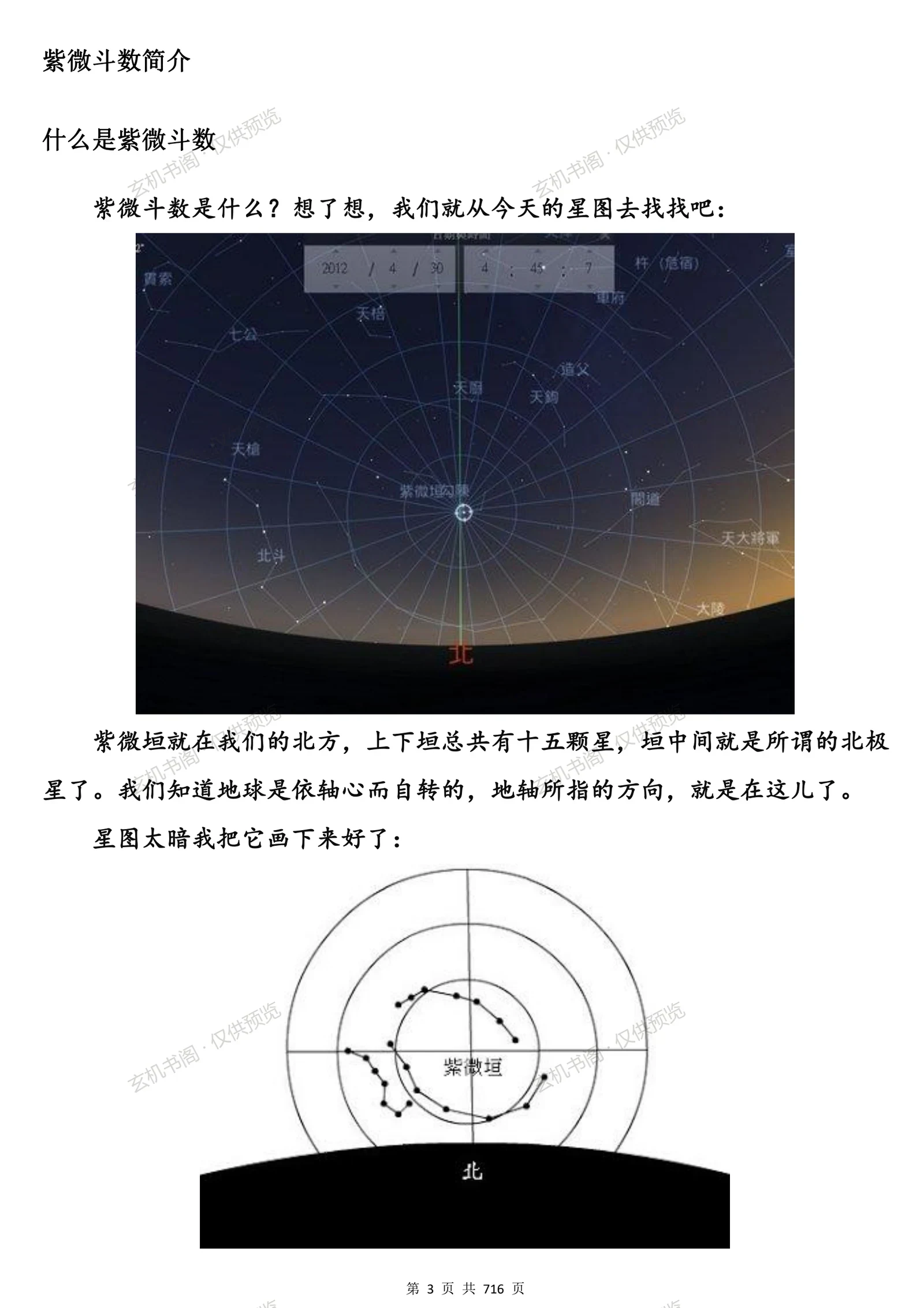
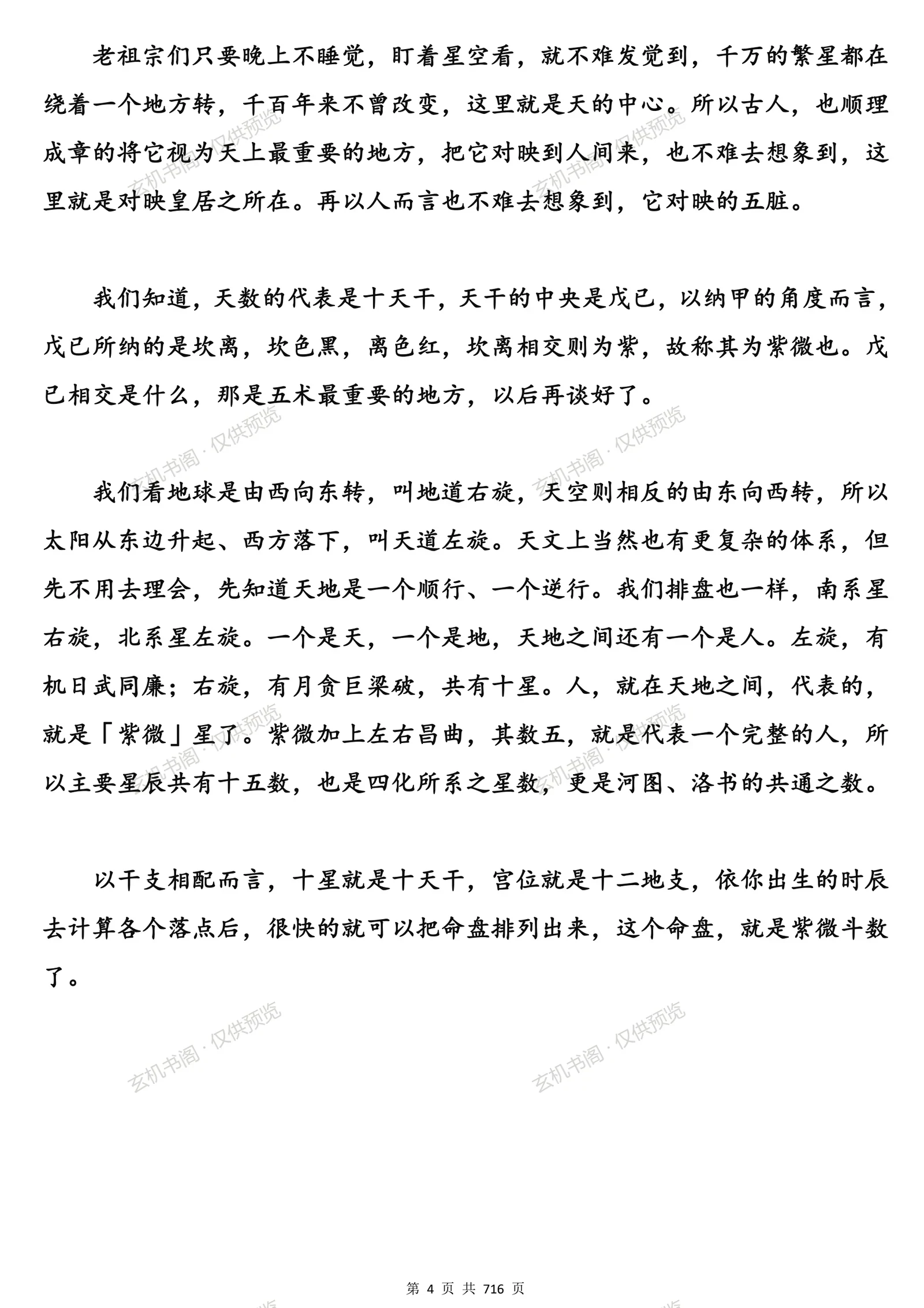
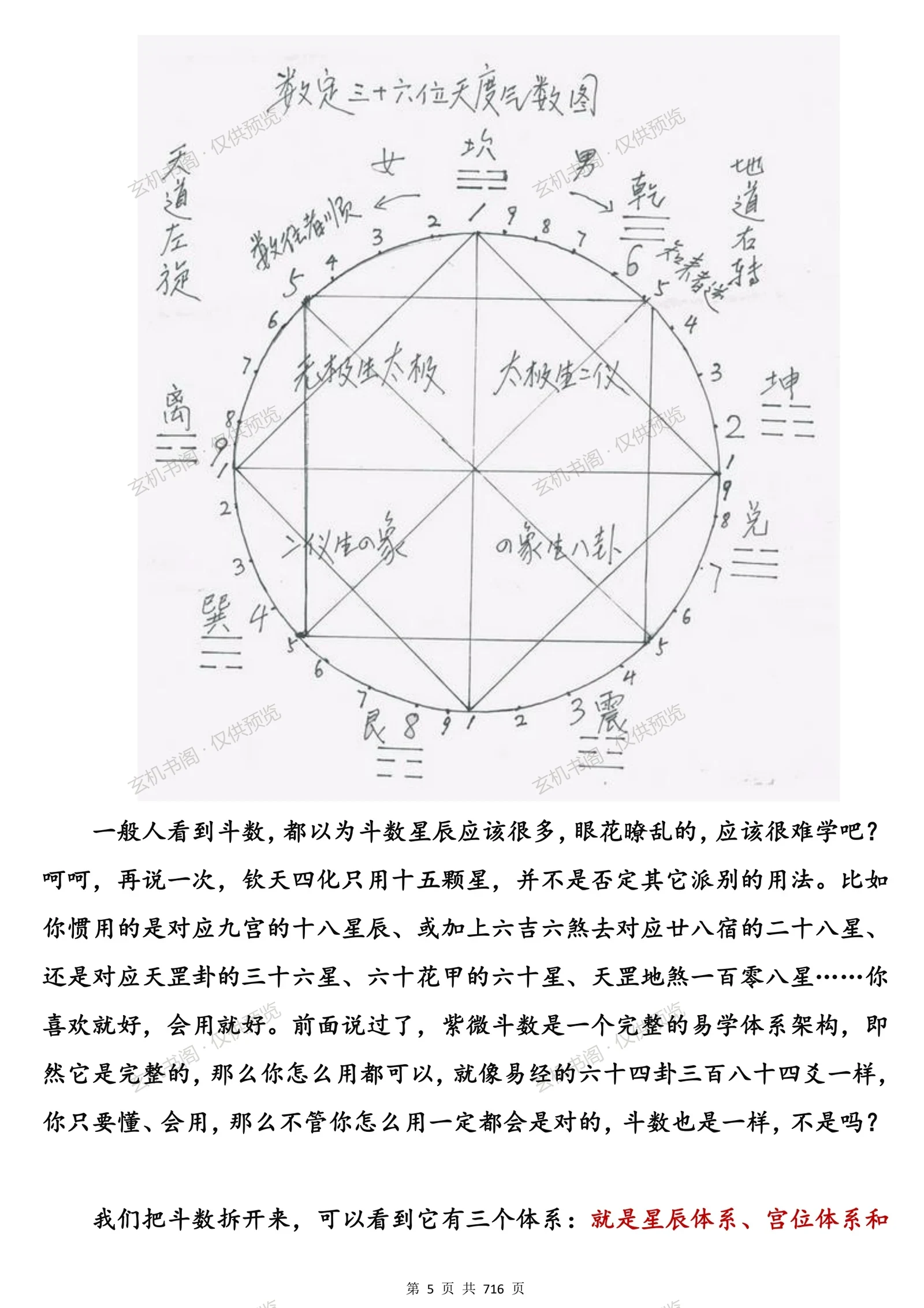
These lecture notes for the advanced sihua class of Xiangshu Xinxue run to about 716 pages. The opening teaching outline divides the material into four parts: foundations cover palace and star concepts, chart layout, palace recognition, and major star interpretation, together with Hetu-Luoshu numerology, najia, and calendrical principles; the system section treats the palace system (Hetu-Luoshu palaces, laiyin palace, destiny-cycle palaces, palace-star imagery), the sihua system (explanation of the four transformations, birth-year sihua, self-transformation, and flying-palace sihua), the star system, and the change system; the imagery section presents the three methods of object imagery and the two-pattern meanings; the judgment section covers time-space rules, group-division phenomena, judgments on property and illness, and essential judgment principles. A course schedule dated to the second month of a Renchen year lists nine session topics, from preliminary palace study and star-sihua through object determination, conditions and paths, number, timing, full imagery, property, and illness, noting that the advanced course has twelve sessions. The main text also includes an introduction to Zi Wei Dou Shu, beginning with the Pole Star and the Ziwei enclosure star map, explaining the ten heavenly stems, najia and the Kan-Li combination that gives the name Ziwei, the left and right rotations of heaven and earth, and the northern and southern star groups. It identifies three systems of dou shu—stars, palaces, and sihua—and stresses that Qintian sihua uses only fifteen stars, with Zuoyou, Changqu, and the five representative stars, while Ziwei symbolizes the center.
Contents
Foundations: palace and star concepts, chart layout, major star interpretation
Foundations: Hetu-Luoshu numerology, najia, calendrical principles
Systems: Hetu-Luoshu palaces, laiyin palace, destiny palaces, palace-star imagery
Systems: sihua explanation, birth-year, self-transformation, flying palace
Systems: origin of stars, star transactions, transformed luminaries
Systems: qualitative and quantitative change, grouping, nine forms of change
Imagery: three methods of object imagery, determination rules, qi transformation
Judgment: time-space rules, group division, property and illness, essential judgment
Key Points
Three systems of dou shu: stars, palaces, and sihua
Qintian sihua uses only fifteen stars; Ziwei, Zuoyou, and Changqu represent the person
Sihua has only lu, quan, ke, and ji; self-transformation has centripetal and centrifugal forms
Year and day represent qi; month and hour represent substance, resonating with bazi principles
The advanced schedule has nine topic sessions; the advanced course totals twelve sessions