Reading guide
Content guideOverview
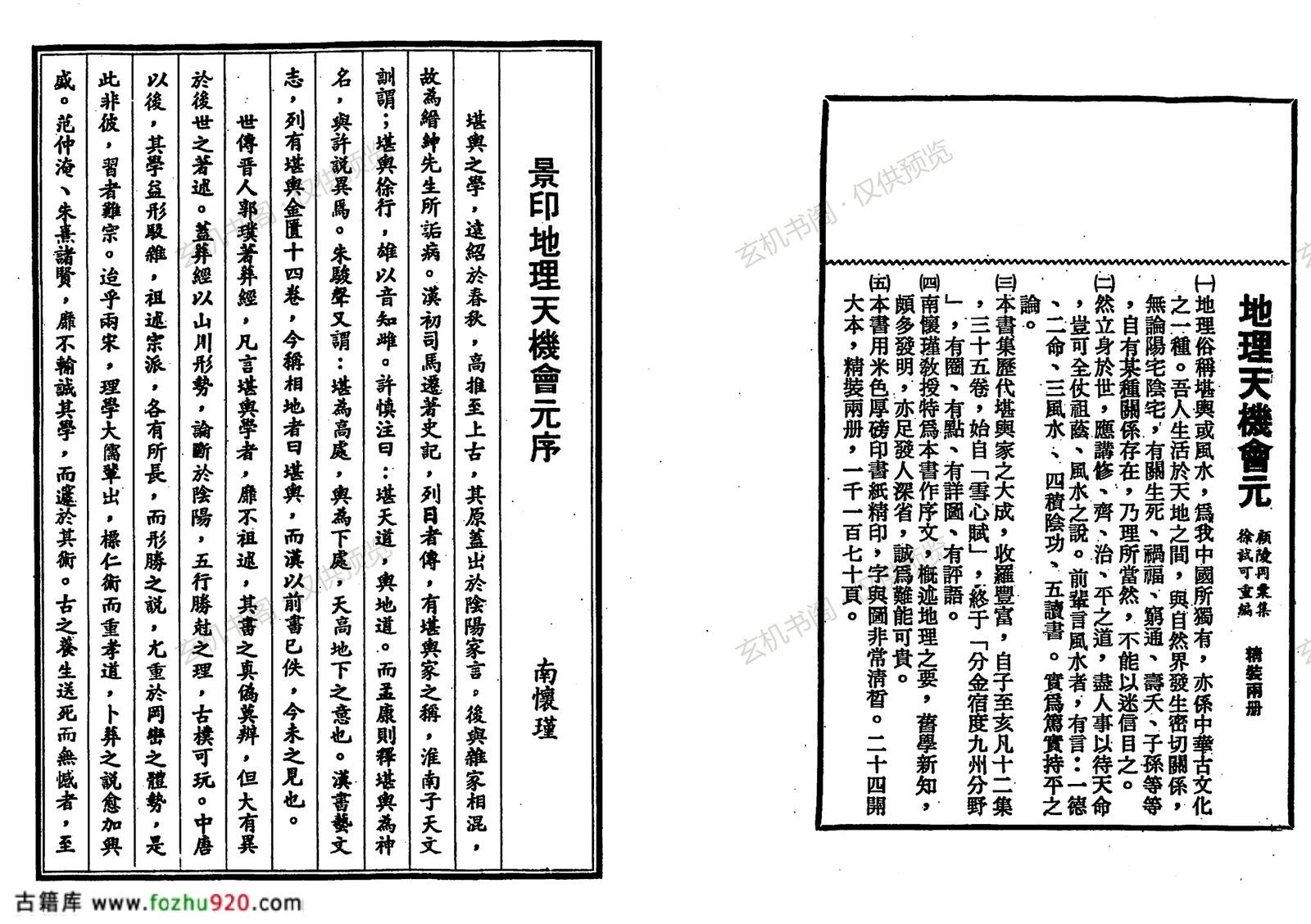
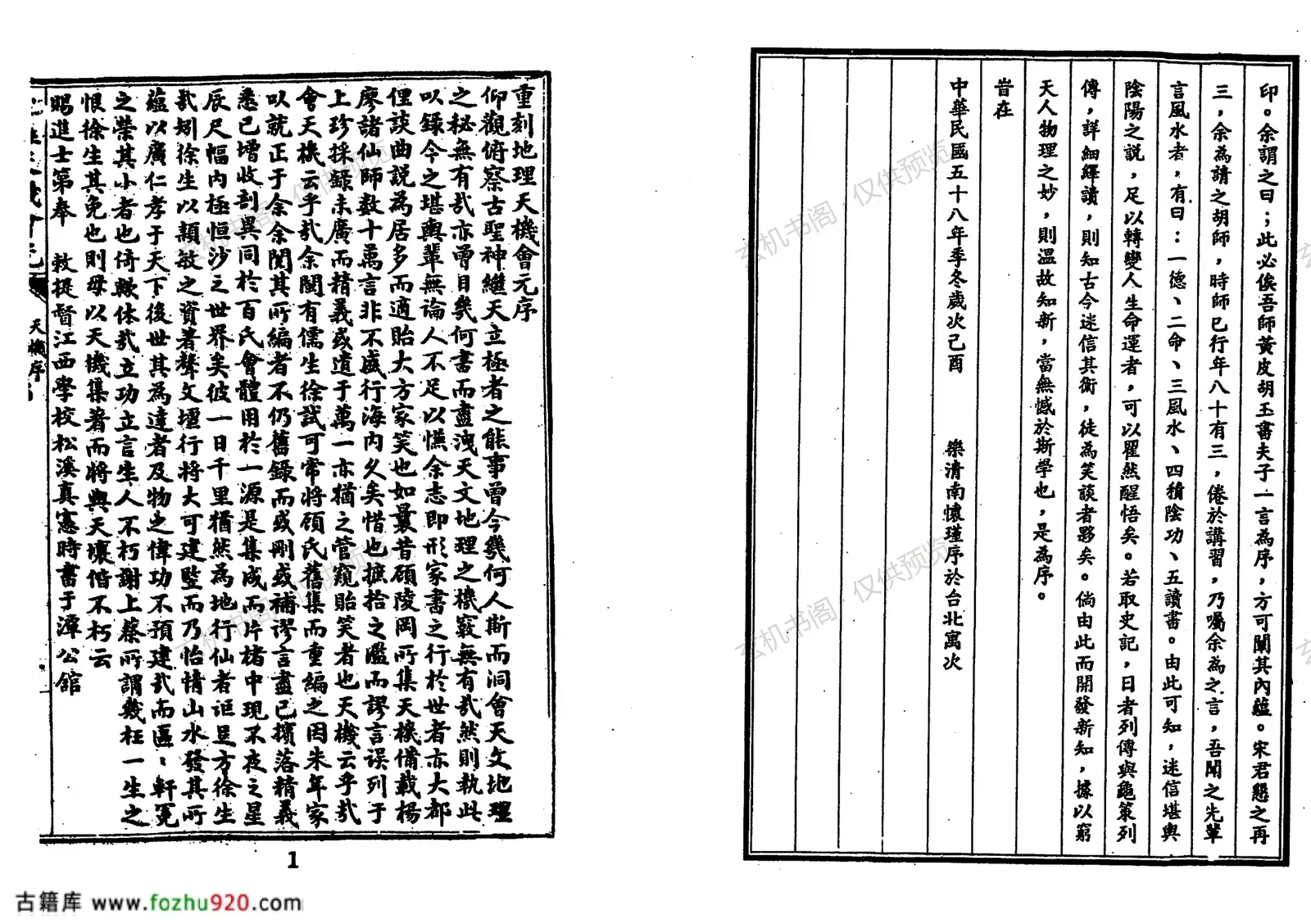
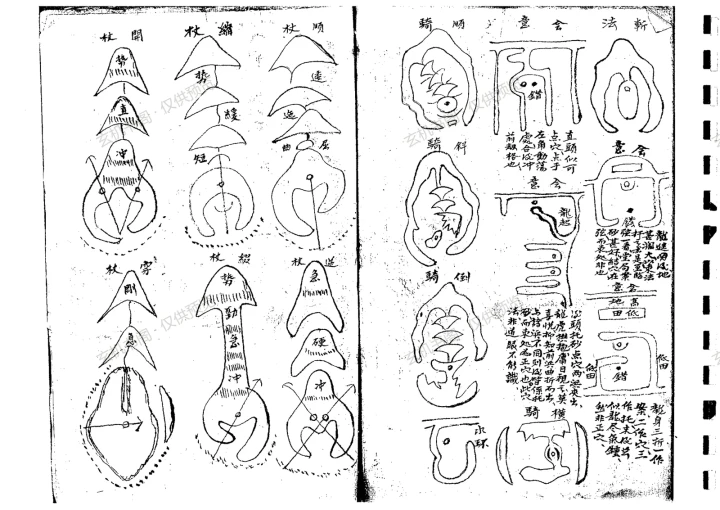
This is the first volume of the Detailed Illustrated Geography: The Celestial Mechanism Compendium, attributed to Gu Linggang as compiler and Xu Shike as re-editor. It is a traditional fengshui text focused on landscape form (xingshi), covering the identification of dragon veins, the siting of穴 points, the assessment of sand and water, and the determination of facing directions. It also incorporates sanhe and gua-based directional theories. The prefaces trace the lineage of fengshui from Guo Pu and Yang Junsong onward and explain that Xu recompiled the work because earlier editions were cluttered and their diagrams error-prone. The book pairs illustrations with mnemonic verses, making it useful for field reference. Volume one emphasizes foundational theory and general form analysis, preparing the reader for the more specific discussions in volume two. It is a valuable source for studying the compilation practices, the convergence of form and directional schools, and the transmission of diagram-based fengshui formulas in the Ming dynasty.
Contents
Prefaces: origins of fengshui and rationale for recompilation
Author's preface to the Celestial Mechanism
General discussion of celestial mechanism diagrams and formulas
Dragon vein configurations and dragon-seeking essentials
Point siting and the coordination of sand and water
Directional theory and the use of gua examples
Key Points
Re-edited by Xu Shike from Gu Linggang's compilation, a Ming fengshui anthology
Primarily form-based, with sanhe directional theory incorporated and extensive illustrations
Prefaces survey the lineage from Guo Pu and Yang Junsong onward
Diagrams paired with verses for practical field reference