Reading guide
Content guideOverview
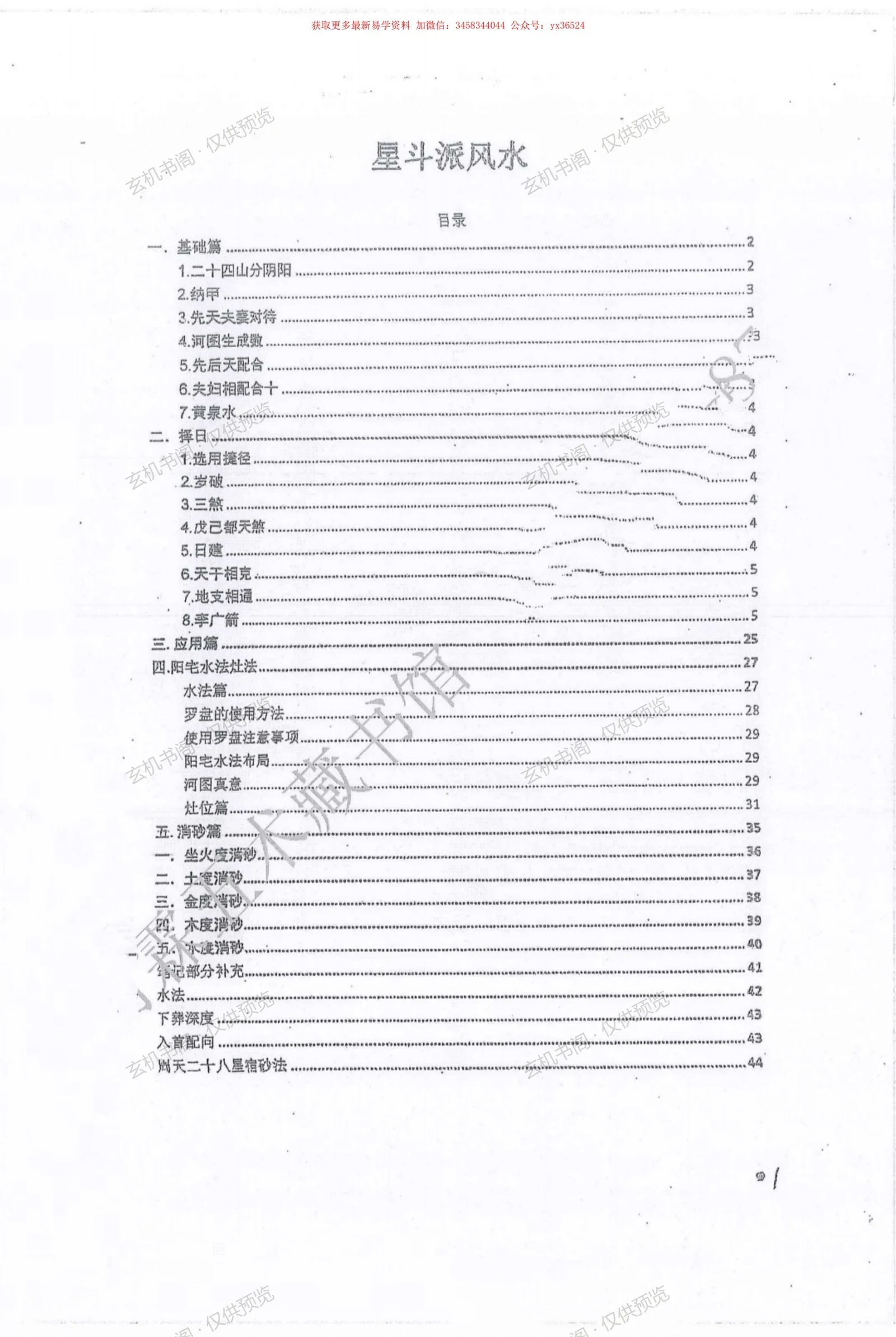
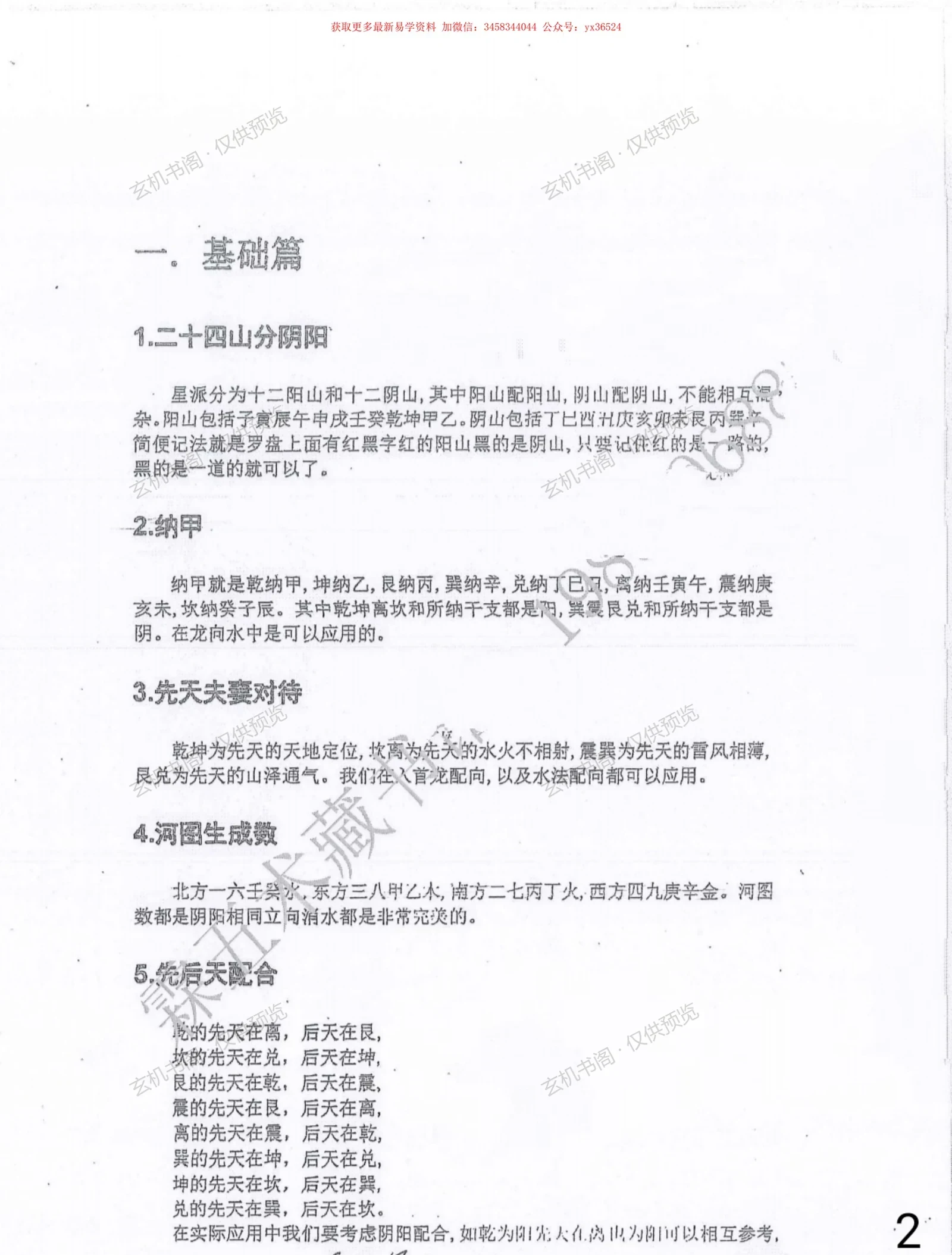
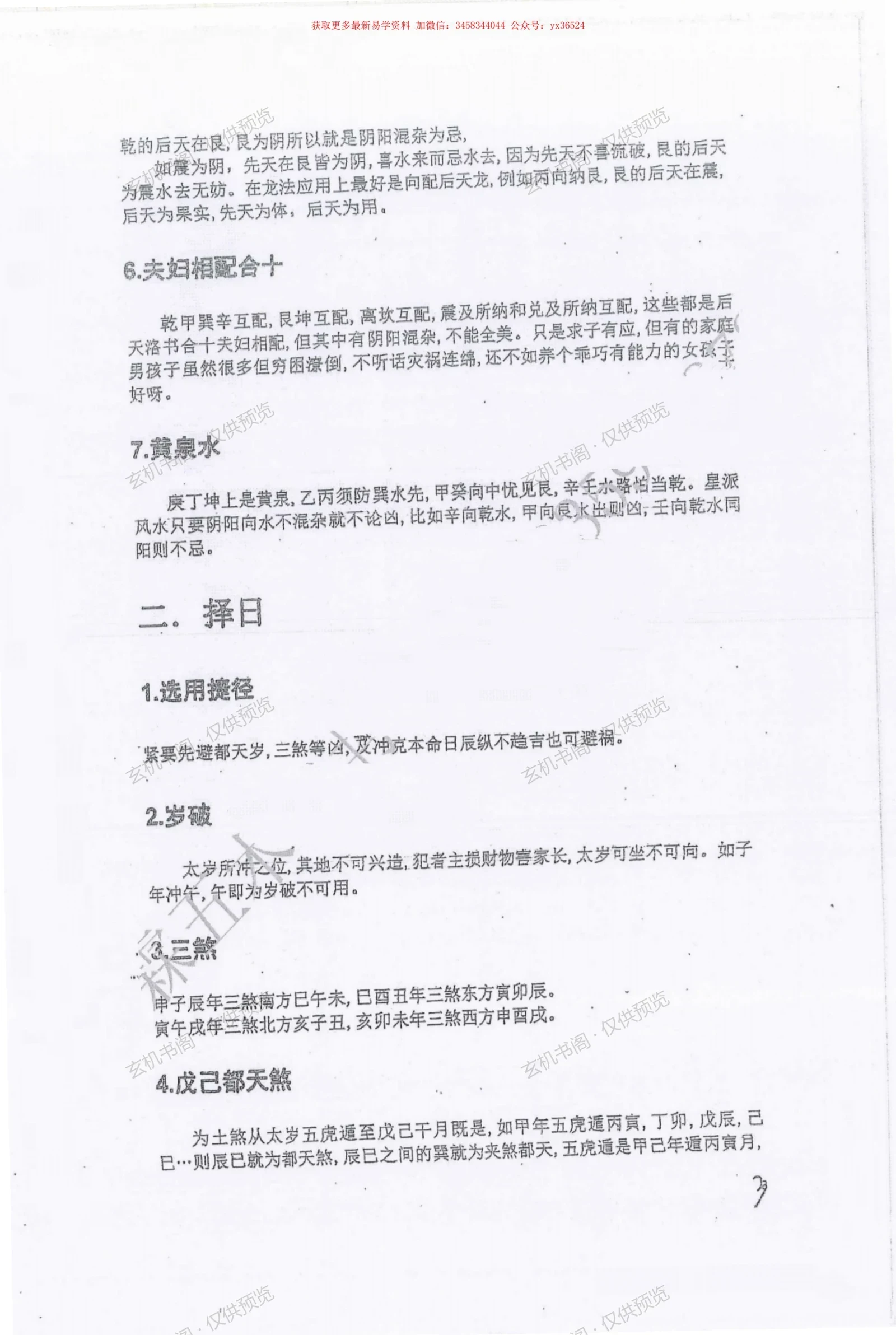
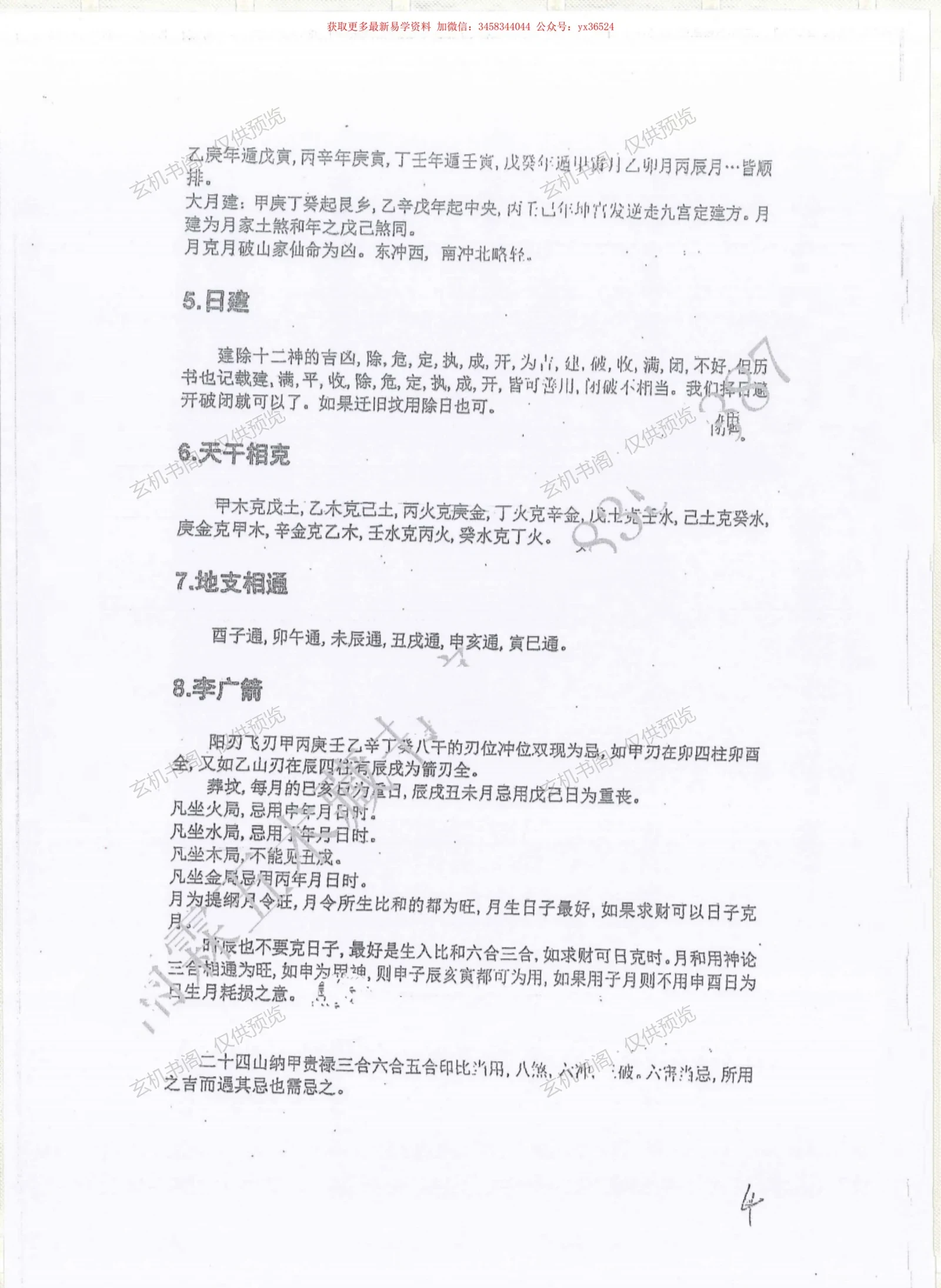
Marked as an internal training manual not for outside circulation, this concise text presents the Xingdou School (Wei-family celestial feng shui) curriculum in five parts. The basics section establishes yin-yang divisions of the 24 mountains and explains najia, the primal couple correspondences, Hetu generating numbers, earlier-and-later heaven pairing, couple compatibility and the Yellow Spring water rule. The date-selection section lists avoidances such as year breach, three killings, Wuji Dutian sha, day establishment, heavenly stem clashes, earthly branch connections and Li Guang's arrow. Later sections move to yang-dwelling water methods, luopan use, water layout, stove position, and five-degree sand elimination by sitting-mountain element, ending with the 28 lunar-mansion sand method and burial depth and facing guidance. It is suited to readers who already know the luopan and the 24 mountains and want a systematic treatment of celestial-school water methods and date avoidances.
Contents
Basics: yin-yang of the 24 mountains and najia
Earlier/later heaven pairing, Hetu numbers and couple compatibility
Yellow Spring water and the no-mixing principle
Date selection: year breach, three killings, Wuji Dutian sha
Day establishment, stem clashes, branch connections and Li Guang's arrow
Yang-dwelling water methods, luopan use and stove position
Sand elimination: five degrees by sitting-mountain element
28 lunar-mansion sand method, burial depth and facing
Key Points
Yin-yang division of the 24 mountains is the governing principle: yang matches yang, yin matches yin.
Najia, primal couple pairing, Hetu numbers and earlier/later heaven pairing form the theoretical base.
Date selection stresses avoiding year breach, three killings and Wuji Dutian sha, with day establishment and stem-branch interactions.
The yang-dwelling section covers luopan use, water layout and stove placement.
Sand elimination is organized by five sitting-mountain elements, plus a 28-mansion method.