Reading guide
Content guideOverview
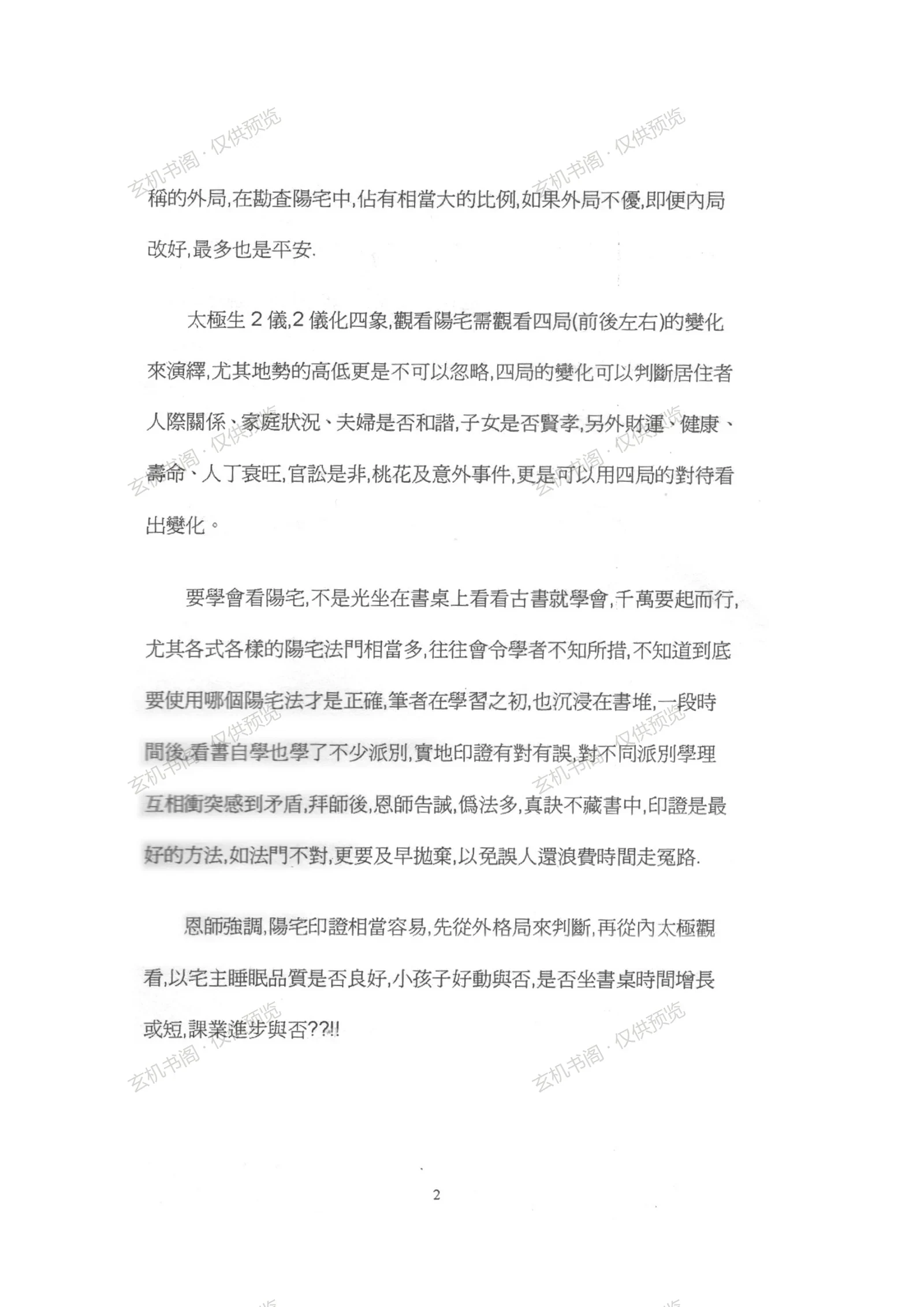
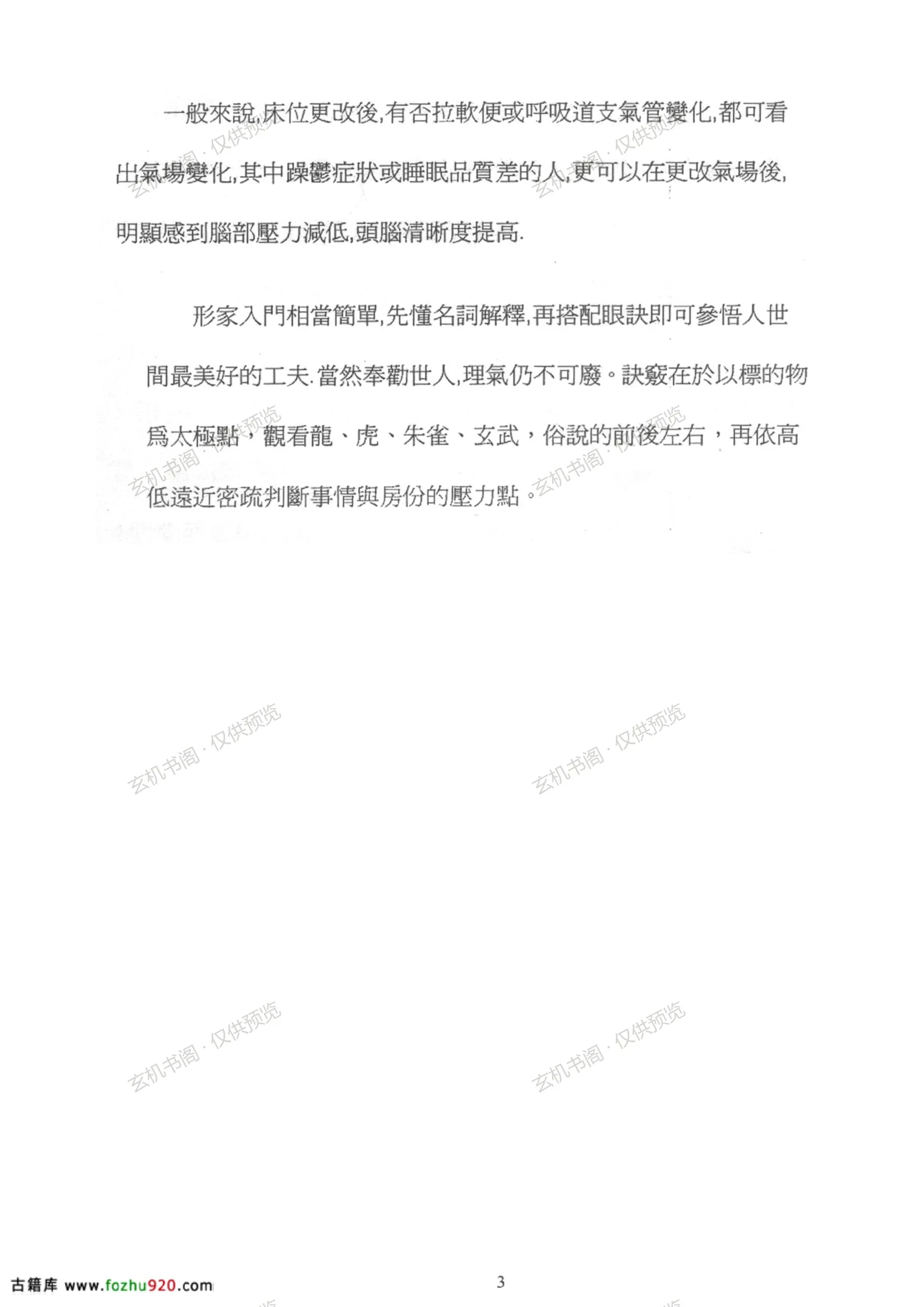
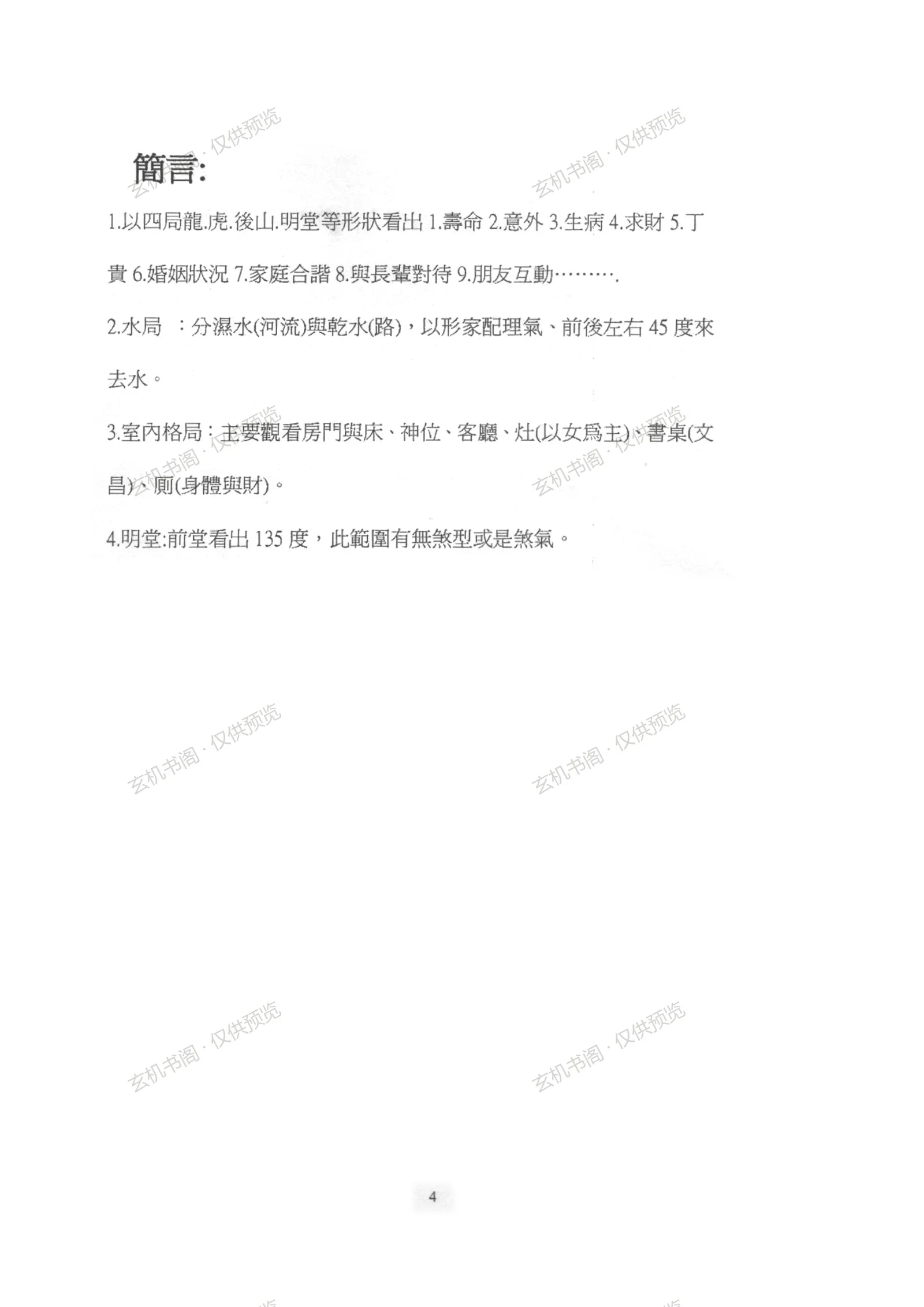
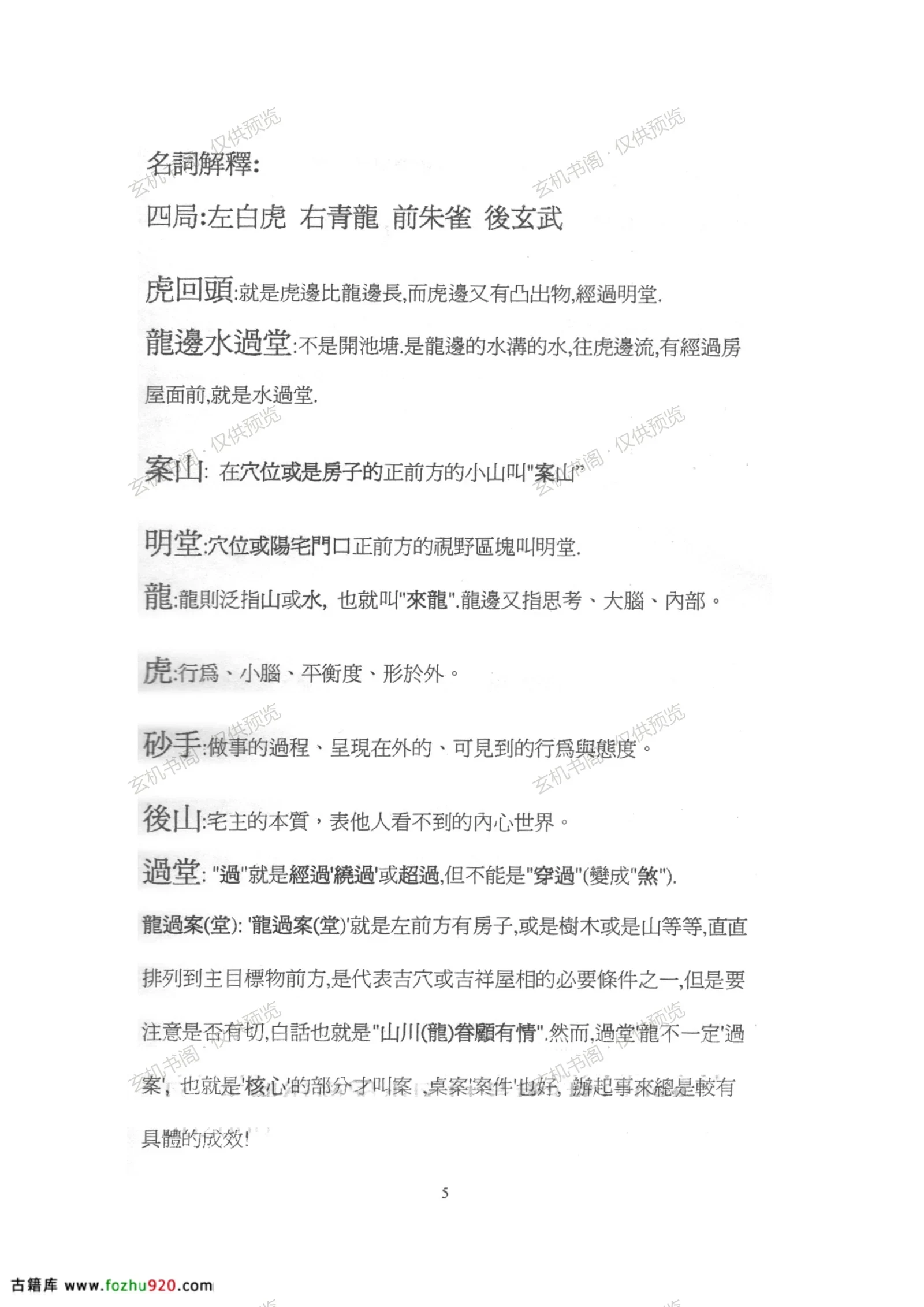
This is a lecture series on Form-School (xingjia) feng shui for dwellings. The preface argues that, apart from graves, the residence most directly affects one's fortunes: good grave sites are increasingly hard to find, and relocating a grave requires family consensus, whereas a dwelling can be altered with the owner's consent alone. The author holds that dwelling assessment should be six parts landform and four parts liqi, with the responses of form and of liqi never cancelling each other out. He stresses learning by doing and field verification rather than book study alone, and suggests checking sleep quality, children's restlessness, and time spent at a desk as evidence. The core is the four-form scheme — White Tiger on the left, Azure Dragon on the right, Vermilion Bird in front, Black Tortoise behind — taking the target object as the taiji point and reading height, distance, and proximity on all sides to judge people and pressure points, covering lifespan, accidents, illness, wealth, descendants, marriage, family harmony, relations with elders and friends. The book then glosses terms such as 'tiger turning back', 'dragon-side water crossing the hall', 'case mountain', 'bright hall', dragon and tiger, sand hand, back mountain, 'crossing the hall', 'dragon crossing the case', 'dragon enclosing the hall', 'dragon bringing a road', 'tiger bringing a road', dragon and tiger movement, and dragon and tiger water. Water layouts divide into wet water (rivers) and dry water (roads), read within forty-five degrees front and back, left and right. Interior layout focuses on doors and beds, shrine, living room, stove (governed by the woman), desk (literary fortune), and toilet (body and wealth); the bright hall is examined across a 135-degree range for baleful forms or qi.
Contents
Preface: dwellings affect fortune; six parts form, four parts liqi
Learning method: practise, verify in the field, drop wrong methods
Brief notes: four forms for lifespan, illness, wealth, marriage; water and interior layout
Terms: four forms, tiger turning back, water crossing the hall, case mountain, bright hall
Dragon, tiger, sand hand, back mountain, crossing the hall, dragon crossing the case
Dragon/tiger roads, dragon/tiger movement, dragon/tiger water
Key Points
Dwelling assessment is six parts landform and four parts liqi, whose effects do not cancel out
Take the target as the taiji point and read height, distance and proximity on all four sides
The four forms indicate lifespan, accidents, illness, wealth, descendants and marriage
Water layouts divide into wet water (rivers) and dry water (roads), read within 45 degrees
Interior focus: doors and beds, shrine, living room, stove, desk, toilet