Reading guide
Content guideOverview
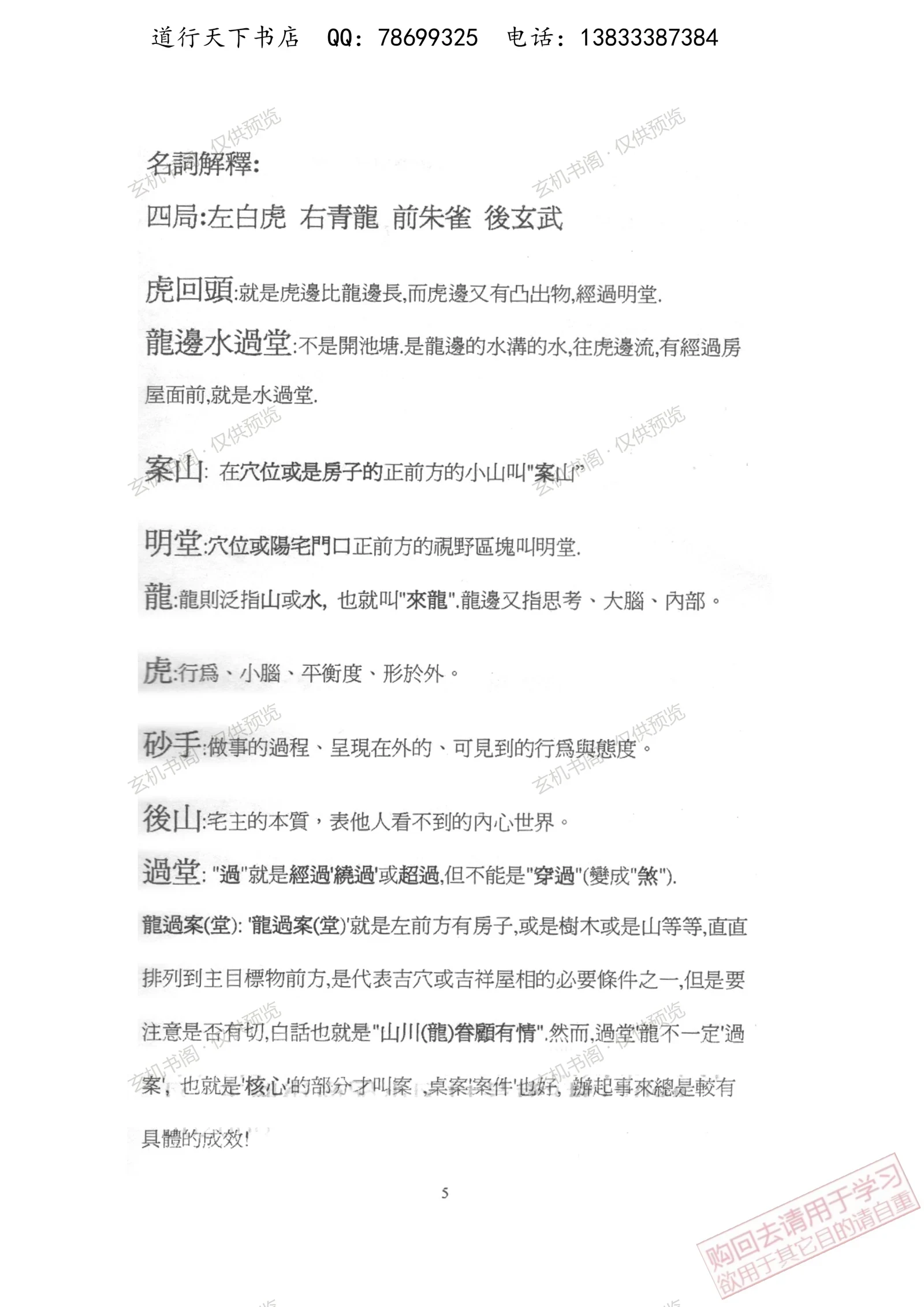
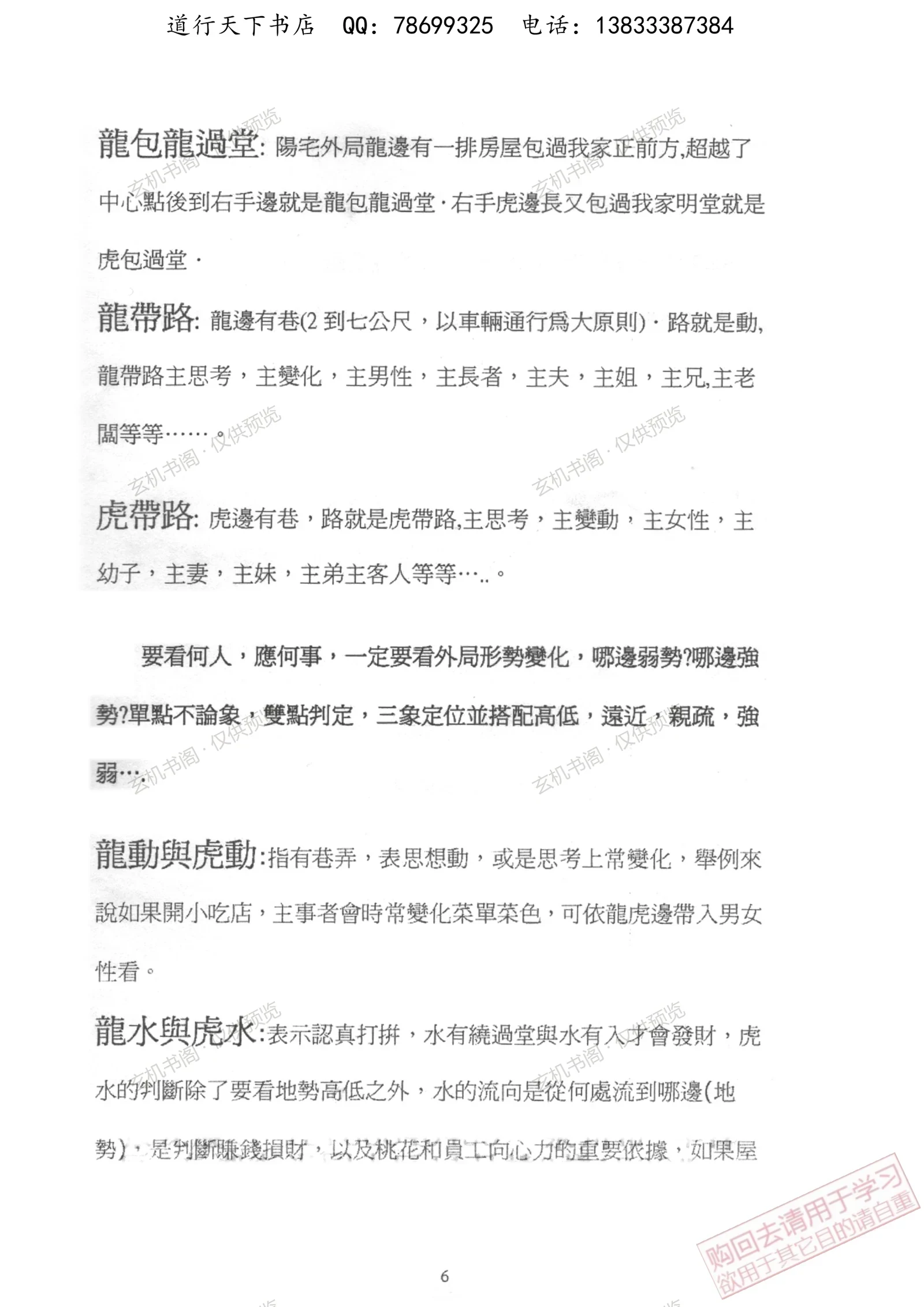
This is the theoretical volume of Lü Maohong's lectures on form-school geography. The introduction argues that yang dwellings are easier to adjust than yin dwellings and that their influence comes from the surrounding environment and interior arrangement. The author recommends six parts form and four parts liqi, examining the outer situation first and then the inner tai chi. The book uses the four quarters—White Tiger on the left, Azure Dragon on the right, Vermilion Bird in front, Black Tortoise behind—as its basic framework, explaining terms such as dragon, tiger, rear mountain, bright hall, case mountain, and water configuration to judge lifespan, accidents, illness, wealth, descendants, marriage, family harmony, relations with elders, and friendships. The brief introduction lists four observation points: the shapes of the four quarters, water configuration with liqi, interior layout of doors, beds, shrines, living room, stove, desk, and toilet, and the 135-degree bright hall for detecting sha shapes or qi. The glossary defines tiger turning back, dragon-side water crossing the hall, case mountain, bright hall, dragon and tiger, sha hands, rear mountain, passing the hall, dragon passing the case, dragon enclosing the hall, dragon-side road, tiger-side road, dragon and tiger movement, and dragon and tiger water, stressing that one must assess strength, height, distance, and closeness in the outer situation to determine who and what is affected.
Contents
Introduction: yang dwelling influence and form-liqi ratio
Brief remarks: four quarters, water, interior, bright hall
Glossary: four quarters and basic dragon-tiger definitions
Dragon side: passing the hall, enclosing, road, movement
Tiger side: turning back, enclosing the hall, road, movement
Water and bright hall: water crossing, case mountain, sha qi
Key Points
Yang dwelling assessment emphasizes form over liqi, roughly six to four.
The four quarters—left White Tiger, right Azure Dragon, front Vermilion Bird, rear Black Tortoise—form the basic framework.
Judge people and events by the outer situation's strength, height, distance, and closeness.
Water is divided into wet and dry, read with liqi and 45-degree incoming and outgoing directions.
Interior focus includes doors, beds, shrines, living room, stove, desk, and toilet.