Reading guide
Content guideOverview
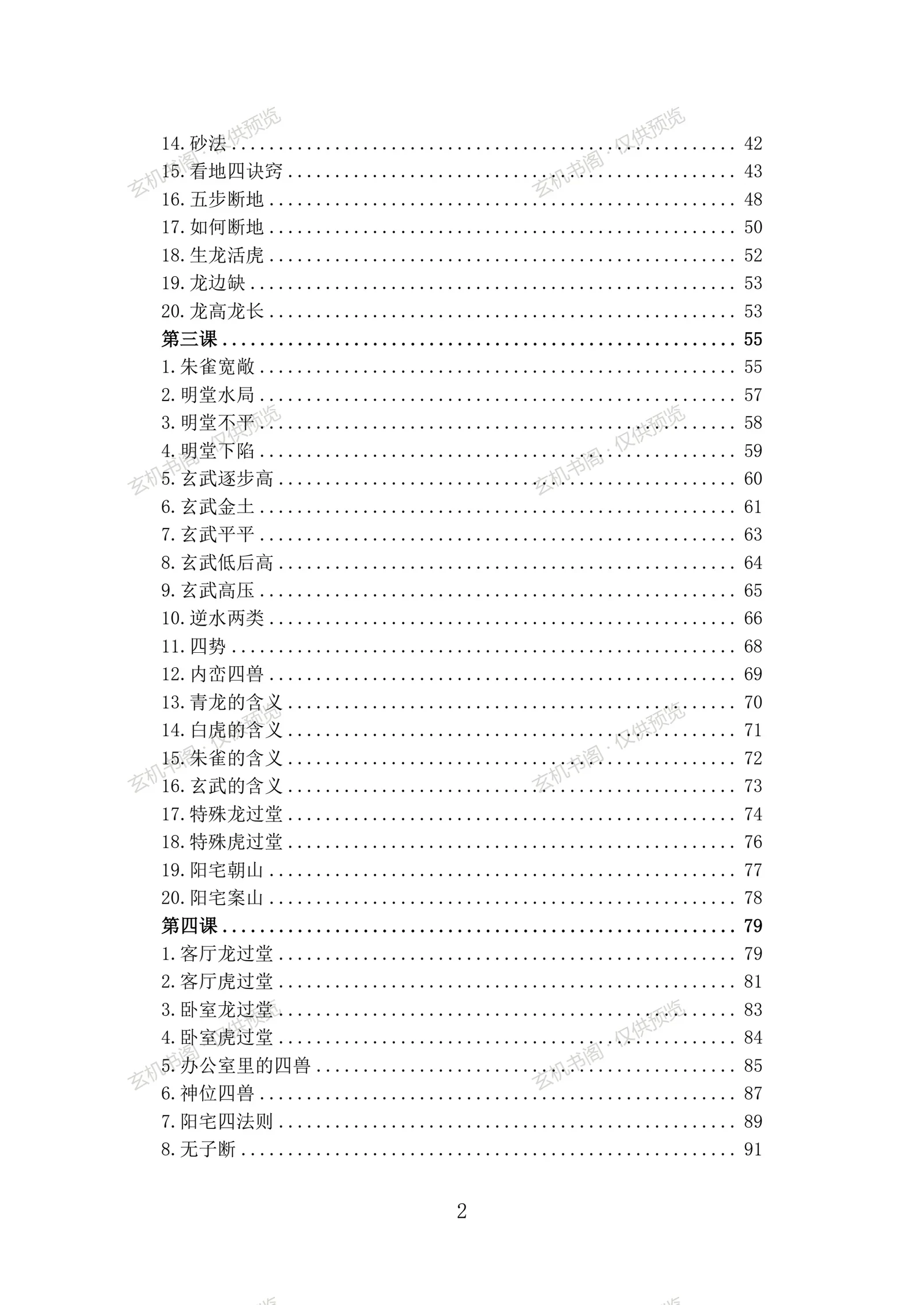
This is the introductory volume of Lin Laijin's lecture series on the old form-school method (xingjia changyanfa), marked as a 2026 internal edition. The preface presents the method as rooted in the luantou (landform) tradition, summarized by the principle that visible form and image carry corresponding effects. It claims that no compass or bagua calculation is needed: one simply observes shapes and recites inherited oral formulas to judge fortune and misfortune. The book is organized into six lessons. Lesson one covers the four animals, the pressing of dragon and tiger, relative strength, and the taixi configuration. Lesson two treats dragon-tiger height, incoming dragons, bright halls, facing and case mountains, water mouths, and four keys for reading land. Lesson three discusses bright-hall water formations, tortoise height, the four configurations, meanings of the four animals, special hall-crossing dragons and tigers, and yang-house facing mountains. Lesson four applies the four animals to living rooms, bedrooms, offices, and shrines. Lessons five and six consist largely of formulaic judgments on children, wealth, illness, marriage, career, and temperament. The dense, itemized table of contents makes it a practical reference-style primer.
Contents
Lesson 1: Four animals and dragon-tiger strength
Lesson 2: Incoming dragons, bright halls, water and sand
Lesson 3: Bright-hall water, tortoise forms, animal meanings
Lesson 4: Four animals in living rooms, bedrooms, offices
Lesson 5: Judgments on illness, wealth, marriage
Lesson 6: Judgments on official luck, wealth, temperament
Key Points
Uses the four animals as the core judgment framework
Rejects compass and hexagram calculation in favor of direct observation
Part of a three-tier course; this is the entry level
Densely itemized table of contents for quick reference
Later chapters focus on yang-house judgments