Reading guide
Content guideOverview
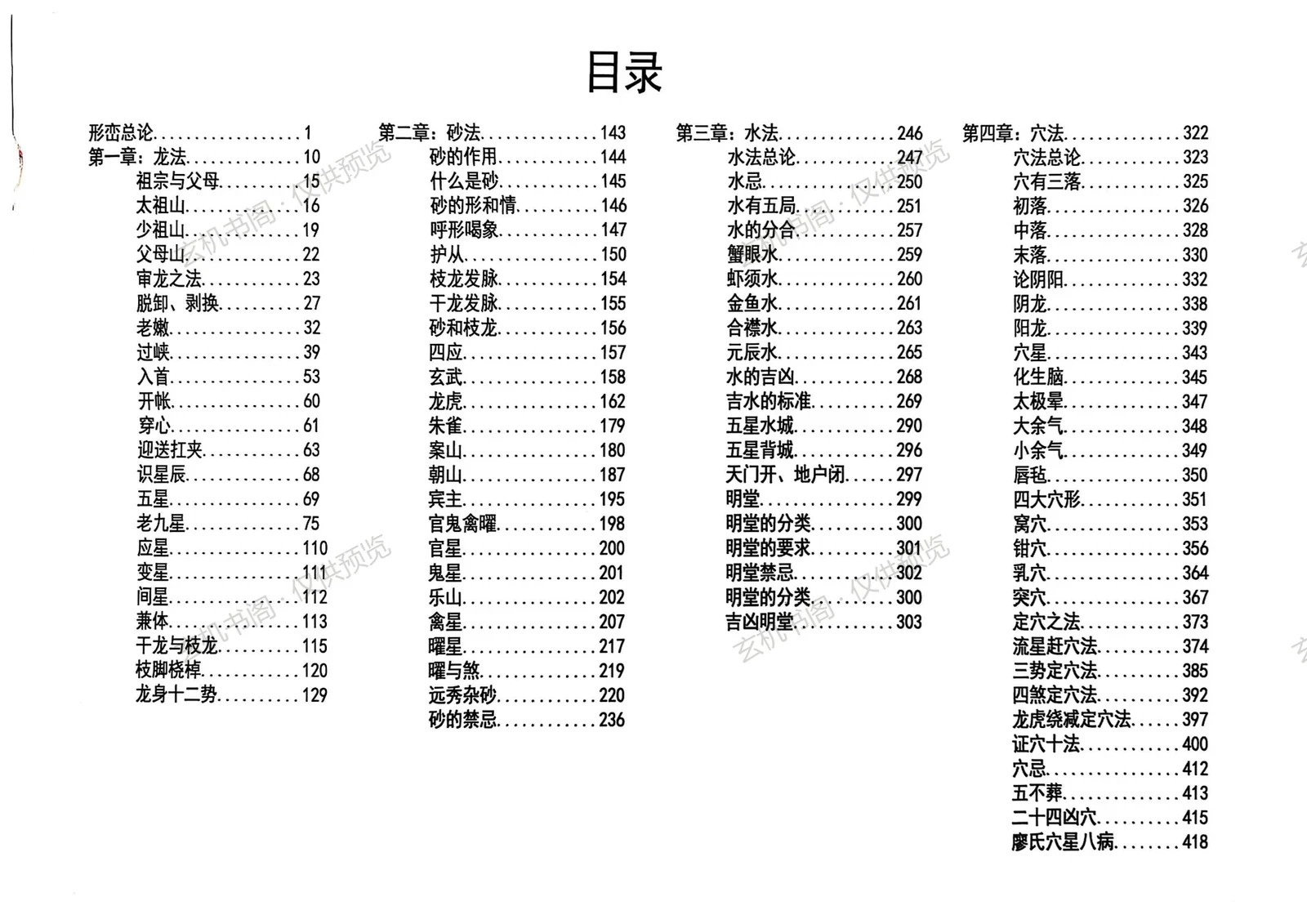
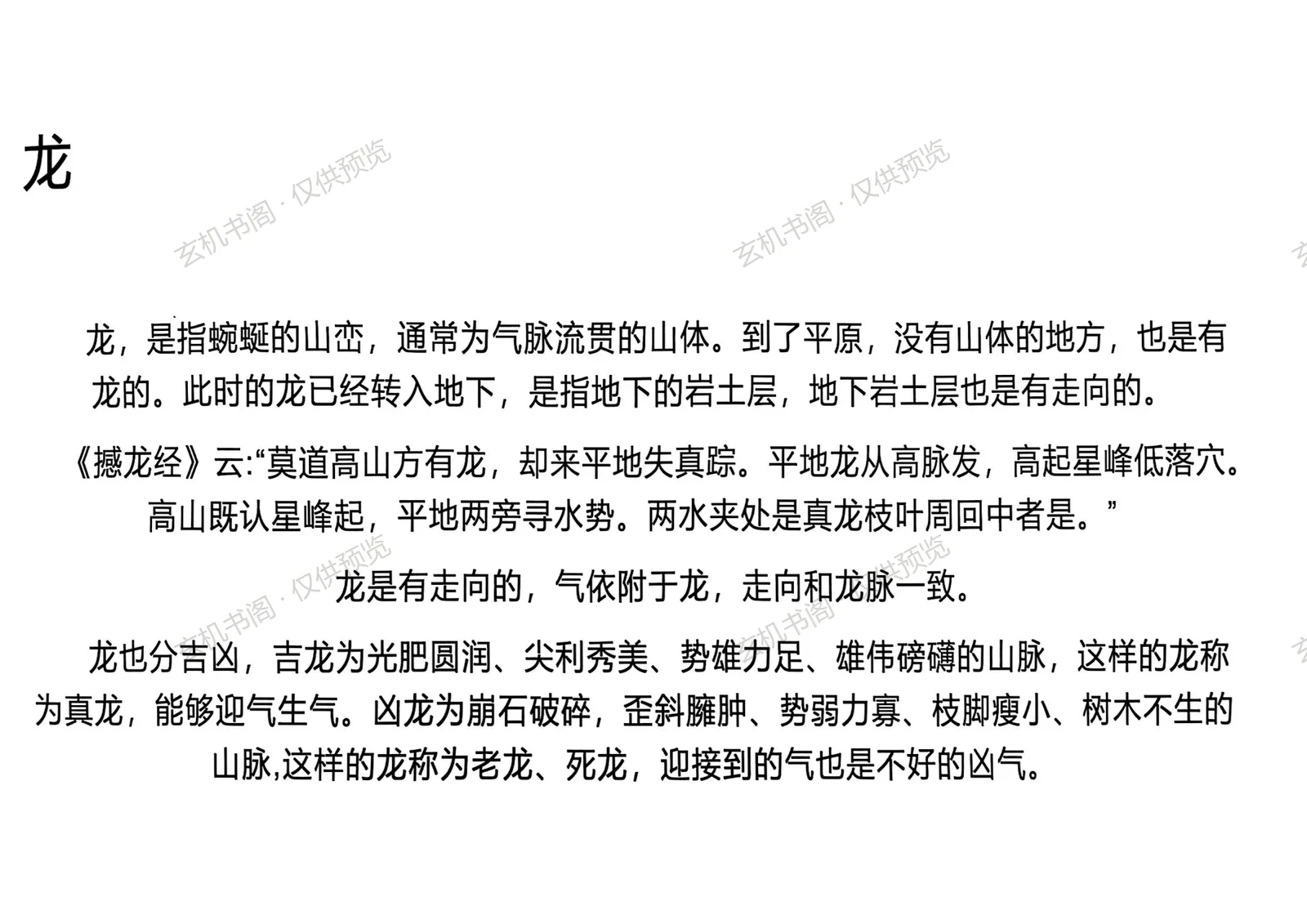
This is a form-and-terrain (luantou) feng shui lecture manual, titled "Lectures on Form-and-Terrain: Secret Methods of Seeking Dragons and Setting Points." Its reference list names Ye Jiusheng's Shafa Dacheng, Xu Shanji and Xu Shanshu's Dili Renzi Xuzhi, Yuan Shouding's Dili Danzhe Lu, Liu Bowen's Kanyu Manxing, and Yang Junsong's Yilong Jing and Hanlong Jing. The table of contents opens with a general survey and has four chapters. Chapter 1, Dragon Methods, covers ancestral and parent mountains, examining dragons, shedding and transformation, old and young, passes, entering the head, opening screens, piercing the heart, welcoming and escorting, stars, the Five Stars and Old Nine Stars, responding and changing stars, trunk and branch dragons, and twelve dragon-body configurations. Chapter 2, Sand Methods, discusses the role and disposition of sand, pictorial naming, escorts, four responses, Black Tortoise, dragon and tiger, Vermilion Bird, desk and facing mountains, guest and host, officer-ghost-bird-spark stars, distant shows, and taboos. Chapter 3, Water Methods, covers general principles, taboos, five configurations, convergence and division, crab-eye, shrimp-whisker, golden-fish and joined-lapel waters, auspicious standards, five-star water cities, heaven gate and earth door, and the bright hall. Chapter 4, Point Methods, treats three falls, yin and yang, point stars, transformation brain, taiji halo, residual qi, lips and felt, the four forms nest-钳-乳-突, methods of fixing points, ten proofs, taboos, five non-burials, twenty-four inauspicious points, and Liao's eight illnesses. A quoted summary states that dragons need proper form, points proper stars, sand proper names, and water proper feeling, while dragons fear isolation, points fear cold, sand fears slanting flight, and water fears reversal. The dragon chapter explains dragons as winding mountain veins carrying qi, including hidden dragons beneath plains, citing the Hanlong Jing, and distinguishes auspicious from inauspicious dragons. The organization is clear but terminology-dense, suited to readers with basic luantou knowledge who want a systematic framework.
Contents
General survey: program and cited classics
Ch.1 Dragon Methods: ancestral mountains, passes, stars, trunk and branch dragons
Ch.2 Sand Methods: four responses, dragon-tiger, desk and facing, officer-ghost-bird-spark
Ch.3 Water Methods: convergences, crab-eye and shrimp-whisker waters, water cities, bright hall
Ch.4 Point Methods: three falls, four forms, fixing and proving points, taboos
Key Points
Organized around four methods—dragon, sand, water, point—making lookup easy.
Draws on Shafa Dacheng, Dili Renzi Xuzhi, and the Hanlong Jing.
The summary stresses proper form, star, name, and feeling, plus four fears.
Distinguishes mountain dragons from hidden plain dragons and auspicious from dead dragons.
Water methods emphasize convergence and the bright hall, with named water forms.