Reading guide
Content guideOverview
This set of pages examines 'form-sha' (xingsha) in yangzhai feng shui, centring on the road rush (luchong) case. It first defines the principle: wind that would otherwise spread evenly is compressed into the width of a single road, multiplying its force and disrupting the qi field of the house. Conditions are then listed: the road must be narrower than the house, and buildings or trees on both sides are needed to gather qi; diagrams contrast a road wider than the house (treated as a bright hall) with one narrower. The text classifies misfortunes by front, rear and side rush, such as bloodshed, traffic accidents, lawsuits, loss of family members, serious illness or stroke from the front, and back-stabbing, betrayal by friends or debt default from the rear, and adds the five-element shapes of buildings (round metal, oblong wood, curving water, pointed fire, square earth). Remedies include planting trees, building walls, adding speed bumps and making ponds, while the author questions the effectiveness of bagua mirrors and mountain-sea seals. Later sections relate road rush to direction under the current period, noting that rush from the northwest, west, northeast or south may bring wealth but not peace and suits shops rather than homes, while other directions govern lawsuits, romance or accidents; three conditions for 'rushing a prosperous palace' are given. The final page introduces the wall blade, where a neighbouring wall shoots straight at one's house like a knife, cutting the airflow and disturbing the household's field.
Contents
Definition of road rush and compressed airflow
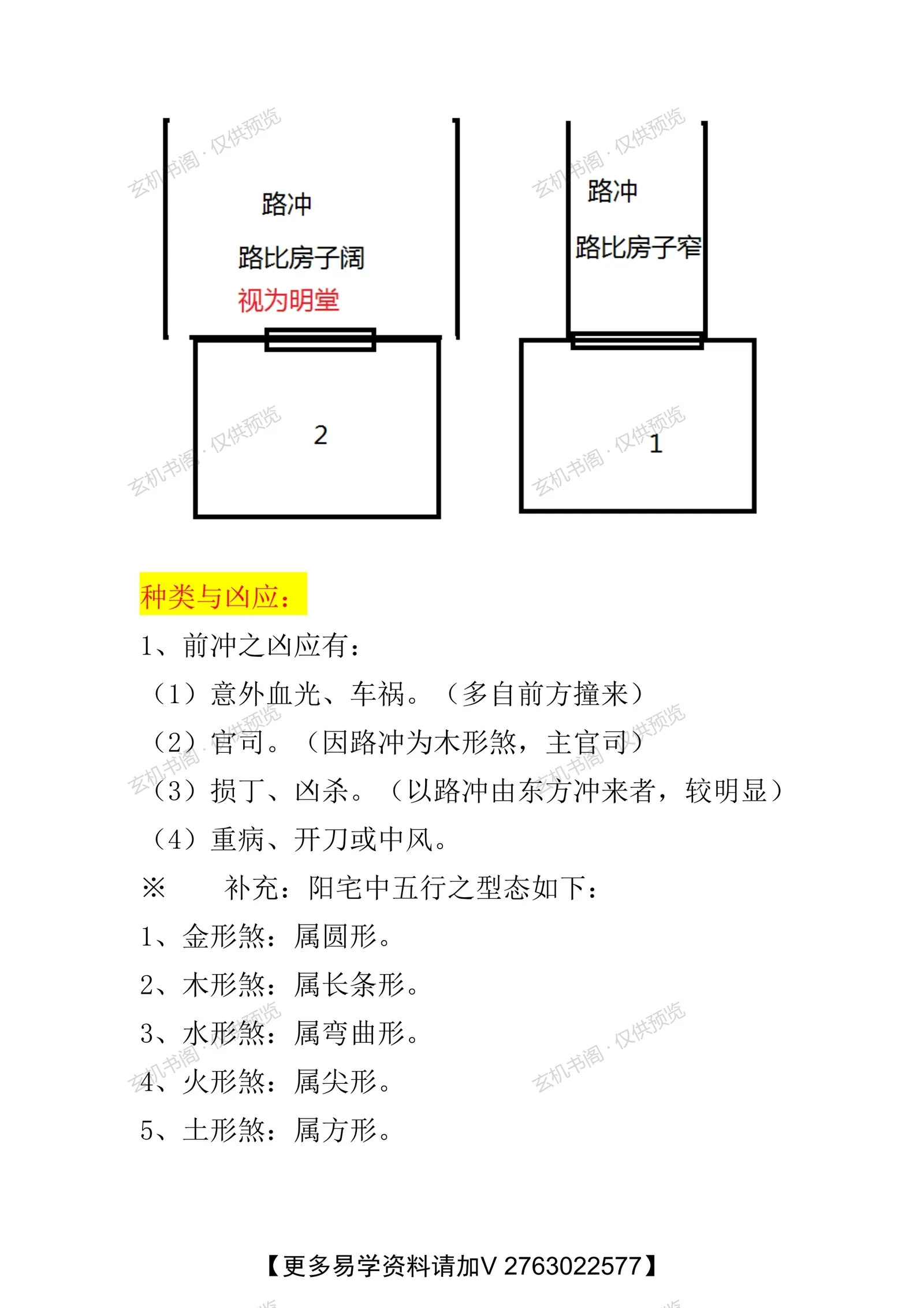
Conditions: narrower road, buildings gathering qi
Misfortunes of front, rear and side rush
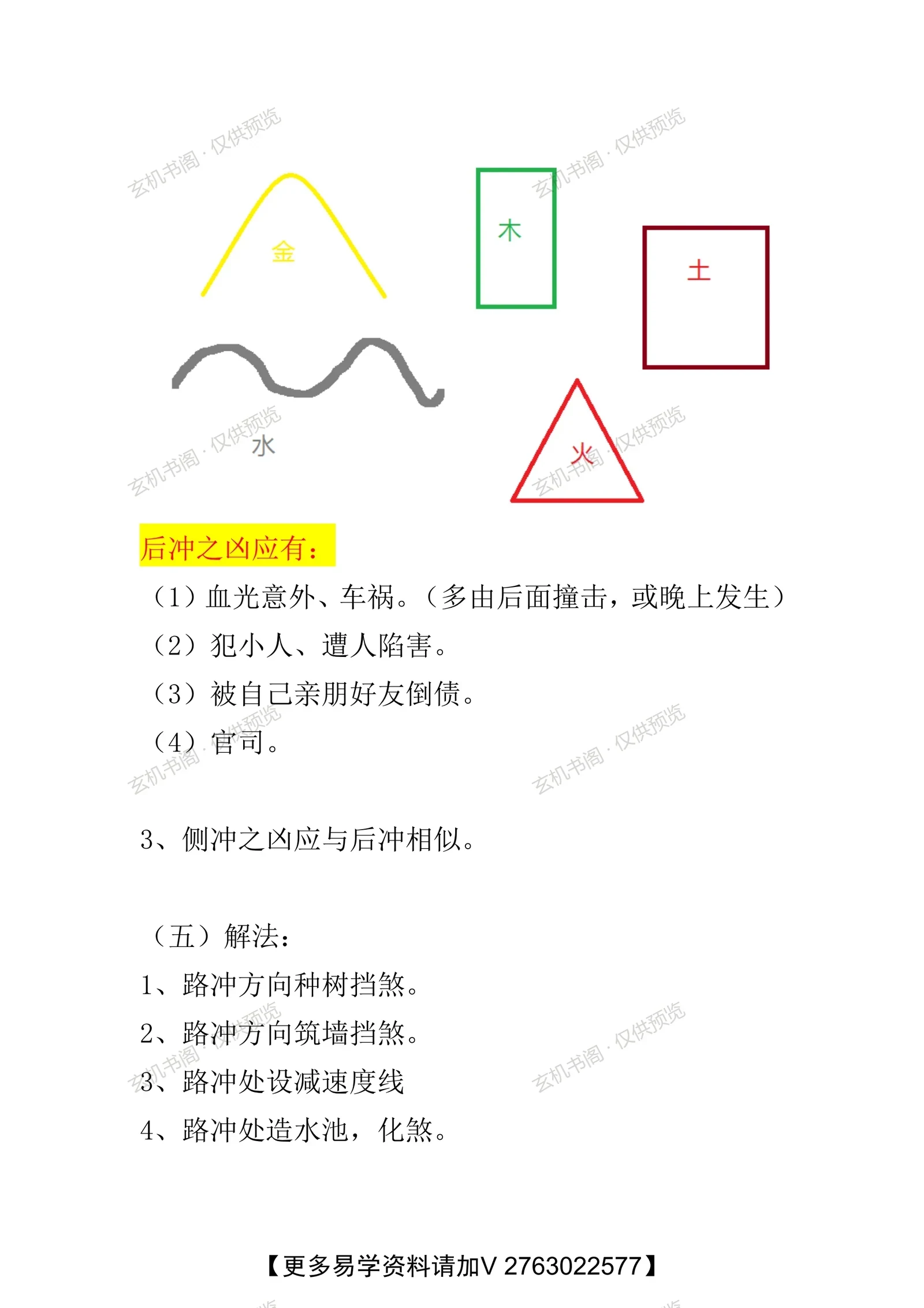
Five-element building shapes
Remedies: trees, walls, speed bumps, ponds
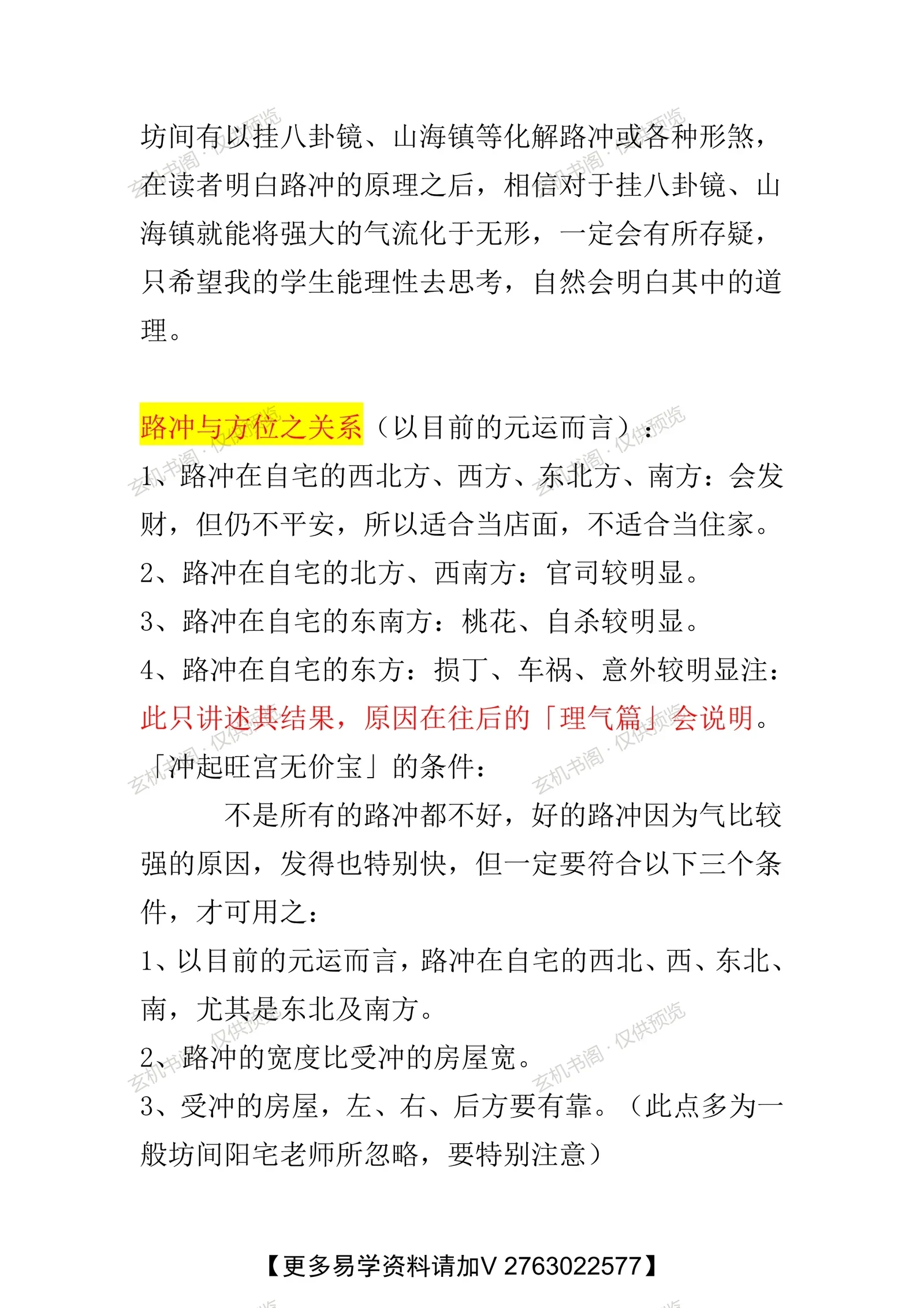
Directional fortune and conditions for a fortunate rush
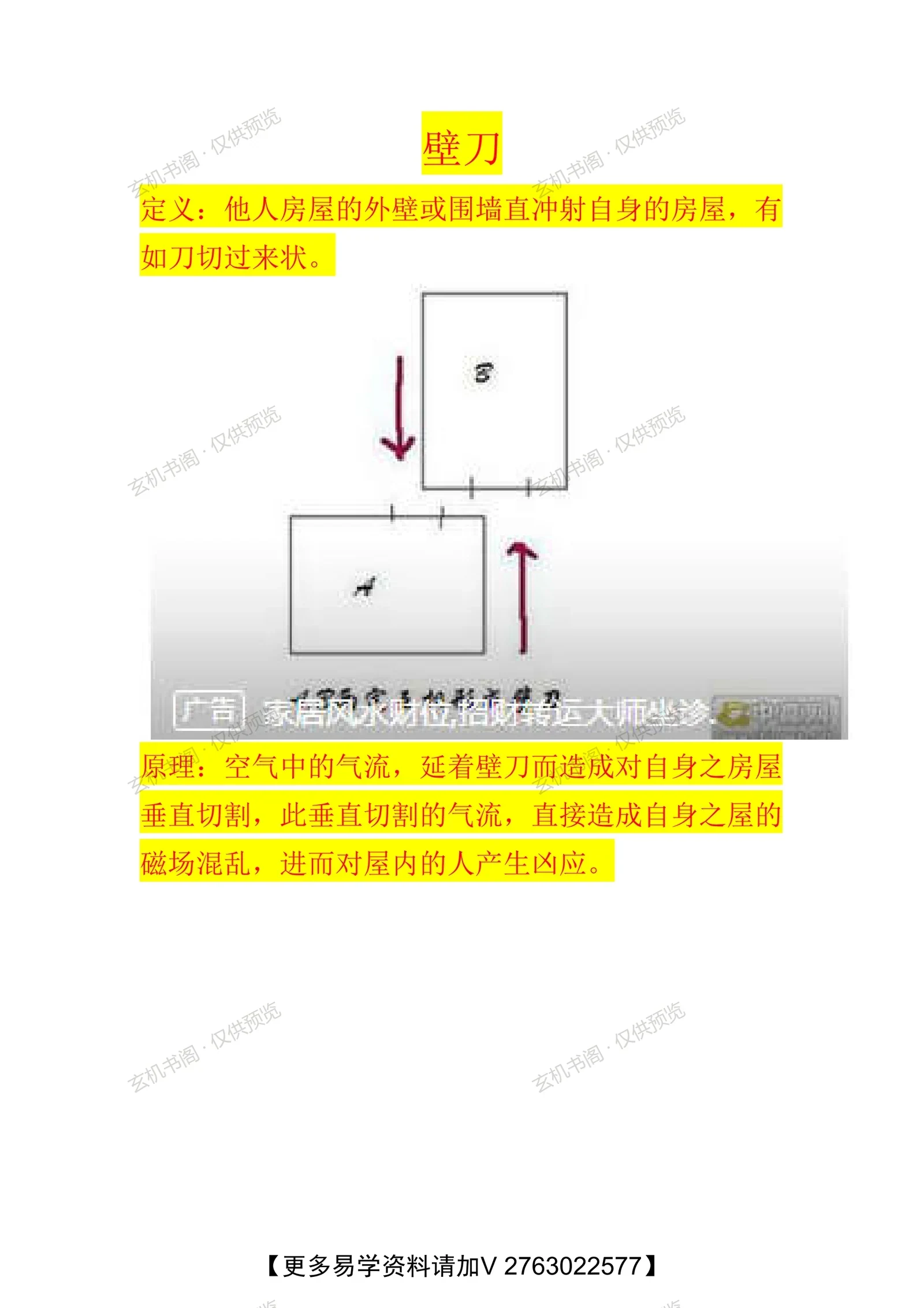
Wall blade: definition and cutting airflow
Key Points
Form-sha is explained through compressed or cutting airflow rather than pure omens.
Road rush requires a road narrower than the house with buildings on both sides.
Front rush brings accidents and lawsuits; rear rush brings betrayal and debt.
Road rush is not always bad: a favourable direction may bring wealth, but suits shops.
The author doubts common cures such as bagua mirrors and urges rational thinking.