Reading guide
Content guideOverview
This is the first volume of Zhong Yiming's Decoding the Secrets of Xuankong Dagua, a work of the Taiwan 'Yijing school of geography' (Xuankong Dagua lineage). The cover reads 'Xuankong Dagua Mijue Poyi (Shang)' with 'Zhong Yiming / author'. The visible text includes an editor's note by Chen Shaogu dated 1968, explaining that the geographical secrets of Sun Changgeng (Mengbai), a Ming dynasty imperial preceptor, survived the Ming-Qing transition through hand-copied transmission, and that Chen annotated the original line by line with diagrams to make it accessible. A preface by Zhong discusses the 1960s Taiwan craze for 'Xuankong Dagua · Yijing school geography,' distinguishing it from Sanhe, Tianxing, and Najia schools, and citing figures such as Zhang Xinyan, Duanmu Guohu, and Zhang Huiyan along with the transmission from Chen Tuan through Mu Xiu, Li Zhicai, and Shao Yong. The book treats Yijing hexagram theory as the body and Xuankong Dagua's star-arrangement, hexagram qi, and cyclical periods as the application, systematically decoding the Yang-Zeng geomantic secrets for readers already grounded in traditional fengshui.
Contents
Cover: title, volume, author
Editor's note by Chen Shaogu on compilation
List of disciples at Zhushan Foxin Cuiying Studio
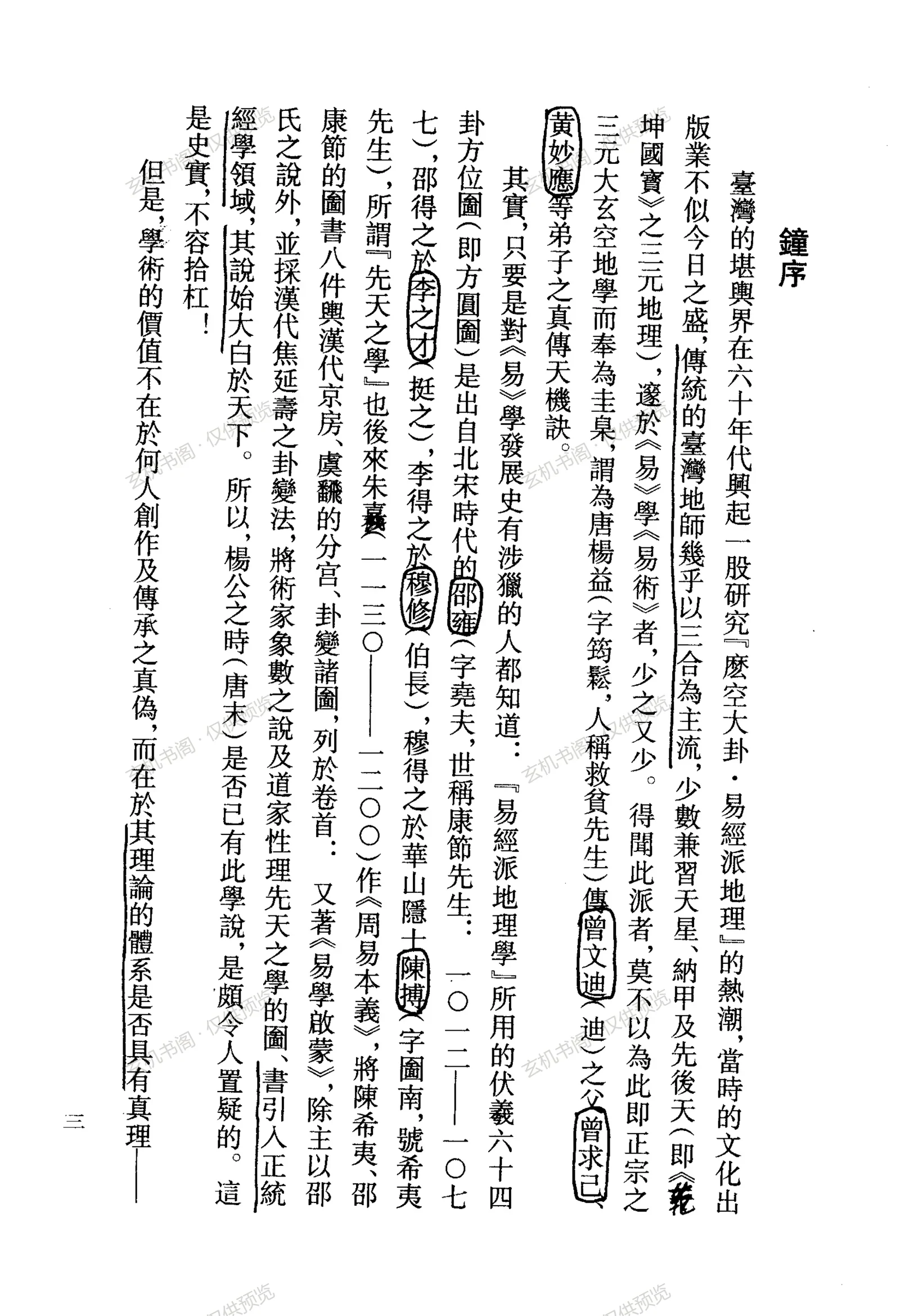
Zhong's preface on Taiwan Xuankong Dagua and Yijing geography
Discussion of Fuxi's sixty-four hexagram diagram and Shao Yong's lineage
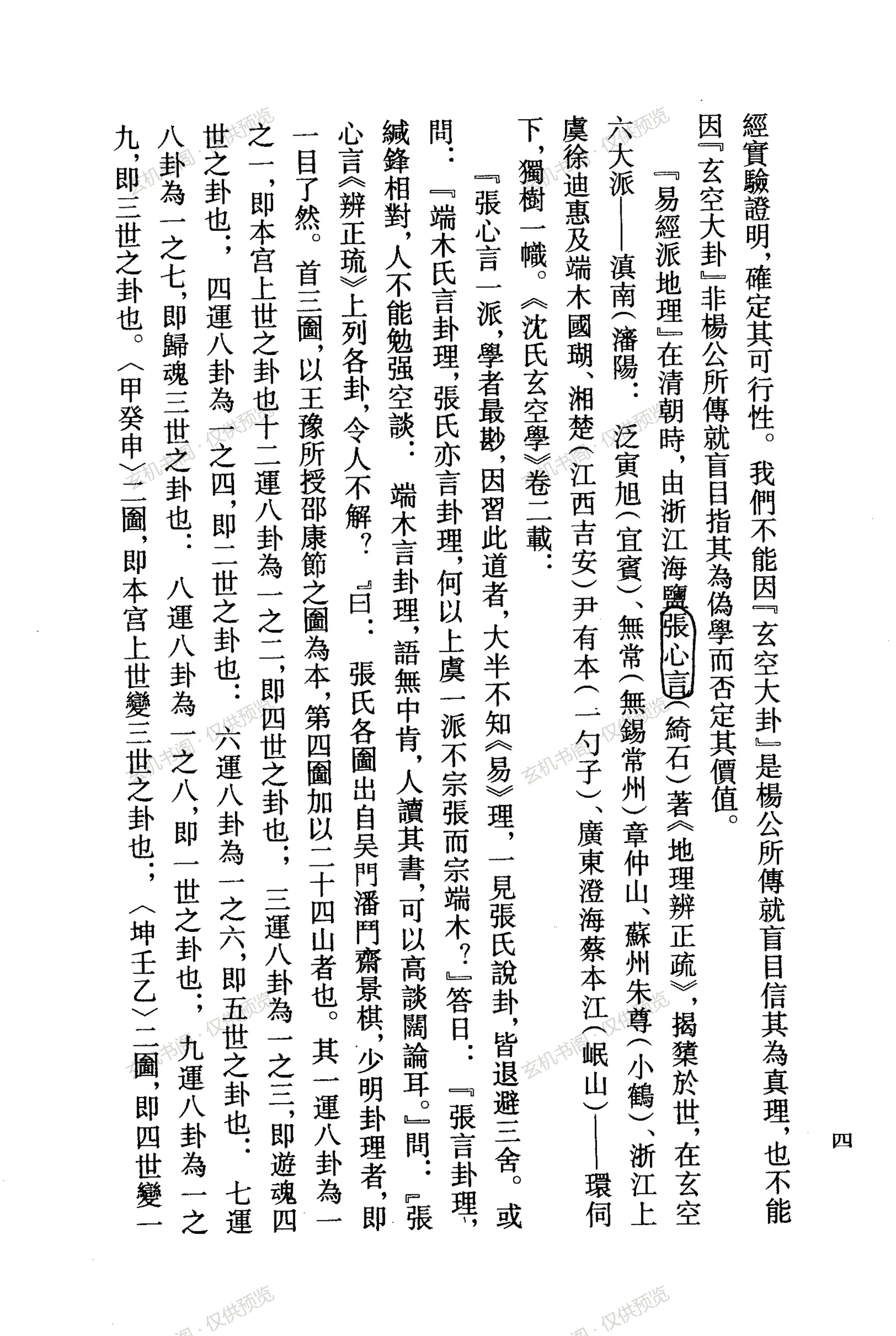
Critique of Zhang Xinyan, Duanmu Guohu, and other hexagram geographers
Citations from Dili Bianzheng commentaries and Shen's Xuankong Xue
Key Points
Uses Yijing hexagram theory to unify Xuankong Dagua, stressing hexagram qi with cyclical periods.
Traces the lineage from Yang Junsong and Zeng Wendi to Jiang Dahong.
Critiques Sanhe, Tianxing, and Najia schools while asserting the Yijing school's primacy.
Cites Dili Bianzheng and Shen's Xuankong Xue as supporting evidence.
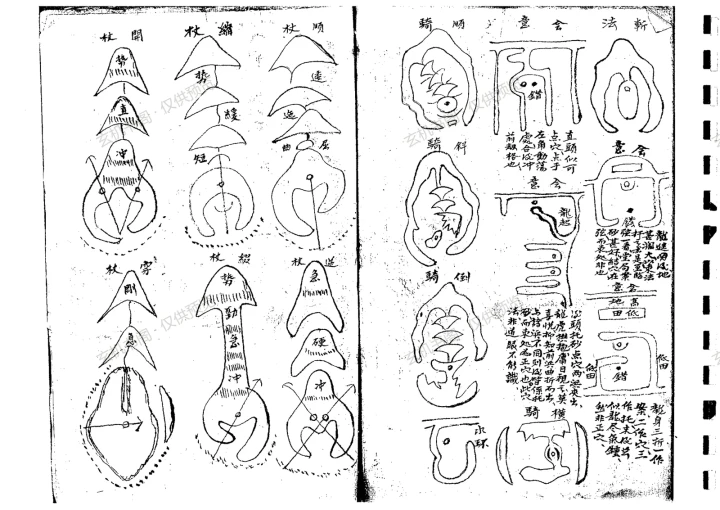
Annotates line by line with diagrams to recover the original secret formulas.