Reading guide
Content guideOverview
This first volume of Xuan Ming San Juan sets out the foundational theory of Zi Ping BaZi. It opens with practical casting: the year pillar begins at the start of spring, the month pillar follows solar terms with its stem derived by the Five Tigers method, the day pillar is looked up in a perpetual calendar, and the hour pillar uses the Five Rats method. It then explains how to arrange major luck cycles for yang men and yin women in forward order and the reverse for yin men and yang women, including how to calculate the age at which the cycles begin. Later chapters turn to basic theory: the yin and yang of the ten heavenly stems, the twelve earthly branches, and then sections on stems, branches and the five elements, strength, useful gods, chart patterns, the ten gods, and the procedure for reading a chart. The text quotes extensively from classics such as Qiong Tong Bao Jian, Yuan Hai Zi Ping, San Ming Tong Hui, Zi Ping Zhen Quan and Shen Feng Tong Kao, illustrating inner and outer patterns and the main ten-god structures. It suits readers who already know some BaZi and want a systematic review of chart casting and interpretive principles.
Contents
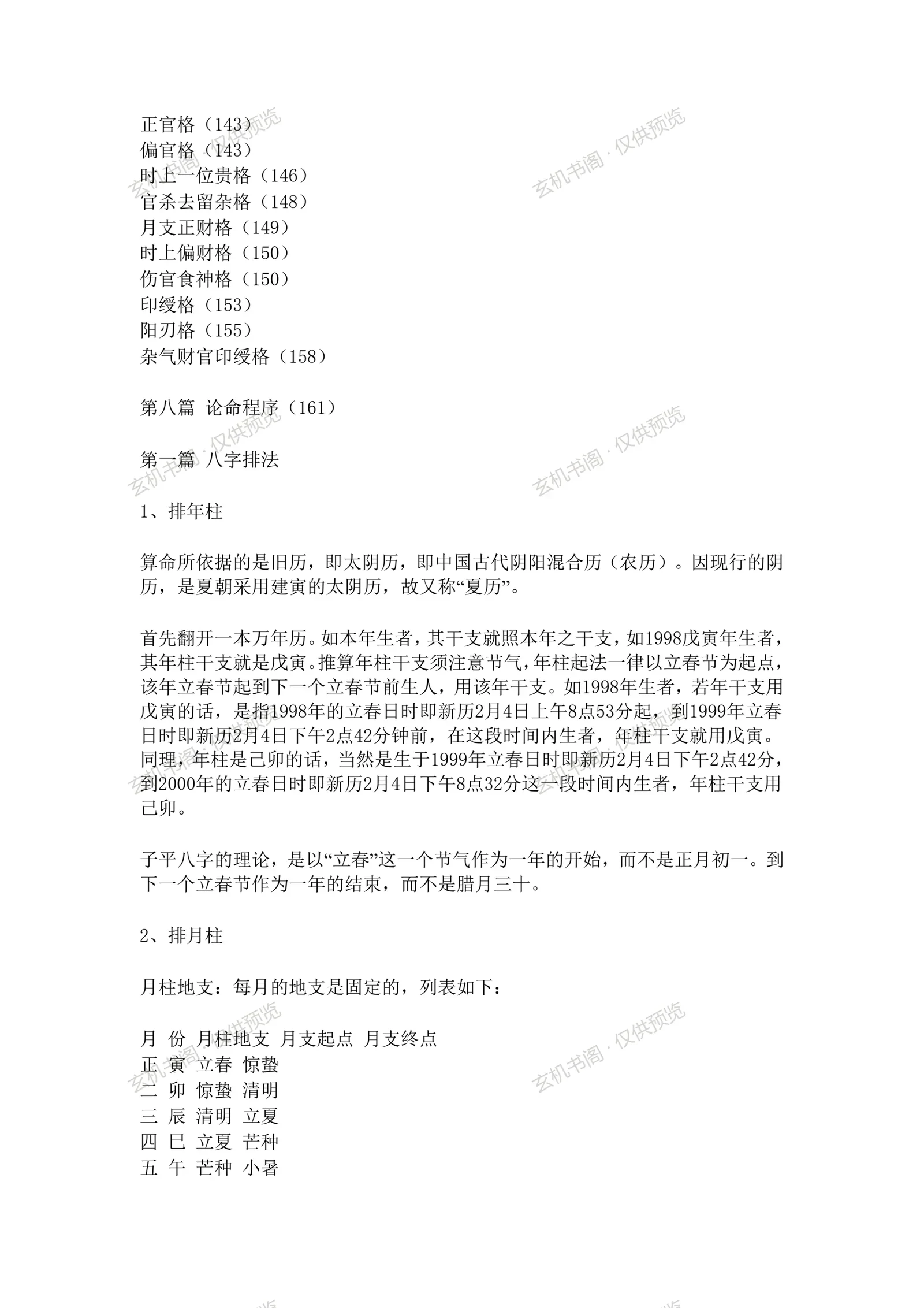
Ch.1 Casting the four pillars
Ch.2 Basic knowledge: stems and branches
Ch.3 Stems, branches and five elements
Ch.4 Judging strength
Ch.5 Useful gods
Ch.6 Determining chart patterns
Ch.7 The ten gods
Ch.8 Procedure for reading a chart
Key Points
The year pillar starts at the beginning of spring, not Lunar New Year
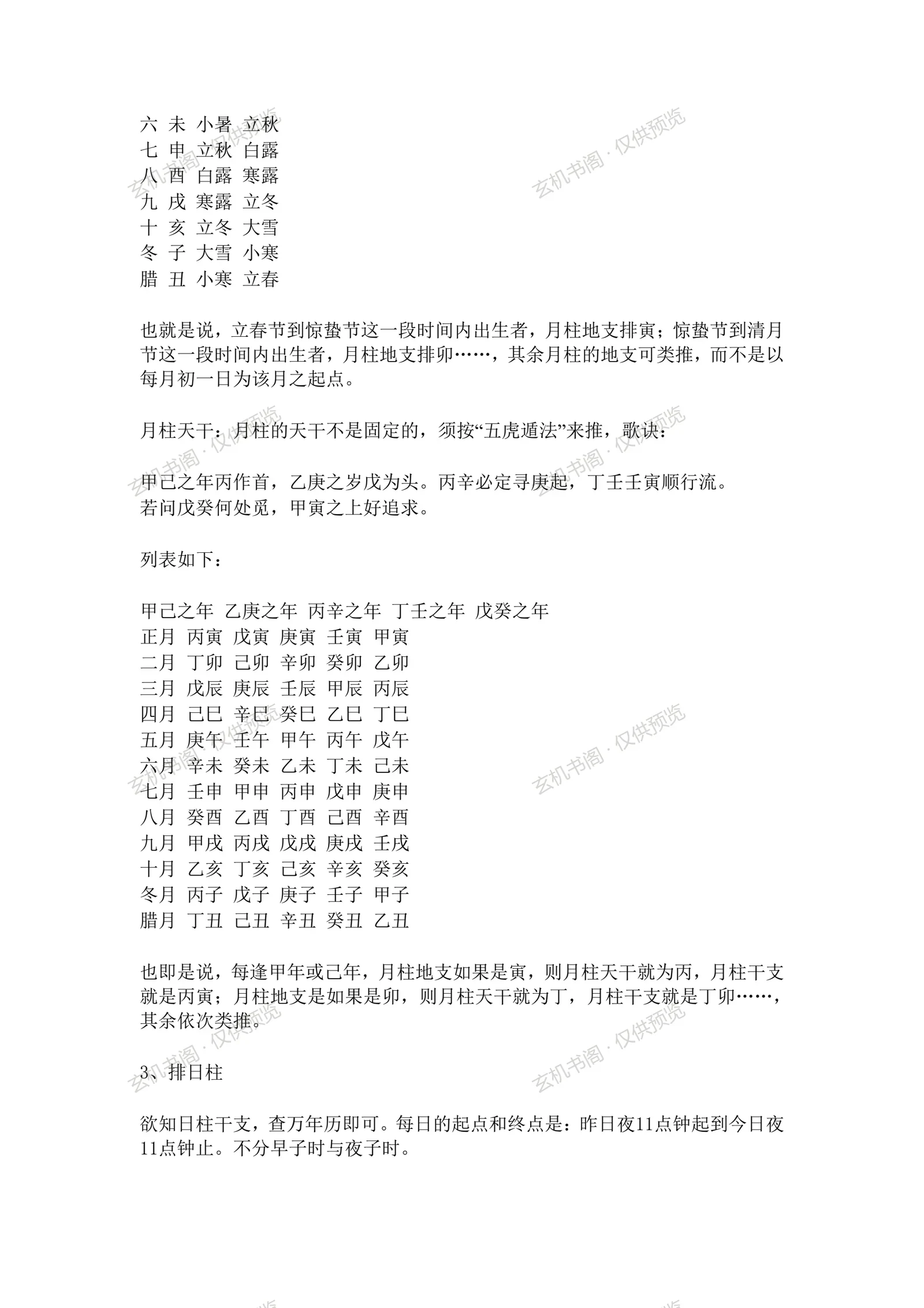
Month branches follow solar terms; month stems use the Five Tigers method
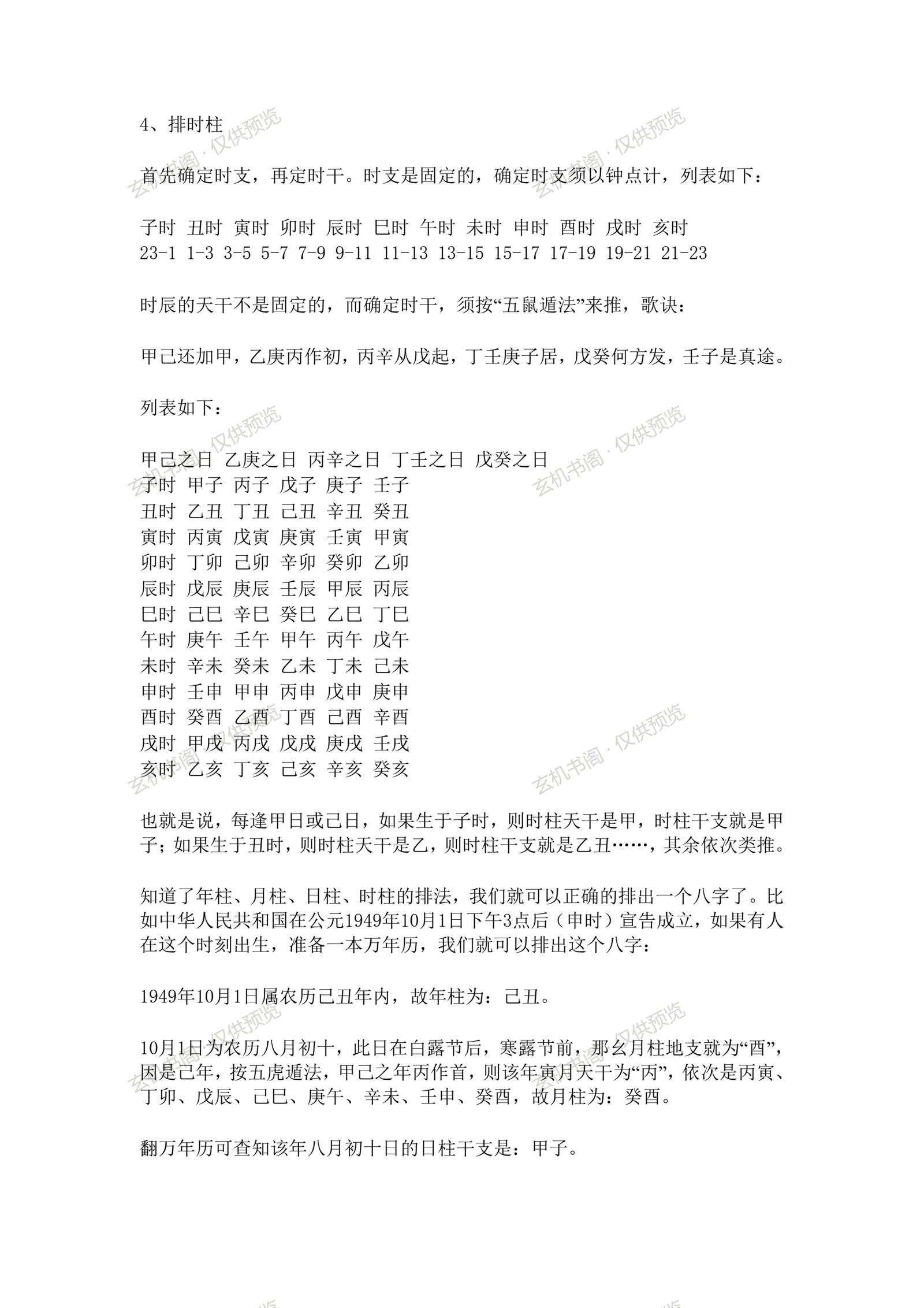
Hour stems use the Five Rats method; day pillars come from a perpetual calendar
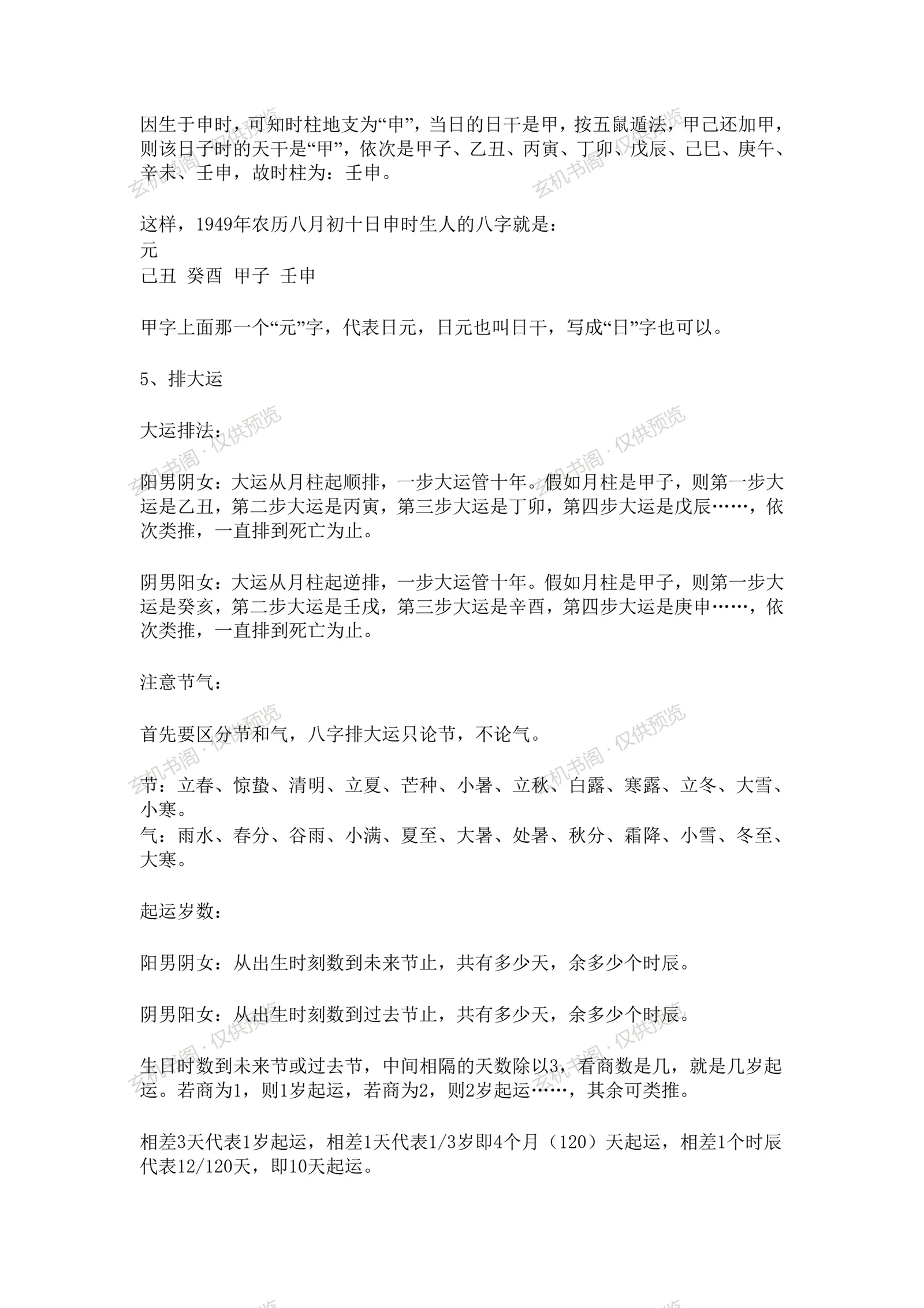
Major luck cycles run forward for yang men and yin women, reverse otherwise
Interpretation moves through strength, useful gods, patterns and ten gods, cross-checked against classics