Reading guide
Content guideOverview
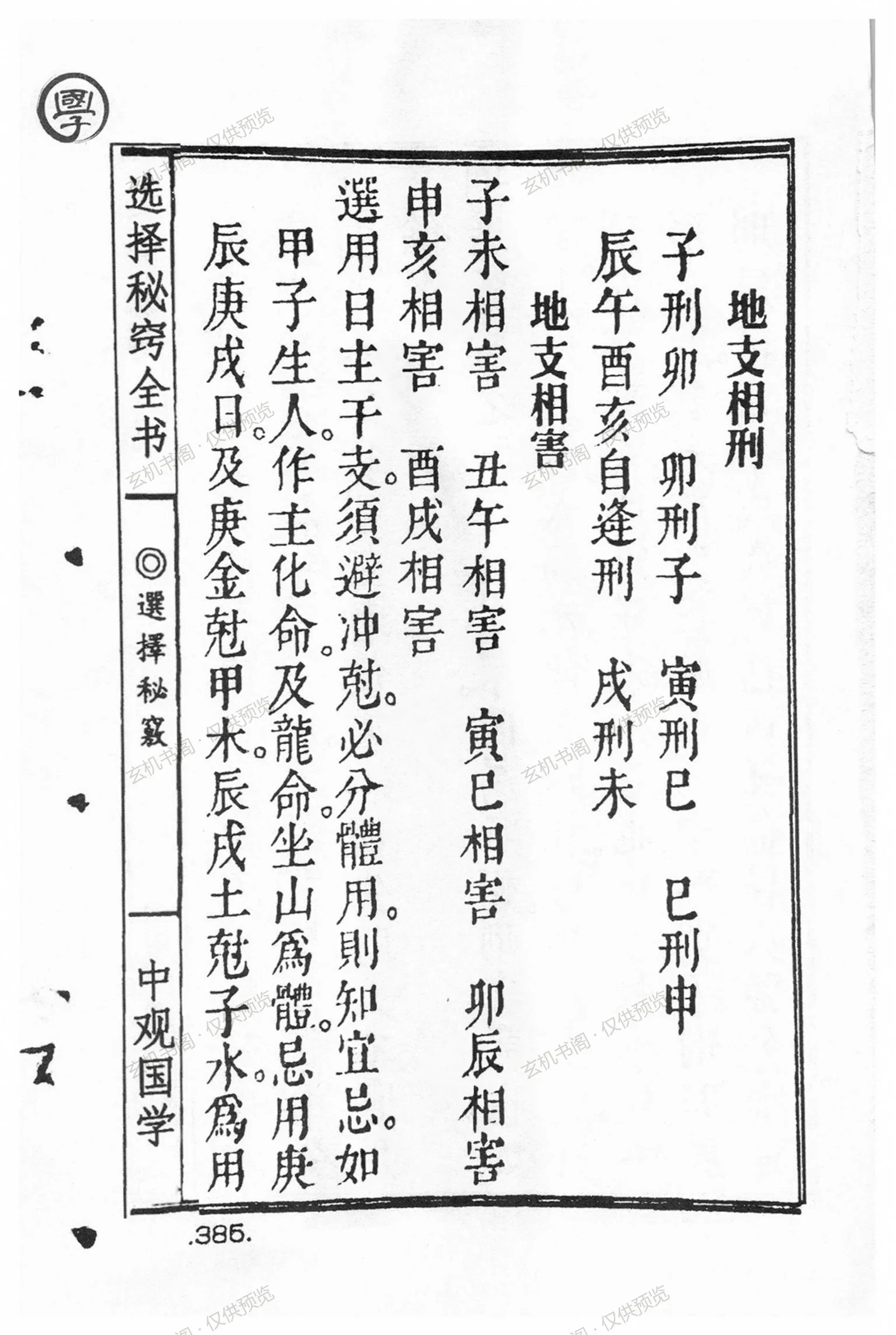
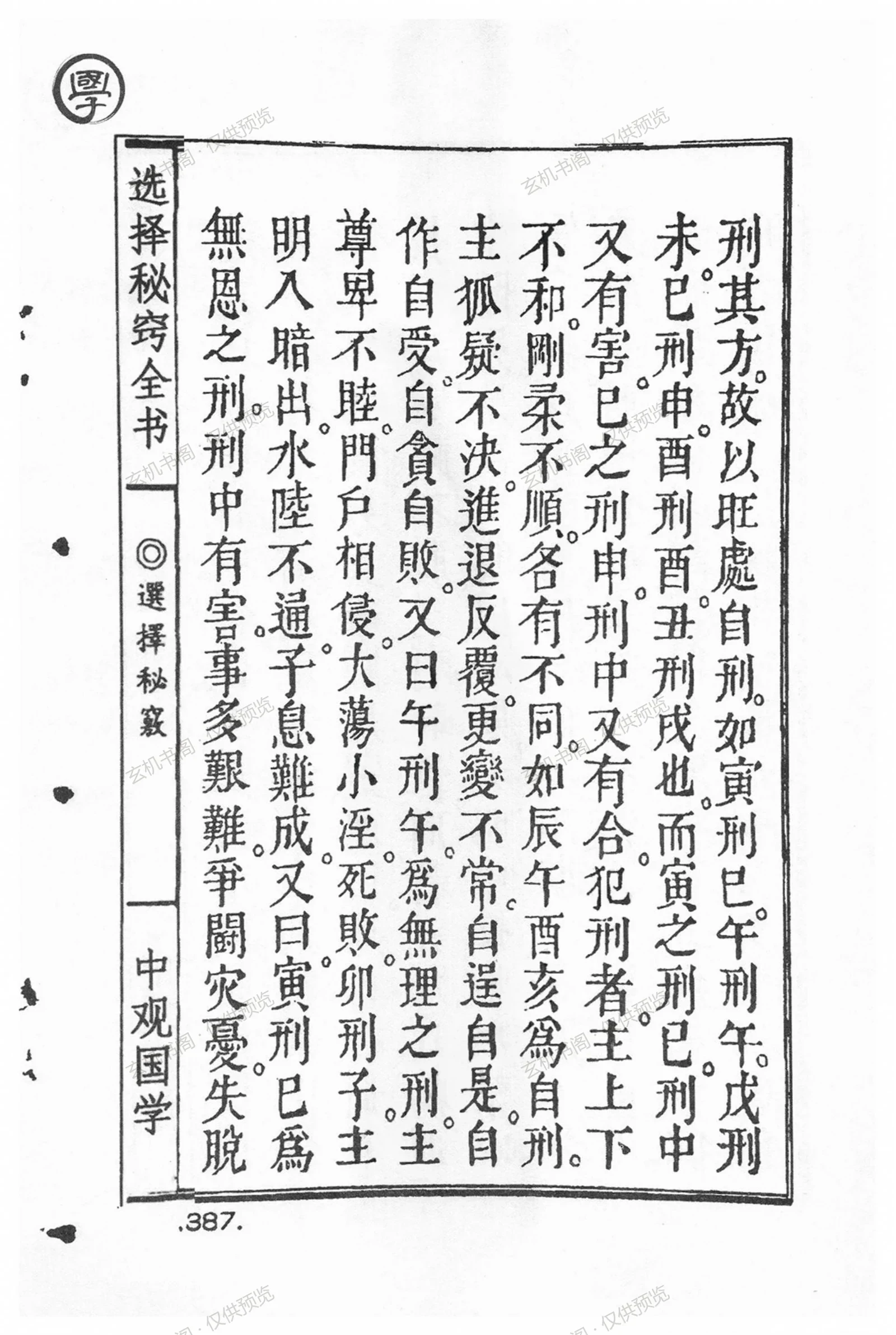
This is Part Two of Secret Essentials of Selection, attributed on the cover to Wang Jinwu, a transmitter of Yang Gong feng shui, and issued by Zhongguan Guoxue. The visible pages belong to the traditional day-selection (zeri) tradition. It opens with a table of true clashes and direct conquests among the earthly branches—Zi–Wu, Mao–You, Chen–Xu, Chou–Wei and so on—annotated with water, fire, metal, wood and earth interactions, then lists branch punishments and harms such as Zi punishing Mao, Yin punishing Si, Si punishing Shen, and Zi harming Wei, Chou harming Wu, Yin harming Si. The prose stresses that the day pillar must avoid clashes and conquests and that body and function must be distinguished: the dragon, the life command and the sitting mountain form the body, while the useful god is selected accordingly; it cites the example of a person born in a Jiazi year. Four categories of punishment—three-combination, three-meeting, self-punishment and combat—are discussed, with their typical indications of isolation, suspicion, dispute, illness and loss. The material is a detailed reference for readers already grounded in feng shui and date selection.
Contents
Table of branch clashes and conquests
Entries on branch punishments and harms
Avoiding clashes and distinguishing body from function
Choosing days with dragon, life command and sitting mountain as body
Four categories of punishment and their indications
Key Points
Branch clash, punishment and harm as the core avoidance framework
Body-and-function distinction centred on dragon, life command and sitting mountain
Classification of punishment patterns with their omens
Worked examples such as the Jiazi-born person