Reading guide
Content guideOverview
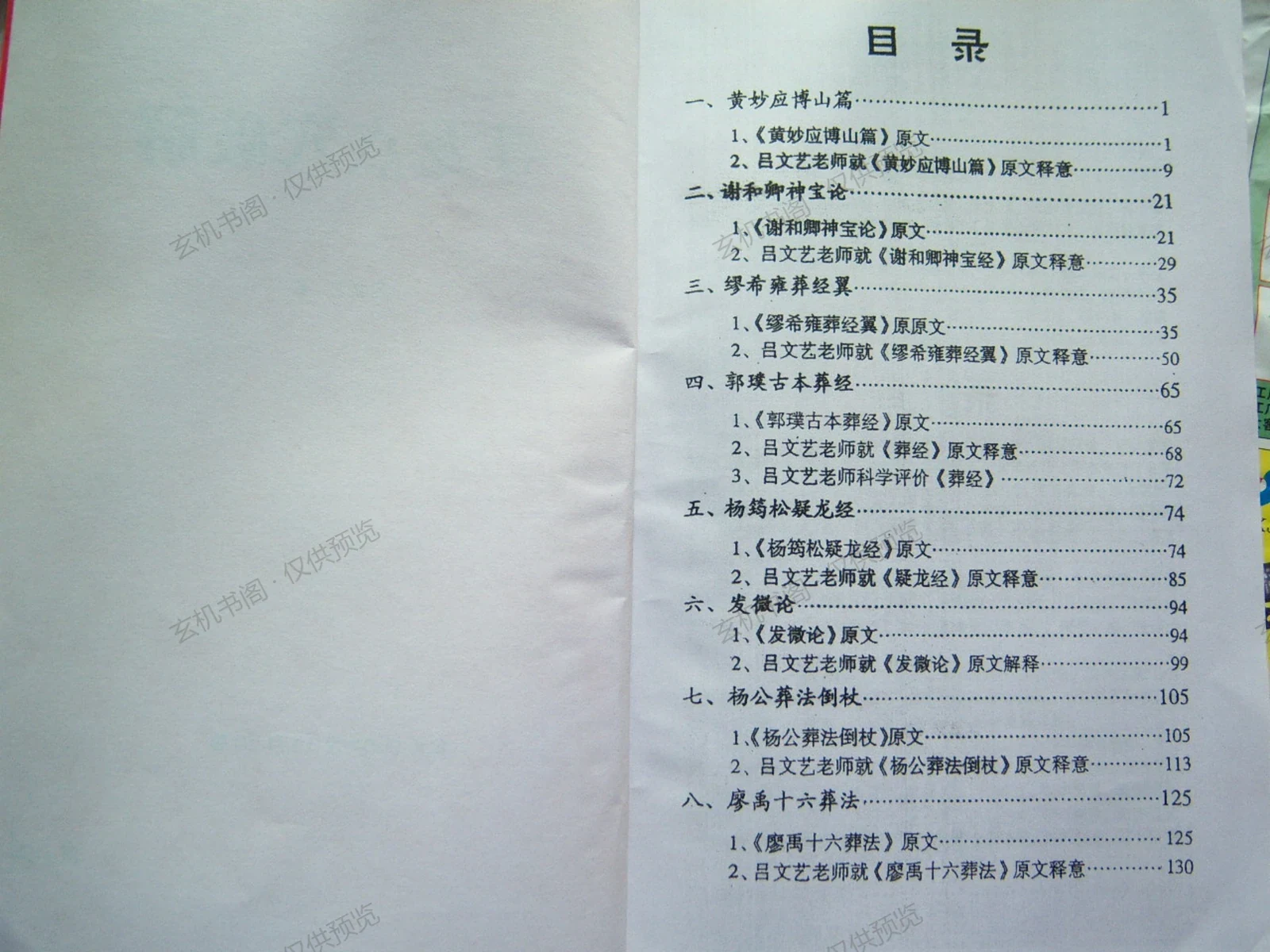
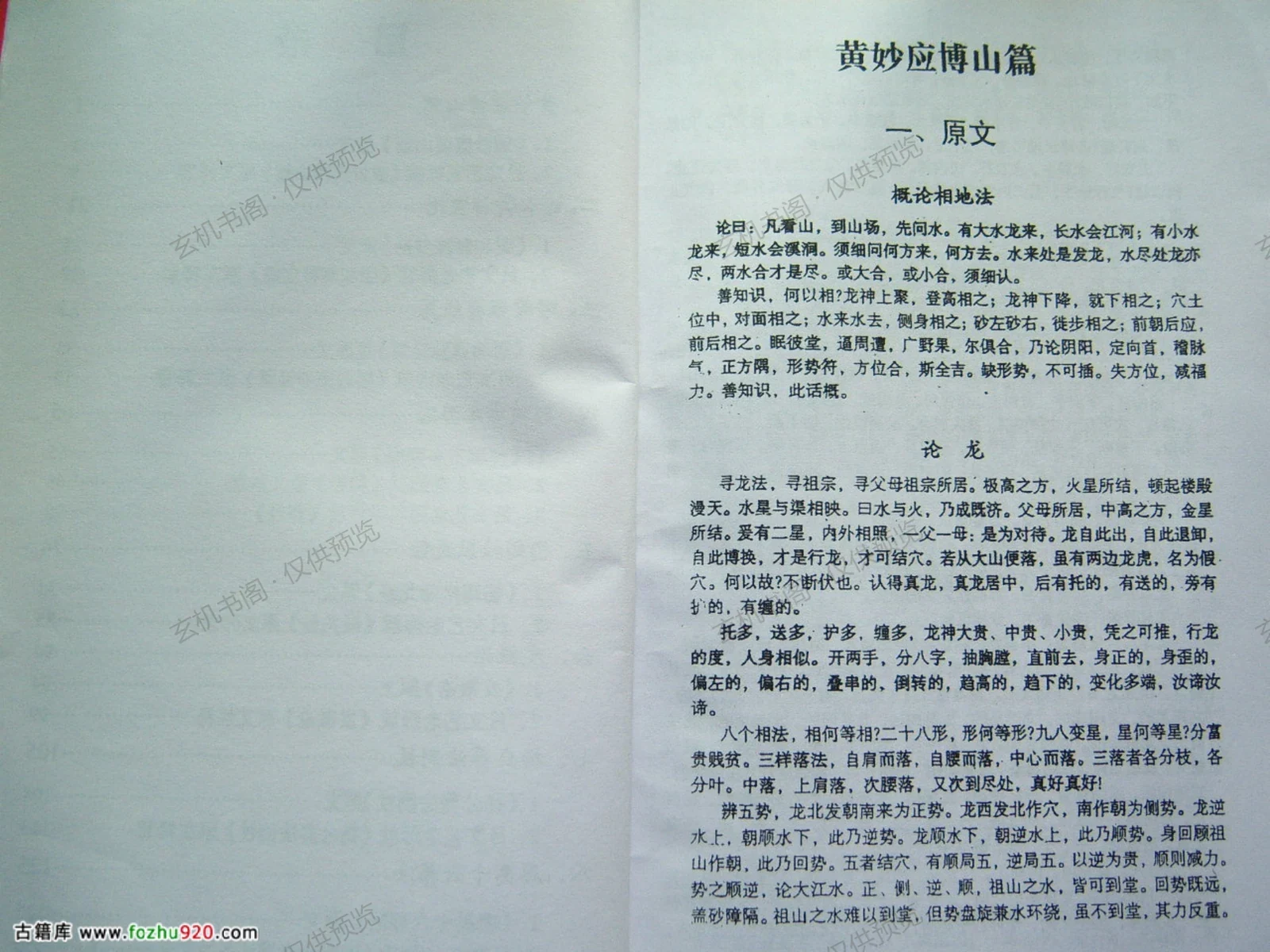
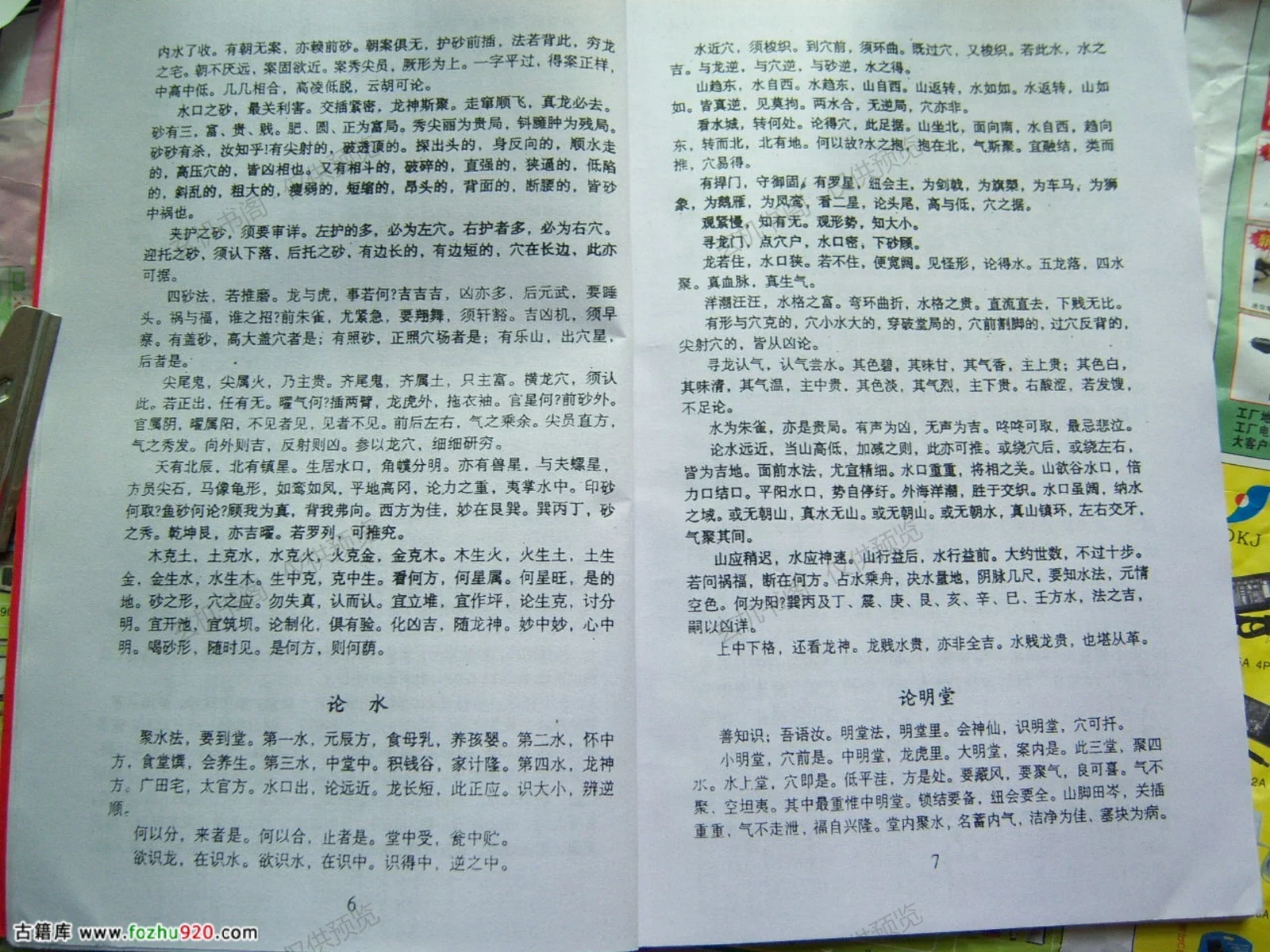
Decoding Dragon Seeking and Point Selection is a feng shui reader built around eight classical texts on site assessment and grave positioning. Attributed on the cover to Lu Wenyi, it presents each text in original wording followed by modern explanation and commentary. The table of contents lists works including Huang Miaoying's Bo Shan Pian, Xie Heqing's Shen Bao Lun, Miao Xiyong's Zang Jing Yi, the ancient Zang Jing attributed to Guo Pu, Yang Junsong's Yi Long Jing, Fa Wei Lun, Yang Gong's burial method text, and Liao Yu's sixteen burial methods. The visible body text shows the Bo Shan Pian in its sections on general landscape observation, dragons, points, sand, water, and bright halls. Readers encounter terms such as five stars, nine stars, water mouths, facing and greeting mountains, and reverse or顺从 water flow. The book is useful for comparing classical feng shui language with a contemporary practitioner's interpretation, though the specific edition and publication details remain unconfirmed from the provided pages.
Contents
Cover and author information
Contents: eight classical texts with explanations
Bo Shan Pian: general principles of site observation
On dragons: tracing dragon ancestry and true points
On points: locating and examining the surroundings
On sand: auspicious and harmful sand formations
On water: water mouths, flow direction, and pooling
On bright halls: formation and qi gathering
Key Points
Presents eight classical feng shui texts with original passages and explanations
Focuses on dragon seeking, point selection, sand, water, and bright halls
Original texts are dense with traditional terminology and require the explanations
Includes a section evaluating the Zang Jing in modern scientific terms
Visible body text discusses the Bo Shan Pian in detail